
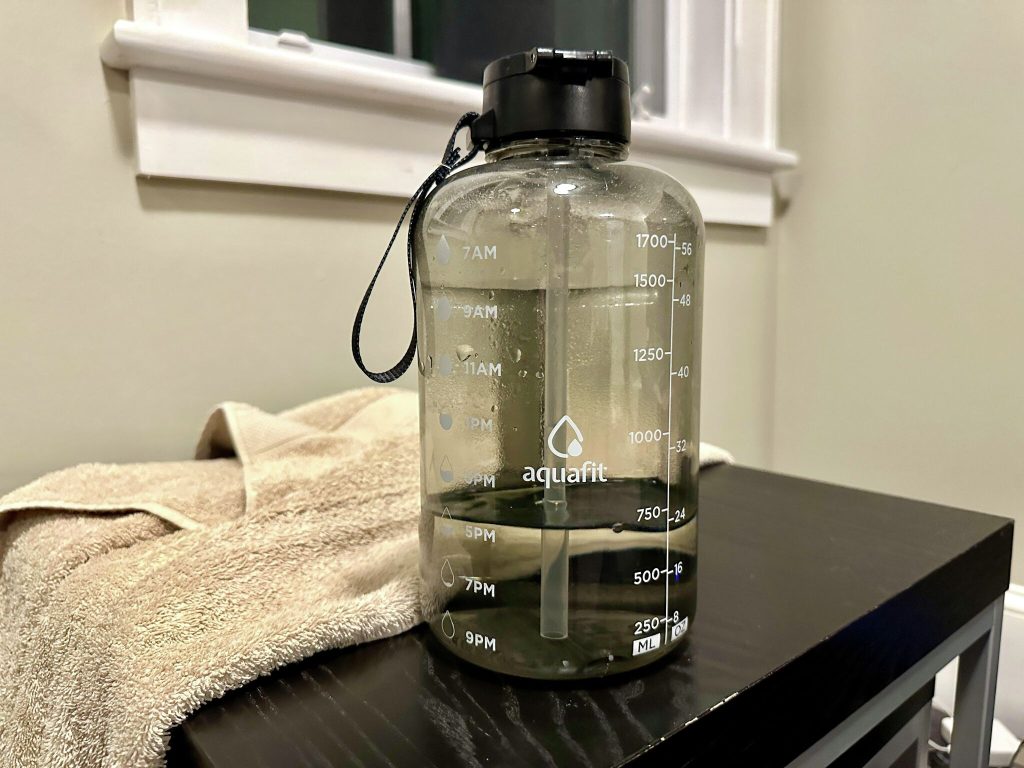
Ever tried lifting a full water cooler jug onto a dispenser? Or packed water jugs into your car for a camping trip and thought, “Why does this feel so heavy?” You are not alone. Millions of people search for the 1gal water weight every month because it touches so many parts of daily life — from cooking and fitness to emergency planning and construction.
Here is the quick answer. One US gallon of water weighs approximately 8.34 pounds, which comes out to about 3.78 kilograms at room temperature. That number comes from data published by the U.S. Geological Survey and the Bureau of Reclamation, so it is as reliable as it gets.
But here is where things get interesting. The 1gal water weight is not always a perfectly fixed number. Temperature, dissolved minerals, atmospheric conditions, and even which version of the “gallon” you are using can nudge that figure up or down by small amounts. Most of the time, those differences are tiny enough to ignore. But in certain situations — lab work, marine engineering, international recipes — they matter more than you might expect.
In this article, we are going to break it all down. You will learn exactly where the 8.34-pound figure comes from, what factors can change it, how the US gallon differs from the Imperial gallon, and where this knowledge actually saves you time and trouble in real life. Whether you are a student, a home cook, a fitness enthusiast, or someone who just wants a straight answer, this guide has you covered.
What Is the Exact Weight of 1Gal of Water?
The Short Answer in Pounds and Kilograms
One US liquid gallon of fresh water weighs right around 8.34 pounds at standard room temperature, which is roughly 70°F or 21°C. In metric terms, that translates to 3.785 kilograms. If you cool that water down to its maximum density point — 39.2°F or 4°C — the weight ticks up ever so slightly to 8.345 pounds. That fraction of a difference rarely matters outside of a chemistry lab, but it is good to know the precise benchmark when discussing 1gal water weight.
The math behind this is refreshingly simple. Water density at standard conditions sits at approximately 1 gram per cubic centimeter. One US gallon equals 3.785 liters, which is 3,785 milliliters. Multiply volume by density and you land at about 3,785 grams, or roughly 8.34 pounds. The formula is just Weight = Volume × Density. Nothing complicated. Nothing hidden. It is one of those rare scientific facts that you can actually verify with a kitchen scale and a gallon jug if you ever feel like testing it yourself.
Breaking It Down Into Smaller Units
Not every situation calls for a full gallon measurement. Sometimes you need to know the weight of a quart, a pint, or even a single cup. So here is how the numbers break down from the top. One gallon holds 4 quarts, 8 pints, or 128 fluid ounces. Each quart of water weighs about 2.09 pounds, each pint comes in at roughly 1.04 pounds, and a single US cup of water weighs around half a pound — 0.52 pounds or 236 grams, to be more exact.
There is an old saying that has been passed down through kitchens and classrooms for generations: “A pint’s a pound, the world round.” It is not perfectly precise, but it is close enough to be useful. If you remember that a pint of water weighs roughly one pound, and that a gallon holds eight pints, you can estimate the approximate weight of 1gal of water in your head without pulling out a calculator. That kind of mental shortcut comes in handy more often than you would think.
Why the Approximate Weight of 1Gal of Water Is Not Always the Same
How Temperature Changes Water Density
If you have ever wondered whether hot water and cold water weigh the same amount per gallon, the answer is no — not exactly. The difference is small, but it is real, and it comes down to how water molecules behave at different temperatures.
When you heat water, you are pumping energy into its molecules. They start vibrating faster and pushing apart from each other. This expansion means that fewer molecules fit into the same container, so the density drops. A gallon pitcher of boiling water holds slightly less mass than the same pitcher filled with cold tap water. The practical difference works out to about 0.03 to 0.04 pounds across a wide temperature range, which is less than an ounce. For cooking and household use, that is negligible. For precision laboratory work, it is not. So while the standard 1gal water weight stays close to 8.34 pounds in most kitchens, scientists need to account for these fine differences.
Water reaches its maximum density at 39.2°F, which is 4°C. That is the temperature at which molecules are packed as tightly together as they can get in liquid form. Above that temperature, water gradually becomes lighter per unit of volume. Below it, something unusual happens — water begins expanding again as it approaches the freezing point, which is why ice floats. This quirk of physics is one of the reasons life on Earth exists the way it does, since frozen lakes stay insulated at the surface rather than freezing solid from the bottom up.
Does Altitude or Atmospheric Pressure Matter?
You might be curious whether living at a higher elevation changes things. Technically, yes. Gravity is marginally weaker the further you get from the center of the Earth, and atmospheric pressure decreases at higher altitudes. Both of these factors could influence the measured weight of water on a scale.
In practice, though, the difference is so small that it does not affect anyone outside of a specialized research facility or an aerospace engineering lab. A gallon of water measured in Denver weighs essentially the same as a gallon measured in Miami for any real-world purpose. So unless you are calibrating scientific instruments at extreme altitudes, you can safely ignore this variable and stick with the standard 1gal water weight of 8.34 pounds.
Saltwater, Hard Water, and Dissolved Minerals
The type of water you are measuring does make a noticeable difference in certain cases. Fresh, pure water and ocean water are not the same thing when it comes to density. Dissolved salts — mainly sodium chloride — increase the mass of seawater without significantly increasing its volume. One US gallon of seawater weighs approximately 8.55 pounds, compared to the standard 8.34 pounds for fresh water. That gap of roughly 0.2 pounds per gallon adds up fast when you are calculating the weight of water in a large marine aquarium or planning ballast for a boat.
Hard water, which contains elevated levels of calcium and magnesium, is also slightly heavier than distilled water. The difference is negligible for household use — you will never notice it while filling a pot or a glass. But in industrial water treatment, laboratory analysis, and chemical processing, even tiny variations in density can affect outcomes. For the rest of us, knowing that dissolved minerals bump the weight up by a hair is interesting trivia more than anything else.
US Gallon vs. Imperial Gallon — Why the Weight of 1Gal Water Changes Depending on Where You Live
The US Liquid Gallon
When most people talk about a gallon, they mean the US liquid gallon. It is defined as exactly 231 cubic inches, which works out to 3.785 liters or 128 fluid ounces. At room temperature, one US gallon of water weighs about 8.34 pounds. This is the standard measurement used across the United States for everything from gas pumps to water bottles, and it is the figure that applies when most people look up the 1gal water weight online.
There is also a lesser-known US dry gallon, which is slightly larger at 268.8 cubic inches or 4.405 liters. A dry gallon of water would weigh approximately 9.71 pounds at peak density. However, the dry gallon is almost never used for measuring liquids. It exists mainly for dry goods like grains and produce, so for all practical water-related discussions, the US liquid gallon is the one that counts.
The UK Imperial Gallon
Across the Atlantic, the story is different. The British Imperial gallon was originally defined in 1824 as the volume of 10 pounds of distilled water at 62°F. That means, by design, an Imperial gallon of water weighs about 10.02 pounds — roughly 4.546 kilograms. In terms of volume, it holds 160 fluid ounces or 4.546 liters, making it about 20 percent larger than its American counterpart.
The Imperial gallon is still referenced in some Commonwealth countries and occasionally shows up in older British recipes, product manuals, and engineering documents. While it is no longer the primary unit for trade in the UK or the EU, it has not disappeared entirely.
Why Getting This Wrong Can Cause Real Problems
Here is where the distinction becomes more than just trivia. If you follow a British recipe that calls for “one gallon” of water and measure it using a US gallon container, you will be short by nearly 20 percent. In cooking, that might just change the consistency of a broth. But in industrial applications — water tank sizing, shipping weight calculations, aquarium setups — a 20 percent error can lead to structural failures, overloaded vehicles, or an incorrectly balanced tank.
The takeaway is simple. Whenever you come across a gallon measurement, especially in international documents, take a moment to confirm whether it refers to a US or Imperial gallon. That one small check can prevent some surprisingly expensive mistakes.
Practical Applications — Where Knowing 1Gal Water Weight Pays Off
Hydration and Fitness Tracking
The Centers for Disease Control and Prevention suggests that adequate daily water intake varies by individual, but many fitness professionals and health guides recommend roughly one gallon per day for active adults. That means you are consuming over 8 pounds of water daily just to stay properly hydrated. Once you know the 1gal water weight, tracking your intake in terms of actual mass becomes second nature. Athletes, coaches, and nutritionists use this figure to plan intake goals, and it gives anyone monitoring their diet a clearer picture of what they are actually putting into their body each day.
If you carry a gallon jug to the gym — something that has become more and more common — you now know exactly how much weight you are hauling around. It is the same as carrying a standard house cat or a large bag of flour. That context helps you plan your day a little more practically.
Cooking and Baking Precision
Professional bakers and serious home cooks know that weight-based measurements are more accurate than volume-based ones. When a recipe lists water in grams rather than cups, understanding the weight of 1gal of water and its subunits saves time and reduces guesswork. One US cup of water weighs about 236 grams. A pint is roughly 473 grams. These conversions become second nature once you start weighing ingredients, and your results get noticeably more consistent.
Emergency Preparedness and Water Storage
Emergency management agencies, including FEMA, recommend storing at least one gallon of water per person per day for a minimum of three days. That sounds manageable until you do the math. A family of four needs at least 12 gallons for a basic three-day supply. That is about 100 pounds of water before you even count the weight of the storage containers themselves.
Knowing the 1gal water weight helps you figure out where to store those reserves safely. Shelving has load limits. Floors in older homes have structural limits. The trunk of your car has a payload capacity. None of these questions have good answers unless you know how heavy the water actually is.
Hauling, Transport, and Load Planning
Contractors, farmers, pool service companies, and landscapers deal with large volumes of water regularly. A standard 5-gallon water cooler jug weighs over 41 pounds when full, and a pickup truck carrying a 250-gallon water tank in the bed is hauling over 2,000 pounds of water alone. Pool owners filling a 10,000-gallon pool are looking at more than 83,000 pounds of water pressing down on the pool structure and surrounding ground. These numbers matter for equipment selection, vehicle loading, structural engineering, and basic safety planning. A solid understanding of 1gal water weight scales up quickly when you are working with hundreds or thousands of gallons at a time.
Quick-Reference Conversion Chart for Water Weight
Sometimes you just need the numbers in front of you without scrolling through paragraphs of explanation. The table below shows the weight of common water volumes at standard room temperature using pure, fresh water.
| Volume | Weight (lbs) | Weight (kg) |
|---|---|---|
| 1 cup (8 fl oz) | 0.52 | 0.24 |
| 1 pint (16 fl oz) | 1.04 | 0.47 |
| 1 quart (32 fl oz) | 2.09 | 0.95 |
| 1 gallon (128 fl oz) | 8.34 | 3.78 |
| 5 gallons | 41.7 | 18.9 |
| 10 gallons | 83.4 | 37.8 |
| 50 gallons | 417.0 | 189.3 |
| 100 gallons | 834.0 | 378.5 |
These figures assume room temperature of roughly 70°F (21°C) and standard atmospheric pressure. For saltwater, add approximately 2.5 percent to each figure. For Imperial gallons, multiply the per-gallon weight by 1.2 to account for the larger volume. This chart makes it easy to estimate weight 1gal water at a glance and then scale the numbers up or down depending on your specific needs.
Common Misconceptions About the Weight of 1Gal of Water
“Ice Weighs the Same as Liquid Water Per Gallon”
This is one of the most common misunderstandings people run into when researching 1gal water weight. A gallon container filled with ice actually weighs less than the same container filled with liquid water. When water freezes, it expands by roughly 9 percent. That expansion means the frozen water is less dense, so fewer grams of ice fit into a gallon-sized space compared to liquid water. This is the same reason ice cubes float in your glass rather than sinking to the bottom.
“Hot Water and Cold Water Are the Same Weight”
Not quite. As we discussed earlier, warmer water is less dense because its molecules are more spread out. If you fill a gallon pitcher with cold tap water and weigh it, then fill the same pitcher with near-boiling water and weigh it again, the hot water will register slightly lighter. The difference is only a fraction of an ounce across typical household temperature ranges, but it is measurable and well documented in the scientific literature.
“All Gallons Are the Same Everywhere”
They absolutely are not. The US liquid gallon, the US dry gallon, and the UK Imperial gallon are three distinct units with different volumes and, therefore, different weights when filled with water. The US liquid gallon at 8.34 pounds, the dry gallon at about 9.71 pounds, and the Imperial gallon at roughly 10.02 pounds represent meaningfully different quantities. Treating them as interchangeable is a recipe for calculation errors — sometimes small, sometimes significant.
“Adding Salt Doesn’t Change the Weight Much”
It changes it more than most people expect, especially at scale. A single gallon of seawater weighs about 8.55 pounds compared to 8.34 for fresh water. That is a difference of roughly two and a half percent. Multiply that across thousands of gallons in a marine tank, a swimming pool using salt chlorination, or a desalination plant, and the added weight becomes a real factor in engineering and structural planning.
How to Calculate 1Gal Water Weight Yourself
You do not need a science degree to figure this out on your own. The calculation is three steps, and you can do it with a basic calculator or even in your head if you round the numbers slightly.
Start by converting your volume to liters. One US gallon equals 3.785 liters. If you are working with a different volume — say half a gallon or two gallons — just multiply accordingly. Half a gallon is 1.893 liters. Two gallons is 7.57 liters.
Next, multiply the volume in milliliters by the density of water. At room temperature, water density is approximately 0.998 grams per milliliter. So for one gallon, the math looks like this: 3,785 milliliters multiplied by 0.998 grams per milliliter equals approximately 3,777 grams. That is 3.777 kilograms.
Finally, convert to pounds if you need the answer in US customary units. One kilogram equals about 2.205 pounds. So 3.777 kilograms multiplied by 2.205 gives you approximately 8.33 pounds, which rounds neatly to the standard figure of 8.34 pounds per gallon.
If precision matters — say you are running an experiment or calibrating equipment — you can look up the exact density of water at your specific temperature using the density tables published by the U.S. Department of the Interior. For everything else, rounding to 8.34 pounds per gallon is perfectly reliable and matches what professionals use day in and day out. That is the beauty of the 1gal water weight figure — it is easy to remember and accurate enough for nearly any situation you will face.
Frequently Asked Questions
1. How much does 1 gallon of water weigh in pounds?
One US gallon of water weighs approximately 8.34 pounds at room temperature. This figure is based on a standard water density of roughly 1 gram per cubic centimeter and is widely referenced by the U.S. Geological Survey.
2. What is the 1gal water weight in kilograms?
In metric terms, one US gallon of water weighs about 3.78 kilograms at room temperature. Since one liter of water weighs nearly one kilogram, and a gallon equals 3.785 liters, the conversion is clean and simple.
3. Does hot water weigh less than cold water per gallon?
Yes, slightly. Heated water molecules spread apart, reducing density, so a gallon of hot water weighs a fraction of an ounce less than a gallon of cold water. The difference is tiny for everyday purposes but scientifically measurable.
4. Is the weight of 1gal of water the same in the US and the UK?
No. A US gallon holds 3.785 liters and weighs about 8.34 pounds, while a UK Imperial gallon holds 4.546 liters and weighs roughly 10.02 pounds. The Imperial gallon is approximately 20 percent larger.
5. How much does 5 gallons of water weigh?
Five US gallons of water weigh approximately 41.7 pounds or 18.9 kilograms at room temperature. This is the weight of a standard water cooler bottle and is worth keeping in mind for safe lifting.
6. Does saltwater weigh more than fresh water per gallon?
Yes. Dissolved salts increase the density of water. One US gallon of seawater weighs about 8.55 pounds compared to 8.34 pounds for fresh water, a difference of roughly 2.5 percent.
7. Why does ice weigh less than liquid water by volume?
Water expands by about 9 percent when it freezes, which makes ice less dense than liquid water. A gallon container filled with ice holds fewer grams of water than the same container filled with liquid, so it weighs less.
8. What is the formula to calculate the weight of water?
The formula is Weight = Volume × Density. For one US gallon, multiply 3,785 milliliters by the water density at your temperature (approximately 0.998 g/ml at room temperature) to get the weight in grams, then convert to pounds.
9. How much water should I store for emergencies based on 1gal water weight?
FEMA recommends one gallon per person per day for at least three days. For a family of four, that is 12 gallons or roughly 100 pounds of water, which helps you plan storage locations that can safely support the load.
10. Does altitude affect how much a gallon of water weighs?
Technically, yes — gravity is slightly weaker at higher elevations, which reduces measured weight by a tiny amount. However, the difference is so small that it has zero practical impact on household, cooking, or fitness calculations.
11. How much does a gallon of water weigh in ounces?
One US gallon of water weighs approximately 133.4 ounces, since 8.34 pounds multiplied by 16 ounces per pound gives you that figure. This conversion is particularly useful for recipes and food service operations that measure ingredients by the ounce.
12. Is a gallon of milk heavier than a gallon of water?
Yes. A gallon of whole milk weighs about 8.6 pounds, which is slightly heavier than the 8.34 pounds of water. Milk is denser because it contains dissolved fats, proteins, and sugars that add mass without adding much extra volume.
13. How much does a gallon of water weigh at boiling temperature?
At boiling point (212°F or 100°C), one US gallon of water weighs approximately 8.0 pounds. That is about 0.34 pounds lighter than at room temperature because the heat causes molecules to expand and spread apart, reducing density.
14. How many gallons of water equal one ton?
One US ton equals 2,000 pounds, and since a gallon of water weighs about 8.34 pounds, it takes roughly 240 gallons to make one ton. This is a critical calculation for trucking, shipping, and agricultural water transport.
15. Does the weight of a gallon of water change when you add sugar or salt?
Yes. Adding any dissolved substance increases the mass of the solution without significantly changing its volume. A gallon of sugar water or salt water will weigh more than a gallon of pure water, with the exact increase depending on how much you dissolve.
16. How much does a 55-gallon drum of water weigh?
A standard 55-gallon drum filled with fresh water weighs approximately 459 pounds at room temperature, not counting the weight of the drum itself. The empty steel drum typically adds another 30 to 40 pounds, bringing the total close to 500 pounds.
17. How much does a gallon of water weigh compared to gasoline?
Water is significantly heavier. A gallon of water weighs about 8.34 pounds, while a gallon of gasoline weighs only about 6.1 pounds. This density difference is why gasoline floats on water and is an important factor in fuel transport safety calculations.
18. How heavy is 10 gallons of water?
Ten US gallons of water weigh approximately 83.4 pounds or 37.8 kilograms at room temperature. That is roughly the weight of a large dog, and it is important to factor in when loading a vehicle or choosing storage furniture.
19. Why is water heaviest at 39.2°F?
At 39.2°F (4°C), water molecules arrange themselves in the tightest possible liquid configuration, reaching maximum density. Above that temperature, molecular motion pushes them apart, and below it, they start forming the hexagonal crystal structure of ice, which takes up more space.
20. How much water does the average person drink per day by weight?
Health guidelines recommend roughly one gallon of total water intake per day for active adults, which equals about 8.34 pounds. This includes water from all sources such as beverages and food, not just glasses of plain water.
21. Can I use a bathroom scale to measure a gallon of water?
Yes. Fill a gallon container with water, place it on a standard bathroom scale, and subtract the container weight. Most bathroom scales are accurate enough to confirm the 1gal water weight within a few tenths of a pound.
22. How much does a gallon of distilled water weigh vs. tap water?
Distilled water and tap water weigh nearly the same — about 8.34 pounds per gallon. Tap water contains small amounts of dissolved minerals that add a negligible amount of weight, typically less than a hundredth of a pound difference.
23. Is a gallon of sand heavier than a gallon of water?
Yes, significantly. A gallon of dry sand weighs approximately 12 to 14 pounds, compared to water’s 8.34 pounds. Sand particles are denser than water, and even with air gaps between the grains, the total mass per gallon is much higher.
24. How do I convert water weight from gallons to liters?
Since one US gallon equals 3.785 liters and one liter of water weighs roughly one kilogram, you simply multiply gallons by 3.785 to get the weight in kilograms. For pounds, multiply gallons by 8.34 — the standard per-gallon weight.
Conclusion
At the end of the day, the 1gal water weight question has a clean, reliable answer: about 8.34 pounds for a US gallon at room temperature. That number holds up across nearly every real-world situation you are likely to encounter, from filling a water bottle to loading a truck bed.
Yes, temperature nudges it slightly. Dissolved minerals bump it up a hair. And using the wrong gallon definition can throw your calculations off by a solid 20 percent. But for the vast majority of everyday needs — cooking, hydration tracking, emergency prep, transport planning — 8.34 pounds per gallon is the figure you can count on.
The fact that you looked this up puts you ahead of most people. Whether you are a weekend camper doing the math on how much water to pack, a parent stocking up for hurricane season, or a contractor figuring out load limits on a job site, knowing this one simple number saves guesswork, prevents mistakes, and helps you plan with confidence. Sometimes the most useful knowledge is also the simplest.