
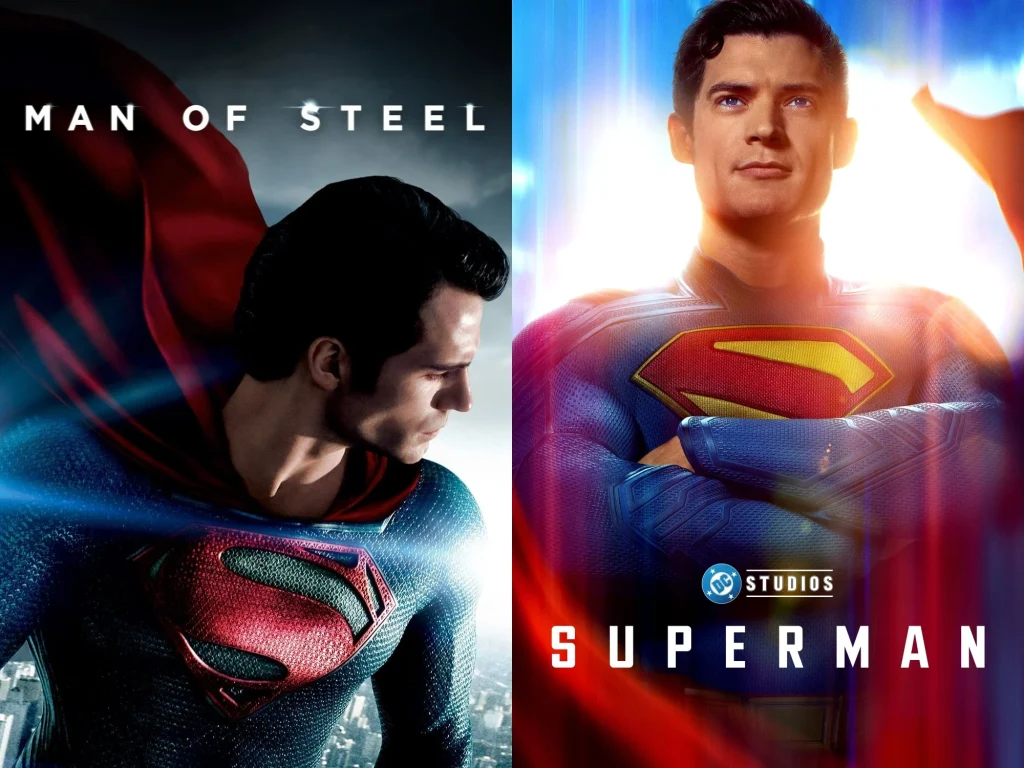
Back in the summer of 2013, audiences walked into darkened theaters expecting a familiar story. They knew the beats. A baby crashes on a Kansas farm, grows up to be a hero, and saves the day with a smile. But what Zack Snyder, Christopher Nolan, and screenwriter David S. Goyer delivered was something nobody saw coming. Man of Steel, the 2013 superman film that rebooted an entire franchise, stripped away decades of nostalgia and forced everyone to reconsider what a Superman story could actually look like.
The result was polarizing, profitable, and impossible to ignore. Critics were split down the middle. Fans debated every creative decision. And Warner Bros. used it as the foundation for an entire cinematic universe that would dominate pop culture conversations for the better part of a decade. Whether you loved it or found its darker tone hard to swallow, there is no denying that this 2013 superman film left a permanent mark on superhero cinema.
This article takes a deep look at everything behind the film, from the legal pressures and creative choices that shaped it, to the talented cast that brought it to life, to the lasting legacy it carved in Hollywood. If you have ever searched for details about the superman film 2013 audiences still debate to this day, you are in the right place.
The Road to Zack Snyder’s 2013 Superman Film
Before a single frame was shot, the journey to bring Superman back to the big screen was anything but smooth. Warner Bros. had been sitting on the franchise since the lukewarm reception of Superman Returns in 2006. That film earned $391 million worldwide, which sounds respectable until you consider the studio had poured roughly $270 million into production and marketing. Warner Bros. President Alan F. Horn said publicly that the film should have crossed $500 million and admitted it needed more action to win over younger audiences.
Then came the legal pressure that truly forced the studio’s hand. In 2009, a court ruled that Jerry Siegel’s family had recaptured partial rights to Superman’s origin story. The ruling came with a critical deadline. If Warner Bros. did not begin production on a new Superman film by 2011, the Siegel and Shuster estates could sue for lost revenue. Suddenly, rebooting the franchise was no longer just a creative preference. It was a legal necessity.
Around the same time, Christopher Nolan was riding the massive success of The Dark Knight. During early story sessions for The Dark Knight Rises in 2010, screenwriter David S. Goyer shared his idea for presenting Superman in a grounded, modern context. Nolan loved the concept and pitched it to Warner Bros. executives. Given Nolan’s track record, the studio jumped at the opportunity and brought him on as producer. Goyer wrote the screenplay while Nolan helped shape the story.
Finding a director took some time. Guillermo del Toro passed because of his commitment to At the Mountains of Madness. Robert Zemeckis was also approached and declined. Finally, in October 2010, Zack Snyder was hired to direct. Snyder had already proven his ability to handle large-scale visual spectacle with 300 and Watchmen. He seemed like the right person to bring a more intense, physically grounded Superman to the screen. What would become the most talked-about 2013 superman film in the genre entered principal photography in August 2011, with shooting locations spanning West Chicago, Plano in Illinois, and Vancouver.
Superman Film Cast 2013: The Actors Who Brought Krypton to Life
One of the strongest aspects of Man of Steel was its ensemble cast, which brought serious dramatic weight to every corner of the story.
Henry Cavill as Clark Kent / Kal-El — The decision to cast a British actor as the most American superhero in history raised eyebrows before the film even started shooting. But Cavill silenced most doubters with his sheer physical commitment and quiet emotional presence. He trained for six months under Mark Twight, the elite trainer behind the cast of 300, at Gym Jones in Salt Lake City. The facility was deliberately stripped of mirrors, televisions, and comfortable seating. Cavill ate upward of 5,000 calories per day during his bulking phase and spent up to two and a half hours per day lifting. He also trained in Brazilian Jiu-Jitsu to build functional athleticism. What stood out most was his refusal to use steroids or any digital body enhancements for shirtless scenes. He believed it would be dishonest to use trickery while playing Superman and pushed himself to earn every ounce of the physique naturally.
Amy Adams as Lois Lane — Adams played a more proactive and independent version of Lois than earlier adaptations. In this story, Lois is a Pulitzer-caliber journalist who tracks Clark down before he even puts on the suit. She is not a damsel waiting to be saved but a skilled reporter who pieces together the mystery on her own terms.
Michael Shannon as General Zod — Shannon’s portrayal of the Kryptonian military leader was one of the most praised elements of the film. His Zod was not a cartoonish villain twirling his cape. He was a soldier bred for one purpose, the protection of Krypton, and every horrific action he takes in the film stems from a warped sense of duty. Shannon brought a chilling intensity to the role that made Zod genuinely frightening.
Kevin Costner and Diane Lane as Jonathan and Martha Kent — Costner’s Jonathan Kent grounded the film in heartland America. His scenes with young Clark carried real emotional weight, particularly a controversial moment involving a tornado that remains one of the film’s most hotly debated decisions. Lane provided steady warmth and strength as Martha, acting as Clark’s moral anchor when the world overwhelmed him.
Russell Crowe as Jor-El — Rather than a brief cameo at the start, Crowe’s Jor-El played a significant role throughout the entire film, appearing as an artificial intelligence guide aboard the Kryptonian scout ship. He brought gravitas and physicality to the part, including an extended action sequence on Krypton that felt like a standalone sci-fi set piece.
The supporting cast also included Laurence Fishburne as Daily Planet editor Perry White, Antje Traue as the ruthless Faora-Ul, and Christopher Meloni as Colonel Hardy. Every member of the superman film cast 2013 brought depth to characters that could have easily felt like background furniture in a lesser production. It is rare for a 2013 superman film to boast this many Oscar-nominated performers committed to a single superhero project.
Plot Breakdown: What the Story Got Right and Where It Stumbled
Man of Steel opens not in Kansas, but on the alien world of Krypton. The planet is dying because its civilization recklessly mined its own core for energy. Scientist Jor-El steals the genetic codex, a record of every future Kryptonian, and infuses it into his newborn son Kal-El before launching him toward Earth. General Zod attempts a coup, kills Jor-El, and is banished to the Phantom Zone along with his soldiers. Minutes later, Krypton implodes.
This prologue runs nearly twenty minutes and establishes a tone that is far more science fiction than traditional superhero fare. Krypton feels like a fully realized world with its own politics, genetic engineering, and ecological failures. It is one of the strongest openings in any comic book adaptation.
From there, the film uses a nonlinear storytelling structure, weaving between Clark’s troubled childhood in Smallville and his adult life as a drifter moving from job to job while hiding his abilities. We see young Clark overwhelmed by his emerging super-senses. We watch him save a busload of classmates and face his father’s fear that the world is not ready to accept him. These flashbacks, clearly influenced by Nolan’s approach in Batman Begins, give the story a reflective, meditative quality that sets it apart from the standard origin formula.
The third act is where the 2013 superman film generated its fiercest controversy. When Zod arrives on Earth and deploys a terraforming machine to reshape the planet into a new Krypton, the resulting battle causes catastrophic destruction across Metropolis. Entire skyscrapers collapse. City blocks are leveled. The visual parallels to post-9/11 imagery were deliberate and, for many viewers, deeply uncomfortable.
Then comes the ending. Trapped in a chokehold with no other option, Superman snaps Zod’s neck to prevent him from killing a group of civilians. The moment divided fans sharply. Supporters argued it gave Superman a defining moral experience that would shape his refusal to kill going forward. Critics felt it betrayed the core of the character. Director Zack Snyder defended the choice in interviews, saying he wanted to explore what would push Superman to that extreme and why he would never go there again. Regardless of where you stand, the scene remains one of the most talked-about moments in modern superhero cinema. And it directly shaped the plot of the sequel, Batman v Superman: Dawn of Justice, where Bruce Wayne’s hatred of Superman is rooted in the civilian deaths caused by that very battle.
Behind the Camera: The Visual and Musical Identity of Man of Steel
Visually, Man of Steel was a clear departure from the bright primary colors and smooth cinematography that audiences had associated with Superman for decades. Zack Snyder and cinematographer Amir Mokri chose a desaturated color palette that leaned into grays, blues, and muted earth tones. Superman’s suit itself was darker, textured, and almost alien in its design. Even the iconic red cape appeared more maroon than scarlet.
Snyder used handheld camera work extensively, lending even quiet dialogue scenes a raw, documentary-like quality. The action sequences, particularly the Smallville battle and the World Engine sequence over the Indian Ocean, pushed the boundaries of what visual effects could accomplish in 2013. The sense of speed, impact, and destruction felt genuinely overwhelming. No Superman adaptation before this 2013 superman film had attempted to portray Kryptonian combat at this level of raw intensity. When two Kryptonian gods collide on a human-scale planet, the film argues, the result should not be clean or tidy. It should be terrifying.
The musical identity was equally bold. Hans Zimmer composed the score after initially denying rumors of his involvement. The biggest creative decision was the deliberate choice not to reuse John Williams’ iconic Superman March from the 1978 film. For many fans, that theme was inseparable from the character. But Snyder and Zimmer believed a complete creative reset required a completely new sonic identity.
Zimmer’s approach traded triumphant brass fanfare for layered, emotional compositions built around themes of hope, isolation, and self-discovery. The standout track, “What Are You Going to Do When You Are Not Saving the World?”, plays during one of the film’s most poignant scenes and has since become deeply associated with Cavill’s version of the character. The score was released publicly on June 11, 2013, three days before the film hit theaters, and was widely praised even by critics who had reservations about the movie itself.
Box Office Performance and Critical Reception of the 2013 Superman Film
Commercially, Man of Steel was a significant success, though perhaps not the blockbuster juggernaut Warner Bros. had hoped for. The film opened to $128.7 million in North America over its debut weekend, which included $12 million from Thursday night Walmart preview screenings. That opening set the record for the biggest June debut of all time, surpassing Toy Story 3. A strong Father’s Day boost contributed to zero decline from Saturday to Sunday, an extremely rare occurrence for a tentpole release.
Internationally, the film opened strong across 24 markets, with the United Kingdom ($17.1 million), Mexico ($9.8 million), and South Korea ($9.9 million) leading the charge. By the end of its theatrical run, Man of Steel had earned $291 million domestically and $379 million overseas, bringing its worldwide total to approximately $670 million. That made it the highest-grossing solo Superman film in history, unadjusted for inflation. Home media sales added another $120 million, with over 2.3 million DVDs and 3.3 million Blu-ray discs sold by early 2019.
However, against a production budget estimated between $225 and $258 million, plus substantial marketing costs, the profit margins were tighter than the raw numbers suggest. Industry publication Deadline Hollywood calculated the film’s net profit at roughly $42.7 million, making it the ninth most profitable release of 2013. Solid, but not the runaway financial juggernaut of an Avengers or Iron Man 3.
Critically, Man of Steel received mixed reviews. It holds a 56 percent approval rating on Rotten Tomatoes and earned a 55 on Metacritic. Praise consistently went to Cavill’s physical commitment, Shannon’s menacing Zod, Zimmer’s score, and the ambition of trying something genuinely different with a well-known character. Criticism focused on the overly grim tone, excessive destruction, the underdevelopment of certain characters, particularly Lois Lane despite Adams’ strong performance, and the divisive ending. Roger Ebert’s review noted that the film minimized or sidelined its female characters in a way that felt like a missed opportunity.
Yet audience reception told a slightly different story. The film earned an A-minus CinemaScore, indicating strong word-of-mouth among general audiences. Online fan communities were especially vocal in their support. Over the years since its release, critical opinion of this 2013 superman film has gradually softened, and many now view it as a more ambitious and layered work than initial reviews suggested.
How the 2013 Superman Film Shaped the Future of DC on Screen
Man of Steel was always intended to be more than a standalone movie. Warner Bros. President Jeff Robinov stated publicly that the film was designed to set the tone for all future DC movies. And that is exactly what happened, for better and for worse.
The film served as the foundation stone of the DC Extended Universe, directly spawning Batman v Superman: Dawn of Justice in 2016, which picked up the destruction of Metropolis as a key plot point. From there, the DCEU expanded to include Wonder Woman, Aquaman, Shazam, and eventually Justice League in 2017, followed by Zack Snyder’s Justice League, the director’s cut released on HBO Max in 2021.
Snyder’s grounded, serious approach became the DCEU’s signature visual and narrative identity. It differentiated DC’s cinematic output from the lighter, quippier tone of the Marvel Cinematic Universe. But that same tone also became the franchise’s most contentious element. Studio executives at Warner Bros. reportedly pushed for more humor and brightness in subsequent films, leading to creative clashes that culminated in the troubled production of the theatrical Justice League cut.
The conversation that the superman film 2013 started took on new dimensions when James Gunn was appointed co-head of DC Studios in late 2022. Gunn announced a full universe reboot, and his 2025 Superman film, starring David Corenswet, deliberately embraced a more hopeful, colorful, and emotionally warm tone. The contrast between Snyder’s approach and Gunn’s vision has fueled endless fan comparisons. Some prefer the grittier, more psychologically complex portrait of Clark Kent that Cavill delivered. Others welcome the return to a more traditional, light-hearted Superman.
What remains undeniable is that Zack Snyder’s 2013 superman film forced the entire industry to take Superman seriously as a dramatic character, not just a nostalgic icon. Every adaptation that followed, whether it agreed with Snyder’s choices or deliberately pushed back against them, had to reckon with the standard Man of Steel established. That kind of creative influence does not fade quickly.
Where to Watch Man of Steel Today
For anyone looking to watch or revisit the 2013 superman film, Man of Steel is available on multiple legitimate streaming and digital platforms. Availability changes regularly depending on licensing agreements, so it is worth checking your preferred service at the time you want to watch.
The film was released on physical media in November 2013 across single-disc DVD, two-disc DVD with bonus features, Blu-ray, and Blu-ray 3D. A 4K Ultra HD Blu-ray edition followed in July 2016 for viewers who want the best possible picture and audio quality at home.
A quick note for anyone searching for “filme gratis online superman 2013” or similar free streaming queries. While the temptation to watch without paying is understandable, free streaming sites frequently carry malware, intrusive ads, and serious privacy risks. The safer and more reliable path is to rent or purchase through authorized digital retailers, or to check whether it is included in a streaming subscription you already have.
Conclusion
More than a decade after its release, Man of Steel continues to spark real conversation. It was never designed to be a safe, crowd-pleasing retread of what came before. Zack Snyder and his creative team set out to reimagine Superman for a modern audience, and they succeeded in creating something that people still feel strongly about. The 2013 superman film gave us a stellar cast anchored by Henry Cavill’s deeply physical and emotionally layered performance. It introduced a Krypton that felt like a fully realized civilization. It delivered action sequences that redefined the scale of what superhero films could depict on screen. And it posed genuine moral questions about what it means to be a hero in a world that is not sure it wants one.
Not every swing connected. The dark tone alienated some longtime fans. The destruction felt excessive to many viewers. And the decision to have Superman kill Zod remains one of the most debated choices in the genre’s history. But the 2013 superman film took real creative risks at a time when superhero films were becoming increasingly formulaic, and that willingness to push boundaries is exactly why it still matters.
If you have not seen it, now is a great time to watch with fresh eyes and form your own opinion. And if you saw it years ago, it is worth a second look. The film has aged better than most people expected.
Frequently Asked Questions
1. What is the official name of the 2013 superman film? The official title is Man of Steel. It was directed by Zack Snyder and released by Warner Bros. Pictures on June 14, 2013, as a complete reboot of the Superman franchise.
2. Who plays Superman in the 2013 superman film? Henry Cavill stars as Clark Kent and Superman. He was the first British actor to play the role in a major theatrical Superman film, and he continued to portray the character in Batman v Superman and Justice League.
3. Who directed Man of Steel? Zack Snyder directed the film. Christopher Nolan served as producer and co-developed the story alongside screenwriter David S. Goyer, bringing a grounded and realistic tone similar to Nolan’s Dark Knight trilogy.
4. What is the full cast of the superman film 2013? The main cast includes Henry Cavill as Superman, Amy Adams as Lois Lane, Michael Shannon as General Zod, Kevin Costner as Jonathan Kent, Diane Lane as Martha Kent, Russell Crowe as Jor-El, Laurence Fishburne as Perry White, Antje Traue as Faora-Ul, and Christopher Meloni as Colonel Hardy.
5. Why did Superman kill Zod in Man of Steel? Superman snapped Zod’s neck because Zod was about to kill a group of civilians with his heat vision and refused to stop. Director Zack Snyder and writer David S. Goyer said the moment was meant to give Superman a traumatic experience that would establish his refusal to ever kill again.
6. How much money did the 2013 superman film make at the box office? Man of Steel earned approximately $670 million worldwide, with $291 million coming from North America and $379 million from international markets. It became the highest-grossing solo Superman film in history at the time of release.
7. Is Man of Steel connected to Batman v Superman? Yes, Man of Steel is directly connected to Batman v Superman: Dawn of Justice. The destruction of Metropolis during the Superman-Zod battle in Man of Steel serves as Bruce Wayne’s primary motivation for opposing Superman in the 2016 sequel.
8. Is Man of Steel part of the DCEU? Man of Steel is the first film in the DC Extended Universe. It launched the shared cinematic universe that eventually included Wonder Woman, Aquaman, Shazam, and both versions of Justice League before the DCEU was retired in favor of James Gunn’s new DCU.
9. What was the budget of the 2013 superman film? The production budget was estimated between $225 million and $258 million. When marketing costs are factored in, total spending was substantially higher, and Deadline Hollywood calculated the net profit at roughly $42.7 million.
10. Who composed the music for Man of Steel? Hans Zimmer composed the original score. He deliberately chose not to reuse John Williams’ iconic 1978 Superman March, instead creating a completely new musical identity built around themes of hope, isolation, and self-discovery.
11. Where was Man of Steel filmed? Principal photography took place across several locations including West Chicago and Plano in Illinois, as well as Vancouver, Canada. Filming began in August 2011 and the production lasted over 120 days.
12. Why is the 2013 superman film so dark compared to other Superman movies? Zack Snyder and Christopher Nolan deliberately chose a grounded, realistic tone similar to Nolan’s Batman trilogy. They used a desaturated color palette and handheld camera work to separate Man of Steel from the brighter, more nostalgic tone of earlier Superman films.
13. Did Henry Cavill use steroids for Man of Steel? No. Cavill publicly stated that he refused to use steroids or any digital body enhancements for his shirtless scenes. He trained for six months under elite trainer Mark Twight at Gym Jones, consuming up to 5,000 calories per day and working out for two and a half hours daily.
14. What is the Codex in Man of Steel? The Codex is an ancient Kryptonian artifact that contains the genetic information of every future Kryptonian citizen. Jor-El infuses it into baby Kal-El’s cells before sending him to Earth, which is why General Zod pursues Superman to retrieve it.
15. How does Man of Steel end? After defeating General Zod by snapping his neck, Superman earns the trust of the U.S. military while keeping his identity secret. The film ends with Clark Kent starting a new job as a reporter at the Daily Planet in Metropolis.
16. Was Christopher Nolan the director of the 2013 superman film? No, Christopher Nolan was the producer, not the director. Zack Snyder directed the film. Nolan co-developed the story with screenwriter David S. Goyer and brought his grounded storytelling philosophy to the project.
17. Is Man of Steel a sequel to Superman Returns? No. Man of Steel is a complete reboot with no connection to Superman Returns or any previous Superman film. Zack Snyder, David S. Goyer, and Christopher Nolan started fresh with an entirely new origin story and cast.
18. What age rating does Man of Steel have? Man of Steel is rated PG-13 for intense sequences of sci-fi violence, action, and destruction, along with some language. The large-scale battle scenes and the darker tone make it more intense than most previous Superman films.
19. How long is the 2013 superman film? Man of Steel has a runtime of 2 hours and 23 minutes. Director Zack Snyder has mentioned that an extended three-hour cut exists, though it was never officially released to the public.
20. Where can I stream Man of Steel today? Man of Steel is available for streaming on Max (formerly HBO Max) in the United States. It can also be rented or purchased digitally through platforms like Apple TV, Amazon Prime Video, and Google Play Movies. Availability varies by region.
21. How is Man of Steel different from the 2025 Superman film? Man of Steel takes a darker, more psychologically grounded approach to the character under Zack Snyder’s direction. James Gunn’s 2025 Superman embraces a more hopeful, colorful, and emotionally warm tone that is closer to the classic comic book portrayal.
22. Did Man of Steel get a sequel? Man of Steel did not receive a direct solo sequel. Instead, the story continued in Batman v Superman: Dawn of Justice in 2016, which introduced Batman and Wonder Woman into the same universe. A standalone Man of Steel 2 was in development but was ultimately abandoned.
23. Why was John Williams’ Superman theme not used in Man of Steel? Zack Snyder and Hans Zimmer made the conscious decision to leave behind the 1978 Superman March to signal a complete creative reset. Zimmer wanted the new score to stand on its own and reflect the film’s more introspective and grounded tone.
24. What was the critical reception of the 2013 superman film? Man of Steel received mixed reviews from critics, holding a 56 percent approval rating on Rotten Tomatoes and a 55 on Metacritic. However, audiences were more receptive, giving it an A-minus CinemaScore, and its reputation has improved over the years