
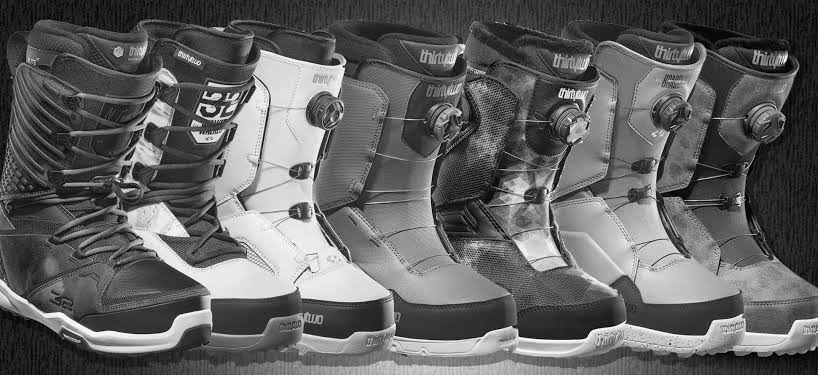
Every snowboarder has lived through at least one miserable day caused entirely by the wrong boots. Cold toes that go numb before the second run. Heel lift that robs you of confidence on steep terrain. Pressure points that turn a powder day into a countdown until you can kick your feet free in the lodge. The truth most riders learn the hard way is simple — your boots matter more than your board, your bindings, or your jacket. They are the only piece of gear that directly touches your body for every single second you spend on the mountain.
That is exactly why ThirtyTwo, the brand most riders just call “32,” has spent more than three decades obsessing over a single product category. Founded in 1995 in Lake Forest, California, the company was built by snowboarders who believed the boot market needed a rider-first option that prioritized comfort and performance in equal measure. Today, 32 snowboard boots are worn by some of the most respected names in the sport, including Jeremy Jones, Zeb Powell, Pat Fava, and Chris Bradshaw. The lineup spans from affordable entry-level options all the way up to premium, pro-tested freeride machines.
This guide walks through everything you need to know before buying your next pair. You will find a breakdown of the most popular models, an honest look at the technology inside every shell and liner, practical fitting advice for both men and women, and tips for making your boots last season after season. Whether you are lacing up your first pair or replacing a setup that has finally packed out, the goal here is to help you find the right fit for your feet, your riding style, and your budget.
What Makes 32 Snowboard Boots Stand Out from the Competition
The snowboard boot market is crowded. Burton, Ride, DC, Vans, K2, and Salomon all compete for shelf space at your local shop. So what earns ThirtyTwo its loyal following year after year? Two things: an unbroken focus on boots as the brand’s core product, and a development process that puts professional riders at the center of every design decision.
A Rider-Driven Brand with Three Decades of Boot Expertise
ThirtyTwo started as a boot-only company and stayed that way for most of its history. While other brands split their attention across boards, bindings, outerwear, and accessories, ThirtyTwo funneled almost all of its research and development energy into building a better boot. The brand only recently expanded into outerwear and, in 2025, launched its first line of bindings through the FASE fast-entry system. As of early 2026, ThirtyTwo even announced its first snowboard line — a move that underscores just how much credibility the company built by doing one thing exceptionally well before branching out.
The brand’s design philosophy leans heavily on skate culture. ThirtyTwo’s roots in Southern California mean their boots often share DNA with skate shoes — low-profile outsoles, clean street-ready aesthetics, and a lighter overall feel compared to many competitors. Their professional team is not just a marketing asset. Riders like Scott Stevens, Halldor Helgason, and Desiree Melancon ride ThirtyTwo daily in demanding conditions, and their feedback shapes every update that reaches the retail shelf. When you buy a pair of 32 snowboard boots, you are getting a product that has been ridden hard and refined through real-world testing, not just lab simulations.
Key Technologies Behind the Comfort and Performance
Several proprietary technologies set ThirtyTwo apart from the pack. The brand’s heat-moldable Intuition liners are the foundation of the fit experience. Available in Comfort, Team, and Performance tiers depending on the model, these liners use dual-density foam that can be shaped to your exact foot profile at any snowboard shop offering heat-molding services. The process takes about fifteen minutes and makes a dramatic difference in heel hold and pressure-point elimination.
On the cushioning side, ThirtyTwo’s STI Evolution Foam outsoles replaced heavy rubber in much of the lineup, cutting boot weight by fifteen to forty percent compared to older models while maintaining shock absorption on hard landings. Higher-end models like the TM-2 and Lashed combine Evolution Foam with strategically placed rubber patches on the heel and toe for traction when hiking or walking across icy parking lots.
The articulated cuff design is another detail riders appreciate. Instead of a rigid shell that distorts during flexion, the articulated cuff “gives” with your natural ankle movement. This keeps the heel locked down throughout the full range of motion rather than allowing the dreaded heel lift that plagues poorly designed boots. Add in the Heel Hold Kit — a set of adhesive foam spacers in three thicknesses (3mm, 5mm, and 8mm) that let you fine-tune the space around your heel inside the liner — and you have a system that allows an almost custom fit without visiting a boot fitter.
For the 2026/27 season, ThirtyTwo is pushing further with FASE-optimized outsoles that integrate seamlessly with their new binding platform, no-sew TPU shell construction on the TM-2 that blocks water penetration at every seam point, and the latest H5 BOA coilers that offer both macro and micro adjustment for dial-in precision.
Top Models from ThirtyTwo — A Breakdown by Riding Style
The lineup covers a wide spectrum. Here is a closer look at the models riders search for most often, from flagship favorites to budget-friendly entry points.
The Lashed — The World’s Best-Selling Snowboard Boot
If you only know one model from ThirtyTwo, it is probably the Lashed. This boot has held the title of the world’s best-selling snowboard boot for years running, and that kind of longevity does not happen by accident. The Lashed sits at a medium flex rating of six out of ten, making it versatile enough for groomers, park laps, powder days, and everything between. It is available in both traditional lace and Double BOA configurations, and the current retail price for the lace version sits around $330 USD.
The Lashed uses a Team Fit liner with Intuition foam, a 3D molded tongue for even flex pressure, and an independent eyestay system that lets you distribute lace tension exactly where you need it. The articulated cuff and performance backstay keep the boot responsive over time, resisting the dreaded “clap-out” that happens when cheaper boots lose their structure after forty or fifty days of riding. For the 2026/27 season, ThirtyTwo has added a Level 2 outsole with a refined tread pattern, a snow guard tongue cover to keep moisture out, and EZ-slide lace loops for faster tightening. Pros like Pat Fava, Austin Visintainer, and Chris Bradshaw have ridden the Lashed as their go-to boot for years, and their continued commitment to the model says a great deal about how well it performs in the real world.
A Look Back at the 32 Lashed Chris Bradshaw Pro Model Snowboard Boots 2017
Pro model boots hold a special place in snowboarding culture. They take an already proven platform and wrap it in a signature colorway and story that reflects a specific rider’s personality. The 32 lashed chris bradshaw pro model snowboard boots 2017 did exactly that, pairing the Lashed’s trusted mold with a distinctive brown leather-toned aesthetic that channeled Bradshaw’s street-influenced riding style.
Under the surface, the 2017 Bradshaw edition carried every feature that made the Lashed a bestseller — the Level 2 Intuition Liner for heat-moldable custom fit, Team Fit construction, STI Evolution Foam outsole, and the internal harness system for superior heel hold. What made it special was the cultural weight behind it. Bradshaw had already established himself as one of snowboarding’s most creative and technically gifted riders, and putting his name on the Lashed was a stamp of approval that resonated with both park rats and all-mountain riders. Bradshaw remains involved with ThirtyTwo to this day, now lending his name to a signature binding colorway in the brand’s FASE collection. For riders who appreciate boot heritage or hunt for past-season deals, the 2017 Bradshaw Lashed remains a sought-after find on resale platforms and outlet clearance racks.
32 Prion Snowboard Boots — A Budget-Friendly Gateway
Not every rider needs or wants to spend three hundred dollars on their first pair of boots. The 32 prion snowboard boots were designed as the brand’s entry-level offering, targeting beginners and early intermediates who wanted access to ThirtyTwo’s comfort technologies without the flagship price tag. The Prion featured a soft flex ideal for new riders still learning edge control, a Comfort Liner built with dual-density Intuition foam and integrated lacing, and the same Evolution Foam outsole found across the rest of the range.
The beauty of the Prion was that it did not feel like a cheap boot. The heat-moldable liner, 3D molded tongue, and internal lacing system gave it a level of fit customization rarely found at its price point. While the Prion has been largely phased out of ThirtyTwo’s current mainline catalog, it remains available through outlet retailers and the secondhand market at steep discounts. For riders on a tight budget who still want the quality and reputation that come with ThirtyTwo products, hunting down a pair of Prions is a smart move.
32 Exit Snowboard Boots — No-Fuss Comfort for Beginners
Sitting alongside the Prion in the entry-level tier, the 32 exit snowboard boots were built around one promise: step in and ride without any painful break-in period. The Exit featured a soft flex, Comfort Fit liners with heat-moldable Intuition foam, and Evolution Foam cushioning that absorbed bumps and chatter from the very first run. Riders who tried the Exit consistently praised its out-of-the-box comfort, which made it a favorite among first-time buyers, resort employees, and casual riders who only get ten or fifteen days on snow each season.
Compared to the Prion, the Exit leaned slightly harder into immediate comfort rather than long-term moldability. Both occupied a similar price tier and shared core technologies, but the Exit was the boot you grabbed when you wanted something that felt great without any fuss. Like the Prion, the Exit has been cycled out of the current ThirtyTwo lineup as the brand consolidates its entry-level offerings around models like the Shifty and STW. That said, closeout deals on the Exit still surface regularly, making it a solid value pick for budget-conscious riders.
Choosing the Right 32 Womens Snowboard Boots
ThirtyTwo has long been one of the few brands that treats its women’s boot line as more than an afterthought. Rather than simply shrinking men’s molds and adding different colors, the company builds 32 womens snowboard boots on women’s-specific lasts that account for a narrower heel, a different instep shape, and adjusted overall volume. The result is a fit that actually reflects the anatomy of the women who ride in them.
Women’s-Specific Design and Fit Differences
The current women’s lineup includes the Lashed Women’s, Lashed Double BOA Women’s, STW BOA Women’s, and Shifty BOA Women’s. Each model mirrors its men’s counterpart in terms of technology and flex philosophy but uses the women’s-specific last throughout. The standout in the range right now is the Lashed Double BOA Women’s, which has earned strong praise from testers for its true-to-size fit, minimal break-in requirement, and rock-solid ankle hold that keeps the foot locked in without cutting off circulation. Multiple reviewers noted that by day three the boot had noticeably molded to their feet without even visiting a shop for heat molding.
ThirtyTwo also runs seasonal collaboration colorways on several women’s models through its ongoing partnership with B4BC (Boarding for Breast Cancer). These limited editions support a meaningful cause while offering the same performance specs as the standard versions. For riders who want their gear purchase to carry extra purpose, the B4BC editions are worth seeking out.
Sizing and Fit Tips for Women
ThirtyTwo women’s boots generally run true to size, but riders who fall between sizes often find that going up a half size provides a more comfortable starting point. Width can vary from model to model, and heat molding makes the biggest difference here — the Intuition foam liners in the mid-tier and premium boots accommodate both narrower and average feet well once they have been shaped. The most practical advice for any boot purchase is to try them on with the socks you plan to ride in, walk around the shop for at least fifteen minutes, and pay attention to any tightness across the top of the foot or pressure on the outside of the ankle. Those hot spots only get worse on the mountain.
How to Pick the Right Flex and Lacing System
Choosing the right boot is about more than picking a brand and a model. Two critical decisions — flex rating and lacing system — determine how the boot actually performs under your feet.
Understanding Flex Ratings
Snowboard boot flex is typically rated on a scale from one to ten, with one being the softest and ten being the stiffest. Soft boots (rated one to three) are forgiving, easier to break in, and best suited for beginners or freestyle riders who prioritize mobility and butter tricks over high-speed stability. Medium boots (four to six) cover the broadest range of riding styles and are the sweet spot for most people. Stiff boots (seven to ten) provide maximum response and support for aggressive freeriders, big-mountain chargers, and riders who spend most of their time at high speed.
Within the ThirtyTwo range, models like the Shifty and the discontinued Exit sit in the soft category. The Lashed and STW land in the medium zone, which is why they sell in the highest volume. The TM-2 pushes into medium-stiff territory, while the Focus sits at the stiff end of the spectrum for riders who demand maximum edge-to-edge control.
Traditional Lace vs. BOA vs. Double BOA
The lacing debate comes down to personal preference, and there is no wrong answer. Traditional lace boots give you maximum control over tension distribution. You can tighten the forefoot without cranking down the ankle, or vice versa. Many professional riders and core snowboarders still prefer laces for this reason, and 32 snowboard boots in the Lashed model remain available in the traditional lace configuration for exactly this audience.
Single BOA systems offer speed and convenience — one dial tightens the entire boot in seconds. The tradeoff is less zone-specific control. Double BOA systems split the difference by using two independent dials, one for the upper zone and one for the lower zone, giving you the convenience of a dial closure with much of the adjustability that lace riders enjoy. ThirtyTwo’s newest boots use H5 BOA coilers that support micro-adjustment, allowing you to add or release small amounts of tension without fully loosening the system.
If you hate fumbling with laces in cold gloves, go BOA. If you enjoy the ritual of hand-tying and want the most granular control possible, go traditional. Both systems work beautifully across the ThirtyTwo lineup.
Caring for Your 32 Snowboard Boots — Maintenance and Longevity Tips
A good pair of boots is an investment, and a little post-ride maintenance goes a long way toward protecting that investment. The most important habit to build is removing your liners after every riding day. Pull them out, stuff the shells loosely with newspaper or use a low-heat boot dryer, and let everything air out overnight. Moisture is the enemy — it breaks down foam, breeds bacteria, and leads to that unmistakable boot stench that no amount of spray can fix. Never set your boots on a radiator or next to a fireplace, as direct heat warps shells and degrades adhesives.
When storing your 32 snowboard boots for the off-season, keep them upright in a cool, dry place with the liners inserted but the laces or BOA left loose. This helps the shells maintain their shape without creating pressure creases. Check the outsoles periodically for wear — the rubber-patched soles on mid-tier and premium models like the Lashed and TM-2 last significantly longer than full-foam soles on entry-level options.
If your liners have packed out and lost their original snugness, consider getting them re-heat-molded at a shop. Most shops offer this service for a small fee, and it can breathe new life into boots that still have plenty of structural life left in the shell. With proper care, a mid-to-high-tier pair from ThirtyTwo can handle eighty to one hundred twenty riding days before they truly need replacing.
Where to Buy and What to Expect on Price
Pricing across the current ThirtyTwo lineup falls into three general tiers. Entry-level models like the Shifty start around $200 to $250. Mid-tier workhorses like the Lashed and STW range from $330 to $380 depending on the lacing system. Premium options like the TM-2 Double BOA and Focus BOA sit at $420 to $500 and above.
Buying from authorized retailers is always the safest bet. Shops that carry ThirtyTwo will honor warranty claims and, more importantly, offer heat-molding services that make a dramatic difference in fit. Purchasing from unauthorized third-party sellers may save a few dollars upfront but leaves you exposed if something goes wrong.
One of the smartest shopping strategies for 32 snowboard boots is buying previous-season models on closeout. Boot technology changes year to year tend to be incremental — a revised outsole tread here, an updated colorway there — so last season’s Lashed rides almost identically to this season’s version at thirty to fifty percent less. Outlet sections of major retailers regularly stock past-season ThirtyTwo models, and secondhand marketplaces are another option for riders comfortable buying gently used gear. Regardless of where you buy, the single most important step is trying boots on in person whenever possible. No online review can replace the feeling of your own foot inside a boot.
Final Thoughts
Choosing the right snowboard boot is the most personal gear decision you will make, and 32 snowboard boots have earned their reputation by respecting that fact. From the entry-level comfort of the Prion and Exit to the all-mountain versatility of the Lashed to the aggressive performance of the TM-2, the ThirtyTwo lineup covers every riding style, every skill level, and every budget.
What ties the range together is a consistent focus on fit. Heat-moldable Intuition liners, adjustable Heel Hold Kits, articulated cuffs, and thoughtfully designed outsoles all serve the same goal — keeping your feet comfortable, warm, and locked in so you can focus on riding instead of counting the minutes until you can take your boots off. With thirty years of boot-making behind them and a wave of new technology arriving for the 2026/27 season, ThirtyTwo is not slowing down.
The best advice anyone can give you is this: go to a shop, pull on a few different models, walk around, flex into them, and trust your feet. The right boot will tell you it is the right boot. And once you find it, everything else about your day on the mountain gets better.
Frequently Asked Questions
1. Are 32 snowboard boots true to size? Most ThirtyTwo models run true to size when measured using the Mondopoint system. However, riders between half sizes often find that going up half a size gives a more comfortable starting point. ThirtyTwo recommends adding 1 cm to your measured foot length before consulting their size chart.
2. Do 32 snowboard boots run wide or narrow? ThirtyTwo boots generally lean toward a slightly narrow fit out of the box, especially in stiffer models like the TM-2 and Focus. Heat molding the liner opens up additional width, and the brand offers dedicated wide versions of the TM-2 with 16mm of extra forefoot room for riders with broader feet.
3. Are 32 snowboard boots good for wide feet? Yes, particularly the TM-2 Wide and Lashed models, which have become popular choices among wide-footed riders. The Lashed is frequently praised on forums by riders with wide feet for fitting comfortably without modification, while the TM-2 Wide is one of the widest snowboard boots currently available from any brand.
4. Should I size up or down in ThirtyTwo boots? ThirtyTwo advises trusting the Mondopoint measurement and choosing your exact size. The boots feel tight at first because the Intuition foam liner needs time to mold to your foot. Sizing up for immediate comfort often leads to a sloppy fit later as the liner packs out over several riding days.
5. How should 32 snowboard boots fit when new? New ThirtyTwo boots should feel snug with your toes lightly brushing the front of the liner when standing upright. They should pull back slightly when you flex forward into a riding position. Minor pressure points are normal and typically disappear after heat molding or three to five days of riding.
6. Can you heat mold 32 snowboard boots at home? ThirtyTwo strongly recommends having your boots heat molded at an authorized dealer or local snowboard shop rather than at home. Professional molding uses controlled convection ovens that heat the liners evenly for about ten minutes without risking damage. Home attempts with a kitchen oven carry the risk of overheating and warping the liner foam.
7. How long does it take to break in 32 snowboard boots? Most riders report that ThirtyTwo boots reach full comfort within five to seven riding days. Getting the liners professionally heat molded before your first day accelerates this process significantly. Stiffer models like the TM-2 and Focus tend to have a longer break-in period than softer boots like the Lashed or Shifty.
8. Do all 32 snowboard boots have heat-moldable liners? Yes. Every current ThirtyTwo boot model includes a heat-moldable liner built with Intuition foam. The liner tier varies by model — entry-level boots use Comfort liners, mid-range models use Team liners, and premium boots feature Performance or Elite liners — but all can be shaped through professional heat molding.
9. What is the most popular 32 snowboard boot? The ThirtyTwo Lashed is the brand’s best-selling boot and has held the title of the world’s top-selling snowboard boot for several consecutive years. Its medium flex, all-mountain versatility, competitive pricing around $330, and multiple lacing options make it the go-to choice for the broadest range of riders.
10. What is the difference between the ThirtyTwo Lashed and TM-2? The Lashed has a medium flex (6/10) and is built for all-mountain versatility with a forgiving feel, while the TM-2 sits at a medium-stiff flex (7/10) and is designed for more aggressive, high-speed riding. The TM-2 also features a higher-tier Performance liner and a Michelin Fiberlite rubber outsole on select versions, compared to the Lashed’s Evolution Foam outsole.
11. Are 32 snowboard boots better than Burton? Both brands make high-quality boots, but they differ in philosophy. ThirtyTwo boots tend to be lighter due to their Evolution Foam outsoles and have strong skate-culture design roots. Burton boots often use full rubber Vibram soles for more traction and offer the Step On system for step-in binding compatibility. The best boot is whichever fits your individual foot shape, so trying both in person is essential.
12. What happened to the ThirtyTwo Prion and Exit boots? Both the Prion and Exit were entry-level models that have been phased out of ThirtyTwo’s current mainline catalog. The brand consolidated its beginner offerings around newer models like the Shifty and STW. However, both the Prion and Exit remain available through outlet retailers and secondhand marketplaces at discounted prices.
13. Is the ThirtyTwo Lashed good for park riding? Yes. The Lashed’s medium flex makes it one of the most versatile all-mountain boots available, and it handles terrain park riding very well. Its forgiving feel allows for easy butter tricks, tweaked grabs, and jib sessions while still providing enough support for jumps and landings. Multiple ThirtyTwo park pros, including Pat Fava and Zeb Powell, ride variations of the Lashed as their primary boot.
14. Are 32 snowboard boots waterproof? ThirtyTwo boots use synthetic materials on the shell that provide water resistance, and newer models in the 2026/27 lineup feature no-sew TPU construction that eliminates stitch holes where moisture can seep through. While no snowboard boot is fully submersion-proof, ThirtyTwo’s higher-end models perform well at keeping feet dry in normal riding conditions.
15. What is the Heel Hold Kit in 32 snowboard boots? The Heel Hold Kit is a set of adhesive foam spacers included with most ThirtyTwo boots. The kit contains spacers in three densities — 3mm, 5mm, and 8mm — that riders can stick inside the liner on either side of the heel to reduce internal volume and eliminate heel lift. It is a simple, tool-free way to customize the fit without buying aftermarket insoles.
16. What is ThirtyTwo’s Evolution Foam outsole? Evolution Foam is ThirtyTwo’s proprietary outsole material developed at their STI lab. It replaces traditional heavy rubber soles with a lighter foam compound that provides cushioning and shock absorption while reducing overall boot weight by fifteen to forty percent. Higher-end models supplement the foam with rubber patches at the heel and toe for added grip and durability.
17. What are FASE-optimized 32 snowboard boots? Starting with the 2026/27 season, ThirtyTwo is introducing FASE-optimized outsoles on select boot models. These outsoles are specifically shaped to integrate smoothly with the brand’s FASE fast-entry binding system, offering a cleaner boot-to-binding connection. However, all ThirtyTwo boots remain fully compatible with standard strap-in bindings from any manufacturer.
18. Can 32 snowboard boots be used with any bindings? Yes. All ThirtyTwo boots use a standard snowboard boot sole and are compatible with traditional strap-in bindings from any brand, including Burton, Union, Ride, Flux, Jones, and Rome. They are also compatible with FASE fast-entry bindings. The only binding type they do not work with is Burton Step On, which requires boots with proprietary built-in connection points.
19. Are 32 snowboard boots compatible with Burton Step On bindings? No. Burton Step On bindings require specific boots with integrated connection hardware in the sole and heel. ThirtyTwo does not produce Step On-compatible boots. If you want a fast-entry system with ThirtyTwo boots, the brand’s own FASE binding platform is designed for quick one-handed strapping and works with any standard snowboard boot.
20. Are 32 snowboard boots good for beginners? Yes. ThirtyTwo offers several beginner-friendly options, including the Shifty and Shifty BOA, which feature soft flex, Comfort liners, and immediate out-of-the-box comfort. Previously, the Prion and Exit models also served this segment well. The brand’s heat-moldable liners give new riders a custom fit without requiring expensive boot-fitting appointments.
21. How long do 32 snowboard boots last? With proper care, a mid-tier to premium pair of ThirtyTwo boots can handle eighty to one hundred twenty riding days before the liner fully packs out or the shell loses structural integrity. Entry-level models may show wear sooner. Removing liners after each session to dry and re-heat-molding once per season can significantly extend the lifespan.
22. What is ThirtyTwo’s warranty policy on boots? ThirtyTwo offers a one-year warranty from the date of purchase on all boots and outerwear. The warranty covers manufacturing defects but does not cover normal wear and tear, modifications, or damage from misuse. Claims for boots purchased from the official website are processed directly through ThirtyTwo, while boots bought from authorized retailers are handled through the point of purchase.
23. Is it worth buying last season’s 32 snowboard boots on sale? Absolutely. Year-to-year changes in the ThirtyTwo lineup tend to be incremental — a revised outsole tread, an updated colorway, or a slightly modified liner. Core performance and fit remain nearly identical from one season to the next. Outlet retailers and closeout sales regularly discount previous-season ThirtyTwo boots by thirty to fifty percent, making it one of the best ways to get premium gear at a fraction of the original cost.
24. Can you replace the insoles in 32 snowboard boots? Yes. The stock footbeds in ThirtyTwo boots are removable and can be swapped out for aftermarket insoles from brands like Remind, Superfeet, or custom orthotics. Upgrading the insole is one of the most effective ways to improve arch support, reduce foot fatigue, and fine-tune the internal volume of the boot for a better overall fit.