If you’ve ever had a canker sore, you know exactly how miserable life becomes. Something as simple as sipping coffee, biting into a sandwich, or laughing too wide can send a sharp bolt of pain straight through your mouth. The worst part? Most people reach for a numbing gel, dab it on, and wait — only to feel the sting return an hour later.
That cycle of temporary relief gets old fast.
There’s a treatment that works differently from everything else on the pharmacy shelf. It doesn’t just block the pain signal for a few hours. It targets the sore itself at the tissue level and, in many cases, eliminates the discomfort almost immediately after a single application. That treatment is debacterol.
It’s not widely advertised. Most people have never heard of it until their dentist mentions it during an appointment. But for those who deal with recurrent mouth ulcers, learning about this option can genuinely change the way they manage flare-ups.
This guide covers everything — what debacterol is, the science behind how it works, step-by-step application using debacterol swabs, clinical evidence, safety considerations, whether a debacterol otc option is available, and exactly where to buy it. By the end, you’ll have a clear, honest picture of whether this treatment is right for you.
What Is Debacterol?
More Than Just a Pain Reliever
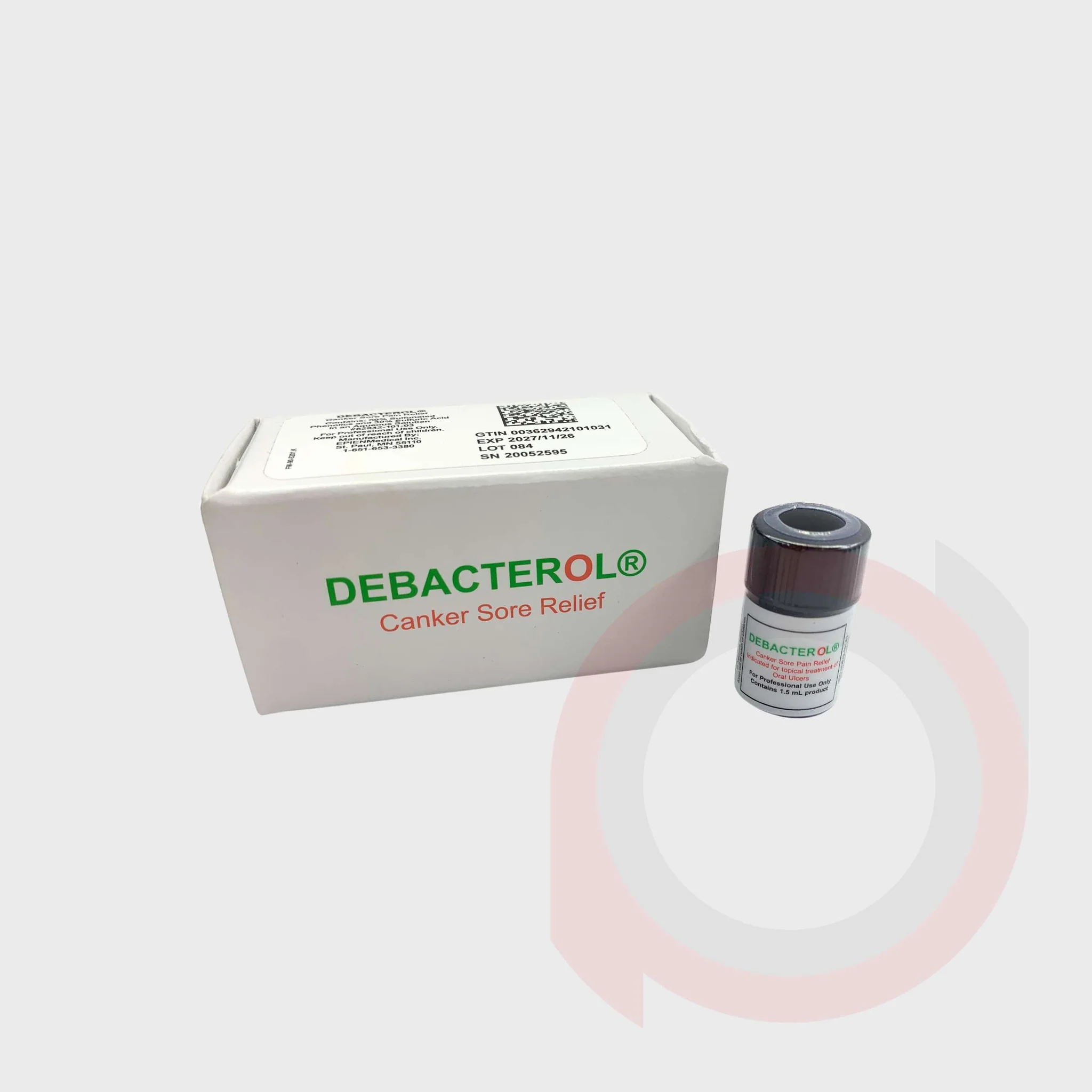
Debacterol is a topical liquid medication classified as a debriding and chemical cautery agent. It is composed of approximately 50% sulfonated phenolics and 30% sulfuric acid — two active ingredients that work together to break down damaged tissue at the site of an oral ulcer.
It is manufactured by Epien Medical Inc. and has been used in dental and oral medicine settings for years. The product comes in pre-filled applicator swabs designed for precise, controlled application onto small mucosal lesions inside the mouth.
The key distinction between this treatment and a standard over-the-counter canker sore product is what it actually does. Most consumer products — benzocaine gels, oral rinses, numbing patches — work by blocking pain receptors temporarily. Debacterol, on the other hand, removes the dead and damaged tissue from the ulcer bed. This is what debriding means in practice: clearing away the necrotic material that’s keeping the wound open and painful, so healthy tissue can take over and heal properly.
What’s Inside the Swab?
The two active components each play a specific role. Sulfonated phenolics are chemically modified phenol compounds. They have a long history of use in wound care because of their ability to denature proteins — essentially disrupting the structural integrity of damaged cells so they can be cleared away. Sulfuric acid contributes to the acidic environment that drives this denaturing process while also acting as a powerful astringent.
Together, these ingredients produce what’s known as a controlled chemical cautery effect. When the tip of the swab makes contact with an ulcer, it chemically “seals” the damaged area. In doing so, it also destroys the superficial nerve endings responsible for the constant throbbing and sensitivity that make canker sores so uncomfortable.
The liquid itself is dark brown and slightly viscous. Knowing that helps patients and practitioners recognize whether the swab has been properly activated before use.
It’s important to note what debacterol is not designed to treat. It is not effective on vesicular lesions — meaning cold sores and fever blisters caused by the herpes simplex virus are outside its scope. Using it on those would be both ineffective and potentially harmful.
The Science Behind Debacterol for Canker Sore Treatment
Understanding the Problem It Treats
Before understanding why debacterol works, it helps to understand what a canker sore actually is. The clinical term is recurrent aphthous stomatitis, commonly abbreviated as RAS. These are non-contagious ulcers that form on the soft tissue inside the mouth — the inner cheeks, gum line, tongue, and floor of the mouth.
They are remarkably common. Research suggests that aphthous stomatitis affects somewhere between 15% and 65% of various population groups in the United States, with an overall prevalence estimated at around 20%. That means roughly one in five people experiences them at some point. For some individuals, they’re a rare inconvenience. For others, they’re a recurring, painful reality that disrupts daily life on a near-monthly basis.
The exact cause is still debated among researchers, but known triggers include stress, minor oral trauma, certain foods, hormonal changes, nutritional deficiencies, and immune system irregularities. Despite how common they are, there is still no single curative treatment — which is part of why a fast-acting option like this gets attention in clinical settings.
How the Cautery Mechanism Works in Practice
When applied correctly, debacterol creates a localized chemical reaction confined to the ulcer site. The sulfonated phenolics penetrate the damaged tissue and denature the proteins within it. This process effectively destroys the compromised cells at the wound surface — including the exposed nerve endings that are responsible for pain signaling.
The result is twofold. First, the body no longer receives pain signals from those destroyed nerve endings, which is why patients typically feel relief almost immediately after rinsing. Second, the treated tissue begins to form a protective layer over the ulcer, acting like a chemical bandage that keeps saliva, food particles, and bacteria from irritating the raw wound underneath.
One nuance worth understanding: the application site must be completely dry before treatment. This is not optional. Saliva significantly dilutes the active ingredients and prevents proper tissue penetration. Because of this, debacterol tends to be more effective on sores located on the inner lips, cheeks, and gum line — areas that can be dried and isolated more easily. Sores under the tongue are trickier to treat effectively for this reason.
What the Clinical Evidence Shows
The evidence for this treatment, while not from large randomized trials, is consistently positive across smaller studies. One clinical trial compared its performance against Kenalog-in-Orabase (a corticosteroid paste commonly prescribed for canker sores) and a no-treatment control group. Patients treated with the sulfonated phenolics and sulfuric acid formulation reported significantly better symptom relief by day three.
By day six, roughly 60% of treated ulcers had completely resolved — compared to around 30% in the other groups. A separate small-scale study showed that 80% of canker sores treated with this method had fully healed by day six, and every participant was pain-free by day ten.
To put that in context: an untreated canker sore typically takes 10 to 14 days to heal on its own. Bringing that timeline down to three to five days with a single treatment is a meaningful clinical outcome.
Transparency matters here though. These are small studies. Larger, more rigorous trials have not yet been published. The existing evidence is promising, but patients and practitioners should weigh that context when making decisions.
Step-by-Step Guide to Using Debacterol Swabs
How Application Actually Works
In most cases, debacterol is applied by a dental professional — a dentist, dental hygienist, or oral surgeon. This is not because patients are incapable of using it, but because proper technique significantly affects both safety and effectiveness. A rushed or incorrect application can mean treating healthy tissue, spreading the solution beyond the ulcer, or not achieving the full cautery effect needed.
Here is exactly what a proper treatment looks like, step by step.
Step 1 — Dry the Area Thoroughly Before anything touches the sore, the ulcerated area must be completely dried using a cotton-tipped applicator. Even a thin film of saliva is enough to interfere with the chemistry. This step is the most important and most commonly skipped by those attempting self-treatment.
Step 2 — Activate the Swab Hold the debacterol applicator swab with the colored ring end facing up. Gently bend the colored ring tip sideways until it snaps and releases the liquid inside. At this point, the dark brown liquid saturates the applicator tip and the treatment is ready.
Step 3 — Apply Using a Rolling Motion Place the saturated tip directly onto the dried ulcer. Use a slow rolling motion to ensure complete coverage across the entire ulcer bed and around the ulcer rim. The contact time should be a minimum of five seconds and no longer than ten. Do not press hard or hold it stationary on one spot.
Step 4 — Rinse Immediately As soon as the application is complete, rinse the mouth thoroughly with water and spit. The burning or stinging sensation will decrease almost immediately once the rinse begins. This is the most reassuring part of the process for patients experiencing it for the first time.
Step 5 — One Treatment Is Typically Sufficient In most cases, a single application handles the pain completely. Retreatment is rarely needed and should not be done without guidance from a dental professional. Applying it more than once can damage surrounding healthy mucosal tissue.
The Stinging Sensation — Why It Happens and Why It’s Normal
First-time patients are often startled by the initial sting. That reaction is the chemical cautery process doing its job — the active ingredients making contact with nerve tissue. It’s sharp, brief, and fades the moment the rinse hits. Understanding that in advance makes the experience far less alarming.
If irritation persists after rinsing, a neutralizing rinse made from half a teaspoon of baking soda dissolved in about 120ml of water can help calm the reaction. This sodium bicarbonate solution works by neutralizing the acidic chemistry left behind in the mouth.
Benefits, Limitations, and Honest Comparisons
What Makes This Treatment Stand Out
The single biggest advantage is speed. Most topical corticosteroids and antiseptic rinses require multiple daily applications over several days before noticeable improvement occurs. Debacterol typically eliminates pain within minutes and accelerates complete healing to three to five days from the usual twelve to fourteen. That difference matters enormously for people who deal with frequent recurrences.
A few other benefits worth noting:
- Single-application convenience. One treatment handles the sore. There’s no prescription bottle to carry around or reminder to apply twice daily.
- No systemic absorption. The chemical reaction is localized to the application site. Unlike corticosteroids taken orally, there are no body-wide side effects to worry about.
- No known drug interactions. Because it works topically and is immediately rinsed out, it doesn’t interact with other medications a patient may be taking.
- Protective barrier formation. After treatment, a thin film forms over the sore that shields it from further irritation while healing progresses.
Where It Falls Short — Being Honest About Limitations
No treatment is without limitations, and patients deserve a complete picture.
Debacterol should never be used on cold sores, fever blisters, or eye tissue. It is also not recommended for use during pregnancy, and its safety has not been established in children under twelve years of age. Anyone with a known sulfa or sulfur allergy should inform their practitioner before treatment, as the formulation contains sulfur compounds and allergic reactions are possible.
The requirement for a completely dry application site creates a practical limitation under the tongue and in other areas where saliva pooling is difficult to prevent. In those cases, effectiveness may be reduced or another treatment option may be more appropriate.
There is also the matter of limited clinical data. The evidence available supports its effectiveness, but the studies are small. Practitioners who prefer evidence-based decision-making should weigh that honestly when presenting this as an option to patients.
Safety Profile and Precautions
What Every Patient Should Know Before Treatment
When used exactly as directed and under professional supervision, debacterol has a favorable safety profile. The most commonly reported side effect is temporary irritation and stinging at the application site — both of which resolve quickly with rinsing.
More serious precautions exist and should be communicated clearly. If the liquid is swallowed accidentally, vomiting should not be induced. Medical help or a Poison Control Center should be contacted immediately. This is a chemical solution, and accidental ingestion requires prompt attention even if the amount is small.
In the event of eye contact — which should never happen but is worth being prepared for — contact lenses must be removed immediately and the eyes irrigated with lukewarm water for at least fifteen minutes, followed by consultation with a physician.
Prolonged or repeated application to healthy mucosal tissue (tissue that is not ulcerated) should be strictly avoided. The denaturing effect that makes it effective on damaged tissue can also harm healthy tissue if the application spreads beyond the intended area or if treatment is repeated unnecessarily.
Is Debacterol OTC or Prescription? The Real Answer
Cutting Through the Confusion
This question comes up constantly, and the honest answer is nuanced. Debacterol is marketed as an OTC medical device rather than a prescription drug, which technically means no prescription is required for a patient to purchase it. It does not have an NDA or ANDA on file with the FDA, and it does not appear on the FDA Drug Shortage Database.
However, in practice, it is almost exclusively distributed through dental supply channels — many of which require a professional license number for purchase. Most patients encounter it through their dentist’s office rather than a retail pharmacy. Whether that makes it “prescription” or not is a technicality, but the functional reality for most people is that accessing it means going through a dental professional.
This is not necessarily a drawback. Given that correct application technique directly affects both effectiveness and safety, professional involvement is a reasonable standard. Misapplication by an untrained individual — using it on healthy tissue, failing to dry the area, or extending contact time — creates unnecessary risk.
Debacterol — Where to Buy It and What to Expect
Finding It in the Real World
Because it moves through professional dental supply chains rather than retail pharmacy shelves, buying debacterol requires a bit more effort than picking up a tube of numbing gel at the drugstore.
The most reliable way to access it is through a dentist or oral care provider who keeps it in stock. Many dental offices carry it specifically for patients with recurrent aphthous stomatitis. A quick call to your dentist asking whether they stock debacterol swabs is often the fastest path to treatment.
For those who want to purchase it independently, licensed dental suppliers carry it. Retailers in the dental distribution space — particularly those that supply professional offices — stock it with varying frequency. Online availability through platforms like Amazon does exist but fluctuates. Stock can appear and disappear without notice.
Retail pharmacy chains do not typically carry it on their shelves. Specialty compounding pharmacies may be able to source it in some regions, but this is not universal.
On the cost side, debacterol is only available as a brand-name product — no generic exists. Retail pricing averages around $80 to $85 for a pack of swabs, though dental office pricing may vary. There is currently no generic alternative and no therapeutic substitute with the exact same mechanism available over the counter.
When It’s Not Available — Alternatives Worth Knowing
If access to debacterol is not possible, a few clinical alternatives exist. Silver nitrate cauterization is an in-office procedure that works through a similar chemical mechanism and is available in many dental and ENT settings. Triamcinolone acetonide dental paste — sold under the brand name Kenalog-in-Orabase — is one of the most studied prescription alternatives and reduces inflammation effectively in many patients. Dexamethasone elixir is another prescription option for patients dealing with multiple simultaneous ulcers rather than a single isolated sore.
None of these replicate the single-application, immediate-relief model of debacterol, but they offer legitimate clinical paths when this specific treatment isn’t accessible.
Why Dental Professionals Rely on This Treatment
Its Role in Clinical Practice
Among dental hygienists, general dentists, and oral surgeons who treat patients with recurrent aphthous stomatitis regularly, debacterol has earned a strong reputation as a practical, fast-acting in-office tool. Its value is particularly clear in situations where a patient arrives in too much discomfort to tolerate a standard hygiene appointment. A two-minute treatment can shift the experience entirely, allowing the patient to proceed without pain.
For immunocompromised patients — including those managing conditions like HIV/AIDS or undergoing chemotherapy — canker sores can be especially severe and slow-healing. In these populations, a debridement-based treatment that accelerates healing without systemic drug exposure offers a meaningful advantage over alternatives.
It is also a cost-effective, low-waste option. Each swab is pre-filled and single-use, which eliminates the contamination concerns associated with multi-use topical preparations and keeps clinical workflow clean and efficient.
Conclusion: Is Debacterol Right for You?
Canker sores are one of those problems that seem minor from the outside but are genuinely disruptive when you’re living through them. If you’re someone who gets them occasionally, over-the-counter options may be enough. But if recurrent ulcers are a regular part of your life — showing up every few weeks, interfering with eating, speaking, or dental care — a better solution exists.
Debacterol is not just a stronger pain reliever. It changes the healing process itself. One application, properly placed on a dry ulcer, can eliminate pain within minutes and reduce a two-week ordeal to three to five days. That’s a meaningful difference for real people dealing with a real problem.
It’s not without limitations. Professional application matters. It isn’t for everyone — not for children under twelve, not during pregnancy, not for those with sulfur allergies. And the clinical evidence, while consistently positive, comes from smaller studies rather than sweeping trials.
But for the right patient, in the right clinical setting, it delivers results that no numbing gel on the pharmacy shelf can match.
The smartest next step is simple: bring it up at your next dental appointment. Ask whether your dentist stocks debacterol swabs and whether your situation is a good fit for treatment. One short conversation could save you days of pain.
FAQ 1: What is Debacterol and what is it used for?
Debacterol is a topical liquid debriding agent used to treat ulcerating lesions of the oral cavity, specifically recurrent aphthous stomatitis — commonly known as canker sores. It provides relief from the pain and discomfort of oral mucosal ulcers. DailyMed It is not a numbing gel or antiseptic; it works by chemically cauterizing damaged tissue so the ulcer can heal from the base up.
FAQ 2: How does Debacterol actually work on a canker sore?
Debacterol works by chemically cauterizing the surface of a canker sore, destroying the damaged tissue and exposed nerve endings to provide almost instant pain relief and promote faster healing. DailyMed The active ingredients — sulfonated phenolics and sulfuric acid — denature the proteins in the damaged cells, seal the wound like a chemical bandage, and block the nerve signals that transmit pain. This is why relief is almost immediate after rinsing — no more exposed nerves means no more pain.
FAQ 3: Is Debacterol a prescription drug or an OTC product?
Debacterol is available in the United States through a prescription from your dentist or doctor, and with that prescription you may be able to buy it from your dentist or from a pharmacy. Drugs.com However, it is technically classified as an OTC medical device rather than a prescription drug, meaning it does not have an FDA-approved NDA on file. In practice, most patients access it exclusively through dental professionals rather than retail pharmacy chains.
FAQ 4: How long does it take for Debacterol to work?
All stinging pain is eliminated with one 5–10 second treatment, and healing time is reduced from 12–16 days to just 3–6 days. Wikipedia Pain relief typically begins within seconds of rinsing. A small study showed that most people experienced noticeable pain relief three days after treatment. DailyMed In one clinical trial, 60% of treated ulcers had disappeared completely by day six.
FAQ 5: Does Debacterol hurt when applied?
Yes, briefly. A stinging sensation is experienced immediately upon application of Debacterol to the ulcer. The stinging sensation and ulcer pain will subside almost immediately after the water rinse. GoodRx The sting is a normal part of the cauterization process — it means the active ingredients are doing their job. If excess irritation occurs, a rinse with sodium bicarbonate solution will neutralize the reaction — use 0.5 teaspoon in 120ml of water.
FAQ 6: Can Debacterol be used on cold sores or fever blisters?
No. Debacterol should only be used for canker sores. It is not for cold sores or fever blisters, which are painful, fluid-filled sores or crusting around the lips. GoodRx Cold sores are caused by the herpes simplex virus, which requires antiviral treatment — not chemical cautery. Using Debacterol on a viral lesion would be both ineffective and potentially harmful to the surrounding healthy tissue.
FAQ 7: How many times can Debacterol be applied to the same sore?
One application per ulcer treatment is usually sufficient. However, if the ulcer pain returns shortly after rinsing with water, it is an indication that some part of the ulcer was not covered — repeat application one more time following the directions. It is not recommended that more than one treatment session be performed on an individual mucosal ulcer. GoodRx Applying it more than once without professional guidance risks damaging healthy mucosal tissue surrounding the ulcer.
FAQ 8: Can Debacterol be used on multiple canker sores at the same time?
Yes, Debacterol can be used on multiple ulcers at once — however, a separate applicator must be used for each mouth ulcer. Drugs.com Each debacterol swab is a single-use device that comes pre-filled with a precise amount of the active solution. Sharing one swab across multiple sores risks cross-contamination, dilution of the solution, and inadequate coverage of each individual ulcer.
FAQ 9: Who should NOT use Debacterol?
Debacterol is suitable for adults and children aged 12 and over. It should not be used if you have a sulfur allergy. This product is not recommended during pregnancy. Drugs.com It is also not appropriate for use on cold sores, fever blisters, or lesions outside the oral cavity. Safety and effectiveness in pregnant women and children under the age of 12 has not been established.
FAQ 10: What are the side effects of Debacterol?
Some side effects include irritation and stinging at the application site. GoodRx These are expected and temporary. More serious concerns arise from misuse: Debacterol may be harmful if swallowed — if ingested, do not induce vomiting and immediately get medical help or contact a Poison Control Center. If eye exposure occurs, immediately remove any contact lenses and irrigate eyes for at least 15 minutes with lukewarm water and contact a physician.
FAQ 11: Is Debacterol safe for children?
Children aged 12 years and older may use Debacterol following adult dosing guidelines. Debacterol For children under 12, safety and effectiveness have not been established by clinical studies, and use in this age group is not recommended. The product packaging must also be kept out of reach of children, as the sulfuric acid component makes accidental ingestion a serious concern regardless of age.
FAQ 12: What is the difference between Debacterol and Orajel for canker sores?
Orajel is a topical anesthetic that numbs the pain temporarily — it does not treat the ulcer itself, and once the numbing wears off (usually within an hour), the pain returns. Debacterol, by contrast, cauterizes the ulcer and provides lasting relief from a single application. DailyMed Orajel manages symptoms. Debacterol physically changes the ulcer. That distinction is the reason dental professionals generally prefer Debacterol for patients who want results rather than temporary relief.
FAQ 13: How does Debacterol compare to Kenalog-in-Orabase?
Kenalog-in-Orabase is a prescription corticosteroid paste that reduces inflammation and promotes healing over several days. It works gradually rather than providing instant relief. Debacterol offers immediate pain elimination but does not have anti-inflammatory properties. DailyMed In a clinical trial comparing the two, patients treated with Debacterol reported significantly better relief of symptoms three days after treatment, and 60% of ulcers had disappeared by day six compared to about 30% in the Kenalog group.
FAQ 14: Does Debacterol leave a scar?
Debacterol does not damage healthy mucosal tissue and leaves no scarring Wikipedia when used correctly and confined to the ulcerated area. The chemical cautery targets only the damaged, necrotic tissue of the ulcer bed. However, prolonged contact with normal oral mucosa or repeated misapplication can cause tissue damage, which is why precision technique and professional application are so important.
FAQ 15: Why does the canker sore need to be dry before applying Debacterol?
The active ingredients — sulfonated phenolics and sulfuric acid — are significantly diluted by saliva. If the sore is wet, the solution cannot penetrate the tissue at full concentration, and the cautery effect is weakened or incomplete. Since the sore must be dry prior to application, Debacterol is difficult to apply properly under the tongue Debacterol where saliva constantly pools. Drying the sore thoroughly with a cotton-tipped applicator immediately before treatment is the single most critical preparation step.
FAQ 16: Can Debacterol be used at home, or does it require a dentist?
Debacterol is typically applied by a healthcare professional such as a dentist at a dental office, clinic, or hospital. This medication needs to be given by a trained professional with the proper tools and technique to ensure it is used safely and to lower the risk of side effects. Debacterol While the product is accessible for home use in some supply channels, self-application without proper technique risks applying the solution to healthy tissue, causing unnecessary damage.
FAQ 17: What should I do immediately after Debacterol is applied?
Thoroughly rinse out the mouth with water and spit out the rinse water immediately after application. The stinging sensation and ulcer pain will subside almost immediately after the water rinse. GoodRx Do not swallow the rinse water. Avoid eating or drinking for a short period after treatment to allow the protective barrier to stabilize over the ulcer. If irritation persists, a baking soda and water rinse can help neutralize any residual acidity.
FAQ 18: How is the Debacterol swab activated?
Hold the Debacterol applicator swab with the colored ring end up. Bend the colored ring tip gently to the side until it snaps to release the liquid inside. The liquid then flows down into the white cotton tip applicator. GoodRx Once activated, the dark brown liquid saturates the tip and the swab is ready for immediate application. The swab must be used straight away — do not activate it in advance or set it down once the seal is broken.
FAQ 19: Has the FDA approved Debacterol?
Sulfonated phenolics/sulfuric acid is not listed in the Physician’s Desk Reference and has not been approved by the Food and Drug Administration for any indication. Debacterol It is marketed as an OTC medical device rather than a drug product, which means it bypasses the NDA/ANDA approval pathway. The product labeling itself includes a disclaimer noting that the drug has not been found by the FDA to be safe and effective, and the labeling has not been approved by the FDA. Safco Dental This does not mean the product is unsafe — it reflects its regulatory classification as a device, not a drug.
FAQ 20: Where can I buy Debacterol?
Debacterol is available in the United States through a prescription from your dentist or doctor, and with that prescription you may be able to buy it from your dentist or from a pharmacy. Drugs.com Licensed dental supply distributors such as Safco Dental and Pearson Dental also carry it. Online availability through platforms like Amazon exists but fluctuates. It is not stocked at major retail pharmacy chains, and no generic version is available. Retail pricing averages approximately $67 to $85 depending on the source and pack size.
FAQ 21: Can Debacterol be used for conditions other than canker sores?
Debacterol is a liquid, topical debriding agent used for the treatment of minor abrasions of the oral mucosa, as well as ulcerating oral mucosal lesions — often referred to as canker sores, aphthous ulcers, or oral ulcers. Debacterol In clinical settings, it is also used to debride damaged tissue during certain dental procedures where controlled removal of necrotic oral tissue is needed. It should not be used on any lesion outside the oral cavity or on any non-ulcerating tissue.
FAQ 22: Does Debacterol interact with other medications?
There are currently no documented drug interactions for Debacterol in the clinical literature, and the manufacturer’s labeling lists no contraindications. However, it is essential to inform your healthcare provider about all medications you are taking, including prescription drugs, over-the-counter medications, vitamins, and herbal supplements, as Debacterol may interact with certain medications. Medfinder Patients with sulfur allergies must disclose this before treatment, as allergic reactions are possible.
FAQ 23: How should Debacterol be stored?
Debacterol should be stored at room temperature, between 15°C and 30°C (or 59°F to 86°F). DailyMed It should be kept away from direct sunlight, heat sources, and moisture. Always store Debacterol in a cool, dry place away from direct sunlight and keep it out of reach of children. Drugs.com Each swab contains 0.2ml of the solution and is designed for single use — opened swabs should never be resealed and stored for future use.
FAQ 24: Is Debacterol effective for immunocompromised patients with severe canker sores?
Frequent recurrent aphthous stomatitis-like lesions are a well-known complication of AIDS. Oncology patients receiving cytotoxic therapy are also known to develop severe, intractable stomatitis as a side effect of their treatment. Safco Dental In these high-risk populations, Debacterol is particularly valuable because it provides fast, single-application pain relief without systemic drug exposure. When debridement of damaged or necrotic tissues is necessary during dental procedures, the chemical and physical properties of Debacterol may help to alleviate patients’ pain and accelerate the healing process. Debacterol Practitioners in oncology and HIV oral care settings have used it to help patients maintain adequate oral function during treatment.