There is a good chance you have reached into a bag, a drawer, or even an old coat pocket and pulled out a single, slightly bent bobby pin. It is one of those objects that feels completely unremarkable — until you desperately need it. Then suddenly, it becomes the most important thing in the room.
Bobby pins have been a quiet fixture in daily life for well over a century. And yet most people know very little about them beyond the basics. Where did they actually come from? Is there a right and wrong way to use them? Are there different types? And yes — can you genuinely pick a lock with one, like in the movies?
This article answers all of that. Whether you style hair professionally or just reach for one to pin back a stubborn strand before a meeting, there is far more to these little clips than most people realize. Let us start at the very beginning.
The Surprising History of Bobby Pins
Where Did the Name Come From?
The name has nothing to do with a person called Bobby. It comes directly from the “bob” hairstyle — a short, blunt cut that swept through Western fashion in the early 1920s. As millions of women cut their hair short for the first time in modern history, they needed a way to keep it in place. A simple, slim metal clip did the job perfectly. The tool took its name from the hairstyle it was designed to support.
The Inventor Behind the Design
The credit for the modern bobby pin design is widely given to Luis Marcus, a San Francisco-based cosmetics manufacturer. Around 1916, Marcus filed an early patent for a hair-gripping slide that used two thin wires crimped together on one side. His design was simple, affordable, and remarkably effective. It caught on almost immediately and has barely changed in its core structure since.
What is interesting is that the design was never considered groundbreaking at the time. Marcus himself did not expect it to become a household staple. Yet here we are, over a hundred years later, still using essentially the same two-wire mechanism he patented.
From Wartime Shortage to Cultural Staple
During World War II, metal rationing across the United States meant bobby pins became scarce. Demand for them did not disappear, though — it went in the opposite direction. Women improvised, shared, and reused their pins obsessively. When production resumed after the war, bobby pins became one of the fastest-restocked household items in American stores. Their scarcity during wartime had only reinforced how genuinely useful they were.
Today, it is estimated that over 100 million bobby pins are lost in the United States every year. That number sounds absurd — until you check the floor of your bathroom.
Types of Bobby Pins: Not All Are Created Equal
Walk into any beauty supply store and you will quickly realize that not all bobby pins are the same. They come in different sizes, materials, finishes, and designs — and the differences genuinely matter depending on your hair type and intended use.
Standard vs. Spin Pins
The standard flat-wire bobby pin is what most people picture. It has a straight side and a crimped, wavy side, and it works by sliding into the hair and gripping against the scalp. Spin pins, on the other hand, look like large metallic corkscrews. You twist them into a bun or updo rather than sliding them in. They provide exceptional hold for thicker, heavier hair that standard pins simply cannot secure.
Decorative Hair Pin Bobby Styles
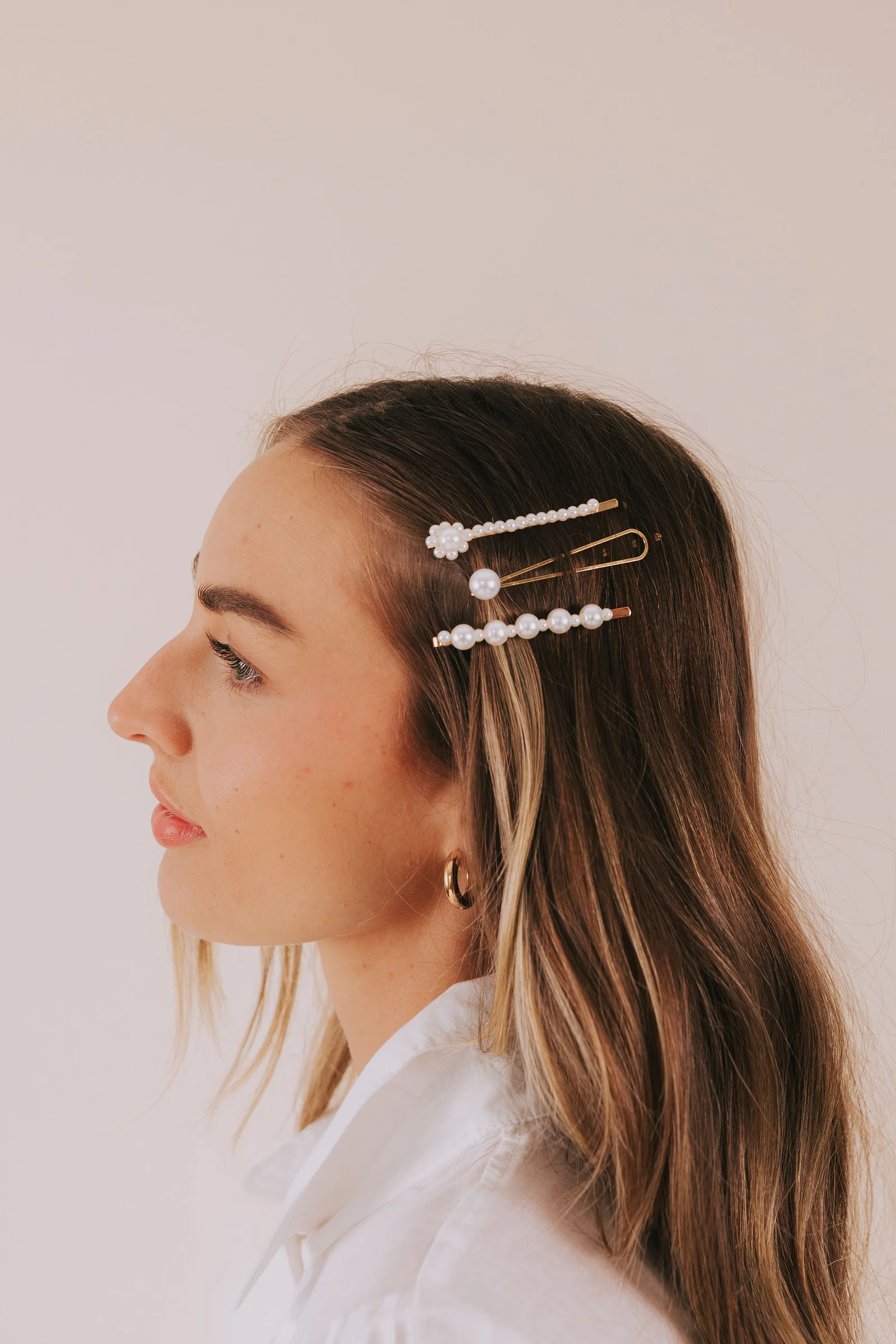
In recent years, the decorative hair pin bobby has become a fashion statement in its own right. Think minimalist gold bars, jeweled slides, pearl-tipped pins, and matte black clips designed to be seen rather than hidden. These are not meant to disappear into your hair — they are meant to sit on top of it as an accessory. Major runway collections have featured them prominently since around 2018, and the trend shows no sign of going away.
Size and Material Differences
Size is another factor most people overlook. Mini pins work best for fine or baby hair, where a full-sized pin would overwhelm the strand and still slip out. Jumbo pins are better suited for thick hair or heavy updos. In terms of materials, the standard metal pin is usually made from steel and coated in a black or blonde lacquer. Over time, this coating chips and peels — which can actually snag hair strands and cause breakage. Plastic-coated options tend to be gentler on hair, though they offer slightly less grip than bare metal.
How to Actually Use Bobby Pins the Right Way
Here is something most people get wrong their entire lives: they put bobby pins in upside down. It seems like a small thing, but it explains a lot of frustration.
The Wavy Side Goes Down — Yes, Really
The wavy, crimped side of a bobby pin is designed to press against the scalp. The flat, smooth side faces upward, toward the outside of the hair. When you flip it — which most people instinctively do because it feels easier to slide in — you lose most of the grip. The crimped side exists specifically to create friction against the scalp and anchor the hair in place. Correct orientation makes a noticeable difference in how long your style holds.
Grip Tricks for Fine or Slippery Hair
If you have fine or straight hair that refuses to cooperate, there are a few things that help. First, a light spritz of dry shampoo or texturizing spray before you pin gives the hair more grip. Second, a small amount of teasing at the pinning point creates a rough surface for the pin to bite into. Third, the cross-lock method — placing two pins in an X shape over the same section — dramatically increases hold without requiring more pins overall.
Classic Styles That Rely on Them
Some of the most elegant hairstyles in existence are built entirely on a foundation of well-placed bobby pins. The French twist requires a vertical row of them down the center back. A chignon relies on a ring of pins around the base of the bun to keep everything smooth. Even a simple half-up knot holds better with two crossed pins underneath the elastic rather than none at all. Understanding how pins work makes all of these styles more achievable at home.
How Many Do You Actually Need?
The common instinct is to use as many as possible and hope for the best. In practice, more pins often create a messier, less secure result. Too many pins can cause sections to shift against each other and the style to lose its shape faster. A thoughtful placement of four to six pins, each correctly positioned, will outperform a hasty application of twenty. Use fewer and use them right.
Beyond Hair: 10 Clever Everyday Uses for Bobby Pins
Once you start looking at bobby pins as small, flexible metal tools rather than purely hair accessories, a surprising number of uses open up. Here are some of the most practical ones:
• Cable organizer: Clip a pin around a desk cable to stop it slipping behind the desk.
• Zipper pull replacement: Thread a pin through a broken zipper tab and you have an instant, functional replacement.
• Chip clip substitute: Fold a pin over the top of an open snack bag to seal it.
• Bookmark: A flat pin sits flush inside a book and does not damage pages the way folded corners do.
• DIY phone stand: Bend one open and prop it behind a phone for a surprisingly stable reading angle.
• Earring back substitute: Bend the tip into a small loop when you have lost the original backing.
• Sewing seam holder: Pin two pieces of fabric together before sewing when you are out of sewing pins.
• Nail art tool: The flat end creates clean, fine lines in wet nail polish for simple designs.
• Key ring organizer: Loop a pin through keys you want to separate from the main ring temporarily.
• SIM card tray ejector: In a pinch, the tip of an open pin fits into the tray release hole on most smartphones.
The list is longer than most people expect. These small tools have been improvised into solutions for decades precisely because they are so physically versatile.
Can You Pick a Lock with a Bobby Pin? Here Is the Truth
This is, without any doubt, the most searched question involving a bobby pin on the entire internet. Movies and television have spent decades making it look effortless — a spy or detective pops one from their hair, bends it at an angle, jiggles it in a lock for five seconds, and walks through the door. The reality is considerably more complicated.
Why People Ask
Most people who search “how to pick a lock with a bobby pin” are not aspiring criminals. They are locked out of a suitcase, a bathroom door, a filing cabinet, or their own bedroom. It is an entirely understandable search. The context matters, and it is worth addressing the question honestly and practically rather than ignoring it.
How It Works in Theory
Standard pin tumbler locks — which are the most common type found in residential homes — work by stacking spring-loaded pins inside a cylinder. When the correct key is inserted, it pushes each pin to a precise height, aligning all of them with a shear line and allowing the cylinder to rotate. Picking a lock manually means mimicking that process using two tools: a tension wrench to apply slight rotational pressure to the cylinder, and a pick to individually manipulate each pin upward until it sets. A bobby pin, bent at a right angle, can function as a rudimentary tension wrench. A second pin, bent into a slight curve, can serve as the pick. In theory, it works.
Why It Rarely Works Like in the Movies
In practice, successfully picking a lock with a bobby pin requires genuine skill, patience, and a feel for the lock that only comes with significant practice. Modern locks are designed with security pins that reset the moment pressure is lost. Metal bobby pins are also not ideal picking tools — they flex unpredictably and often slip. A trained locksmith using proper tools still takes time with a good-quality lock. The idea that someone can do it in ten seconds with no experience is almost entirely fictional.
When to Call a Locksmith Instead
If you are locked out of your home, a locksmith is almost always the faster and less damaging option. Attempting to pick a quality deadbolt without experience risks damaging the lock cylinder, which can make the locksmith’s job harder and more expensive. For a luggage lock, a suitcase zipper, or an old interior door lock, improvised picking is more realistic. For anything protecting your home, call a professional. It is not worth the risk to the lock — or to your door frame.
It is also worth noting clearly: lock picking should only ever be attempted on locks you own or have explicit permission to open. This information is provided purely for educational and emergency awareness purposes.
Caring for Your Bobby Pins So They Actually Last
Most people treat bobby pins as completely disposable. Buy a pack, lose half in a week, throw out the bent ones, repeat. With a little more care, a good set of pins can last much longer and perform better throughout their life.
Why They Rust and Bend
The two biggest enemies of bobby pins are moisture and product buildup. Showering with pins in your hair, storing them in a damp bathroom, or leaving hairspray and dry shampoo residue on them for weeks causes the metal to corrode far faster than it should. Bending happens when pins are forced into hair that is too thick for their size, or when they are pried open wider than the metal is designed to flex. Once a pin has been bent beyond its natural range, it never grips as securely again.
Smart Storage Ideas
The classic approach — leaving them scattered across a bathroom counter — is how most of them disappear. A few storage solutions that actually work include magnetic strips mounted inside a cabinet door, small mint tins, pill organizers, and old prescription bottles with wide mouths. The goal is a container that keeps them grouped, protects them from moisture, and is small enough that you always know exactly where it is.
When to Throw Them Out
A bobby pin that has lost its coating has rough metal edges that can snag and break individual hair strands. Bent pins lose their tension and slide out without gripping. Rusty pins leave marks on light-colored hair. When any of these signs appear, discard the pin. They are inexpensive enough that holding onto worn-out ones is never worth the damage they cause.
Bobby Pins in Pop Culture and Fashion
For most of the twentieth century, the goal with bobby pins was invisibility. They were color-matched to hair, tucked out of sight, and considered a practical tool rather than a fashion accessory. That perception began to shift noticeably in the late 2010s.
Fashion weeks in Paris, Milan, and New York began featuring models with visible pins arranged in deliberate patterns — geometric shapes across the temple, scattered arrangements across a slicked-back style, or a single oversized jeweled pin placed front and center. The message was clear: the pin was no longer something to hide.
Social media amplified this shift quickly. Tutorials showing decorative bobby pin placement gathered millions of views, and major beauty brands responded by expanding their lines of decorative accessories significantly. The humble bobby pins that Hollywood glamour icons like Audrey Hepburn and Grace Kelly used to hide under their elaborate updos are now being worn openly as the focal point of simpler styles. It is a complete reversal in less than a decade.
Final Thoughts
Bobby pins are one of the most deceptively simple objects in existence. They are small enough to lose without noticing and cheap enough to replace without thinking — and yet they have been shaping hair, fashion, and everyday problem-solving for over a hundred years.
Using them correctly makes a genuine difference. Choosing the right type for your hair saves time and frustration. Storing them properly means they are actually there when you need them. And understanding their honest limitations — like their role in the enduring lock-picking myth — helps separate movie logic from real-world practicality. Whether you reach for one every morning or only think about bobby pins when one rolls out from under your bathroom vanity, there is a quiet brilliance to their design. Marcus got it right in 1916, and over a century of daily use has yet to improve significantly on his original idea. That is worth appreciating the next time you slide one into place.
Q1. What exactly are bobby pins and what are they used for?
Bobby pins are small, double-pronged metal hair accessories with one flat side and one wavy, crimped side. They are primarily used to grip and hold sections of hair close to the scalp, securing hairstyles like updos, buns, French twists, and chignons. They can also tame flyaways and pin back bangs. Beyond hair, they are widely repurposed for cable organization, bookmarks, zipper pull replacements, and smartphone SIM tray ejectors.
Q2. Why are they called bobby pins and not something else?
The name comes directly from the “bob” hairstyle — the short, blunt haircut that became enormously popular among women in the 1920s. Inventor Luis Marcus originally called them “bobbing pins,” which was later shortened to “bobby pins.” He chose to link them to the trend they were designed for rather than name them after himself. The word “bob” itself dates back centuries, originally referring to cropped horse tails before being applied to short human hair.
Q3. What is the difference between a bobby pin and a hairpin?
Bobby pins have two prongs pressed closely together — one flat, one wavy — and are designed to grip hair tightly close to the scalp by sliding in sideways. Hairpins have a U-shaped, more open design and are used to hold larger sections of hair in buns or updos by twisting into the style. Bobby pins are for precise, tight gripping; hairpins are for larger-scale structural support in a hairstyle.
Q4. What are bobby pins called in the UK?
In the United Kingdom, bobby pins are most commonly called “kirby grips” or “kirbigrips” — named after the Birmingham-based manufacturer Kirby, Beard & Co. Ltd., which produced similar hairpins from 1853. They are also referred to as “hair grips.” The term “bobby pin” is American English that is understood in the UK but not the standard term used in everyday British conversation.
Q5. Who invented the bobby pin and when?
The bobby pin is most widely credited to Luis Marcus, a San Francisco-based cosmetics manufacturer who invented it after World War I in the early 1920s. He originally hand-sold two pins for 35 cents. Other inventors also contributed to the design and manufacturing process around the same period. Marcus chose to name the invention after the popular “bob” hairstyle rather than after himself. The design has remained virtually unchanged for over 100 years.
Q6. Were bobby pins used during World War II?
Yes — and their wartime story is significant. Metal rationing during World War II caused bobby pins to become scarce across the United States. Despite the shortage, demand did not fall — it rose, as women improvised and shared their pins. When metal became available again after the war, bobby pins were among the first household items to be rapidly restocked. Their scarcity during those years paradoxically reinforced just how essential they had become to everyday life.
Q7. Why did bobby pins become so popular in the 1920s?
Bobby pins rose to popularity because they solved a specific problem created by a major cultural shift. When the “bob” hairstyle swept through 1920s fashion — symbolizing women’s independence and modernity — millions of women suddenly had short hair that needed different tools to style. The traditional long hairpin was designed for swept-up updos with long hair. Bobby pins were compact, discreet, and perfectly suited to securing short, bobbed hair, making them an instant necessity.
Q8. Which side of the bobby pin faces down — the wavy side or the flat side?
The wavy, crimped side should always face downward toward the scalp. This is the most common mistake people make — inserting the pin with the flat side down feels more natural, but it loses almost all gripping power. The wavy side is specifically designed to create friction against the scalp and anchor the hair firmly in place. The flat, smooth side faces outward, away from the head. Simply flipping the pin to its correct orientation dramatically improves how long any hairstyle holds.
Q9. How do you keep bobby pins from slipping out of fine or silky hair?
Apply a light-hold product like dry shampoo or texturizing spray before pinning — this creates a rougher surface for the pin to grip. Lightly tease the pinning section for added texture. Use matte-finish pins rather than shiny ones, as matte surfaces grip better. Insert the pin in its natural closed position without forcing it open. Finally, the cross-lock method — placing two pins in an X shape — dramatically increases hold at any single point in the hair.
Q10. Should you open a bobby pin wide before inserting it into hair?
No — and this is one of the most damaging habits people develop. A bobby pin is designed to hold precisely as much hair as it grips in its natural, closed state. Prying it open wide to force in more hair overstretches the metal prongs, permanently reducing the pin’s tension and grip. Once stretched, a pin rarely snaps back to its original shape. Overstuffed pins also tend to pop out faster than correctly loaded ones, defeating the purpose entirely.
Q11. How many bobby pins are actually needed to hold a hairstyle in place?
Far fewer than most people think. For most everyday styles, four to eight correctly placed pins outperform twenty randomly inserted ones. The key factors are correct orientation with the wavy side down, correct loading without overstuffing, and strategic placement at points where the hairstyle naturally wants to collapse. Using too many pins causes sections to compete against each other, creating an uneven hold that falls apart faster. Precision beats quantity every time.
Q12. Is it safe to use bobby pins in wet hair?
It is not recommended. Wet hair is in a weakened, more elastic state and significantly more vulnerable to breakage when gripped by metal pins. Inserting pins into wet hair causes visible dents and indentations in the hair shaft as it dries, which can persist after the pins are removed. Moisture trapped by the pins also accelerates rusting of the metal, shortening the pin’s lifespan. Always wait until hair is completely dry before using any metal hair accessory.
Q13. Do bobby pins cause hair breakage and damage?
They can, but whether they do depends almost entirely on how they are used. The main risk factors are using pins with chipped or missing coating (bare metal edges snag hair strands), wearing pins in the same spot every day (cumulative friction breakage), inserting them too forcefully, and removing them by yanking rather than sliding out in the direction they were inserted. When used correctly with quality pins that have intact tips and rotated across different positions, breakage risk is minimal.
Q14. Is it bad to sleep with bobby pins in your hair?
Yes — sleeping with metal pins in is generally a bad idea. As you move during sleep, the pins create repeated friction and pressure against both hair strands and the scalp, causing breakage and scalp irritation over time. Pins can work loose overnight and become tangled in hair in a way that causes damage when removed in the morning. Softer alternatives like silk scrunchies or satin-wrapped elastics are far better choices for overnight use.
Q15. Can overheating bobby pins with a hair dryer damage hair?
Yes. Metal is an excellent heat conductor, meaning bobby pins heat up quickly when exposed to a hair dryer. When a heated pin sits against the scalp or hair shaft, it can cause burns to the scalp and damage the hair’s protein structure. Metal also retains heat after the dryer is switched off — so the damage can continue briefly. If drying styled hair with pins in place, move the dryer constantly and avoid concentrating heat on any pinned area for more than a few seconds.
Q16. What types of bobby pins work best for thick or curly hair?
For thick, heavy, or curly hair, jumbo-sized bobby pins (typically 2.5 inches or longer) provide considerably more grip than standard-length ones. Spin pins — corkscrew-shaped pins that are twisted rather than slid into the hair — are particularly effective for securing thick buns and updos that standard pins would slide out of. For very coarse or high-volume hair, using multiple standard pins in the cross-lock X pattern around a bun or updo is also more reliable than relying on a single pin.
Q17. Why do the rubber tips fall off bobby pins so quickly?
The rubber or plastic tips on most budget bobby pins are applied as a dip coating rather than bonded structurally to the metal. Daily use, exposure to hair products, and the flexing of the pin during insertion and removal gradually loosen the adhesion between the tip and the metal prong. Once the tips fall off, the bare metal ends can scratch the scalp and snag hair fibers. Higher-quality brands apply more durable tip coatings, which is the main reason professional-grade pins last significantly longer than drugstore varieties.
Q18. What is the best way to store bobby pins so you stop losing them?
The most effective storage solutions are small, dedicated containers kept in a consistent location. Magnetic strips mounted inside a bathroom cabinet door keep pins accessible and visible. Small metal tins with lids, pill organizers, and wide-mouth prescription bottles all work well. The key principles: keep them in one dedicated place only, protect them from bathroom moisture to prevent rusting, and use a container small enough that you always know exactly where it is. Scattering pins across multiple surfaces is the primary reason so many disappear within days of purchase.
Q19. How do you clean bobby pins and how often should you replace them?
Bobby pins accumulate hairspray, dry shampoo residue, scalp oil, and dirt over time, which reduces their grip. Cleaning them with mild soap and warm water, then drying thoroughly before storing, keeps them performing well. Replace any pin that shows significant coating loss, visible rust, structural bending that does not spring back, or missing tips. Given how inexpensive they are, holding onto damaged pins is never worth the hair breakage or scalp scratching they cause.
Q20. Can you actually pick a lock with a bobby pin — or is that just a movie myth?
Technically yes, but only under specific conditions. Pin tumbler locks — the most common residential type — can theoretically be picked using two bent bobby pins: one bent at a right angle to act as a tension wrench, and one with a slight curve to manipulate the internal pins upward. In practice, it requires genuine skill, developed through significant practice. Modern security locks are designed with features that make amateur picking extremely difficult. The effortless five-second movie version is almost entirely fictional.
Q21. How do you pick a lock with a bobby pin step by step?
For educational purposes only, on locks you own: bend the first pin at a 90-degree angle — this is your tension wrench. Bend the tip of the second pin into a slight upward curve — this is your pick. Insert the tension wrench into the bottom of the keyhole and apply very light rotational pressure in the direction the key turns. Insert the pick above it and gently push upward on each internal pin until it sets (a slight give). Repeat for each pin until the cylinder rotates. Note: this works poorly on high-security locks and requires considerable practice.
Q22. What types of locks cannot be picked with a bobby pin?
Several lock types are effectively immune to basic bobby pin picking. High-security pin tumbler locks with “security pins” — spool and serrated pins that actively resist picking — are extremely difficult even for experienced pickers with proper tools. Disc detainer locks, tubular locks, and deadbolts with hardened anti-pick features are also not practically pickable with improvised tools. Additionally, some keyholes are too narrow for even a single bent bobby pin to fit inside. For any lock protecting your home, always call a licensed locksmith.
Q23. Are visible bobby pins still trendy in 2025 and 2026?
Yes. The shift from hiding bobby pins to displaying them deliberately has continued well beyond its 2018–2019 runway debut. Visible pins arranged in geometric patterns, scattered clusters, or as single statement accessories remain a fixture in editorial and street style photography. The trend has expanded to include oversized jeweled pins, minimalist gold bar designs, and pearl-tipped accessories worn prominently on slicked-back or pulled-back styles. The shift from concealment tool to intentional accessory has proven durable rather than fleeting.
Q24. How many bobby pins are lost every year in the United States?
Estimates suggest that over 100 million bobby pins are lost annually in the United States alone. The figure reflects a well-documented pattern: the pins are small enough to slip unnoticed from hair, bags, bathroom counters, and car seats, and inexpensive enough that most people replace rather than search for them. This constant cycle of purchase and loss has made them one of the highest-volume, lowest-cost hair accessories in the world. Sta-Rite, the only remaining U.S.-based manufacturer, has been producing them for over 100 years from its plant in Shelbyville, Illinois.