
Picture this. You’ve decided to get back into shape. You want something more exciting than staring at a wall while you run on a treadmill. You grab your phone, type in “basketball gyms near me,” and suddenly you’ve got a dozen options you’ve never heard of. Some look great. Some look like they haven’t been updated since 2009. You’re not sure which one is worth your money, your time, or your commute.
That’s exactly the situation this guide was written for.
Finding the right basketball gym isn’t complicated once you know what to look for. Whether you’re a casual player who wants a place to shoot around a few times a week, someone who wants to join a competitive league, or an athlete who treats the court like a second home — this article walks you through everything. We’re talking about what makes a gym worth joining, how to locate open courts near you, what to expect when you walk through the door, and how to make every single session count.
Why Playing at a Basketball Gym Beats Almost Every Other Workout
Let’s start with the obvious question: why an indoor court specifically, when there are dozens of ways to stay fit?
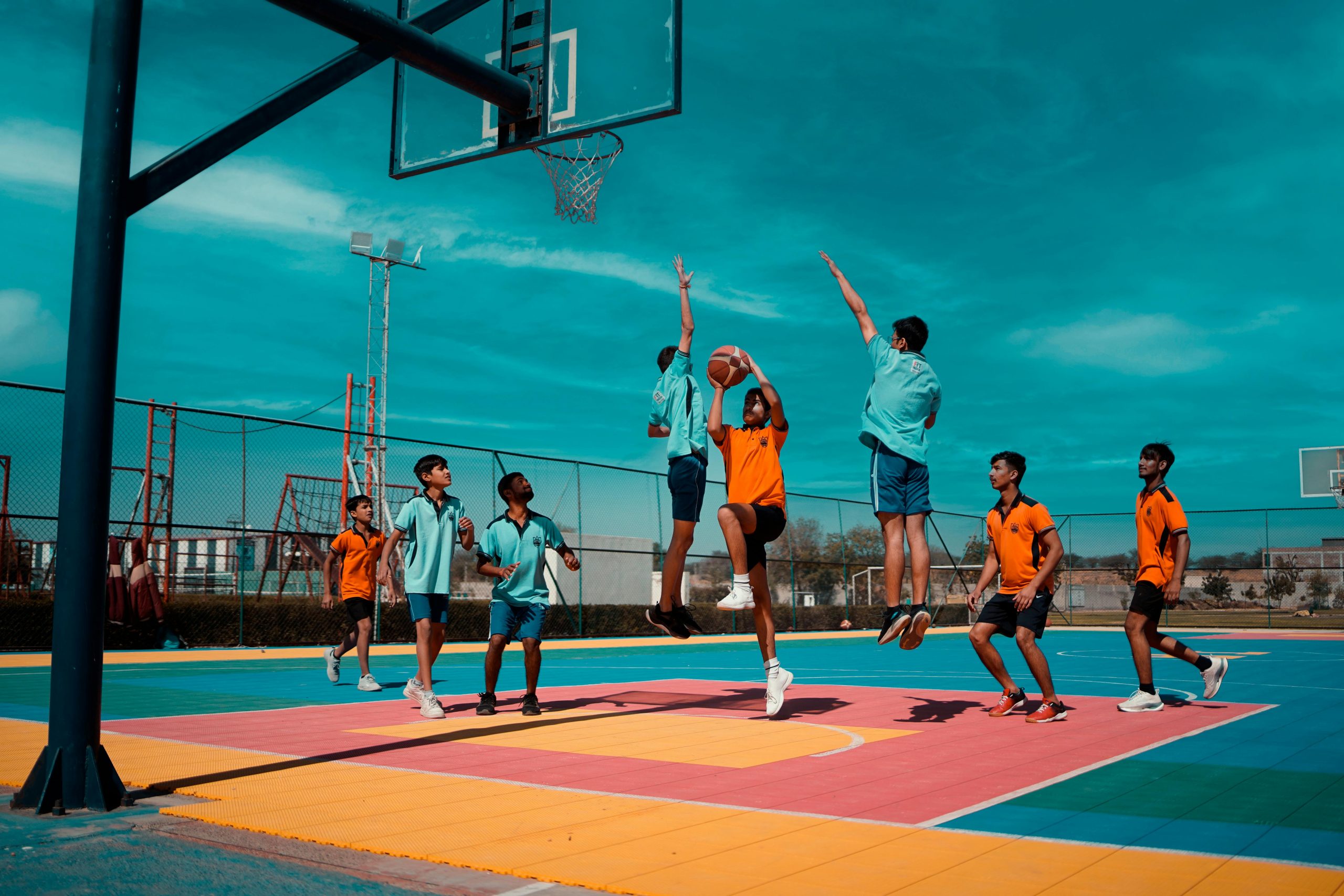
The answer is simple. Basketball gives you a full-body workout that doesn’t feel like a workout. Most people who struggle with consistency at the gym fail because the gym feels like a chore. Lifting weights is isolating. Cardio machines are monotonous. But stepping onto a basketball court is different. It’s competitive. It’s social. It’s engaging in a way that makes you forget you’ve been running up and down a hardwood floor for the past ninety minutes.
From a pure fitness standpoint, the benefits are hard to match. A single session on the court combines cardiovascular training, agility work, explosive power, and coordination all in one. You’re sprinting, stopping, cutting, jumping, and reacting — often without even realizing how hard you’re working. A typical pickup game burns anywhere from 500 to 800 calories per hour depending on how intense the game gets. That’s difficult to replicate on a stationary bike.
There’s also the mental side to consider. Playing basketball in a gym environment builds focus and sharpens decision-making under pressure. You have to read the play, communicate with teammates, and adjust in real time. Over time, this kind of engagement creates mental sharpness that carries over into everyday life. Research consistently shows that team sports, even casual recreational versions, are linked to lower rates of anxiety and depression compared to solo exercise.
Then there’s the social component. Walk into any busy indoor court on a Tuesday evening and you’ll find something rare in the modern fitness world: a genuine community. People who play together regularly form real connections. They hold each other accountable. They push each other to improve. That social glue is one of the underrated reasons why basketball players tend to stick with their routine longer than most.
And the final advantage of an indoor basketball gym — something outdoor courts simply can’t offer — is year-round reliability. Rain, heat, cold, darkness — none of it matters. You walk in, the court is there, the lights are on, and the air conditioning is running. That consistency is the foundation of real improvement.
Types of Basketball Gyms — Know What You’re Looking For
Not every facility that claims to have a basketball court is worth your membership fee. Before you start searching for gyms near me, it helps to understand the landscape of what’s actually available.
Big-Box Fitness Chains
These are the most widely available options. LA Fitness, Life Time Fitness, YMCA, 24 Hour Fitness, Equinox, and Gold’s Gym all offer basketball courts at many of their locations. Court access is typically included in the standard membership, which makes them one of the more cost-effective choices if you’re also using the gym for weight training or cardio. Membership costs at these facilities generally range from around $30 to $60 per month for standard access, with premium chains like Life Time Fitness running closer to $240 per month. The tradeoff is that courts at big-box gyms can get extremely crowded during peak hours, and the level of play in pickup games varies significantly.
Dedicated Sports Facilities and Athletic Centers
These are the hidden gems worth hunting for. Standalone sports performance centers and private court rental facilities exist in most mid-size cities. They tend to have better hardwood floors, more serious competition, and a focused environment that’s built around athletic performance rather than general fitness. Many of these facilities allow you to book courts privately — ideal for team practices, skill training sessions, or if you simply want a guaranteed court without waiting in line.
YMCA and Community Recreation Centers
The YMCA remains one of the most underrated options for anyone searching for basketball gyms near me. Memberships are typically budget-friendly, courts are almost universally available, and the community is genuinely welcoming to players of all skill levels. Most branches offer structured open gym times alongside youth clinics and adult leagues. City recreation centers operate similarly — and in many cases, residents can access courts for a surprisingly small monthly fee or even a daily drop-in rate.
School and College Facilities
This option gets overlooked more often than it should. Many high schools and colleges open their gyms to community members during off-hours, summer months, or through formal community access programs. These facilities frequently have excellent hardwood courts, proper lighting, and more space than a commercial gym. Call your local institutions directly. Ask whether they offer community memberships or day passes. Some of the best courts in any area are sitting in school gymnasiums that most people never think to ask about.
How to Find a Basketball Gym Near You
Now to the practical part. Here’s how to actually locate a solid place to play — without wasting time on facilities that look better online than they are in person.
Search Smart, Not Just Fast
Typing “basketball gym near me” or “gyms with basketball courts near me” into Google Maps is a reasonable starting point, but don’t stop at the first result. Look at photos of the actual courts — not just lobby shots. Read reviews specifically mentioning court quality, crowding, and open gym hours. A gym with 4.8 stars for its spin classes may have a court that sits empty and unswept most of the week.
The Courts of the World platform is a genuinely useful tool for finding both indoor and outdoor courts. It maps over 70,000 courts globally and includes details on floor type, lighting, and whether pickup games run regularly.
Call Before You Go
This sounds obvious, but it saves real headaches. Many gyms don’t prominently list court availability or open gym hours on their websites. A quick two-minute call to the front desk will tell you everything you need to know: when courts are typically available, whether they require reservations, whether non-members can pay for a day pass, and how crowded things get on a typical weekday evening.
Tap Into Local Communities
Some of the most valuable information about which local court actually has the best pickup games in your area won’t come from Google. It comes from locals. Facebook Groups for your city, Reddit communities like r/basketball or local city subreddits, and neighborhood apps all have active sports communities. Ask where the competitive games happen. Ask which facilities have the best courts. You’ll get honest, specific answers that no review site can match.
Check Parks and Recreation Websites
City parks departments and recreation centers publish schedules online — including open gym times for basketball courts. These are often the most affordable and consistently available options. In many cities, residents can access indoor courts at recreation centers for free or at minimal cost. These schedules fill up, though. If you find one that works for you, commit to it early.
What Makes a Great Basketball Gym — The Real Checklist
Once you’ve identified a few options, here’s how to evaluate them properly.
Court Surface and Floor Quality
Hardwood is the gold standard. A proper hardwood floor gives you true ball bounce, good traction, and — importantly — better joint protection than concrete or rubber alternatives. If you’re playing multiple times a week, the surface matters more than you’d think. Chronic knee and ankle issues are often accelerated by poor court surfaces. When you visit a facility, look at the floor. Is it clean and polished? Are there warped or raised boards? Are the court lines clearly marked? A well-maintained floor tells you a lot about how seriously a facility takes its basketball program.
Synthetic and rubber floors are common at budget facilities and aren’t necessarily bad, but they play differently. Ball bounce is less predictable, and rubber surfaces can be harsh on your legs over long sessions.
Lighting and Ceiling Height
Poor lighting is a game-killer. Uneven overhead fixtures create shadows across the court that make it harder to track the ball, read defenders, and judge depth. Before committing to a membership, visit the court during the hours you plan to play and look up. The lighting should be consistent and bright across the full floor.
Ceiling height matters too. A low ceiling disrupts shooting arcs, forces you to flatten your shot, and turns a three-pointer into a coin flip. Any serious indoor court should have ceilings high enough to accommodate regulation play without restriction.
Hours, Booking, and Crowding
The best courts in the world are useless if you can never get on them. Peak hours at most gyms run from 6 to 9 PM on weekdays and Saturday mornings. Before joining, ask specifically about court availability during your preferred playing times. Some newer facilities have moved to app-based court reservation systems, which is a significant quality-of-life improvement over showing up and waiting.
Amenities and Vibe
Clean locker rooms and reliable showers matter more than people admit — especially for anyone heading to the gym directly from or before work. Weight rooms, stretching areas, and on-site training staff can make a single membership much more efficient if you’re also working on strength and conditioning alongside your basketball game.
And then there’s vibe. The social atmosphere of a facility — how welcoming it is to new players, how seriously people take the pickup game, whether regulars are cliquish or inclusive — is real and worth evaluating before you commit. The best way to assess it is to walk in, watch a game, and observe how people interact. No amount of Google reviews captures this as accurately as five minutes of observation in person.
Understanding Open Basketball Gyms and How to Navigate Them
When you search “open basketball gyms near me,” you’re looking for something specific: unstructured, drop-in court time where you can show up, play, and leave without needing a reservation or a team.
What Open Gym Actually Means
Open gym is informal, self-organized play. There are no referees, no assigned teams, and usually no structured format. Players show up, warm up, and organize themselves into pickup games. It happens at YMCAs, recreation centers, big-box gym chains, school facilities, and dedicated sports centers across the country. Open gym times are usually posted as part of the facility’s weekly schedule.
What makes open gym valuable isn’t just the free play — it’s the exposure. You’ll play against people you’ve never met, in situations you can’t script, against defense that doesn’t know your moves. That unpredictability is one of the most effective development tools available to any player at any level.
Unwritten Rules You Need to Know
Every facility has written rules posted on the wall. The more important rules are the ones nobody writes down.
- Call your own fouls — but only the ones that actually affect the play. Over-calling is the fastest way to lose respect in a pickup game.
- “Next” means your team plays after the current game ends. Announce it when you arrive if there’s a wait. Most gyms operate on a first-come basis.
- Winners stay, losers rotate. This is the standard format unless the facility runs it differently.
- Respect the skill gap. Don’t dominate a casual rec center game just to rack up points. Don’t expect a pro-level experience at a community gym. Read the room.
- Communicate. Call out screens, announce switches, talk to your teammates. Even in casual games, communication is respected.
Making Open Gym Actually Productive
Showing up without a goal is fine occasionally, but it won’t make you a better player. Before you walk through the door, have at least a loose intention for the session. Are you there primarily to compete? To work on your weak hand? To practice your shot off the dribble?
Players who come in with a purpose get more out of open gym than players who just drift into whatever game is running. You don’t need a formal practice plan. You just need one or two specific things you’re consciously working on. Track them. Over weeks and months, the improvement becomes visible.
Membership Costs: What You Should Actually Pay
Here’s a straightforward breakdown of what to expect across different types of facilities.
Budget Options ($20–$70/month)
Community recreation centers and YMCA facilities fall in this range. Courts are almost always included. Open gym hours are regular and reliable. These are the right choice for casual players, beginners, families, and anyone who wants consistent access without spending serious money.
Mid-Range Gyms ($30–$60/month)
LA Fitness, 24 Hour Fitness, Gold’s Gym, and similar chains offer good court access at reasonable membership prices. The value here is high if you’re also using the gym for other workouts. Watch for peak-hour crowding and check whether your specific location actually has a court — not all branches do.
Premium Facilities ($100–$250+/month)
Life Time Fitness, dedicated sports performance centers, and private court rental facilities sit at the top of the range. The court quality, amenities, and competitive level of play tend to justify the cost for serious players. Life Time’s Ultimate Hoops leagues are well-organized and popular among competitive recreational players. Private court rental at premium facilities typically runs $35–$100 per hour for a full court.
Free Options Worth Knowing
Don’t underestimate what’s available at no cost. Public parks across most cities have outdoor courts, some of which are covered or lit for evening play. Churches, community organizations, and some schools run open gym nights free of charge. Some of the most competitive pickup basketball in any city happens at spots that cost absolutely nothing.
Getting the Most Out of Every Trip to the Basketball Gym
You’ve found your gym. You’ve got your membership. Now here’s how to make sure you’re actually improving and not just logging time.
Come In With a Purpose
Define what you’re doing before you get there. A skill-focused session looks different from a conditioning session, which looks different from a competitive session. Each requires a different mindset and a slightly different warm-up. Players who walk in with intention walk out having accomplished something.
Warm Up Like You Mean It
Cold muscles and stiff joints are how minor tweaks become real injuries. Before any serious play, spend 10 to 15 minutes on light cardio, dynamic stretching, and gradual ramp-up to full speed. Pay particular attention to your ankles and knees — the two areas where basketball players get hurt most often. A proper warm-up isn’t optional. It’s insurance.
Track What You’re Working On
Keep a simple note on your phone. Something as brief as “this week: left hand layups and mid-range pull-up” is enough. Progress in basketball is slow and largely invisible from day to day. Tracking gives you a reference point and makes improvement visible across weeks and months.
Respect the Space and the People
Return equipment to where you found it. Clean up any mess you’ve made. Manage your noise level when other players are working on adjacent courts. These habits seem small, but they build a reputation. In any well-run facility, reputation determines which games you get invited to, who’s willing to run with you, and what opportunities open up over time.
Final Thoughts
Finding the right basketball gym comes down to knowing what you need and being willing to do a bit of legwork upfront. The search takes maybe an afternoon — a few calls, a couple of visits, one conversation with someone who already plays locally. After that, you’ve got a home base. A place where you can show up consistently, get better, compete, and be part of something.
The benefits go well beyond fitness. The routines you build around a good court — the regulars you come to know, the games you start to look forward to, the improvement you see in your game over months — add up to something genuinely meaningful. That’s rare in any workout program.
So start the search. One good basketball gym session is usually enough to remind you why you started playing in the first place.
Q1. What is a basketball gym and how is it different from a regular gym?
A basketball gym is an indoor sports facility built specifically around one or more full-size basketball courts. Unlike a regular gym that centers on cardio machines and weight equipment, a basketball gym prioritizes court space, flooring quality, ceiling height, and programming like open gym sessions, pickup leagues, and skills training. Some facilities offer both — a fitness floor alongside a dedicated court — but a true basketball gym treats the court as the main event, not an add-on.
Q2. How do I find open basketball gyms near me?
The fastest way is to search “basketball gym near me” or “open basketball gyms near me” on Google Maps and filter results by ratings and reviews that specifically mention court access. Beyond that, check your city’s parks and recreation department website, which typically lists open gym schedules at local community centers. Apps like Courts of the World map tens of thousands of indoor and outdoor courts globally. Calling facilities directly is also highly reliable — many gyms do not post open gym hours prominently online.
Q3. What should I look for when choosing a basketball gym?
Five things matter most: court surface (hardwood is the gold standard for both performance and joint protection), ceiling height (low ceilings disrupt shooting arcs), lighting quality (consistent overhead brightness across the full floor), open gym availability during your preferred hours, and overall atmosphere. Visit in person before committing. The social vibe of a gym — how welcoming it is to new players — is something no review site can fully capture.
Q4. How much does a basketball gym membership cost?
Costs vary significantly by facility type. Community recreation centers and YMCAs typically run $20–$70 per month with courts included. Mid-range commercial chains like LA Fitness and 24 Hour Fitness range from $30–$60 per month. Premium facilities such as Life Time Fitness charge $239–$250 per month for full access including organized leagues. Private court rental at dedicated sports centers typically runs $35–$100 per hour for a full court. Free outdoor courts are also available at most public parks.
Q5. Do gyms with basketball courts charge extra for court access?
Most gyms with basketball courts include court access as part of the standard membership fee — no extra charge. However, organized league play, team court reservations, or peak-time booking may come with additional fees at some facilities. Life Time Fitness, for example, includes open court access but charges separately for its Ultimate Hoops league registration. Always clarify court policies before signing up, and ask specifically whether weekend and evening access is included.
Q6. What is open gym in basketball?
Open gym refers to unstructured, drop-in court time where players arrive, self-organize into pickup games, and play without referees, assigned teams, or formal structure. It is the most common format for recreational basketball across YMCAs, recreation centers, school gyms, and commercial fitness facilities. Open gym sessions are usually listed on a weekly facility schedule and included in standard memberships. They are used by players of all levels for everything from solo shooting practice to full 5-on-5 games.
Q7. What are the unwritten rules of pickup basketball at a gym?
Pickup basketball runs on a few widely understood customs. Winners stay on the court; losers rotate out and the waiting team takes over. “Next” means your team claims the following game — announce it when you arrive if courts are busy. Players call their own fouls, but over-calling quickly damages your reputation with regulars. Respect the skill level of the game already running — don’t dominate a casual setting just to run up a score. Communicate with teammates, call out screens, and acknowledge good plays. These habits determine how quickly you become a trusted part of the court community.
Q8. What type of flooring is best in a basketball gym?
Hardwood — specifically maple — is the industry standard and the best surface for a basketball gym. It provides superior ball bounce, consistent energy return, and better shock absorption than concrete, rubber, or synthetic alternatives. According to the Maple Flooring Manufacturers Association, maple hardwood achieves over 93% ball rebound, which is critical for consistent gameplay. From a player health standpoint, hardwood reduces long-term strain on the knees and ankles compared to harder, less forgiving surfaces. Rubber and synthetic floors are found in budget facilities and work reasonably well, but they play differently and tend to be harder on joints over time.
Q9. Is it safe to play basketball every day at the gym?
Playing basketball daily is possible for most people, but smart recovery practices matter. Rest days, proper warm-up and cool-down routines, and good hydration all reduce cumulative joint stress. The ankles and knees carry the most load in basketball due to constant cuts, jumps, and landings. Sports medicine professionals generally recommend at least one or two rest days per week for players who are training intensely, and cross-training with lower-impact activities on alternate days. Listening to your body — particularly around recurring soreness in the knees, ankles, or Achilles — is the most important safety measure.
Q10. What shoes should I wear at a basketball gym?
Always wear proper indoor basketball shoes with non-marking rubber soles on any hardwood gym floor. Running shoes and cross-trainers are not designed for the lateral cuts, quick stops, and jumping involved in basketball — wearing them increases ankle sprain risk significantly. Basketball shoes are built with higher ankle support, cushioned midsoles for impact absorption, and outsoles that provide grip without scratching hardwood. Wearing the wrong footwear can also void some gym policies and damage court surfaces. Court-specific shoes are an investment that protects both your game and your joints.
Q11. Can beginners use a basketball gym for the first time without experience?
Absolutely. Most basketball gyms — especially YMCAs, community recreation centers, and big-box gym chains — actively welcome beginners. Open gym environments are typically low-pressure, self-paced, and attended by players of mixed skill levels. If you’re nervous about walking into a pickup game for the first time, arrive early when courts are less busy, start with solo shooting practice, and ease into group play once you feel comfortable. No skill level is required to show up, shoot around, and learn the rhythms of the space.
Q12. How long is a typical basketball gym session?
Most recreational players spend between 1 and 2 hours per session at a basketball gym, though this varies based on goals. A solo skills session focused on shooting or dribbling drills might run 60–75 minutes. A full open gym session with multiple pickup games can easily stretch to 2 hours or more. Organized league games at most rec facilities run 40–60 minutes per game, with additional warm-up time. Regardless of session length, scheduling a proper warm-up at the start and a cool-down at the end is important for injury prevention.
Q13. What is the standard size of a basketball court in a gym?
A regulation NBA full court measures 94 feet long by 50 feet wide. NCAA college courts are the same dimensions. Most commercial gyms and recreation centers that offer full courts use this standard or come close to it. Half courts — 47 feet by 50 feet — are common in smaller facilities, apartment complexes, and YMCA locations. When evaluating a basketball gym, ask specifically whether they have a full court or half court, since pickup game culture differs significantly between the two setups.
Q14. How do I improve my game by going to the gym regularly?
Consistent improvement at the gym comes from intentional practice, not just logging game time. Show up with one or two specific skills you’re deliberately working on — weak hand finishing, pull-up jumpers, defensive footwork — and track your progress week to week. Use open gym time strategically: spend the first 20–30 minutes on focused skill work before jumping into pickup games. Over time, combine gym sessions with film study of your own game or professional players who play a similar style. The players who improve fastest are those who treat open gym as practice time, not just recreation.
Q15. What is the difference between a full court and half court at a basketball gym?
A full court allows for regulation 5-on-5 basketball across the entire court length, including transition play, fast breaks, and full defensive sets. A half court limits play to one basket — typically 3-on-3 or smaller — with no transition runs. Full courts at a basketball gym produce more game-realistic experience and better conditioning. Half courts are useful for skill practice, smaller groups, and facilities where space is limited. When searching for a competitive pickup game environment, always prioritize facilities with full court access.
Q16. Are there basketball gyms that allow court rental for private use?
Yes, many facilities offer private court rental separate from general membership. This is ideal for team practices, birthday events, skills training sessions with a coach, or any situation where you need guaranteed exclusive access. Rental rates at most gyms and sports centers range from $35 to $100 per hour depending on the facility, location, and time slot. Some premium athletic centers charge significantly more for full-court access in major cities. Always book in advance — private court slots at quality facilities fill up quickly, especially on weekday evenings and Saturday mornings.
Q17. What are the health benefits of playing basketball at a gym regularly?
Regular basketball gym sessions deliver a comprehensive health profile that is hard to match with single-purpose workouts. Cardiovascular fitness improves significantly through the sustained high-intensity intervals of running, cutting, and defending. Muscle strength develops in the legs, core, and upper body through repeated jumps, rebounds, and drives to the basket. Coordination and agility sharpen over time through the sport’s multi-directional demands. Studies consistently show that team sport participants report lower rates of anxiety and depression compared to solo exercisers, making the mental health benefits equally notable. A single hour of competitive play burns between 500 and 800 calories.
Q18. How do I join a basketball league at a local gym?
Most gyms that offer basketball courts also run recreational leagues for adult players. Visit the gym’s website or front desk and ask about upcoming league registration windows — most rec leagues start new seasons several times per year. Some facilities require you to register as a full team; others allow individual sign-ups and place players onto balanced rosters. LA Fitness, Life Time Fitness (Ultimate Hoops), and most YMCAs offer well-organized adult leagues. Community recreation centers often have the most affordable options, sometimes running seasonal leagues for $50–$100 per person.
Q19. Can I use a basketball gym without a membership by paying a day pass?
Many facilities offer day passes or guest fees that allow non-members to access the courts for a single visit. Community recreation centers and YMCAs are the most flexible about this, often charging $5–$15 for a drop-in visit. Some commercial gym chains allow day passes at a higher rate, typically $15–$25. Private sports centers and premium athletic clubs may offer guest access through booking a court directly. Calling ahead to confirm the day pass policy and whether courts are available during your planned visit is always worth the two-minute phone call.
Q20. What is the best time to go to a basketball gym to avoid crowds?
Peak hours at most basketball gyms are weekday evenings between 6 and 9 PM and Saturday mornings from 9 AM to noon. If you want more court space, quieter sessions, and faster game rotations, aim for weekday mornings between 7 and 10 AM, weekday afternoons between 1 and 4 PM, or Sunday evenings. Many serious players and regulars build their schedules around these off-peak windows specifically to get more focused game time with fewer waits. If your gym has an app-based court booking system, use it to check real-time availability before you travel.
Q21. Do YMCAs have basketball courts and open gym times?
Yes. Basketball courts are a core feature at the vast majority of YMCA locations across the United States. Most YMCA facilities offer regularly scheduled open gym times — typically several hours each day — included in the standard membership. Youth clinics, adult pickup sessions, and organized intramural leagues are common programming additions. YMCA memberships are among the most affordable basketball gym options, generally ranging from $50–$70 per month for adults. Court quality varies by location, but YMCAs consistently offer one of the most welcoming and community-oriented environments for players at any experience level.
Q22. What should I bring to a basketball gym session?
Pack indoor basketball shoes with non-marking soles — this is non-negotiable on hardwood courts. Bring a water bottle, athletic clothing that allows full range of motion, and a basketball if the facility expects players to bring their own (most do). A gym bag with a change of clothes and a small towel is helpful if the session will be intense. Some players bring resistance bands for warm-up activation work, ankle braces for added support if they have a history of sprains, and a phone or small notebook for tracking what they worked on during skill sessions.
Q23. How do I find free or low-cost basketball gyms near me?
Several options exist for players on a tight budget. City and county parks departments operate recreation centers with indoor basketball courts that charge minimal fees — often $2–$5 per drop-in session for residents. Many public school gyms and community centers host free open gym nights funded by local sports organizations or churches. College campuses sometimes grant community members access to athletic facilities for low monthly fees. Outdoor public courts in city parks are free and year-round in mild climates. Searching your city’s parks and recreation website is the most reliable starting point for finding free or near-free court access.
Q24. How do I know if a basketball gym is worth the membership fee?
The best way to evaluate value is a combination of a facility visit and a few targeted questions. Walk in during your planned playing time — not a midday Tuesday when it’s empty — and observe court conditions, lighting, and how organized the open gym rotation is. Ask about: the number of usable courts, whether court access requires reservations or is walk-in, whether leagues or structured programming are offered, and the quality of locker room facilities. A gym worth paying for will have clean hardwood floors, consistent lighting, knowledgeable staff, and a court community that feels welcoming to new players. Trial memberships or week-long passes are common — use them before committing to a full contract.