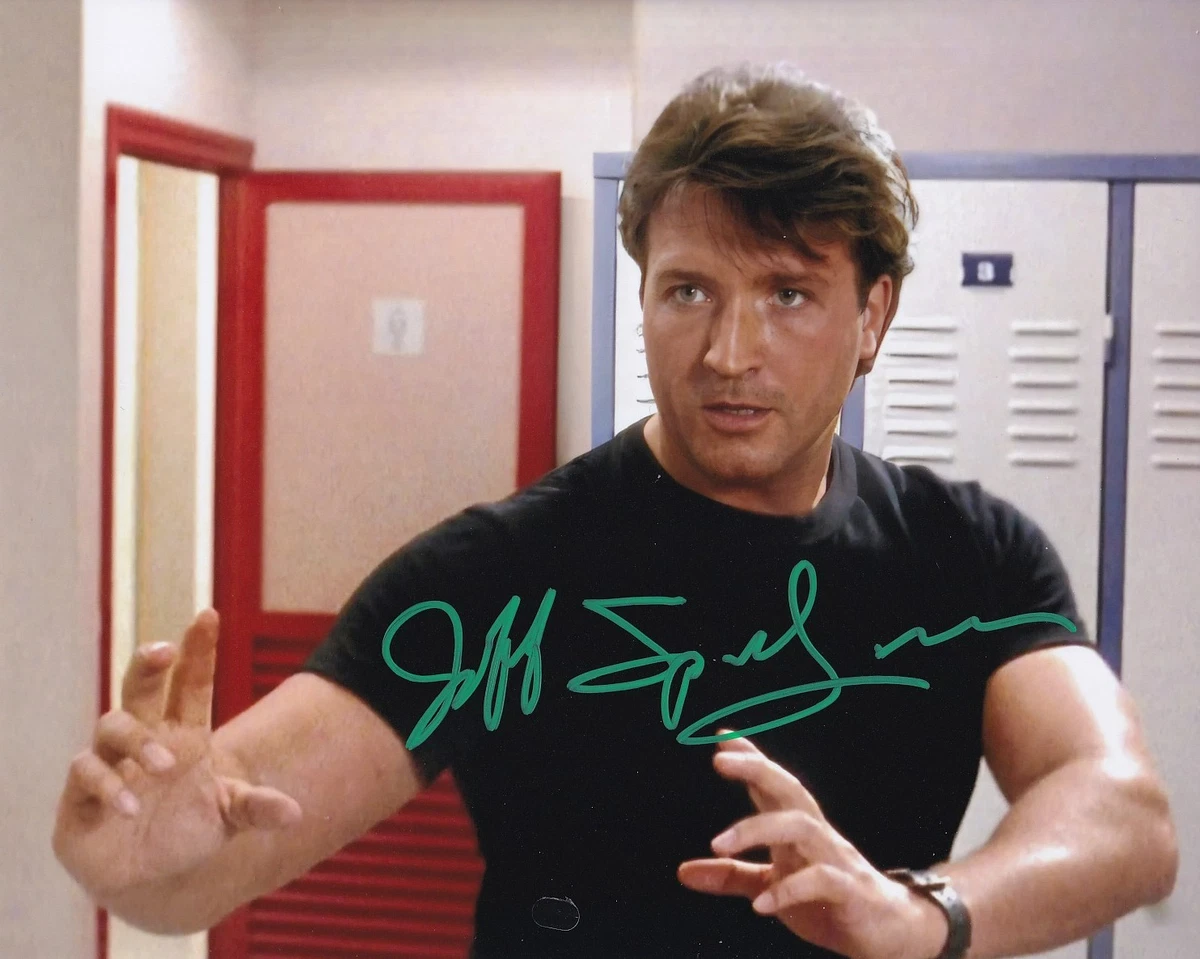
There are very few people in the martial arts world who have managed to leave a lasting mark on both the big screen and the training floor. Jeff Speakman is one of them. Born and raised in Chicago, he went from diving off springboards in freezing midwestern winters to becoming one of the most recognized Kenpo practitioners on the planet. His 1991 film The Perfect Weapon changed how audiences saw martial arts in cinema. But that movie was just the beginning of a much bigger story.
Behind the Hollywood spotlight lies a journey defined by relentless discipline, a near-fatal cancer battle, a deep connection to behavioral psychology, and a global martial arts empire built from scratch. Whether you know him from his films or from his decades of teaching, this is a man whose influence runs far deeper than most people realize. He didn’t just perform martial arts for cameras. He dedicated his entire life to using it as a tool for personal transformation and global education. This is the full story of how a kid from the windy city became a grandmaster, a movie star, a cancer survivor, and a leader whose reach now spans more than twenty countries.
Early Life and Athletic Beginnings
Jeff Speakman was born on November 8, 1958, in the suburbs of Chicago, Illinois. From a very young age, athletics consumed his world. During the school year he trained and competed as a gymnast. When summer came around, he switched to springboard diving. Both disciplines demanded balance, body control, and a willingness to push through pain. These traits would define everything he did later in life.
His talent as a diver stood out quickly. At John Hersey High School, he set new records in both conference and district competition. He earned All-American honors in springboard diving, which on its own would be an impressive achievement for any young athlete. What makes it even more remarkable is that he did it without a diving coach. There was no formal guidance. He figured out technique, timing, and form largely on his own. Every morning during those brutal Chicago winters, he caught the bus at 5:30 a.m. and rode across town to practice at a neighboring high school’s pool. That kind of dedication at such a young age tells you everything about the mindset that would carry him through decades of challenges.
After high school, he enrolled at Missouri Southern State University. He worked his way through his undergraduate studies and graduated with a bachelor’s degree in General Psychology and a minor in Biology. His time in the behavioral sciences department proved pivotal. He didn’t just pass his courses. He excelled to the point where his senior thesis involved actually teaching incoming freshmen about behavioral management under the supervision of the department head. That academic foundation in understanding human behavior would later become one of the defining elements of his martial arts teaching philosophy and his career as a motivational speaker. Most people don’t know about this side of his background, but it shaped everything that followed.
Jeff Speakman’s Martial Arts Journey
The martial arts chapter of this story began during college. While studying at Missouri Southern, his roommate turned out to be a black belt in Japanese Goju-Ryu Karate under the legendary instructor Lou Angel. That chance encounter sparked a passion that would consume the rest of his life. By 1980, he had earned his own black belt in Goju-Ryu. He was hooked. But Lou Angel saw something bigger in his student. He told the young fighter that if he truly wanted to make martial arts his life, there was only one place to go and one man to study under. That place was California, and that man was Ed Parker, the founder of American Kenpo Karate.
It was a decision that required sacrifice. He sold his car just to afford the U-Haul truck for the move to Los Angeles. He arrived in California with little money and no connections in the industry. But he had something more valuable than either of those things. He had an unshakable commitment to mastering his craft. Two years after arriving, Ed Parker personally invited him to join a small, exclusive group at his home in Pasadena, California. This group of just four people would become known as Parker’s final protégés. From 1983 to 1990, he trained directly under the grandmaster himself, absorbing the philosophy, technique, and depth of American Kenpo at its highest level. That period of mentorship laid the foundation for everything he would later build.
Building a Global Kenpo Organization
After Ed Parker’s passing, many in the Kenpo world splintered into different factions and directions. But Speakman had a different vision. He wanted to honor Parker’s legacy while also evolving the art to meet the demands of modern self-defense. He founded American Kenpo Karate Systems, known as AKKS, which grew into an international organization with more than fifty schools across the globe. He also served as President of the International Kempo Federation from 2008 to 2018, further cementing his role as one of the most influential leaders in the Kenpo community. Today, he holds a 10th-degree black belt in American Kenpo and a 7th-degree black belt in Japanese Goju-Ryu. These aren’t honorary titles. They represent decades of real, hands-on training, teaching, and organizational leadership.
He also earned certifications as a Defensive Tactics Instructor for the United States Department of Justice, working with agencies including the FBI and DEA. On top of that, he is a certified sharp-edge weapons instructor for the California Department of Corrections. These credentials speak to a level of practical expertise that goes well beyond the dojo. His martial arts knowledge has been tested and validated in some of the most demanding law enforcement and security environments in the country.
The Hollywood Career That Changed Everything
While building his martial arts career, Jeff Speakman was also quietly pursuing acting. He studied the craft for five years at an acting workshop in Burbank, California, going through the same grind of auditions, callbacks, and small bit parts that every aspiring actor endures. The breakthrough came through an unexpected connection. One of the acting coaches at his workshop was also a screenwriter who had written Kickboxer for Jean-Claude Van Damme. After visiting the karate school in West Los Angeles where Speakman was teaching, the writer was so impressed by what he saw that he insisted the producer of his Van Damme films come see it for himself. That producer eventually visited the school, and what he witnessed led directly to the production of The Perfect Weapon.
The Perfect Weapon and Its Impact
Released by Paramount Pictures in 1991, The Perfect Weapon was a game changer. The film starred Speakman as Jeff Sanders, a martial artist drawn into a conflict with Korean mob figures after the murder of his mentor. What set the movie apart from nearly every martial arts film before it was the fight choreography. This was not the slow, exaggerated combat that audiences had grown used to throughout the 1980s. The fight scenes were fast, fluid, and brutally authentic. Kenpo’s rapid-fire hand techniques and explosive strikes were on full display, and critics and fans alike took notice. Many people in the martial arts community still point to The Perfect Weapon as the first film where the fighting looked genuinely real and technically precise on screen. It was a commercial success for Paramount and instantly put its lead star on the map.
Film Career Beyond the Debut
Following that breakout role, Speakman went on to star in a string of action films throughout the 1990s and 2000s. Street Knight came in 1993 through Warner Bros., followed by The Expert in 1995 through MGM, and Deadly Outbreak in 1996. He also starred in Escape from Atlantis for Universal. Over the course of his career, he appeared in approximately fourteen feature films and produced three of them. In the 2000s, the landscape of action cinema shifted. Studios moved away from mid-tier action films, and many stars of the 1990s martial arts boom transitioned to direct-to-video and independent projects. Speakman was no exception, appearing in films like Running Red, Hot Boyz alongside Master P and Snoop Dogg, and Striking Range. Throughout every project, he made a point to showcase authentic Kenpo techniques. He never watered down the art for the cameras. That commitment to authenticity earned him lasting respect in the action film community even as the industry changed around him.
There is also a fascinating footnote to his Hollywood story that many fans don’t know. According to multiple interviews, Speakman was originally in the running to star in the 1994 blockbuster Speed. While the role ultimately went to Keanu Reeves, the fact that he was considered for such a major studio film shows how seriously Hollywood took his potential as a leading man during that era.
What Is Kenpo 5.0 and Why Does It Matter
After Ed Parker’s death, the American Kenpo community faced an identity crisis. Many instructors continued teaching the art exactly as it had been passed down, without adaptation. Jeff Speakman took a different approach. He recognized that while classic Kenpo was extraordinarily effective as a striking system, it had gaps when it came to ground fighting and grappling. In a world where mixed martial arts was exposing the limitations of stand-up-only systems, he saw an opportunity to evolve the art without abandoning its soul.
The result was Kenpo 5.0, a full-spectrum self-defense system that integrates the explosive hand combinations and footwork of traditional American Kenpo with ground fighting knowledge drawn from grappling arts. This was not about chasing trends or jumping on the MMA bandwagon. It was about making Kenpo complete. A real self-defense situation can end up on the ground in seconds, and Speakman wanted his students to be prepared for every phase of a confrontation, not just the standing exchange.
The Philosophy Behind the System
What truly separates Kenpo 5.0 from many other martial arts systems is its philosophical foundation. Speakman draws heavily on his background in behavioral psychology to shape how he teaches. The training is not just about learning techniques. It is about building discipline, earning self-respect, and developing the kind of character that carries over into every area of life. He has spoken publicly and passionately about the difference between what he calls “martial art” and “martial fighting.” In his view, martial fighting is about one person advancing because another person falls. Martial art is about someone sacrificing something of themselves to help another person grow. That distinction is the heartbeat of everything he teaches.
His motivational speaking career is built on this same foundation. He speaks to groups around the world about sustained excellence through martial arts, responsible leadership, and the importance of embracing change to create a better future. His message resonates because it comes from lived experience, not theory. He has built one of the largest Kenpo organizations in history, survived stage four cancer, and continued to teach and lead well into his sixties. When he talks about discipline, resilience, and purpose, people listen because he has walked every step of that path himself.
Today, Kenpo 5.0 franchise schools operate in more than twenty countries. The system attracts students of all ages and backgrounds, from children learning self-discipline for the first time to law enforcement professionals seeking practical defensive skills. It is a testament to the vision of its founder that the system has grown so far beyond a single school or a single country.
Jeff Speakman’s Battle with Cancer and His Remarkable Comeback
In early 2013, everything changed. At a time when he was preparing for a return to the big screen with a role in Expendables 3, he received devastating news. Doctors at the City of Hope medical center diagnosed him with stage four throat cancer. The diagnosis was severe. Treatment options included radiation therapy and chemotherapy, with surgery as a backup plan. But surgery meant removing his voice box, a price no speaker, teacher, or actor would want to pay. He chose the non-surgical route and began an aggressive treatment regimen immediately.
The battle was grueling. Radiation and chemotherapy took an enormous physical toll. For someone who had spent his entire life in peak physical condition, the experience was humbling in ways most people cannot imagine. But the same discipline that had driven him to catch buses at dawn in Chicago winters, the same willpower that had pushed him through years of acting auditions and martial arts training, carried him through treatment. His prognosis was described as excellent by his physicians, and over the following two years, he made a full recovery.
A Renewed Sense of Purpose
What came after the cancer battle was arguably the most important chapter of his career. By his own account, surviving a coin-flip brush with death changed his entire perspective. He stopped holding back. He stopped worrying about whether people would like his decisions. He committed fully and unapologetically to his vision for Kenpo 5.0 and for the direction of his teaching career. In interviews, he has described this shift as a kind of awakening. He expected to lose students when he became more assertive and direct in his leadership. The opposite happened. His student base grew. People responded to the renewed energy and authenticity that came from a man who had stared down his own mortality and come out the other side with absolute clarity about what mattered.
He has since used his cancer journey as a central theme in his motivational work. His message is simple and powerful. Life is short. Character is everything. The pursuit of money, possessions, and social media validation is empty compared to the impact you make on the people around you. It is a message that carries real weight coming from someone who nearly lost everything.
Awards, Honors, and the Legacy He Continues to Build
The list of accolades earned over this career is extensive and well deserved. He was inducted into the Black Belt Hall of Fame and received the Instructor of the Year award in 1993. He was also inducted into the World Martial Arts Hall of Fame and the Masters Hall of Fame, where he received the Silver Life Achievement Award in 2009. On top of these formal honors, he was voted the most popular martial artist in the world by the Martial Arts Network website, a recognition that reflects his broad appeal among practitioners and fans alike.
But awards only tell part of the story. The real legacy is in the people he has trained and the schools he has built. Jeff Speakman currently resides in Las Vegas, Nevada, where he continues to teach, train, and oversee his global Kenpo 5.0 network. His influence extends well beyond technique. He has shaped how thousands of practitioners around the world think about discipline, leadership, personal growth, and the true purpose of martial arts. His motivational speaking combines rigorous behavioral science with decades of real-world martial arts experience, and his message of responsible leadership and embracing change continues to resonate with audiences worldwide.
At sixty-seven years old, he remains active, engaged, and committed to the same mission that drove him from the very beginning. He is proof that martial arts, when practiced as a genuine art and not merely a fighting system, can be a vehicle for transformation that lasts a lifetime.
Conclusion
The story of Jeff Speakman is not just a story about a martial artist or an actor. It is a story about what happens when discipline, education, and passion converge in a single life. From catching early morning buses across Chicago to train without a coach, to earning a psychology degree that would shape his teaching for decades, to selling his car for a shot at training under Ed Parker, to starring in a Paramount film that redefined martial arts cinema, to surviving stage four cancer and emerging with more clarity and purpose than ever before, every chapter of his life has been defined by the refusal to settle for anything less than excellence.
His Kenpo 5.0 system now operates in more than twenty countries. His Hall of Fame inductions and law enforcement credentials speak to a level of mastery that very few ever achieve. And his motivational message, rooted in behavioral science and battle-tested by real life, continues to inspire people far beyond the martial arts community. Jeff Speakman didn’t just master a martial art. He turned it into a philosophy for living, and that philosophy is still changing lives around the world today.
1. Who is Jeff Speakman?
Jeff Speakman is an American martial artist, actor, and motivational speaker born on November 8, 1958, in Chicago, Illinois. He is best known for starring in the 1991 Paramount action film The Perfect Weapon and for founding the Kenpo 5.0 martial arts system, which now operates franchise schools in more than twenty countries worldwide.
2. What martial art does Jeff Speakman practice?
Jeff Speakman practices American Kenpo Karate, in which he holds a 10th-degree black belt, and Japanese Goju-Ryu Karate, in which he holds a 7th-degree black belt. He trained directly under Ed Parker, the founder of American Kenpo, from 1983 until Parker’s death in 1990.
3. How old is Jeff Speakman?
Jeff Speakman was born on November 8, 1958, making him 67 years old as of 2026. Despite his age, he remains actively involved in teaching martial arts and running his global Kenpo 5.0 organization from his base in Las Vegas, Nevada.
4. What is Jeff Speakman’s net worth?
Estimates of Jeff Speakman’s net worth vary across sources, with figures ranging from approximately one million to several million dollars. His income comes from a combination of his acting career, his international network of Kenpo 5.0 franchise schools, motivational speaking, and instructional content.
5. What is Kenpo 5.0?
Kenpo 5.0 is a full-spectrum self-defense system created by Jeff Speakman that integrates the rapid hand strikes and footwork of traditional American Kenpo with ground fighting and grappling techniques. It is called “5.0” because it represents the fifth major evolution of the Kenpo art originally developed by Ed Parker.
6. Did Jeff Speakman train under Ed Parker?
Yes, Jeff Speakman was one of Ed Parker’s final direct protégés. He moved to Los Angeles in 1983 specifically to train under Parker and earned his first-degree black belt in American Kenpo in 1984. Before Parker’s passing in 1990, Speakman had achieved a 4th-degree black belt directly under his guidance.
7. What happened to Jeff Speakman’s career after The Perfect Weapon?
After his breakout role, Speakman starred in films like Street Knight, The Expert, Deadly Outbreak, and Escape from Atlantis. He appeared in roughly fourteen feature films total. As the action film industry shifted in the 2000s, he transitioned to direct-to-video and independent projects while focusing increasingly on his martial arts teaching career.
8. Did Jeff Speakman have cancer?
Yes, Jeff Speakman was diagnosed with stage four throat cancer in early 2013. He underwent aggressive radiation and chemotherapy treatment at the City of Hope medical center. He made a full recovery over the following two years and has spoken publicly about how the experience transformed his outlook on life and leadership.
9. Is Jeff Speakman still alive?
Yes, Jeff Speakman is alive and active as of 2026. He continues to teach martial arts at his Kenpo 5.0 training center in Las Vegas, Nevada, oversees his worldwide network of franchise schools, and is involved in motivational speaking engagements.
10. Where does Jeff Speakman live?
Jeff Speakman currently lives in Las Vegas, Nevada. He operates his Kenpo 5.0 World Training Center there and personally teaches classes on a regular basis, which is uncommon among martial arts grandmasters of his rank and stature.
11. How tall is Jeff Speakman?
Jeff Speakman stands approximately 5 feet 11.5 inches tall, which is about 1.82 meters. His athletic build was developed through years of gymnastics, springboard diving, and decades of martial arts training.
12. Was Jeff Speakman supposed to star in Speed?
According to multiple interviews and industry reports, Jeff Speakman was originally in the running to star in the 1994 blockbuster Speed before the role went to Keanu Reeves. This detail is often cited as evidence of how seriously Hollywood viewed Speakman as a potential leading man during the early 1990s.
13. What belt rank does Jeff Speakman hold?
Jeff Speakman holds a 10th-degree black belt in American Kenpo Karate, the highest rank achievable in the system. He was promoted to 10th degree on July 9, 2022. He also holds a 7th-degree black belt in Japanese Goju-Ryu Karate.
14. Is Jeff Speakman married?
Jeff Speakman is known to be married, though he keeps his personal and family life largely private. One biographical source identifies his wife as Jacqueline. He rarely discusses family details in public interviews, preferring to keep the focus on his martial arts and professional work.
15. What movies has Jeff Speakman been in?
Jeff Speakman has appeared in approximately fourteen feature films. His most notable titles include The Perfect Weapon (1991), Street Knight (1993), The Expert (1995), Deadly Outbreak (1996), Escape from Atlantis, Scorpio One, Running Red, Hot Boyz, Land of the Free, and Striking Range. He also produced three of these films.
16. How many Kenpo 5.0 schools are there worldwide?
Jeff Speakman’s Kenpo 5.0 system currently operates franchise schools in more than twenty countries around the world. This makes it one of the largest Kenpo organizations in the history of the martial art, with schools spanning across the Americas, Europe, the Middle East, and Australia.
17. What is the difference between Kenpo and Kenpo 5.0?
Traditional American Kenpo, as created by Ed Parker, is primarily a striking-based system focused on rapid hand combinations, angles, and footwork. Kenpo 5.0, developed by Jeff Speakman, adds ground fighting and grappling techniques to the existing curriculum, making it a more complete self-defense system designed for the realities of modern combat situations.
18. What awards has Jeff Speakman won?
Jeff Speakman has been inducted into the Black Belt Hall of Fame (Instructor of the Year, 1993), the World Martial Arts Hall of Fame, and the Masters Hall of Fame (Silver Life Achievement Award, 2009). He was also voted the most popular martial artist in the world by the Martial Arts Network website.
19. Did Jeff Speakman work with the FBI or DEA?
Yes, Jeff Speakman is a certified Defensive Tactics Instructor for the United States Department of Justice and has trained personnel from agencies including the FBI, DEA, Homeland Security, and the Department of State. He is also a certified sharp-edge weapons instructor for the California Department of Corrections.
20. What inspired Jeff Speakman to start martial arts?
Jeff Speakman has stated that the television show Kung Fu originally sparked his interest in martial arts. He began training in Japanese Goju-Ryu Karate during college under instructor Lou Angel. It was Angel who then encouraged him to move to California and train under Ed Parker to take his martial arts career to the next level.
21. Does Jeff Speakman still teach martial arts classes personally?
Yes, unlike many grandmasters of his rank, Jeff Speakman personally teaches classes at his Kenpo 5.0 World Training Center in Las Vegas on a regular basis. He has said in interviews that being on the mat teaching every day is central to his life and his identity as a martial artist.
22. What degree did Jeff Speakman earn in college?
Jeff Speakman earned a bachelor’s degree in General Psychology with a minor in Biology from Missouri Southern State University. He excelled in behavioral sciences and his senior thesis involved instructing freshmen on behavioral management principles, a foundation that later shaped his martial arts teaching and motivational speaking career.
23. Is Jeff Speakman a motivational speaker?
Yes, Jeff Speakman maintains an active motivational speaking career built on the theme of sustained excellence through the martial arts. His talks focus on responsible leadership, embracing change, behavioral management, and using discipline as a vehicle for personal and professional growth. His message draws heavily from both his psychology background and his real-life experiences including surviving cancer.
24. What is Jeff Speakman’s World Martial Arts Event?
Jeff Speakman’s World Martial Arts Event is an annual international gathering hosted by the Kenpo 5.0 organization. The 2026 event is scheduled for July in Las Vegas and includes competition, testing, seminars, and community activities for Kenpo 5.0 practitioners from around the globe. Early registration discounts are typically offered for those who sign up in advance.