
If you have ever wondered what 20 an hour is how much a year, you are not alone. This is one of the most searched salary questions on the internet right now, and for good reason. Whether you are weighing a job offer, thinking about switching careers, or just trying to figure out if your paycheck covers the bills, knowing how your hourly wage translates into annual income is the first step toward making smart money decisions.
Here is the quick answer. If you earn $20 per hour and work a standard 40-hour week for all 52 weeks of the year, your gross annual income comes to $41,600. That is the number before taxes, deductions, or any other withholdings come out of your paycheck. It sounds simple enough, but that figure only tells part of the story. Once you account for federal and state taxes, Social Security and Medicare contributions, differences in work schedules, and the cost of living in your area, the amount that actually hits your bank account can look very different from $41,600.
In this guide, I am going to walk you through every angle of this question. You will see the full math behind the calculation, learn what your paycheck looks like after taxes, understand how part-time hours change the picture, and get a clear sense of whether $20 per hour is actually enough to live on in today’s economy. I will also cover which jobs currently pay this rate and what you can do to grow your earnings beyond this level. By the time you finish reading, you will have a complete and honest understanding of what this wage really means for your financial life.
20 an Hour Is How Much a Year — The Full Breakdown
Let us start with the straightforward math, because everything else in this article builds from here. The formula is as simple as it gets. You take your hourly rate, multiply it by the number of hours you work each week, and then multiply that result by 52 weeks in a year.
$20 × 40 hours × 52 weeks = $41,600 per year
That $41,600 figure represents your gross annual income. It assumes you are clocking in for 40 hours every single week of the year with no unpaid vacation, no sick days, and no breaks in employment. For a lot of hourly workers, that is not entirely realistic, but it gives you the cleanest baseline to work with.
Here is what that breaks down to across different pay periods:
- Daily (8 hours): $160
- Weekly (40 hours): $800
- Biweekly (every two weeks): $1,600
- Monthly (average): approximately $3,467
- Annually: $41,600
One thing most people miss is how biweekly pay actually works in practice. If your employer pays you every two weeks, you receive 26 paychecks per year rather than 24. That means two months out of the year will have three paydays instead of the usual two. Those “extra” checks are a hidden opportunity to boost your savings, knock out some debt, or pad your emergency fund, but only if you plan for them in advance rather than spending them as regular income.
It is also worth knowing that the $3,467 monthly figure is an average. Your actual monthly deposits will fluctuate slightly because months do not divide evenly into two-week pay periods. For day-to-day budgeting, planning around the biweekly amount of $1,600 tends to be more reliable than using the monthly average.
So when someone types 20 an hour is how much a year into a search engine, the textbook answer is $41,600. But what you actually take home after taxes is a different conversation entirely, and that is where most people get surprised.
What Does $20 per Hour Look Like After Taxes?
Gross pay is the easy part. Anyone searching 20 an hour is how much a year usually finds that $41,600 figure within seconds. The question that actually matters for your monthly budget is how much of that $41,600 you get to keep. Let us break down the major deductions one by one.
Federal Income Tax at This Income Level
For a single filer in 2026, the standard deduction sits at approximately $14,600. That means your taxable income drops from $41,600 down to roughly $27,000. At that level, you fall into the 10% and 12% federal tax brackets, putting your estimated federal income tax bill somewhere between $2,800 and $3,300 per year depending on your specific filing situation.
There is a silver lining at this income level that a lot of people do not realize. You may qualify for the Saver’s Credit, which can reduce your tax bill by up to $1,000 if you contribute to a retirement account like a 401(k) or IRA. And if you have qualifying children, the Earned Income Tax Credit could put even more money back in your pocket. These are dollar-for-dollar credits, meaning they reduce what you owe directly rather than just lowering your taxable income. They are absolutely worth looking into if you are earning around $20 per hour.
FICA Taxes — Social Security and Medicare
Every employee in the United States pays FICA taxes on top of federal income tax. These fund Social Security and Medicare, and they come straight out of your paycheck with no deduction to reduce them. Social Security takes 6.2% of your gross wages, which works out to about $2,579 per year at $41,600. Medicare adds another 1.45%, or roughly $603 annually. Put them together and FICA pulls about $3,182 from your yearly earnings. Unlike income tax, there is no standard deduction here — FICA is calculated on every dollar you earn.
State Taxes — The Wildcard
This is where your location can make a massive difference. If you work in Texas, Florida, Nevada, Wyoming, Washington, or a handful of other states, you owe zero state income tax. Every dollar that federal taxes and FICA do not claim stays in your pocket. On the flip side, if you live in California, New York, or other high-tax states, you could lose another 4% to 6% of your income on top of everything else. For someone bringing in $41,600, that amounts to an extra $1,600 to $2,500 gone from your paycheck each year.
What You Actually Take Home
When you stack all of these deductions together, a single filer earning $20 per hour typically keeps between 65% and 78% of their gross pay. In real numbers, that translates to roughly $27,000 to $32,500 per year, or about $2,250 to $2,700 per month landing in your bank account. Your exact take-home number depends on your filing status, your state of residence, and whether you have pre-tax deductions like health insurance premiums or retirement plan contributions coming out of your check. Understanding these deductions is essential because the real answer to 20 an hour is how much a year is not the gross figure — it is what you actually get to spend.
How the Yearly Number Changes With Fewer Hours
Not everyone works a standard 40-hour week. The answer to 20 an hour is how much a year shifts significantly depending on your actual schedule. Plenty of people earning $20 per hour are part-time employees, freelancers, or gig workers with inconsistent schedules. If that sounds like you, the annual income picture looks quite different. Here is how $20 per hour plays out at various weekly schedules, assuming you work all 52 weeks:
- 20 hours per week: $20,800 per year
- 25 hours per week: $26,000 per year
- 30 hours per week: $31,200 per year
- 35 hours per week: $36,400 per year
- 40 hours per week: $41,600 per year
The drop-off is steep. Going from 40 hours down to 30 hours does not just cut your income by 25% — it also often means losing access to employer-sponsored benefits like health insurance and retirement plans. That adds hidden costs you have to cover out of pocket, further squeezing your budget.
Part-time income is also much more fragile than full-time pay. A cancelled shift, a slow week, or a client who disappears has an immediate and direct impact on your earnings. There is no salaried cushion to absorb the blow. If you work variable hours, the smartest approach is to budget based on your average weekly hours over the past two to three months, not your best weeks.
Freelancers and independent contractors face an additional hit that traditional employees do not. On top of regular income tax, self-employed workers owe an extra 7.65% in self-employment tax, which covers the employer’s share of Social Security and Medicare. This pushes the effective tax rate noticeably higher and makes the real take-home answer to 20 an hour is how much a year even lower for gig workers than for someone on a company payroll. If you are self-employed at this rate, setting aside 25% to 30% of every payment for taxes is a wise habit.
Is $20 an Hour a Good Salary in 2026?
This is the question behind the question. People searching 20 an hour is how much a year are rarely asking just about math. The math is useful, but what people really want to know is whether earning $20 per hour is enough to live a decent life in today’s economy. The honest answer depends on two things — how you compare to other workers and where you live.
How $20 per Hour Stacks Up Nationally
According to Bureau of Labor Statistics data, median weekly earnings for full-time U.S. workers in early 2026 were approximately $1,235 per week, which translates to about $64,000 per year. At $41,600 annually, a $20 per hour wage falls below the national median. However, it still clears the federal minimum wage of $7.25 by nearly three times. Many states have pushed their own minimums into the $15 to $17 range as of 2026, so $20 per hour still sits above those benchmarks, although the margin is thinner than a lot of people assume.
For dual-income households, the picture shifts dramatically. When both partners earn $20 per hour, the combined income reaches roughly $83,200, which comfortably exceeds the median household income in most parts of the country. At that level, a two-earner family can handle monthly bills, save consistently, and absorb the occasional unexpected expense without going into debt.
Your Zip Code Matters More Than You Think
Whether $20 per hour feels comfortable or tight depends almost entirely on where you live. In lower-cost states like Mississippi, Oklahoma, Arkansas, and Iowa, this wage stretches surprisingly far. Housing costs stay low, groceries are cheaper, and in several of these states there is no state income tax chipping away at your paycheck. A single adult in these areas can cover rent, transportation, food, and still set aside money for savings each month.
The story changes fast in expensive metros. In cities like San Francisco, New York, and Los Angeles, $20 per hour falls well below what housing researchers consider a livable wage for a single person. MIT’s Living Wage Calculator has consistently shown that California’s livable wage for a single adult sits significantly above the $20 per hour mark, with steep variation from county to county.
A useful benchmark is the 30% housing guideline. At roughly $2,700 per month in take-home pay, you can reasonably afford about $810 to $878 in rent. That is doable in cities like Columbus, Indianapolis, San Antonio, or the suburbs around Tampa and Raleigh. It is very difficult in most coastal metros without roommates or a partner splitting the cost. So when you ask yourself 20 an hour is how much a year and whether it is enough, your location is honestly the single biggest factor shaping the answer.
Smart Budgeting When You Earn $20 an Hour
Knowing your income is half the battle. The other half is deciding where every dollar goes. At roughly $2,700 per month in take-home pay, there is not a lot of room for financial autopilot. Every dollar needs a purpose, and building a realistic budget is what separates people who feel broke from people who feel in control at the same income level.
A Sample Monthly Budget on $2,700 After Taxes
Here is a practical monthly spending plan that covers the essentials while still leaving room for savings and a bit of breathing room:
- Housing (rent or mortgage): $810
- Groceries: $350
- Transportation (car payment, gas, insurance, or transit pass): $300
- Utilities and phone: $200
- Health insurance (employee share): $150
- Savings and emergency fund: $300
- Debt payments (student loans, credit cards): $200
- Personal spending and entertainment: $200
- Miscellaneous and buffer: $190
The numbers are tight, but they work. The key is building this plan around your actual take-home pay, not the $3,467 gross figure. Far too many people budget against their gross income and then feel confused when they come up short every month. Taxes and deductions are not optional — they leave your paycheck whether you plan for them or not.
Small Moves That Make a Real Difference
Start by tracking every dollar you spend for one full month. Use a free budgeting app or even a basic spreadsheet. Most people are genuinely surprised by how much drains away on things like convenience store stops, forgotten subscriptions, vending machines, and impulse purchases. Those small leaks can easily add up to $150 or more each month without you even noticing.
If housing is eating too large a chunk of your income, consider shared living arrangements. Splitting a two-bedroom apartment with a roommate in an affordable city can free up $400 to $700 per month compared to living alone. That extra money can go straight into an emergency fund, a debt payoff plan, or a starter retirement contribution.
On the topic of retirement, if your employer offers a 401(k) with any kind of match, contributing even 3% of your gross income is absolutely worth it. At $41,600, that costs about $104 per month. If your employer matches even half of that amount, you are getting free money added to your retirement savings. Over a decade or two, those small contributions compound into something surprisingly meaningful. When you understand the full picture of 20 an hour is how much a year, it becomes clear that the smartest financial moves happen on the margins — small, consistent actions that add up.
20 an Hour Is How Much a Year — And What Jobs Pay It in 2026?
Now that you know the full answer to 20 an hour is how much a year after taxes and how to budget around it, you might be wondering which careers pay at this level. The good news is that $20 per hour is no longer limited to a handful of specialized positions. It has become a realistic starting point across a wide range of industries, and many of these roles do not require a four-year college degree.
Healthcare Roles — Medical assistants, dental hygienists, physical therapy assistants, and licensed vocational nurses frequently earn at or above $20 per hour. These positions typically require a certification or an associate degree, and job growth in healthcare remains strong heading into 2026 and beyond.
Skilled Trades — Apprentice-level electricians, HVAC technicians, plumbers, and solar panel installers regularly earn $20 per hour or more. The Bureau of Labor Statistics projects that solar installer jobs alone will grow by more than 20% over the coming decade. Trade certifications and on-the-job training replace the need for a traditional degree in most of these careers.
Office and Administrative Work — Administrative assistants, customer service representatives, and data entry specialists earn around $20 per hour across many markets. These roles are widely available and often include benefits like health insurance and paid time off.
Transportation and Logistics — Delivery drivers, warehouse supervisors, and entry-level truck drivers are in strong demand, fueled by the continued expansion of online shopping and same-day delivery. Many of these positions offer overtime opportunities that push annual earnings well beyond the $41,600 baseline.
Freelance and Remote Work — Virtual assistants, freelance writers, social media managers, and online tutors can all earn $20 per hour or more. The trade-off is that these roles require you to manage your own taxes, benefits, and sometimes irregular workloads.
Retail and Hospitality — Shift managers, lead associates, and experienced servers in high-tip markets regularly hit the $20 per hour mark. Recent labor market shifts have pushed hourly pay upward across these industries.
The pattern across all of these roles is consistent. Employers pay $20 per hour when the worker brings a measurable skill to the table, whether that is a trade license, a software proficiency, specialized training, or strong customer-facing experience. Demonstrating clear value is what gets you to this pay rate and positions you to grow beyond it.
How to Grow Beyond $20 per Hour
Earning $20 an hour is a solid foundation, but it does not have to be where your income story ends. Once you have figured out what 20 an hour is how much a year in take-home terms, the next logical step is growing beyond that number. A few deliberate steps can push your hourly rate higher within a year or two without requiring a four-year degree or a complete career overhaul.
Ask for a Raise at Your Current Job
This is the fastest and cheapest way to increase your income. Before you walk into the conversation, research the average pay for your specific role and location using free salary comparison tools online. Then prepare two or three concrete examples of how your work has benefited the company — maybe you saved time on a process, reduced errors, trained a new team member, or handled a challenge that protected revenue. Employers respond much better to fact-based requests than to general appeals about fairness or loyalty.
Invest in Skills That Pay More
Certain certifications and training programs consistently lead to wages of $25 to $35 per hour within two to three years. HVAC technicians, licensed electricians, and IT help desk professionals are all in high demand. Cybersecurity support roles frequently start at $25 to $30 per hour even for people transitioning from unrelated fields. Project management certifications open doors in almost every industry.
The math is compelling. Even a modest bump from $20 to $21 per hour adds more than $2,000 to your annual income at full-time hours. A jump to $25 per hour adds over $10,400 per year. Over a career, these incremental raises compound into tens of thousands of additional dollars.
Build a Side Income Stream
If a raise or career change is not in the immediate picture, supplementing your main paycheck can bridge the gap. Freelance writing, online tutoring, delivery driving, or selling stock photography are all accessible options that fit around an existing work schedule. Even an extra $200 to $400 per month from side work can make the difference between barely scraping by and actually building financial momentum. When you know exactly what 20 an hour is how much a year and you see the limits, creating additional income streams becomes a practical next step rather than just a nice idea.
Frequently Asked Questions About Earning $20 an Hour
FAQ 1: How much is $20 an hour annually before taxes?
If you work a standard 40-hour week for all 52 weeks of the year, $20 an hour equals $41,600 per year before any taxes or deductions are taken out. This calculation is based on the simple formula of $20 multiplied by 2,080 total working hours in a year. Keep in mind that this figure represents gross income, not the amount you actually take home.
FAQ 2: How much is $20 an hour after taxes?
After federal income tax, Social Security, and Medicare deductions, a single filer earning $20 an hour typically takes home between $27,000 and $32,500 per year. The exact amount depends on your state of residence, filing status, and any pre-tax deductions like health insurance or retirement contributions. Workers in states with no income tax, such as Texas and Florida, keep more than those in high-tax states like California or New York.
FAQ 3: How much is $20 an hour per month?
At 40 hours per week, $20 an hour works out to approximately $3,467 per month in gross pay before taxes. After taxes and deductions, most single filers bring home roughly $2,250 to $2,700 per month depending on their location and filing status. It is important to budget around the after-tax figure, not the gross amount.
FAQ 4: How much is $20 an hour per week?
Working a full 40-hour week at $20 per hour, you earn $800 per week before taxes. If your employer pays biweekly, that translates to $1,600 every two weeks, with 26 pay periods throughout the year. Two months out of the year will include a third paycheck, which many workers use as an opportunity to save or pay down debt.
FAQ 5: How much is $20 an hour working part-time at 20 hours a week?
If you work 20 hours per week at $20 per hour, your gross annual income would be $20,800 before taxes. After deductions, you would take home roughly $17,000 to $18,500 per year. Part-time workers at this rate typically do not receive employer-sponsored benefits, which can add hidden costs for health insurance and retirement savings.
FAQ 6: Is $20 an hour a good salary in 2026?
Whether $20 an hour is “good” depends heavily on where you live. The Bureau of Labor Statistics reports that the national median hourly wage is approximately $23 per hour, placing $20 below the midpoint but still nearly three times the federal minimum wage of $7.25. In affordable parts of the country, this wage covers basic expenses comfortably. In high-cost cities, it can be a real challenge without roommates or a dual income.
FAQ 7: Is $20 an hour considered middle class?
For a single individual, $41,600 per year falls below the middle-income threshold that the Pew Research Center defines as roughly $56,600 to $169,800 for households. However, dual-income households where both partners earn $20 per hour bring in about $83,200 combined, which places them comfortably within the middle-class range in most U.S. metro areas.
FAQ 8: Is $20 an hour above minimum wage?
Yes, and by a wide margin. The federal minimum wage remains at $7.25 per hour, making $20 nearly three times that amount. Many states have enacted higher minimums in the $15 to $17 per hour range as of 2026, but $20 per hour still exceeds every current state minimum wage in the country.
FAQ 9: How much rent can I afford making $20 an hour?
Using the widely recommended 30% rule, you should spend no more than 30% of your gross monthly income on rent. At $20 per hour with a 40-hour week, your gross monthly income is approximately $3,467, meaning your rent should stay at or below $1,040 per month. However, many financial advisors suggest basing this on your after-tax income instead, which would bring the comfortable rent range down to about $675 to $810 per month.
FAQ 10: Can I buy a house making $20 an hour?
It is possible, but challenging in many markets. On a gross annual salary of $41,600, mortgage lenders will generally qualify you for a home in the $120,000 to $180,000 range, depending on your debts, credit score, and down payment. FHA loans with low down payment requirements can make homeownership more accessible at this income level, but in markets where the median home price exceeds $300,000, you would likely need a co-borrower or substantial savings.
FAQ 11: How much car can I afford on $20 an hour?
Financial experts recommend that total car expenses — including your payment, insurance, gas, and maintenance — should not exceed 20% of your monthly take-home pay. At roughly $2,700 per month after taxes, that gives you about $540 total per month for all car-related costs. A vehicle in the $15,000 to $25,000 range is typically realistic at this income, especially if you can make a reasonable down payment.
FAQ 12: What is time and a half for $20 an hour?
Time and a half for a $20 per hour wage is $30 per hour. Under the Fair Labor Standards Act, most non-exempt hourly employees are entitled to this overtime rate for every hour worked beyond 40 in a single workweek. Five hours of weekly overtime at this rate adds $150 per week, or roughly $7,800 per year, to your gross income — pushing your annual total from $41,600 to nearly $49,400.
FAQ 13: How much does $20 an hour add up to with overtime?
With consistent overtime, a $20 per hour wage can grow substantially. Five hours of overtime per week at time-and-a-half ($30/hour) brings your annual gross to approximately $49,400. Ten hours of weekly overtime pushes it to roughly $57,200. Many warehouse, manufacturing, and construction jobs at this level offer regular overtime, making these figures realistic for workers willing to put in extra hours.
FAQ 14: How much tax do I pay on $41,600 a year?
A single filer earning $41,600 in 2026 owes approximately $2,800 to $3,300 in federal income tax after the standard deduction of about $14,600. FICA taxes (Social Security at 6.2% and Medicare at 1.45%) add roughly $3,182. State income tax, if applicable, can add another $1,600 to $2,500 depending on where you live. In total, you can expect to lose between 16% and 25% of your gross pay to combined taxes.
FAQ 15: Do I pay more taxes earning $20 an hour or a $41,600 salary?
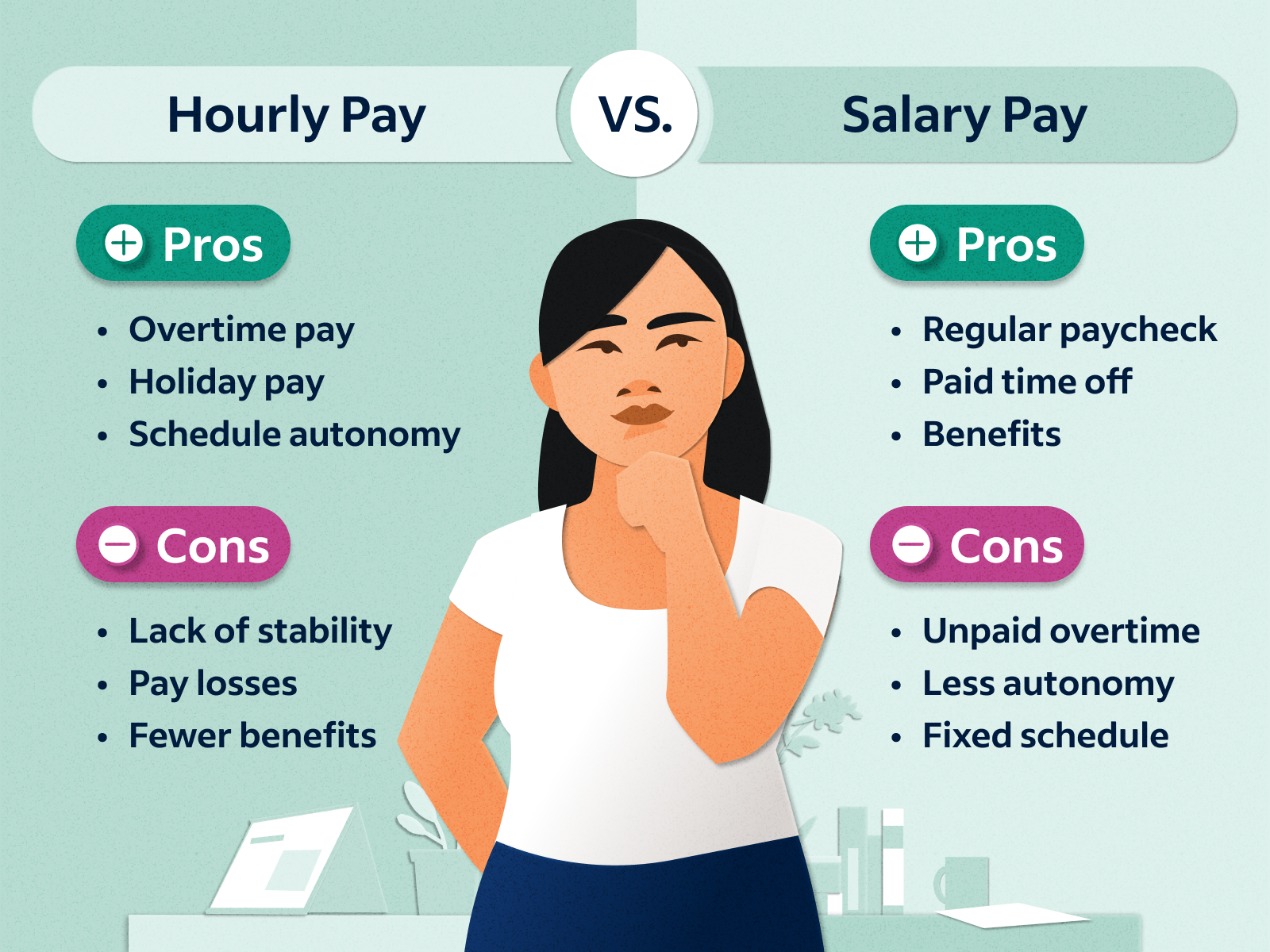
The tax burden is identical because the gross annual income is the same regardless of how it is paid. Whether your compensation is structured as an hourly wage or a fixed salary does not change your tax bracket or total tax obligation. The only practical difference is whether you are eligible for overtime pay, which hourly workers typically receive and salaried exempt employees do not.
FAQ 16: Can I save for retirement on $20 an hour?
Yes, and starting early makes a significant difference. If your employer offers a 401(k), contributing even 3% of your gross income costs only about $104 per month and may come with an employer match. At this income level, you also qualify for the Saver’s Credit, which can reduce your federal tax bill by up to $1,000 for contributing to a retirement account. Workers earning $41,600 can also contribute to a Roth IRA, which allows up to $7,500 in 2026 contributions.
FAQ 17: How much do I make at $20 an hour if I take two weeks unpaid vacation?
If you take two weeks of unpaid leave per year, you are working 50 weeks instead of 52. That reduces your annual gross income from $41,600 to $40,000 — a difference of $1,600. Workers without paid time off should account for this reduction when budgeting, as every week away from work directly lowers the yearly total.
FAQ 18: What is $20 an hour as a daily rate?
Working a standard 8-hour shift at $20 per hour, you earn $160 per day before taxes. For freelancers or day-rate contractors, knowing this daily figure helps when comparing project-based offers to traditional hourly positions.
FAQ 19: Is $20 an hour enough to live alone?
In low-to-moderate cost areas of the United States, $20 an hour is generally enough to cover rent, utilities, groceries, transportation, and basic savings for a single person living alone. In high-cost cities like San Francisco, New York, Boston, or Los Angeles, living alone on $20 per hour is extremely difficult without additional income or housing assistance. The 30% housing guideline limits your rent budget to about $810 per month after taxes, which is feasible in cities like Columbus, Indianapolis, and San Antonio, but not in most coastal metros.
FAQ 20: What jobs pay $20 an hour without a college degree?
Many in-demand roles pay $20 per hour or more without requiring a four-year degree. Common examples include medical assistants, dental hygienists, HVAC technicians, electricians (apprentice level), plumbers, solar installers, truck drivers, warehouse supervisors, customer service representatives, and virtual assistants. Trade certifications, online courses, and on-the-job training are the typical paths into these positions.
FAQ 21: How does $20 an hour compare to the national average wage?
As of early 2026, the average hourly wage for private-sector U.S. workers is approximately $35.93 per hour according to the Bureau of Labor Statistics. A $20 hourly wage is about 44% below that national average. However, the median hourly wage — a more useful comparison because it is not skewed by very high earners — is roughly $23 per hour, placing $20 per hour about 13% below the midpoint.
FAQ 22: How much is $20 an hour for a self-employed person after taxes?
Self-employed workers earning $20 per hour face a higher tax burden than traditional employees because they must pay both the employee and employer portions of FICA taxes. That adds an extra 7.65% on top of regular income tax, bringing the combined self-employment tax to 15.3% on net earnings. After federal income tax and self-employment tax, a self-employed person at $20 per hour typically takes home 55% to 65% of their gross pay, compared to 65% to 78% for a W-2 employee.
FAQ 23: How much is $20 an hour semi-monthly vs biweekly?
Biweekly pay (every two weeks) results in 26 paychecks per year at $1,600 each. Semi-monthly pay (twice per month, usually the 1st and 15th) results in 24 paychecks per year at approximately $1,733 each. The annual gross total is the same $41,600 either way, but the per-paycheck amount differs, which can affect how you structure monthly bill payments and savings.
FAQ 24: Can a family of four live on $20 an hour?
A single-income family of four earning $20 per hour ($41,600 per year) will face tight finances in most parts of the country. According to the Pew Research Center, this falls below the middle-income threshold for a household. Childcare costs alone can run $800 to $1,500 per month, which consumes a major portion of take-home pay. In affordable rural areas, a family may manage with careful budgeting and government assistance programs. In most metro areas, a second income or supplemental support is needed to cover essentials comfortably.
Wrapping It All Up
When you lay it all out, the answer to 20 an hour is how much a year is $41,600 before taxes on a standard full-time schedule. After federal income tax, FICA contributions, and any applicable state deductions, most workers take home between $27,000 and $32,500 per year — landing somewhere around $2,250 to $2,700 in monthly spending power.
But the number on its own does not paint the complete picture. Whether $20 per hour feels like solid ground or a constant stretch depends on where you live, how many hours you work, whether you have dependents, and how intentionally you manage your spending. In affordable parts of the country, this income covers rent, groceries, transportation, and basic savings with room to spare. In high-cost cities, it demands strict budgeting, shared housing, or a second earner to keep things stable.
The biggest takeaway from this entire breakdown is straightforward. Understanding what your hourly rate actually translates to on a yearly, monthly, and after-tax basis puts you in a stronger position to make smarter choices. You can negotiate job offers from a place of knowledge instead of guesswork. You can build a budget rooted in reality rather than wishful math. And you can spot the skills and career moves that will lift your earnings over time.
Whether you just landed a $20 per hour job or you are comparing offers right now, the fact that you looked up 20 an hour is how much a year shows you are already thinking one step ahead. That kind of thinking is what separates people who get stuck at a wage from people who use it as a stepping stone. Keep running the numbers, keep asking the right questions, and keep pushing toward the next level.