
Some strains earn their reputation over years. Others walk in the door and immediately take over the conversation. The ice cream cake strain did exactly that. From the moment it hit dispensary shelves, cannabis consumers started talking — and they haven’t stopped since.
It is not hard to understand why. Crack open a well-cured jar and you are instantly greeted by warm vanilla, thick cream, and a subtle earthiness that sits underneath it all like a rich dessert base. The aroma alone is enough to make you pause. Then comes the high — deep, settled, and smooth in a way that feels almost deliberate.
This guide covers everything worth knowing about this strain. Whether you are a seasoned consumer looking for your next go-to or someone new to cannabis trying to make an informed choice, you will walk away from this article knowing exactly what to expect: where it comes from, what it looks like, how it tastes, what it does to your body and mind, who it is genuinely good for, and what to watch out for. Nothing is skipped, and nothing is overstated.
Origins and Genetics: Where Did This Strain Come From?
The ice cream cake strain was brought to life through a cross of two powerhouse parent strains — Wedding Cake and Gelato #33. The breeders responsible are widely credited as Seed Junky Genetics, a California-based operation known for producing strains that combine flavor complexity with reliable potency.
To understand why this strain turned out the way it did, it helps to look briefly at each parent.
Wedding Cake (also known as Pink Cookies) is an indica-dominant hybrid descended from Girl Scout Cookies and Cherry Pie. It delivers a rich, tangy-sweet flavor profile with undertones of vanilla and sugary dough. It is widely respected for both its flavor and its punch, and it has won multiple awards at cannabis competitions around the world.
Gelato #33 is a hybrid bred from Sunset Sherbet and Thin Mint Girl Scout Cookies. It brings fruity sweetness, a notably creamy finish, and THC content that typically falls between 20 and 25 percent. Gelato is beloved for the kind of euphoric, body-relaxing effects that feel almost medicinal in their depth.
When these two were crossed, the result was something genuinely unique. The ice cream cake strain inherited the dessert-forward taste of both parents, the dense trichome production of Wedding Cake, and the smooth, deeply calming effect profile of Gelato #33. It was the right combination at the right time, and it caught on fast.
Ice Cream Cake Strain Indica or Sativa? The Answer, Clearly
This is one of the most common questions people search before trying this strain, so it deserves a direct and thorough answer.
The ice cream cake strain is an indica-dominant hybrid. The typical breakdown is approximately 75 percent indica and 25 percent sativa. That puts it firmly on the relaxing, body-focused end of the spectrum — but it is not a pure indica, and that matters.
Because of its sativa component, you do not fall into a completely dark, mentally heavy experience. There is a cerebral lift at the start — a mood boost, a wave of ease, a sense that whatever was weighing on you has quietly stepped aside. That initial mental phase is the sativa doing its part. The indica then gradually takes over, shifting the experience toward physical relaxation, heaviness in the limbs, and eventually a deep, settled calm.
It is worth noting that the indica/sativa classification is only part of the story. What truly shapes how a strain feels is its cannabinoid content and its terpene profile. Two strains labeled “75% indica” can feel completely different depending on their specific terpenes and THC levels. So while the classification tells you something useful, the terpene breakdown and your own tolerance tell you more.
For practical purposes: this strain is best treated as an evening or nighttime strain. Its indica dominance means it is not built for productivity or daytime responsibilities. Plan accordingly.
Appearance: What the Buds Actually Look Like
Good cannabis has a certain visual quality that is hard to miss. This one fits that description well.
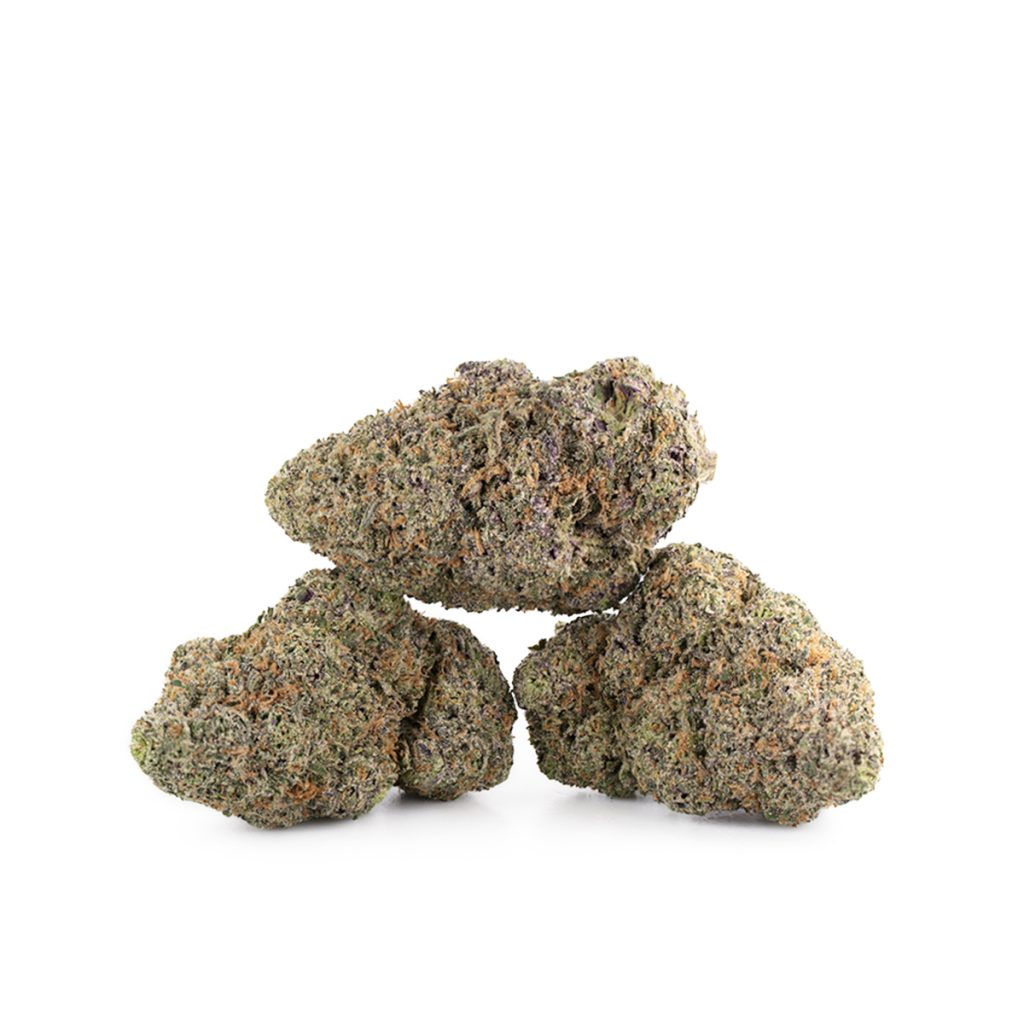
The buds are dense and compact — not airy or loosely structured like some sativa-leaning strains. They tend to be small to medium in size, roughly grape-shaped, with a dark forest green base color. What sets them apart visually is the detail layered on top of that green: thick clusters of burnt orange pistils (hairs), patches of deep purple, and a heavy coating of white crystal trichomes that gives the buds a frosted, almost glittering appearance.
That trichome layer is not just cosmetic. It reflects the strain’s high resin content, which is directly tied to its potency and aromatic intensity. A well-grown, properly cured batch looks almost sticky at a glance.
When shopping at a dispensary, visual inspection is a useful quick check. Look for buds that are firm but not bone dry, evenly frosted, and vibrant in color. Flat, dusty-looking nugs or ones with very few visible trichomes often indicate poor storage or old stock.
Aroma and Flavor: Does It Actually Taste Like Dessert?
The short answer is yes — and the longer answer explains why.
The Aroma
The smell is the first thing most people notice, and it tends to surprise them. It does not hit you with sharp pine or pungent skunk in the way older classic strains do. Instead, it is dense and almost warm — thick vanilla with an earthy cream note underneath, and a faint sweet nuttiness that becomes more apparent the longer you leave the jar open.
Some people pick up a slight pepperiness, which comes from the dominant terpene caryophyllene. Others notice a ghost of citrus from limonene. A few reviewers have compared the burn smell to aged cheese with a sweet finish — not everyone’s first guess, but accurate once you smell it yourself.
The Taste on Inhale and Exhale
The flavor on inhale is smooth and creamy — genuinely dessert-like in a way that is not forced or artificial. The vanilla and nutty dough notes come through clearly. On exhale, the sweetness lingers. Some users report a light spiciness on the back end, which is again the caryophyllene making itself known.
If you are vaping rather than smoking, the terpene profile comes through even more cleanly. Live resin or full-spectrum vape carts preserve the strain’s natural flavors better than distillate products, which often lose the nuance.
The Terpene Breakdown
Three terpenes dominate the profile of this strain:
- Caryophyllene — This peppery, spicy terpene has a unique ability among terpenes to interact directly with the body’s CB2 receptors. It contributes anti-inflammatory properties and is also found in black pepper, cloves, and rosemary.
- Limonene — The citrus-forward terpene associated with mood elevation and stress reduction. It is common in many cannabis strains but particularly noticeable here as a supporting note in the overall flavor.
- Linalool — Found in lavender as well as cannabis, linalool contributes a soft floral undertone and is associated with calming, anxiety-reducing effects.
These three work together to produce a flavor and effect profile that feels cohesive rather than chaotic — everything pointing in the same direction.
Ice Cream Cake Strain Effects: What to Actually Expect
This is the section that matters most to most people, so it deserves real depth.
How It Starts
The first thing users typically notice is a mental shift. Negative thoughts or racing anxieties tend to quiet down quickly. There is a warmth that spreads across the mind — not overwhelming, not disorienting, but genuinely pleasant. Mood lifts. Tension softens. Most people feel a wave of happiness that is calm rather than giddy.
This is the sativa component making its presence felt. It does not turn you into a high-energy, talkative person. It is subtler than that — more like the mental noise has been turned down a few notches.
The Body High: Where Indica Takes Over
Within 15 to 30 minutes, the physical effects begin to layer in. The body starts to feel heavy in a comfortable way. Muscles relax. Tension in the shoulders and back eases. For many users, there is a sensation of sinking into whatever surface they are sitting or lying on — not in a panicked way, but in a deeply restful way.
At moderate doses, this feels like a full-body unwind. At higher doses, it can tip into what is commonly called couch-lock — a state where moving feels unnecessary and sleep feels close. This is expected for an indica-dominant strain with 20 to 25 percent THC.
Mental Effects Over Time
The mental component does not disappear when the body high kicks in. Instead, it transitions. Early euphoria gives way to a quieter happiness — the kind where you are content watching something on TV, listening to music, or simply existing without needing stimulation. Creative or conversation-heavy activities are possible at lower doses but become less natural as the physical sedation deepens.
Duration and Intensity
Effects typically last between two and three hours, with the peak body high arriving in the first hour and gradually easing into a sleepy comedown. The total duration depends heavily on your method of consumption.
- Smoking flower: Effects arrive in 5 to 15 minutes and last 2 to 3 hours
- Vaping: Similar timeline to flower, sometimes slightly faster
- Concentrates: Faster onset, more intense peak, experienced users only
- Edibles: Effects can take 45 to 90 minutes to arrive and last 4 to 6 hours
Potency — How Strong Is It Really?
The THC content of the ice cream cake strain typically sits between 20 and 25 percent, placing it on the higher end of the hybrid spectrum. Some batches tested by licensed labs have come back at 30 percent or above, though this represents the upper ceiling rather than the average.
The strain also contains minor cannabinoids including cannabichromene (CBC) and cannabinol (CBN), both of which contribute to its sedative quality. This combination of cannabinoids creates what researchers call the entourage effect — where the whole profile works together more effectively than any single compound would on its own.
Medical and Therapeutic Benefits: What Users Report
It is important to say clearly: this section reflects community-reported experiences and should not be interpreted as medical advice. Always speak with a qualified healthcare provider before using cannabis to address any health condition.
That said, the medical cannabis community has gravitated toward this strain for several consistent reasons.
Stress and Anxiety Relief
The calming mental onset makes it a popular choice for people dealing with daily stress, generalized anxiety, and the mental weight of depression. The euphoria it produces is gentle enough that it tends not to tip into paranoia — a common complaint with high-THC sativa strains — and the body relaxation reinforces the mental ease.
Chronic Pain Management
Users report meaningful relief from conditions including arthritis, fibromyalgia, migraines, and general muscle tension. The caryophyllene in its terpene profile contributes anti-inflammatory effects, and the broad body high provides a physical buffer against persistent pain.
Sleep Support
This is perhaps the most commonly reported benefit. The deep sedation that comes with higher doses makes it genuinely effective for people who struggle to fall asleep or stay asleep. It is one of the more frequently recommended strains for insomnia in dispensary conversations.
Nausea and Appetite Stimulation
The antiemetic properties of this strain have been noted by users managing nausea — including those undergoing chemotherapy. Alongside nausea relief, most users report a significant increase in appetite, commonly called the munchies, which makes it useful for people dealing with appetite loss related to illness or medication.
Potential Side Effects: Honest Drawbacks to Know
No strain is without its downsides, and the ice cream cake strain is no exception.
Common Side Effects
Dry mouth and dry eyes are the most frequently reported issues. Both are manageable — staying well hydrated before and during a session helps significantly with dry mouth, and eye drops handle dry eyes. These are minor inconveniences rather than serious concerns for most people.
Less Common but Worth Knowing
At higher doses, some users experience mild dizziness or feelings of anxiety. This is more common among new users or people with a low THC tolerance. It is not a reaction unique to this strain — most high-THC cannabis can produce these effects when consumed in quantities that exceed what your body is ready for.
Practical Tips for a Better Experience
- Start with a small amount and wait a full 15 to 20 minutes before taking more
- Eat something light beforehand if you are prone to lightheadedness
- Avoid this strain if you have plans that require alertness, driving, or precise cognitive work
- If you have a history of THC-induced anxiety, consider starting with a lower-THC product and working upward gradually
- Keep water nearby — it makes a real difference
It rewards patience and mindful dosing. Rushing the experience by consuming too much too fast is the most common reason people have negative sessions with it.
Is the Ice Cream Cake Strain Right for You?
This depends on who you are as a consumer and what you are looking for.
It is likely a great fit if you:
- Prefer evening or nighttime cannabis use
- Enjoy dessert-forward, sweet, and creamy flavor profiles
- Want something that helps with sleep, pain, or persistent stress
- Have moderate to high THC tolerance
- Are looking for full-body relaxation rather than an energetic or social high
It is probably not the right choice if you:
- Need to remain alert, focused, or productive
- Are a first-time cannabis user without any guidance (start with something milder)
- Have a history of THC-triggered anxiety or paranoia
- Prefer bright, citrus-forward, or earthy flavor profiles over sweet ones
- Are looking for a daytime strain that supports activity
If you fall into the first group, this strain consistently delivers on its reputation. If you fall into the second, there are better entry points in the cannabis world.
Growing the Ice Cream Cake Strain: A Brief Overview
For those interested in cultivating this strain, it is considered a relatively approachable grow — particularly for intermediate growers.
Flowering time indoors typically runs between 8 and 10 weeks. Outdoor harvests are usually ready by late September to early October, depending on climate. The plants tend to be compact and bushy in structure, staying shorter than many sativa-leaning varieties, which makes them manageable in smaller indoor spaces.
The strain is noted for solid resistance to common pests and mold, which takes some of the stress out of the growing process. Yields are moderate to good when conditions are well managed.
One important note: finding authentic genetics from a reputable seed bank matters more than most growers realize. Mislabeled or low-quality genetics will not produce the flavor or potency the strain is known for. Do your research before purchasing seeds.
Buying Ice Cream Cake at a Dispensary: What to Look For
When you walk into a dispensary asking for this strain, a few things are worth knowing.
Start with the batch test results. A reputable dispensary will have lab testing information available — this tells you actual THC percentage, terpene content, and whether the product has been tested for pesticides and contaminants. The number on the label matters, but so does the terpene profile. High caryophyllene content in the test results generally signals a more authentic flavor experience.
Ask to smell the flower if possible. Clear vanilla and cream notes point to intact terpenes and a properly cured batch. A flat, dusty, or one-dimensional smell suggests the flower is old or was not stored correctly. Trust your nose — it is a surprisingly reliable quality indicator.
Format matters too. Flower gives you the most complete experience. Vape carts — especially live resin options — preserve terpenes well and offer convenience. Concentrates deliver the most intense version of the effects but are best suited to experienced users. Edibles using this strain are available at select dispensaries and deliver a longer, heavier version of the typical effects.
Conclusion
Few strains earn the kind of widespread, consistent admiration that the ice cream cake strain has built over the past several years. It is not hype. The genetics are legitimately strong, the flavor is genuinely distinct, and the effects deliver on everything the profile promises.
It is a strain built for rest, recovery, and genuine relaxation. People reach for it after long days, after difficult weeks, and on nights when sleep feels distant. For those dealing with chronic pain, anxiety, or insomnia, it offers something real — not a cure, but meaningful relief backed by community experience and a well-understood cannabinoid profile.
Like any cannabis product, it rewards respect. Start slow, know your tolerance, choose the right time for it, and let it do what it does best. When approached that way, this strain consistently delivers one of the most satisfying experiences in the modern cannabis landscape.
FAQ 1: What is the ice cream cake strain?
The ice cream cake strain is an indica-dominant hybrid cannabis variety bred by crossing Wedding Cake with Gelato #33. It is widely recognized for its dessert-like flavor profile — creamy vanilla, sweet dough, and subtle earthiness — alongside deeply relaxing and euphoric effects. With THC levels typically ranging from 20 to 25 percent, it sits firmly on the potent end of the modern cannabis spectrum and is considered one of the most popular “dessert strains” available today.
FAQ 2: Is the ice cream cake strain indica or sativa?
The ice cream cake strain is an indica-dominant hybrid, with a genetic breakdown of approximately 75 percent indica and 25 percent sativa. This means the experience leans heavily toward physical relaxation and body sedation, though the sativa component delivers an initial cerebral mood lift before the indica effects settle in. Because of this balance, it is generally recommended for evening or nighttime use rather than daytime productivity.
FAQ 3: Who bred the ice cream cake strain and where does it come from?
The ice cream cake strain is most widely credited to Seed Junky Genetics, a California-based cannabis breeding operation known for producing potent, flavor-forward strains. Some sources, however, attribute the strain to Mad Scientist Genetics, also based in Bakersfield, California. Regardless of the exact originator, both its parent strains — Wedding Cake and Gelato #33 — are award-winning varieties, which explains the exceptional quality of the final cross.
FAQ 4: What are the parent strains of ice cream cake?
The ice cream cake strain is a cross of Wedding Cake (also known as Pink Cookies) and Gelato #33. Wedding Cake itself is a descendant of Girl Scout Cookies and Cherry Pie, while Gelato #33 comes from Sunset Sherbet crossed with Thin Mint Girl Scout Cookies. This layered lineage is why ice cream cake delivers such a complex, multi-dimensional flavor and a nuanced effect profile that combines euphoria, creativity, and deep physical relaxation.
FAQ 5: What does “ICC” mean in cannabis?
ICC is simply a shorthand abbreviation for the ice cream cake strain, used frequently by cannabis consumers, budtenders, and growers. It is a convenience term that appears on dispensary menus, strain databases, and social media discussions to save space. When you see ICC listed anywhere in a cannabis context, it refers exclusively to the ice cream cake variety.
FAQ 6: What are the effects of the ice cream cake strain?
The ice cream cake strain typically produces a two-phase experience: an initial cerebral uplift that promotes happiness, ease, and a quiet euphoria, followed by a progressive and deeply relaxing body high. As the high develops, users often report heavy limbs, muscle relaxation, and a tendency toward couch-lock at higher doses. Most sessions end with a drowsy, sleepy comedown, making it particularly effective for unwinding at the end of the day or preparing for sleep.
FAQ 7: How long do the effects of ice cream cake last?
When smoking or vaping flower, the effects of the ice cream cake strain generally last between two and three hours, with the peak body high arriving in the first 45 to 60 minutes. Concentrates produce a faster onset but a similarly timed duration. Edibles made with this strain behave differently — effects can take 45 to 90 minutes to begin and may last four to six hours depending on dosage and individual metabolism.
FAQ 8: Does the ice cream cake strain make you sleepy?
Yes, the ice cream cake strain is strongly associated with sleepiness, particularly at moderate to high doses. Its indica dominance, combined with terpenes like myrcene and linalool — both known for sedative properties — makes it one of the more sleep-forward strains on the market. It is consistently recommended by dispensary staff for people struggling with insomnia or those who simply need help winding down after a stressful day.
FAQ 9: Is ice cream cake good for anxiety?
Many users report meaningful anxiety relief from the ice cream cake strain, particularly because its euphoric onset tends to quiet racing thoughts without causing the jitteriness or heightened alertness that high-THC sativa strains can trigger. The linalool in its terpene profile is also associated with calming, anxiolytic effects. However, users with low THC tolerance should approach with caution — at very high doses, any potent THC-heavy strain has the potential to temporarily increase anxiety rather than reduce it.
FAQ 10: Can ice cream cake be used during the day?
The ice cream cake strain is generally not recommended for daytime use, especially for tasks that require focus, alertness, or physical coordination. Its indica dominance and sedative terpene profile make it better suited to late afternoons, evenings, or nights when there are no pressing responsibilities. Some users with higher tolerance do consume it in smaller amounts during the day without significant impairment, but this is the exception rather than the rule.
FAQ 11: Is the ice cream cake strain good for beginners?
It can be, but with caution. The ice cream cake strain’s THC content of 20 to 25 percent places it firmly in the high-potency category, which can be overwhelming for first-time or inexperienced cannabis users. Beginners who want to try it should start with a very small amount, wait at least 20 minutes before considering more, and consume it in a comfortable and familiar environment. Starting with a lower-THC product and working upward is generally the safer approach before reaching for this strain.
FAQ 12: What does the ice cream cake strain smell like?
The ice cream cake strain has a distinctive and memorable aroma that lives up to its dessert-inspired name. The dominant scent is warm vanilla and sweet cream, layered with a nutty, doughy undertone that many users compare to freshly baked goods. Some batches carry a faint peppery or earthy note on the nose, which comes from the caryophyllene terpene, and a subtle citrus brightness from limonene. Overall, the smell is rich, dense, and inviting rather than sharp or pungent.
FAQ 13: What does ice cream cake taste like when smoked or vaped?
On inhale, the ice cream cake strain delivers a smooth, creamy flavor with clear notes of sweet vanilla and sugary dough. The exhale often brings out a slightly nutty or peppery finish that adds complexity. Many users describe the overall taste as genuinely dessert-like — closer to actual ice cream or cake frosting than most strains that carry a similar name. Vaporizing tends to highlight these flavors more cleanly than combustion, making it a popular choice for terpene-forward consumption.
FAQ 14: What do ice cream cake buds look like?
Buds from the ice cream cake strain are dense, compact, and typically small to medium in size, often described as grape-shaped or small cone-shaped. They display a forest green base color accented by deep purple hues, vivid burnt-orange pistils, and a heavy frosting of white crystal trichomes that gives the flower a sparkling, almost sugar-coated appearance. This visual trichome density is a reliable indicator of the strain’s resin content and potency, and well-grown batches are considered among the most visually striking in the modern cannabis market.
FAQ 15: What terpenes are in the ice cream cake strain?
The ice cream cake strain’s primary terpenes are caryophyllene, limonene, and linalool, with myrcene also present in many phenotypes. Caryophyllene contributes the peppery kick and offers anti-inflammatory potential through CB2 receptor interaction. Limonene adds citrus brightness and is associated with mood elevation and stress reduction. Linalool brings floral softness and calming, anxiolytic properties. Myrcene, when present, enhances the sedative and earthy quality of the overall profile.
FAQ 16: How much THC does the ice cream cake strain have?
The ice cream cake strain typically tests between 20 and 25 percent THC, though some batches — particularly well-grown indoor phenotypes — have tested as high as 30 percent or above. This places it firmly in the high-potency category by any modern standard. The average batch a consumer will find at a licensed dispensary sits around 22 to 23 percent THC, which is more than enough to produce strong effects even in experienced users.
FAQ 17: What is the CBD content of the ice cream cake strain?
The ice cream cake strain contains very little CBD — typically less than 1 percent, with some lab results showing CBD as low as 0.1 percent. This means it is not a suitable choice for those primarily seeking CBD’s therapeutic benefits, such as seizure management or certain forms of chronic pain treatment that respond better to CBD-rich formulas. The minor cannabinoids CBC and CBN are present in small amounts and contribute to its sedative character through the entourage effect.
FAQ 18: What is the entourage effect and how does it apply to ice cream cake?
The entourage effect refers to the way cannabinoids, terpenes, and other cannabis compounds work together synergistically to produce a more complete effect than any single compound would on its own. In the ice cream cake strain, the combination of THC, minor cannabinoids like CBC and CBN, and a rich terpene profile featuring caryophyllene, linalool, and myrcene creates a more rounded sedative and mood-lifting experience than pure THC isolate would. This is why full-spectrum and live resin products made with this strain often produce noticeably richer effects than distillate-based alternatives.
FAQ 19: What medical conditions is the ice cream cake strain used for?
Based on community reports and dispensary feedback, the ice cream cake strain is most commonly used for insomnia, chronic pain, anxiety, stress, depression, nausea, and appetite loss. Its deep physical relaxation and mood-lifting onset make it particularly appealing to medical users managing conditions like fibromyalgia, arthritis, PTSD, and chemotherapy-related nausea. As with all cannabis use for medical purposes, individual results vary significantly, and consulting a qualified healthcare provider before using cannabis therapeutically is strongly advised.
FAQ 20: Is ice cream cake good for pain relief?
The ice cream cake strain is widely reported to offer meaningful relief from various pain types, including muscle tension, joint pain, migraines, and inflammation-related discomfort. The caryophyllene terpene in its profile interacts directly with the body’s CB2 receptors, which are linked to inflammation regulation. Combined with the strain’s high THC content — which activates pain-modulating pathways — many chronic pain patients consider it one of the more reliable indica strains for physical discomfort management.
FAQ 21: How hard is the ice cream cake strain to grow?
The ice cream cake strain is considered moderate in difficulty — approachable for growers with some experience, but not necessarily the easiest starting point for absolute beginners. It shows good resistance to common pests and mold, which simplifies the process, and it responds well to training techniques like topping and low-stress training (LST) to maximize canopy coverage and yield. Indoor growers should maintain temperatures between 70 and 80°F and humidity levels around 40 to 50 percent during flowering for best results.
FAQ 22: How long does the ice cream cake strain take to flower?
The ice cream cake strain has a flowering time of approximately 8 to 10 weeks when grown indoors under controlled conditions. For outdoor cultivation, harvest is typically ready by late September to early October, depending on the regional climate. The autoflowering version of the strain — which incorporates Ruderalis genetics — has a shorter seed-to-harvest cycle of 9 to 10 weeks total and does not require light manipulation to trigger flowering.
FAQ 23: What is the expected yield for the ice cream cake strain?
Indoor growers can expect yields in the range of 400 to 500 grams per square meter under optimal conditions, while outdoor plants in warm, sunny climates can yield up to 600 grams per plant and occasionally higher. Photoperiod plants grown outdoors in ideal conditions with proper training have been reported to produce even larger yields. The autoflowering version produces more modest harvests — typically 150 to 300 grams per plant outdoors — as a trade-off for the faster, light-independent grow cycle.
FAQ 24: How does the ice cream cake strain compare to Wedding Cake and Gelato?
All three strains share dessert-forward flavor profiles and potent, enjoyable highs, but they differ meaningfully in effect character. Wedding Cake offers a more balanced hybrid experience with euphoria and relaxation in roughly equal measure, making it workable for both day and evening use. Gelato #33 leans toward uplifting, functional euphoria that suits daytime or social settings better than ice cream cake does. The ice cream cake strain sits at the far end of the relaxation spectrum — more sedating and body-heavy than either parent — which makes it the best choice of the three for sleep, deep rest, and nighttime relief, but the least versatile for daytime activities.