
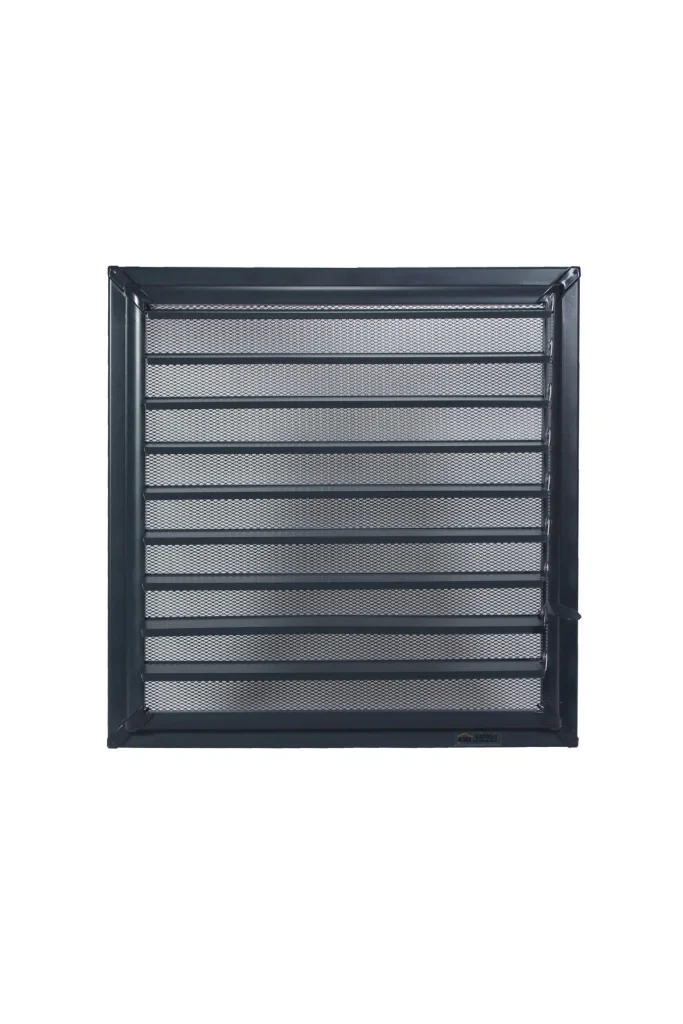
Think about the last time you walked into a stuffy room. The air felt heavy, maybe a little damp, and there was a faint smell of last night’s dinner still hanging around. You opened a window, but the breeze barely made a dent. That frustrating moment? It usually comes down to one overlooked component in your building’s design — the ventilation grille sitting quietly on your wall or ceiling.
In the HVAC world, this component goes by the name merfez. It is the Turkish term for the air terminal devices that control how fresh air enters a room and how stale air leaves it. Every residential building, office tower, hospital, or shopping mall depends on these grilles to keep indoor air moving, clean, and comfortable. Without them, your heating and cooling system would pump conditioned air into ductwork that goes nowhere useful.
Yet most people never give their ventilation grilles a second thought. They assume the air conditioner or furnace does all the work. The reality is different. The grille is where the system meets the room. Its size, type, placement, and material quality directly shape how well you breathe indoors. A poorly chosen grille can create dead zones where air barely circulates, noisy drafts that disrupt sleep, and moisture buildup that invites mould.
This guide covers everything you need to know about ventilation grilles — from basic definitions and types to materials, installation, and leading manufacturers like Birlik Merfez. Whether you are a homeowner upgrading your bathroom ventilation, a contractor specifying components for a new build, or a facility manager maintaining a commercial HVAC system, you will find practical and actionable advice here.
What Is a Merfez and How Does It Work?
At its simplest, a merfez is a structured opening — usually made of aluminium or plastic — that sits at the end of a ventilation duct. It allows air to flow into or out of a room while blocking larger objects like insects, dust clumps, and debris from entering the ductwork. The word itself has French roots and has been widely adopted in Turkish construction and HVAC terminology. You will hear it used interchangeably with terms like ventilation grille, air register, and air terminal device depending on the region.
The way it works is straightforward. Your HVAC system pushes conditioned air through a network of ducts. At the point where a duct meets a wall, ceiling, or floor, the grille acts as the final gateway. If it is a supply grille, it distributes fresh or conditioned air into the room. If it is a return grille, it collects used air and channels it back into the system for filtering and reconditioning. Some models come with adjustable vanes — small angled blades behind the front face — that let you aim the airflow horizontally, vertically, or at a specific angle. Others include a built-in damper, which is a sliding plate that controls how much air passes through.
Core Functions of a Merfez
Every ventilation grille serves three fundamental purposes. First, it distributes supply air evenly across a room so that every corner receives adequate ventilation. Without proper distribution, you end up with hot spots near the unit and cold zones on the far side of the room. Second, it collects return air — the stale, warm, or humid air that needs to leave the space. This return function is critical in kitchens where cooking fumes build up, bathrooms where moisture from showers can damage surfaces, and any sealed room where carbon dioxide levels rise over time. Third, it acts as a physical barrier. The mesh or vane structure prevents pests, construction debris, and large particles from entering the duct system, which protects the filters and internal components downstream.
Where Are They Installed?
You will find these grilles in almost every type of built environment. In homes, they are most common in bathrooms, kitchens, and living rooms — mounted on walls, ceilings, or even glass windows. Apartment buildings typically have them in ventilation shafts that run vertically through the structure. In commercial settings like offices and retail spaces, ceiling-mounted models dominate because they distribute air downward without taking up wall space. Hospitals and laboratories use specialised versions with higher filtration ratings to maintain strict air quality standards. Industrial facilities rely on heavy-duty grilles that can handle large air volumes and withstand harsh environments. The common thread across all these applications is that proper grille selection and placement is not optional. It is essential for comfort, health, and energy efficiency.
Types of Merfez for Every Application
One of the biggest mistakes people make is assuming that all ventilation grilles are the same. They are not. The right type depends on what the grille needs to do, where it will be installed, and what kind of airflow pattern the space demands. Here is a breakdown of the main categories.
Supply vs. Return Grilles
Supply grilles push conditioned air into a room. They often feature adjustable vanes arranged in single or double rows, allowing you to direct airflow toward specific zones. Double-row models give you control over both horizontal and vertical angles, making them ideal for large open-plan spaces where even distribution is tricky. These are sometimes called distributor grilles in technical specifications. Return grilles, on the other hand, pull stale air out of a room and send it back through the duct system. They tend to have a simpler design since directional control is less important on the suction side. What matters most for return grilles is open area — the percentage of the grille face that is actually open for air to pass through. A higher open area means less resistance and quieter operation.
Linear, Square Honeycomb, and Round Duct Varieties
Linear grilles are long, narrow models that create a sleek, barely-there aesthetic. They are widely used in modern office fit-outs, conference halls, hotel lobbies, and along the edges of swimming pools. Because you can join multiple linear sections end to end, they can stretch across entire walls or ceiling runs, creating a continuous line of ventilation that blends into the architecture. Square honeycomb grilles feature a grid of small square openings and are commonly paired with fan-coil units in commercial HVAC systems. They work well as return grilles because their uniform pattern allows steady, even airflow. Round duct grilles connect to circular ductwork — the most common duct shape in residential systems. They come in both supply and return configurations and are popular for their compact size and easy installation.
Specialty Options — Louvered, Fan-Assisted, and Transfer Types
Louvered grilles, known as panjurlu models in Turkish, have a hinged shutter that you can open or close manually. They are a bathroom and toilet staple because they let you shut off airflow completely when ventilation is not needed. Fan-assisted grilles have a small built-in fan that actively pulls or pushes air, making them far more effective than passive models in apartment ventilation shafts where natural draft is weak. Transfer grilles serve a different purpose entirely. They do not connect to ductwork at all. Instead, they sit in internal walls or doors to allow air to pass between adjacent rooms, balancing pressure differences caused by the HVAC system. Beyond these core types, you will also encounter slot diffusers, anemostats, and jet nozzles, each designed for specific airflow patterns and room geometries.
Materials and Build Quality
The material your grille is made from affects its durability, appearance, weight, and suitability for different environments. Most models on the market today fall into one of two camps: aluminium or plastic. But there are niche options worth knowing about.
Aluminium vs. Plastic
Aluminium grilles are the professional’s choice for commercial and industrial applications. They are lightweight yet strong, resistant to corrosion and rust, and they hold up well in high-temperature environments near heating equipment. Their clean metallic finish suits modern architectural styles, and they can be powder-coated in virtually any colour to match interior design schemes. The trade-off is cost. Aluminium models typically run higher in price compared to plastic, and they require screw-mounting rather than adhesive installation in most cases. Plastic grilles are the go-to for residential bathrooms, toilets, and kitchens. They are affordable, moisture-resistant, and incredibly easy to install. Most come with self-adhesive strips that stick directly to tile, glass, or marble surfaces without drilling. This makes them a favourite for renters and DIY homeowners who want a quick upgrade without calling a contractor. However, plastic is less durable under sustained heat and high-pressure airflow, so it is not suitable for industrial settings or primary HVAC distribution lines. For decorative applications, you can also find grilles made from wood, which adds a warm, natural touch to living spaces but requires more maintenance. Glass window grilles — the round type commonly seen in Turkish kitchens — serve a dual purpose by providing both ventilation and natural gas safety venting.
Coatings and Finishes
The standard finish for aluminium grilles is natural anodised, which gives a clean silver look and adds a thin protective oxide layer against corrosion. For projects that demand a specific colour, electrostatic powder coating is the industry-standard method. This process bonds a coloured resin to the metal surface using an electrostatic charge, then bakes it in a furnace for a hard, chip-resistant finish that lasts years. Slot diffusers often come with matte black vanes as a design accent against a silver or white frame. When choosing a finish, think beyond aesthetics. In coastal or high-humidity environments, the quality of the coating directly determines how long the grille will last before showing signs of wear.
How to Choose and Install a Merfez Correctly
Getting the right grille is only half the battle. Installing it properly is just as important. A perfectly engineered HVAC system will underperform if the end-point grilles are the wrong size, in the wrong spot, or poorly sealed. Industry research consistently shows that a significant share of ventilation complaints trace directly back to grille selection and placement errors.
Sizing and Placement Considerations
Start with the room’s requirements. A large open-plan living area with high ceilings needs bigger or more numerous supply grilles than a compact bedroom. The heating and cooling load — measured in BTUs or kilowatts — determines how much air the system needs to deliver, and that figure dictates the grille’s minimum open area. Undersized grilles restrict airflow, which forces the HVAC unit to work harder and increases energy consumption. Oversized grilles can create drafts and noise issues. Placement is equally critical. Supply grilles on exterior walls beneath windows counteract cold downdrafts in winter. Ceiling-mounted supply grilles work best in rooms with uniform ceiling heights, where air can cascade evenly downward. Return grilles should be positioned away from supply grilles to avoid short-circuiting — a problem where conditioned air gets sucked back into the system before it has a chance to mix with room air.
Step-by-Step Installation Tips
Whether you are fitting a simple bathroom grille or a commercial ceiling model, the installation process follows a similar pattern. First, clean the mounting surface thoroughly. Dust, grease, and moisture will weaken adhesive bonds and prevent a proper seal. Second, choose your mounting method. For tile, glass, and marble, self-adhesive strips or double-sided mounting tape work well for lightweight plastic grilles. For drywall, concrete, or metal duct connections, screw-mount the grille using the pre-drilled holes in its frame. Third, seal the edges. Use appropriate sealant or insulation tape around the perimeter to prevent air leakage between the grille frame and the wall or ceiling opening. Even a small gap can reduce system efficiency and create whistling noises. Fourth, adjust the damper. If your grille has a built-in damper, set it to the desired airflow level. You can fine-tune this after the system has been running for a few hours and you can feel how the air distributes across the room.
Common Mistakes to Avoid
The most frequent error is blocking grilles with furniture, curtains, or shelving. A sofa pushed against a return grille effectively chokes the system. Another common mistake is choosing a grille based on appearance alone, without checking its airflow rating or open area percentage. Noise is another overlooked factor. In bedrooms, home offices, and recording studios, you need grilles rated for low-velocity, quiet operation. Skipping edge insulation is a silent efficiency killer — air that leaks around the frame is air that never reaches the room. Finally, many homeowners install passive grilles in apartment ventilation shafts where natural draft is too weak. In those situations, a fan-assisted model makes a noticeable difference in actual air exchange.
Birlik Merfez — A Leading Name in Ventilation Equipment
When it comes to choosing a reliable manufacturer, few names in the Turkish HVAC market carry as much weight as Birlik Merfez. Based in Istanbul, this company has been producing ventilation equipment for over 32 years. Their motto — success and continuity in production come from honesty and quality in service — reflects a business philosophy that has earned them a loyal customer base among contractors, engineers, and facility managers.
Product Range and Capabilities
Birlik Merfez manufactures a comprehensive range of air distribution products. Their catalogue includes grilles in every configuration discussed in this article — supply, return, linear, honeycomb, round duct, and louvered types. Beyond grilles, they produce diffusers, anemostats, dampers, louvers, fan-coil unit covers, natural gas outlet grilles, roof cowls, ventilation ducts, filters, silencers, and custom metal fabrication work. This breadth means that a contractor can source virtually every air terminal component from a single supplier, which simplifies procurement and ensures compatibility across products. Their dedicated research and development team continually refines product designs to meet evolving building codes and energy efficiency standards.
Quality Standards and Industry Reputation
Quality certifications back up the company’s claims. Birlik Merfez maintains documented quality policies and holds relevant industry certifications. They have completed over 500 reference projects, ranging from residential complexes to hospitals and commercial towers. Their participation in major international trade fairs like ISK-SODEX — one of the largest HVAC exhibitions in the region — demonstrates their commitment to staying at the forefront of industry developments. The company also serves international markets, with multilingual outreach in Turkish, English, German, Arabic, and Hebrew, reflecting their growing export footprint.
Why Contractors and Engineers Trust This Brand
Several factors set this manufacturer apart. Their production facility spans 1,000 square metres and is staffed by a team of 30 specialists who bring deep expertise to every order. The product catalogue covers over 250 items, which means most projects can be fully supplied without mixing vendors. On-time delivery is a stated commitment, with quality control checks completed before every shipment. For contractors working on tight construction schedules, that reliability matters. Birlik Merfez also offers tailored solutions for non-standard requirements — custom dimensions, special finishes, and unique mounting configurations — which is something smaller or less experienced manufacturers often struggle to provide.
Benefits of Investing in Quality Ventilation Grilles
Spending a little more on well-made grilles pays dividends in ways most people do not immediately see. Here are the three biggest returns on that investment.
Health and Indoor Air Quality
Indoor air can be two to five times more polluted than outdoor air according to environmental health studies. Cooking fumes, bathroom moisture, cleaning chemical vapours, carbon monoxide from gas water heaters, and carbon dioxide from breathing all accumulate in sealed modern buildings. A properly functioning ventilation system with correctly specified grilles continuously flushes out these pollutants and replaces them with fresh outdoor air. This is not just a comfort issue. Poor indoor air quality has been linked to headaches, fatigue, respiratory problems, and what researchers call sick building syndrome. Quality grilles with integrated mesh filters add an extra layer of protection by trapping airborne particles and preventing pests from entering the duct system.
Energy Savings and System Efficiency
When grilles are correctly sized and positioned, the HVAC system distributes air evenly without working overtime. Every dead zone in a room — a corner that stays stuffy while the rest feels comfortable — represents wasted energy. The system keeps running, trying to bring the thermostat to its set point, but the conditioned air never reaches the problem area. Properly placed supply and return grilles eliminate these dead zones, which means the system reaches its target temperature faster and cycles off sooner. Over a year, this translates into measurable savings on electricity and gas bills. In commercial buildings with hundreds of grilles, the cumulative impact on operating costs can be substantial.
Aesthetic and Property Value Impact
Modern grille designs have come a long way from the clunky metal covers of the past. Linear models create clean, architectural lines that interior designers love. Custom powder-coated finishes match any colour palette. Concealed ceiling grilles virtually disappear into the surface. For homeowners preparing to sell, upgraded ventilation components signal a well-maintained property and can contribute to a higher perceived value, especially in markets where buyers are increasingly aware of indoor air quality.
Buying Guide — What to Look for When Shopping
Before you place an order, run through this practical checklist. First, match the grille type to its function. Are you supplying air, returning air, or transferring air between rooms? Each job calls for a different product. Second, choose the material based on the installation environment. Plastic works for wet rooms. Aluminium handles commercial and industrial demands. Third, measure your duct opening precisely. A grille that is even a centimetre off will either not fit or leave gaps that leak air and create noise. Fourth, check whether you need a built-in damper for airflow adjustment. Not all models include one, and retrofitting a damper later can be awkward. Fifth, compare pricing on a per-unit basis across manufacturers, but do not sacrifice quality for a small saving. A cheap grille that corrodes or warps within two years costs more in the long run than a well-made one that lasts a decade. Sixth, ask for product data sheets and certifications. Reputable manufacturers like Birlik Merfez provide detailed technical documentation that helps you verify airflow ratings, noise levels, and material specifications before you commit.
Conclusion
A ventilation grille is not just a metal or plastic cover on your wall. It is the point where your entire HVAC system delivers its promise of clean, comfortable air to the room you live and work in. The type of merfez you choose, the material it is made from, and where you install it all have a direct and measurable impact on indoor air quality, energy consumption, and everyday comfort.
This guide has walked you through the fundamentals — what these grilles are, the different types available, how to pick the right material, and how to install them without the common mistakes that undermine performance. We have also looked at Birlik Merfez as an example of what a reputable manufacturer brings to the table: decades of experience, a broad product range, quality certifications, and a commitment to reliable delivery.
As building standards tighten and awareness of indoor air quality grows, the demand for well-engineered ventilation components will only increase. Smart building technologies are beginning to integrate sensors with grille systems, allowing real-time airflow adjustments based on occupancy and air quality readings. Whether you are installing a simple bathroom grille or specifying hundreds of units for a commercial project, the fundamentals remain the same. Choose quality. Choose the right type for the job. And work with manufacturers and HVAC professionals who understand that the last metre of ductwork matters just as much as the first.
1. What does merfez mean?
Merfez is a widely used Turkish term for ventilation grilles and air terminal devices installed in HVAC systems. These components are mounted on walls, ceilings, or floors to control how fresh air enters an indoor space and how stale or contaminated air leaves it. The word has French origins and is used across the construction, mechanical engineering, and building services industries in Turkey and neighbouring regions.
2. What is the difference between a merfez, a register, and a diffuser?
A merfez (grille) is the simplest type of vent cover. It has no moving parts and allows air to pass freely in or out. A register is a grille with an added adjustable damper, giving you control over airflow volume and direction. A diffuser is a more advanced component designed to spread conditioned air in multiple directions or patterns for even distribution. In short, all registers and diffusers are types of grilles, but not every grille is a register or diffuser.
3. Is a merfez the same as a vent?
Not exactly. A vent is the general term for any opening through which air enters or exits a room. A merfez is the cover or device placed over that opening to regulate airflow, block debris, and prevent insects from entering the duct system. Think of the vent as the hole and the merfez as the structured cover that manages what passes through it.
4. What materials are ventilation grilles made from?
The two most common materials are aluminium and plastic. Aluminium grilles are durable, corrosion-resistant, and ideal for commercial and industrial environments. Plastic grilles are lightweight, affordable, moisture-resistant, and popular for residential bathrooms and kitchens. You can also find niche options made from wood for decorative use, stainless steel for hygienic settings like hospitals, and glass for kitchen window vents used as natural gas safety outlets.
5. What are the main types of merfez used in buildings?
The main types include supply (distributor) grilles that push conditioned air into rooms, return (collector) grilles that pull stale air back into the duct system, linear grilles for sleek architectural lines, square honeycomb grilles for fan-coil units, round duct grilles for circular ductwork, louvered grilles with manual shutters, fan-assisted grilles with built-in motors, and transfer grilles that balance air pressure between adjacent rooms.
6. What is a linear merfez and where is it used?
A linear merfez is a long, narrow ventilation grille that creates a clean, barely-visible line along a wall or ceiling. It is widely used in modern offices, hotel lobbies, conference halls, along swimming pool edges, and in raised-floor data centres. Multiple linear sections can be joined end to end to create continuous runs stretching several metres, making them a favourite among architects and interior designers.
7. What is a transfer grille and when do I need one?
A transfer grille is installed in an interior wall or door to allow air to flow between two adjacent rooms. It does not connect to any ductwork. You need one when a room with a closed door has no direct return air path to the HVAC system. Without a transfer grille, the closed room builds up positive pressure, which restricts new supply air from entering and creates uncomfortable stuffiness.
8. How do I choose between a supply and a return merfez?
It depends on the airflow function at that point in your system. If the duct is delivering conditioned air into the room, you need a supply grille with adjustable vanes to direct airflow. If the duct is pulling used air out of the room and back to the HVAC unit, you need a return grille with a high open-area percentage for minimal resistance. In most rooms, you will have at least one of each to create proper air circulation.
9. Should I choose a louvered or fixed-blade grille for my bathroom?
A louvered (panjurlu) grille is the better option for most bathrooms. Its hinged shutters let you close off airflow completely when ventilation is not needed, which prevents cold drafts in winter. Fixed-blade grilles are always open and work well in spaces that need constant airflow, such as kitchens with gas appliances. For windowless bathrooms, consider a fan-assisted louvered model that actively pulls humid air out of the room.
10. Where should a merfez be installed in a room?
Placement depends on the type. Supply grilles work best on exterior walls beneath windows to counteract cold downdrafts, or on ceilings in rooms with uniform height for even downward air distribution. Return grilles should be positioned away from supply grilles to avoid short-circuiting, where conditioned air gets sucked back before mixing with room air. In kitchens, grilles are typically installed on windows or external walls for gas safety ventilation.
11. Can I install a merfez myself or do I need a professional?
Simple residential grilles, especially self-adhesive plastic models for bathrooms and kitchens, are straightforward enough for DIY installation. You just clean the surface, peel the backing off the adhesive strips, and press the grille firmly into place. For screw-mounted aluminium grilles, ceiling-mounted models, or any installation that connects to active HVAC ductwork, hiring a qualified HVAC technician is recommended to ensure proper sealing, sizing, and system balance.
12. What is the standard size for a bathroom merfez?
The most common standard size for bathroom ventilation grilles in residential buildings is 25 x 45 cm. However, sizes can range from as small as 15 x 15 cm for compact spaces to 40 x 40 cm or larger for main bathrooms. The correct size depends on your duct opening dimensions and the airflow volume required. Always measure the existing opening before purchasing a replacement grille.
13. How do I prevent air leaks around a newly installed grille?
Use insulation tape or a suitable sealant around the full perimeter of the grille frame where it meets the wall, ceiling, or duct opening. Even a small gap can cause whistling noises and reduce system efficiency by letting conditioned air escape into wall cavities instead of the room. For screw-mounted grilles, ensure all mounting screws are tight and the frame sits flush against the surface.
14. How often should I clean my ventilation grilles?
Clean your grilles at least every three to six months. If you have indoor pets, live near a construction site, or anyone in the household has allergies or asthma, clean them monthly. Dust and grease buildup on the vanes and mesh reduces airflow, forces the HVAC system to work harder, and can become a breeding ground for bacteria and mould. A regular cleaning schedule aligned with your HVAC filter changes is the simplest approach.
15. What is the best way to clean a merfez?
Turn off the HVAC system first. For removable grilles, unscrew or unclip them and soak in warm water with a small amount of dish soap. Use a soft-bristled brush to clean between the slats, then rinse and air dry completely before reinstalling. For grilles that cannot be removed, vacuum the surface with a brush attachment, then wipe down with a damp microfibre cloth. Avoid bleach or harsh chemicals, as these can damage finishes and create indoor air quality issues of their own.
16. Can dirty grilles make you sick?
Yes. Clogged or dirty ventilation grilles restrict airflow, which allows dust, mould spores, bacteria, pet dander, and allergens to build up inside the duct system and the room. According to the EPA, indoor air can be significantly more polluted than outdoor air, and poorly maintained ventilation components are a contributing factor. Symptoms linked to dirty grilles and ducts include headaches, fatigue, allergic reactions, and respiratory problems sometimes referred to as sick building syndrome.
17. Can the wrong merfez increase my energy bills?
Absolutely. An undersized grille restricts airflow, forcing the HVAC system to run longer cycles to reach the set temperature. An oversized grille can create drafts and uneven temperature zones. Poorly placed grilles create dead spots where conditioned air never reaches, causing the system to overwork. All of these scenarios translate into higher electricity and gas consumption. Correctly sized and positioned grilles allow the system to operate at peak efficiency with shorter run times.
18. What does the open-area percentage of a grille mean?
Open-area percentage refers to the proportion of the grille face that is actually open for air to pass through, as opposed to being blocked by vanes, blades, or the frame. A higher open-area percentage means less resistance to airflow, quieter operation, and better system efficiency. Return grilles typically need a higher open area than supply grilles because they must handle the full volume of air leaving the room without creating a noticeable suction noise.
19. Do ventilation grilles affect noise levels in a room?
Yes, significantly. Noise from grilles is caused by air turbulence as it passes through the vanes and openings. Undersized grilles or those with a low open-area percentage force air through at higher velocity, which creates hissing, whistling, or rattling sounds. For quiet environments like bedrooms, home offices, and recording studios, choose grilles with a high open-area percentage and check the manufacturer’s NC (Noise Criteria) rating. Larger grilles operating at lower velocity are inherently quieter.
20. Is a kitchen merfez required by law for natural gas safety?
In many countries, including Turkey, building codes require that kitchens with natural gas appliances have a ventilation grille or opening that connects to the outside. This is a critical safety measure. In the event of a gas leak, the grille allows the gas to dissipate rather than accumulate to dangerous levels. These kitchen grilles, often the round glass-window type, must never be blocked, covered with plastic, or sealed shut under any circumstances.
21. Should I keep my merfez open or closed during winter?
Keep it open. Closing ventilation grilles during winter traps moisture, cooking fumes, and carbon dioxide inside your home. This leads to condensation on windows, mould growth on walls, and poor indoor air quality. If you are concerned about cold drafts, choose a louvered grille that lets you partially close the vanes to reduce airflow without sealing the opening completely. In kitchens with gas appliances, the grille must remain fully open year-round for safety.
22. What is Birlik Merfez and what do they manufacture?
Birlik Merfez is an Istanbul-based manufacturer of HVAC air distribution equipment with over 32 years of industry experience. Their product range covers more than 250 items, including supply and return grilles, linear grilles, diffusers, anemostats, dampers, louvers, fan-coil unit covers, natural gas outlet grilles, roof cowls, ventilation ducts, filters, silencers, and custom metal fabrication. They serve both domestic and international markets and have completed over 500 reference projects.
23. How much does a merfez cost on average?
Prices vary widely depending on the type, material, size, and manufacturer. Basic residential plastic grilles for bathrooms can start from as little as a few dollars or Turkish lira. Mid-range aluminium grilles for commercial applications typically cost more per unit. Linear grilles and custom-fabricated models are at the higher end of the price scale. Always compare prices on a per-unit basis and factor in longevity. A cheap plastic grille that warps in two years costs more long-term than a quality aluminium one that lasts a decade.
24. What should I look for when buying a merfez online?
Check six things before placing your order. First, confirm the exact dimensions match your duct opening. Second, verify the material suits the installation environment — plastic for wet rooms, aluminium for commercial use. Third, check whether the grille includes a built-in damper for airflow control. Fourth, read the product data sheet for airflow capacity and noise ratings. Fifth, look for quality certifications from the manufacturer. Sixth, compare customer reviews and return policies, especially when buying from third-party marketplaces.

