
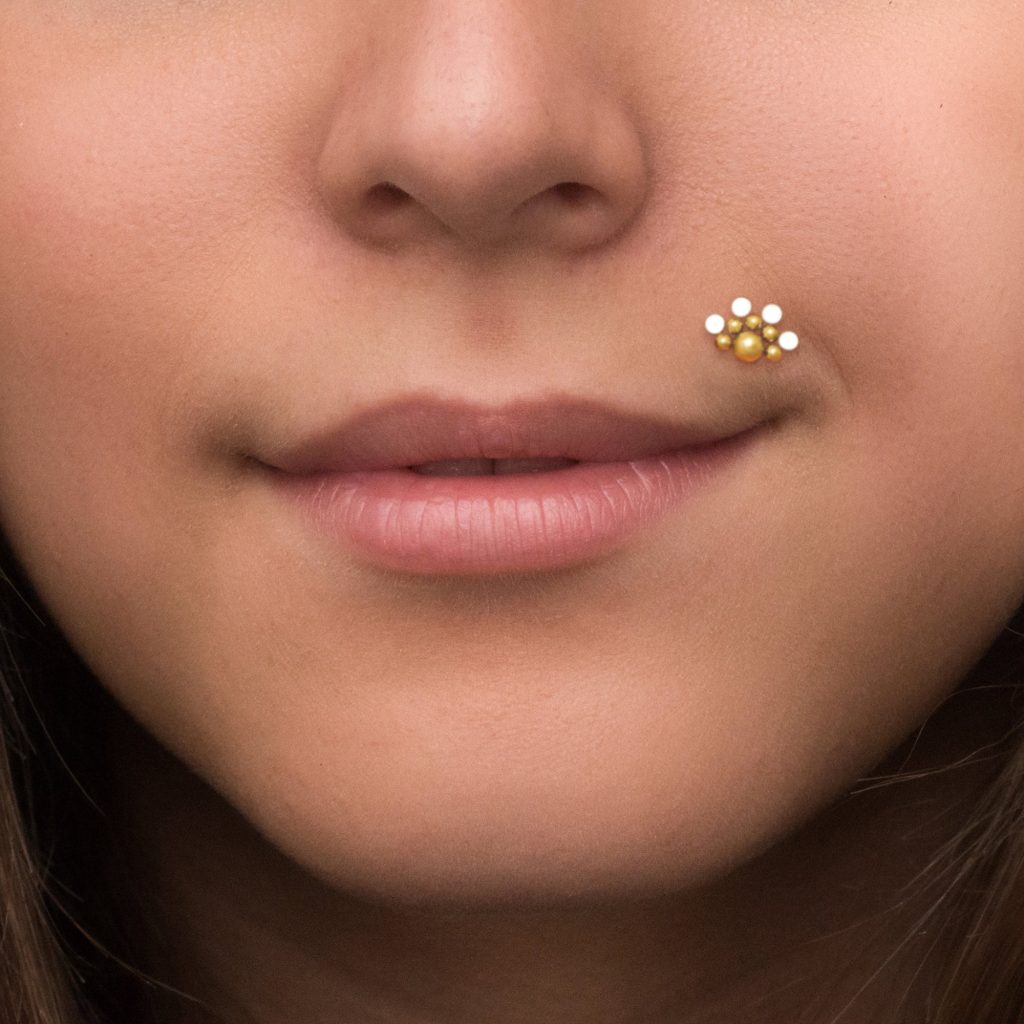
Some piercings are purely trendy. Others feel like they belong to a different era entirely. A monroe piercing sits somewhere in between — timeless in origin, relevant in every decade since it became popular, and still one of the most requested facial piercings in professional studios today.
It sits just above the upper lip, slightly off-center to the left, replicating the famous beauty mark that made Marilyn Monroe one of the most photographed women in history. That deliberate placement — delicate without being invisible, noticeable without being loud — is exactly why this look has endured.
Whether you’re drawn to the vintage Hollywood glamour, the subtlety of it, or simply the way it frames the lips, there’s no shortage of reasons people keep gravitating toward it. But before you book that appointment, there’s a lot worth knowing — about the pain, the healing, the jewelry, the costs, and yes, the scarring. This guide lays it all out honestly, so you walk in prepared and walk out with a decision you feel good about.
What Is a Monroe Piercing? The Story Behind the Style
The name does the explaining for you. A monroe piercing takes its placement directly from Marilyn Monroe’s iconic beauty mark — a small, deliberate spot positioned just above the upper lip on the left side. The jewelry recreates that exact placement, turning what was once a natural skin marking into a permanent style choice.
In terms of anatomy, it sits in the philtrum region — the soft tissue above the upper lip, below the base of the nose, just off to one side. That asymmetry is intentional. It’s what gives the piercing its signature look — artful rather than surgical, personal rather than predictable.
It’s worth knowing how it fits alongside similar piercings. A Madonna piercing is placed on the right side of the upper lip rather than the left — same style, different side, different celebrity namesake. A medusa sits dead-center above the upper lip. A labret piercing sits below the lower lip entirely. The monroe is distinctly left-of-center, and that placement distinction matters both aesthetically and in terms of how piercers execute it.
The appeal spans a wide range of people. Those drawn to vintage aesthetics love the old Hollywood connection. People in creative or expressive environments wear it as a signature detail. And many people who want something facial but understated find it hits the perfect note — visible enough to make an impact, subtle enough for daily life. That balance is hard to find in facial piercings, and the monroe delivers it consistently.
Does a Monroe Piercing Hurt? What to Expect
Pain is deeply personal and varies from one person to the next. But most people who’ve gone through the process put the discomfort somewhere in the moderate range — noticeably less intense than cartilage piercings, roughly on par with a standard nostril piercing, and significantly easier than eyebrow or industrial placements.
The needle passes through soft, fatty tissue above the upper lip. There’s no bone involved, no cartilage to push through, and the actual procedure takes only a matter of seconds in the hands of an experienced piercer. Most people say the build-up in their head was far worse than the physical sensation.
What comes after is a different story. The upper lip area has a rich blood supply, which means swelling sets in quickly and noticeably. Your initial jewelry will be deliberately longer than what you’ll eventually wear — usually around 10–14mm — to leave room for that swelling without the disc pressing into the tissue inside your mouth.
What the First 48 Hours Feel Like
Expect noticeable puffiness around the piercing site, tenderness whenever you move your upper lip, and a dull throbbing sensation that eases over the first day or two. You’ll also likely see some clear or whitish fluid around the jewelry. That’s normal lymph fluid your body produces as part of the natural healing response — it is not a sign of infection.
Rinsing with cold water (not direct ice) helps manage discomfort. Over-the-counter anti-inflammatories like ibuprofen are generally fine, but check with your piercer or a healthcare provider before taking anything.
Healing Timeline and Aftercare You Actually Need to Follow
Healing happens in two distinct stages, and understanding both prevents most of the mistakes people make. Externally, the skin around the entry and exit points may look healed within six to eight weeks. The redness fades, the swelling goes down, and the site stops feeling sore. This is where many people check out mentally.
But internally, the tissue channel the jewelry sits in takes considerably longer to fully mature — four to six months in most cases, and sometimes longer depending on your body. Treating a piercing as fully healed before it actually is leads to setbacks, irritation bumps, and extended recovery.
Your Daily Aftercare Routine
- Spray the external piercing twice daily with sterile saline wound wash — look for 0.9% sodium chloride with no added preservatives or fragrances
- Pat gently dry with a clean, single-use paper towel after cleaning — fabric towels harbor bacteria and snag jewelry
- Rinse your mouth with a non-alcoholic saline rinse or a piercer-approved alcohol-free mouthwash after every meal
- Keep all skincare products, makeup, and SPF away from the piercing site until fully healed
What to Avoid During Healing
- Spicy, acidic, or very salty foods during the first few weeks
- Any mouth contact with the piercing — no kissing, no sharing drinks
- Pools, hot tubs, lakes, or any non-sterile water submersion
- Sleeping directly on the piercing — a travel pillow can help keep pressure off
- Touching or rotating the jewelry. This is one of the most persistent myths in piercing aftercare. Rotating the jewelry disrupts the healing fistula and causes more damage than it prevents
Normal healing signs include light crusting around the jewelry base and occasional minor redness after cleaning. Concerning signs include spreading redness, skin that feels warm to the touch, green or yellow discharge, fever, or pain that intensifies rather than gradually improving over time. If you notice any of these, see a professional — don’t just wait it out.
Choosing the Right Monroe Piercing Jewelry
Jewelry quality is not a luxury — it’s a healing variable. The wrong material in a fresh piercing can trigger allergic reactions, delay healing, and cause problems that take months to resolve. Getting this decision right from day one is one of the most important things you can do.
Starter Jewelry: What Goes in First
The standard initial jewelry for this type of placement is a flat-back labret stud. It has a flat disc on the inside of the mouth that rests gently against the gum line, and a decorative top on the outside. The flat internal disc design minimizes movement and reduces irritation from the inside out.
Your piercer will use a longer post than you’ll eventually wear — this is intentional. Once swelling subsides, typically around the six-to-eight-week mark, you’ll return for a shorter post. This process is called downsizing, and it matters. A post that’s too long after swelling settles can snag on things, cause irritation bumps, or apply unnecessary pressure to your gum line.
Best Materials for Long-Term Wear
- Implant-grade titanium (ASTM F136): The gold standard for initial and long-term jewelry. Lightweight, biocompatible, hypoallergenic, and available in anodized color finishes without compromising safety
- Implant-grade surgical steel: A solid choice for most people, though those with nickel sensitivities may react
- Solid 14k or 18k gold: Excellent for fully healed piercings. Never accept gold-plated or gold-filled — the coating wears away and exposes base metals that can cause reactions
- PTFE bioplastic: A flexible, inert material often recommended for people with metal sensitivities or for long-term retainer use
What to Avoid
- Nickel-based alloys
- Acrylic tops or mystery metal jewelry without material certifications
- Sterling silver — it tarnishes inside tissue and can leave permanent gray staining
For fully healed monroe piercing placements, the style range opens considerably. Gem-set tops, opal inlays, diamond-cut flat discs, and minimalist domes are all popular choices. Sizing typically runs at 16 gauge (1.2mm) or 14 gauge (1.6mm). Always confirm your gauge and post length with your piercer before purchasing replacement jewelry on your own.
Risks and Side Effects Worth Knowing
No piercing is risk-free, and the upper lip area comes with a specific set of considerations. Being aware of them doesn’t mean you should expect problems — it means you’ll recognize them early if they do appear.
Infection
The mouth environment exposes the piercing to bacteria constantly. Consistent aftercare dramatically reduces your risk, but it can’t eliminate it entirely. If you suspect infection — not just routine healing irritation — see a healthcare provider promptly. A critical mistake many people make is removing the jewelry themselves at the first sign of trouble. Doing this while infected can trap bacteria inside the tissue channel and make the situation significantly worse.
Gum and Tooth Erosion
The flat disc sitting against your upper gum line creates friction over time. This can gradually wear down gum tissue and, in more serious cases, scratch tooth enamel. Choosing an appropriately sized disc, switching to a flexible PTFE backing for long-term wear, and scheduling periodic dental check-ins all help keep this manageable. It’s a risk that develops slowly — easy to prevent, harder to reverse once it’s progressed.
Migration and Rejection
Sometimes the body treats jewelry as a foreign object and slowly pushes it toward the surface. This shows up as the jewelry appearing to change position over weeks, thinning skin around the entry or exit points, or persistent irritation that does not respond to improved aftercare. If you notice these signs, visit your piercer promptly. Catching migration early means you can potentially retire the piercing before visible scarring becomes a concern.
Irritation Bumps
Small fluid-filled bumps near the piercing site are common and usually not serious. They’re typically caused by pressure, improper jewelry, or disrupted aftercare — not infection. Upgrading jewelry quality and improving care usually resolves them without any additional treatment.
Will a Monroe Piercing Leave a Scar?
This is one of the most commonly searched questions about this particular piercing, and the straightforward answer is: probably, but the severity varies widely from person to person.
When the jewelry is removed, the tissue channel closes. For some people this leaves a nearly invisible indented mark. For others — particularly those with darker skin tones, a genetic tendency toward keloid formation, or a history of complications during healing — the monroe piercing scar can be more noticeable.
Several factors shape how visible the mark ends up being. How long you wore the jewelry matters significantly — a decade of wear creates a more established channel than six months. Whether you experienced infections or repeated irritation also plays a role, since tissue disruption leaves more to heal.
Options for Minimizing a Monroe Piercing Scar
- Silicone scar sheets, worn consistently for several weeks after the piercing is removed, can flatten and fade the area
- Topical vitamin C serum or niacinamide applied once the wound is fully closed supports skin regeneration
- Daily SPF on the area prevents scar tissue from hyperpigmenting, especially in warmer climates
- Professional treatments — microneedling, laser resurfacing, or steroid injections for keloids — are available for more persistent scarring
If you’ve decided to retire the piercing, do it thoughtfully. Have it removed professionally rather than pulling it out yourself, keep the area moisturized as it closes, and be patient. Scar tissue can continue to improve and fade for up to twelve months after removal.
Cost, Studio Selection, and Questions to Ask Your Piercer
Pricing varies by region, studio reputation, and the quality of jewelry included in the service. In most parts of the United States and United Kingdom, expect to pay between $40 and $80 for the procedure plus basic starter jewelry. High-demand studios in major cities may charge more.
The jewelry included in that base price varies considerably. Budget studios often use low-grade surgical steel. Reputable studios typically include implant-grade titanium as standard — and that distinction directly affects how cleanly your piercing heals. Trying to save money by going to the cheapest studio available is a false economy. Complications from improper technique or substandard jewelry can cost far more to fix than the difference in price.
What to Look for in a Trustworthy Studio
- APP (Association of Professional Piercers) membership or equivalent certification — this signals commitment to safety standards
- Single-use, sterile needles opened in front of you. Any studio using a piercing gun for lip or facial work should be walked away from immediately
- An autoclave on-site for sterilizing reusable equipment — ask to see it
- Clear, written aftercare instructions provided at the appointment
- A visible portfolio of healed facial and lip piercings — not just fresh work
Questions Worth Asking Before You Sit Down
- What material is the starter jewelry made from, and can I see certification?
- Will you handle the downsize appointment, and is that included in the price?
- What gauge and post length will you use, and what’s your reasoning?
A skilled, professional piercer answers these without hesitation or irritation. If you feel like you’re being rushed or brushed off, trust that instinct and find another studio.
Styles, Variations, and Making It Your Own
The longevity of this piercing isn’t just about history — it’s about how adaptable it is. The way you wear it shifts depending on your jewelry, your other piercings, and how you choose to style around it.
Left Side vs. Right Side
Traditionally, a monroe sits on the left — mirroring the placement of Marilyn Monroe’s actual beauty mark. A right-side placement has its own name (Madonna piercing) and its own celebrity association. In practical terms, both are anatomically identical piercings using the same jewelry type and aftercare. The choice of side comes down to your face, your symmetry preferences, and which feels more like you.
Pairing It With Other Piercings
A double placement — one on each side of the upper lip — is sometimes called a Marilyn. Some people add a medusa in the center for a trio effect. Spider bites on the lower lip create a visual contrast that pairs well with upper lip work. The important thing here is working with a piercer who can assess your individual anatomy. Spacing that works beautifully on one face may not translate to another.
Makeup and Workplace Considerations
During healing, keep all cosmetics away from the site. Once healed, the piercing becomes part of your toolkit — a tiny gem top next to a bold lip color, or a minimalist disc paired with a clean, bare look. Both work. For workplaces with visible jewelry restrictions, a clear PTFE retainer allows you to maintain the channel while reducing visibility.
Final Thoughts
A monroe piercing is one of those rare style choices that manages to feel simultaneously timeless and deeply personal. Done properly — with a qualified piercer, quality materials, and patient aftercare — it heals cleanly, wears beautifully, and becomes a natural part of how you carry yourself.
The fundamentals are simple: choose a certified professional, invest in implant-grade jewelry, follow your aftercare protocol without shortcuts, and give your body the time it needs to heal fully. The vast majority of complications that arise with this piercing trace back to one of these four areas being skipped or rushed. If you’ve worked through this guide, you’re already better prepared than most people who walk into a studio. Bring your questions, trust your instincts about the piercer, and don’t let anyone rush you. A monroe piercing done right is something you’ll be glad you took seriously from the very start.
Q1. What exactly is a monroe piercing and where is it placed?
A: A monroe piercing is a facial piercing positioned just above the upper lip, slightly off-center to the left side of the face. It sits in the soft tissue of the philtrum region, directly mimicking the famous beauty mark that Marilyn Monroe wore throughout her career. The jewelry used is almost always a flat-back labret stud, which keeps a low profile on the outside while a small flat disc rests against the inner gum line. The placement is deliberately asymmetric — this off-center positioning is what gives it its signature, graceful appearance.
Q2. What is the difference between a monroe piercing and a Madonna piercing?
A: The only real difference is which side of the upper lip they are placed on. A monroe piercing sits on the left side, mirroring Marilyn Monroe’s beauty mark. A Madonna piercing sits on the right side, referencing Madonna’s own iconic facial mark. The jewelry, healing timeline, aftercare protocol, and overall procedure are completely identical for both placements. The choice between them is purely a matter of personal preference and which side better suits your facial symmetry.
Q3. Why is it called a monroe piercing?
A: The name comes directly from Marilyn Monroe’s famous beauty mark, which sat just above her upper lip on the left side of her face. In the late 1990s, piercers began placing labret studs in this exact location so that clients could permanently replicate that iconic look. The piercing took her name and has kept it ever since. It is one of the very few piercings in modern body art named after a specific individual rather than its anatomy or jewelry style.
Q4. What does a monroe piercing symbolize?
A: A monroe piercing is widely associated with beauty, femininity, confidence, and individuality. Because it directly references Marilyn Monroe — one of the most enduring symbols of classic Hollywood glamour — wearing it carries a subtle nod to that legacy. For many people, it also represents self-expression and the desire to enhance their natural features in a personal, intentional way. It transcends gender as well; while historically more popular among women, many men now wear it as a minimalist facial accent.
Q5. How much does a monroe piercing hurt on a pain scale?
A: Most people rate a monroe piercing around 4 out of 10 on a standard pain scale, placing it in the moderate range. The upper lip has more nerve endings than areas like the earlobes or nostrils, which means the initial pinch is noticeable — but the needle passes through soft tissue quickly. The sharpest sensation lasts only a fraction of a second. The post-procedure swelling and tenderness over the first 48 hours is often described as more uncomfortable than the actual piercing itself.
Q6. Can a monroe piercing damage a nerve?
A: There is a small theoretical risk of nerve contact in the upper lip region since it is densely innervated. However, when performed by an experienced, APP-certified piercer who understands facial anatomy, the risk of meaningful nerve damage is extremely low. A poorly trained piercer who misjudges placement or angle presents a far greater risk. Symptoms such as persistent numbness or unusual tingling should be reported to a healthcare provider immediately. This is one of the strongest arguments for never cutting corners on studio and piercer quality.
Q7. Can you get a monroe piercing with a piercing gun?
A: No — and any studio offering to do so should be avoided entirely. Piercing guns use blunt-force trauma to push jewelry through tissue rather than cleanly removing a small cylinder of skin the way a hollow needle does. This causes significantly more tissue damage, increases infection risk, and cannot be fully sterilized between clients. Facial piercings like this one require precision that guns are incapable of providing. A hollow needle used by a trained professional is the only acceptable method.
Q8. How long does a monroe piercing take to fully heal?
A: External healing typically takes 6 to 10 weeks with consistent aftercare. However, the internal tissue channel takes considerably longer to fully mature — often 4 to 6 months. The most common mistake people make is stopping aftercare as soon as the piercing looks healed on the surface. The internal tissue remains susceptible to irritation and infection until it has fully stabilized. Always confirm with your piercer before reducing your aftercare routine.
Q9. Should you rotate or twist a monroe piercing while it heals?
A: No — this is one of the most persistent and damaging myths in piercing aftercare. Rotating or twisting jewelry disrupts the developing fistula (the healed tissue channel) each time it is done, essentially restarting the healing process at the surface. It also introduces bacteria from your fingers into the wound. Modern professional piercing standards universally advise leaving jewelry completely undisturbed during healing. Clean around the jewelry gently — never move it intentionally.
Q10. What foods and drinks should you avoid after getting a monroe piercing?
A: During the first few weeks of healing, avoid spicy, acidic, very salty, and extremely hot or cold foods — all of which can irritate the internal wound. Chewy or crunchy foods increase the risk of accidentally catching the jewelry. Alcohol and cigarettes are particularly harmful: alcohol weakens immune response and thins the blood, while cigarette chemicals actively disrupt tissue repair. Stick to soft, room-temperature, mild foods and rinse with a saline solution or alcohol-free mouthwash after every meal.
Q11. Can you use whitening toothpaste while a monroe piercing heals?
A: No. Whitening toothpastes and mouthwashes contain abrasive chemicals and bleaching agents that can irritate and disrupt the healing tissue around an oral piercing. This includes products listing charcoal, hydrogen peroxide, or other whitening compounds. Switch to a plain, non-whitening fluoride toothpaste and an alcohol-free mouthwash for the entire healing period. You can resume whitening products once the piercing has fully healed internally.
Q12. What is the best jewelry material for a monroe piercing?
A: Implant-grade titanium (ASTM F136) is the top recommendation for both initial and long-term wear. It is lightweight, entirely biocompatible, nickel-free, and can be anodized into various colors without compromising safety. Solid 14k or 18k gold is excellent for fully healed piercings. Implant-grade surgical steel is viable for most people, though those with nickel sensitivities may react. Always avoid nickel alloys, acrylic, sterling silver, and gold-plated or gold-filled pieces.
Q13. What gauge is a monroe piercing and what size post is used?
A: The standard gauge is 16G (1.2mm), though some piercers prefer 14G (1.6mm) depending on anatomy and jewelry preference. The initial post length is deliberately longer than what you will eventually wear — typically 8mm to 14mm — to accommodate swelling during early healing. Once swelling fully subsides (around weeks 6 to 8), you will need a downsize appointment to switch to a shorter post. Wearing an oversized post after swelling resolves increases the risk of snagging, irritation bumps, and gum contact.
Q14. When can you change monroe piercing jewelry for the first time?
A: The first jewelry change — the downsize from the initial long post — should happen around 6 to 8 weeks after piercing, once initial swelling has fully resolved. This swap should be performed by your piercer, not attempted at home. Flat-back labret jewelry uses a push-pin or threadless system that requires technique to insert and remove cleanly. After the piercing is fully healed (4 to 6 months internally), jewelry changes can be done independently with the right handling.
Q15. Does a monroe piercing damage teeth or cause gum recession?
A: It can, over time, if the wrong jewelry is used or placement is imprecise. The flat disc pressing against the upper gum line with every lip movement can gradually wear down gum tissue or scratch tooth enamel. Choosing an appropriately sized backing, switching to a flexible PTFE retainer for long-term daily wear, and scheduling periodic dental check-ins significantly reduce this risk. Most people who are properly fitted and diligent about jewelry sizing do not experience meaningful dental complications.
Q16. What are the signs of an infected monroe piercing?
A: Normal healing includes some redness, swelling, and light crusting. Signs of a possible infection are distinctly different: spreading redness that worsens, skin that feels warm to the touch, green or yellow discharge, a foul smell, fever, or pain that intensifies over several days. A critical mistake is removing the jewelry yourself if infection is suspected — this can trap bacteria inside the tissue channel and worsen the situation. See a healthcare provider promptly rather than waiting to see if it resolves on its own.
Q17. What causes a monroe piercing to smell, and how do you fix it?
A: A mild smell is usually caused by sebum — the oily secretion produced naturally by skin glands — mixing with dead cells, bacteria, and sweat around the jewelry. This is a normal biological process and not a sign of infection on its own. The fix is straightforward: clean the external site twice daily with saline spray, maintain good oral hygiene, and clean the jewelry thoroughly when you change it. If the smell is accompanied by pain, discharge, or swelling, consult a piercer or doctor.
Q18. How do you know if a monroe piercing is rejecting?
A: Rejection happens when the body gradually pushes jewelry toward the skin’s surface. Warning signs include: the jewelry visibly changing position over weeks, the skin above the jewelry becoming unusually thin or shiny, persistent irritation that does not respond to improved aftercare, or the entry/exit holes appearing to widen or become red and flaky. See your piercer immediately if you notice these signs — catching rejection early significantly limits scarring compared to letting it grow out entirely.
Q19. Will a monroe piercing leave a visible scar after removal?
A: For most people, yes — a small mark remains. The severity depends on how long you wore the jewelry, your skin tone, whether complications occurred during healing, and your individual tendency toward scar formation. Many people describe the mark as similar to a faded pimple scar — subtle and barely noticeable. Scar tissue can continue to fade and flatten for up to 12 months after the jewelry is removed. Silicone sheets, vitamin C serum, and professional treatments like microneedling can all accelerate fading.
Q20. How long does it take for a monroe piercing hole to close after removal?
A: The speed of closure depends entirely on how long the piercing has been in place. A fresh or partially healed piercing can start closing within hours to days of jewelry removal. A fully healed piercing worn for several years may take weeks to months to close at the surface, and the internal channel may never close completely. If you need to remove jewelry temporarily, use a clear PTFE retainer to maintain the channel rather than removing it entirely.
Q21. How much does a monroe piercing cost?
A: In the United States, the average cost ranges from $40 to $100 for the service, varying based on studio reputation, piercer experience, geographic location, and jewelry quality. In the UK, typical pricing runs £30 to £70. Always prioritize expertise and studio standards over finding the lowest price — complications from poor technique or substandard jewelry consistently cost more to resolve than any savings made upfront.
Q22. How do you hide a monroe piercing for work or school?
A: The most effective method is a clear or flesh-toned PTFE retainer — a bioplastic piece with a transparent post and a nearly invisible flat disc. These are specifically designed to maintain the piercing channel while significantly reducing visibility. Makeup can be applied over a retainer on a healed piercing but should never be used on a fresh or healing piercing as it risks introducing bacteria. Plan for visibility during the initial healing weeks if your workplace or school has visible jewelry restrictions.
Q23. Can you get a monroe piercing with braces or Invisalign?
A: Getting a monroe piercing while wearing braces is generally not recommended. The flat backing of the labret stud can catch on brackets and wires, causing irritation, displacing the jewelry, or damaging the orthodontic hardware. Invisalign aligners can also interfere if the piercing disc hooks on the aligner edge. The safest approach is to wait until orthodontic treatment is fully complete. If you are already pierced and beginning orthodontic work, discuss the situation with both your piercer and your orthodontist.
Q24. What is a double monroe or angel bites piercing?A: A double monroe refers to two piercings placed vertically above the same side of the upper lip, creating a stacked effect. Angel bites is the term for one piercing on each side of the upper lip — a monroe on the left and a Madonna on the right — creating a symmetrical pair. Both variations use the same flat-back labret jewelry and follow identical aftercare protocols. Working with a piercer who specializes in facial anatomy is especially important for paired placements, as spacing and symmetry must be carefully assessed against your individual facial structure.

