
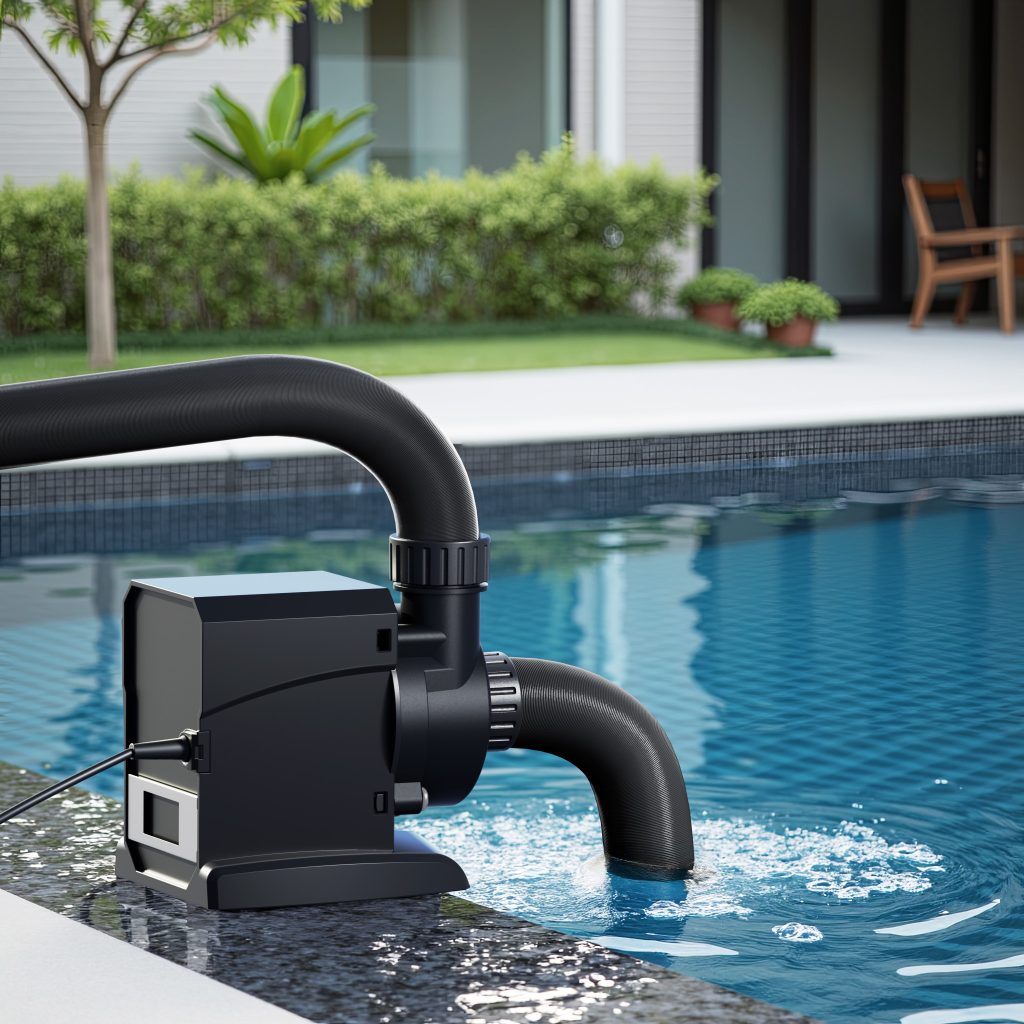
Picture this. You planned a pool party two weeks in advance. You invited friends, stocked up on sunscreen, and bought all the snacks. Then the morning of the party, you walk outside and stare at a pool that looks more like a swamp than a swimming destination. The water is cloudy. There is a faint green tinge near the walls. And the pump is making a noise that does not sound right.
This is one of those situations that every pool owner dreads — and almost always, it traces back to one root cause. The pool filter pump was either failing, undersized, or neglected for too long.
Your pool pump and filter system is not just another piece of equipment sitting in the corner of your backyard. It is the circulatory system of your entire pool. Without it working properly, every dollar you spend on chemicals, covers, and cleaning tools becomes far less effective. The water simply cannot stay clean without consistent, properly filtered circulation.
This guide is written for real pool owners — people who want to understand what they are buying, why it matters, and how to keep it running without calling a technician every season. Whether you are shopping for your very first setup, upgrading an aging unit, or trying to figure out why your current system is underperforming, this article covers everything you need. You will learn about the different types of systems, how to size one correctly for your pool, what to look for when buying, how to install it, and how to maintain it for years to come.
What Is a Pool Filter Pump and Why Does It Matter?
The Heart of a Healthy Pool
A pool filter pump is a two-part system that works together to keep your water safe, clear, and properly circulated. The pump itself is responsible for moving water. It pulls water from the pool through the skimmer and main drain, passes it through a filter where debris and contaminants are captured, and then returns the clean water back into the pool through the return jets.
Without this constant movement and filtration, pool water becomes stagnant. Stagnant water is where algae bloom, bacteria multiply, and cloudiness sets in. No amount of chlorine can compensate for a pool that is not being properly circulated and filtered. The chemistry simply does not distribute evenly, and the contaminants have nowhere to go.
This applies to every type of pool — whether you have a large in-ground setup in the backyard or a smaller above ground pool pump and filter arrangement. The principle is the same. Move the water, filter out the junk, return it clean.
Key Components You Should Know
Before you go shopping or start comparing models, it helps to understand what the main parts of the system actually do. The pump motor powers the impeller, which is a rotating blade that creates the suction needed to pull water through the system. The strainer basket sits at the pump inlet and catches large debris — leaves, bugs, hair — before it can reach the filter or damage the impeller. The filter housing contains the actual filtration media, whether that is sand, a cartridge, or diatomaceous earth. Finally, the return jets push the filtered water back into the pool, and their positioning affects how well circulation happens across the entire pool surface.
Knowing these components means you can identify where a problem is coming from when something goes wrong — and more often than not, the fix is simpler than you think.
Types of Pool Filter Pumps — Which One Is Right for You?
Not all filtration systems are built the same way. The type of filter media you choose affects how fine the filtration is, how much maintenance is involved, and what the long-term cost looks like. There are three main types of pool filter pump setups on the market today, each with its own strengths and trade-offs.
Sand Filter Pump for Above Ground Pools
A sand filter pump for above ground pool setups is one of the most popular choices among homeowners, and for good reason. Sand filtration works by passing water through a bed of specially graded silica sand. As water flows through, particles down to about 20 to 40 microns in size get trapped in the sand bed, and clean water moves on to the return line.
The appeal here is straightforward. Sand filters are durable, affordable, and remarkably low-maintenance. The filter media — the sand itself — does not need to be replaced for five to seven years under normal use. When the sand becomes clogged and the pressure gauge starts climbing, you simply run a backwash cycle. Backwashing reverses the water flow through the filter, flushing out the trapped debris and clearing the sand bed for continued use.
The main downside is that sand does not capture the finest particles. If you want crystal-clear water at the microscopic level, a sand system will not fully get you there. But for most above-ground pool owners who want reliability without complexity, a sand filter pump for above ground pool use is an excellent, practical choice.
Cartridge Filter Pumps
Cartridge filter systems take filtration a step further. Instead of sand, these units use a pleated polyester filter element that traps particles down to around 10 to 15 microns. That is noticeably finer than sand filtration, which means cleaner water with less debris slipping through.
One of the biggest practical advantages is that cartridge systems do not require backwashing. This is a significant benefit in areas where water conservation matters, since backwashing can use hundreds of gallons each time. To clean a cartridge filter, you simply remove the element, rinse it with a garden hose, and reinstall it. Every one to three years, depending on usage, the cartridge itself gets replaced.
Cartridge systems are a great match for smaller pools, households with water restrictions, and owners who want better-than-sand filtration without the added complexity and cost of a DE system.
Diatomaceous Earth (DE) Filter Pumps
If you want the absolute finest filtration available in a residential pool system, diatomaceous earth — or DE — is the answer. DE filters use a powder made from fossilized algae to coat a series of internal grids. Water passes through this powder coating, and particles as small as two to five microns get captured. That is impressive filtration by any standard, and the water clarity it produces is noticeably better than either sand or cartridge systems.
The trade-off is complexity and cost. DE filters require periodic recharging with fresh DE powder, particularly after backwashing. The powder itself requires careful handling, as inhaling DE dust is a health hazard. These systems also cost more upfront and require more involved maintenance. For in-ground pools with heavy usage — or for owners who simply will not settle for anything less than glass-clear water — a DE setup is worth the investment.
How to Choose the Right Pump and Filter for Your Swimming Pool
Choosing the right pump and filter for swimming pool use is not just about picking the most powerful option or the one with the most features. It comes down to matching the system’s capacity to your pool’s specific needs. Getting this wrong in either direction creates problems.
Sizing the Pump Correctly
The concept of turnover rate is the foundation of proper pump sizing. Your pool water should cycle through the filtration system completely at least once every eight hours. That is the minimum standard for maintaining water quality.
To figure out what size pump you need, start with your pool’s volume in gallons. Divide that number by eight (for an eight-hour turnover). That gives you the gallons per hour — or GPH — that your pump must be capable of moving. Convert that to gallons per minute (GPM) by dividing by 60, and you have your minimum flow rate requirement.
For example, a 20,000-gallon pool needs to move roughly 2,500 GPH, or about 42 GPM, to achieve a full turnover in eight hours. Any pump rated below that will leave your pool under-filtered.
Oversizing is just as problematic. A pump that is too powerful for your plumbing creates excessive pressure, accelerates wear on fittings and seals, and costs significantly more to operate. Bigger is not always better here.
Matching Filter Size to Pump Output
Your filter needs to handle the flow rate your pump produces — and ideally, it should be rated somewhat higher. A filter that is undersized relative to the pump’s output will clog faster, require more frequent cleaning, and reduce overall system efficiency.
For cartridge and DE filters, look at the square footage rating on the filter housing. A higher square footage means more surface area and greater capacity. For sand filters, the tank diameter and flow rate rating are the key numbers to check.
When buying a pump and filter for swimming pool use as a matched set, manufacturers have already done this sizing work for you. This is one reason why combo kits — especially for above ground pools — are such a practical starting point.
Single-Speed vs. Dual-Speed vs. Variable-Speed Pumps
The motor type you choose has a big impact on both performance and operating cost. Single-speed pumps run at full power all the time. They are the most affordable upfront, but they are also the most expensive to run because they draw maximum electricity regardless of whether full power is actually needed.
Dual-speed pumps offer two settings — a high speed for vacuuming and backwashing, and a lower speed for routine filtration. Running at low speed for the bulk of the day can meaningfully cut energy consumption.
Variable-speed pumps are the most efficient option available today. These motors can be programmed to run at precisely the speed your pool needs at any given time. According to the U.S. Department of Energy, variable-speed pool pumps can reduce pump energy use by up to 90 percent compared to single-speed models. The upfront cost is higher, but most owners recoup that difference within two to three swimming seasons through lower electricity bills. It is also worth noting that U.S. energy regulations now require most new residential pool pumps to meet efficiency standards that effectively favor variable-speed technology.
Above Ground vs. In-Ground — Key Differences
Above ground pools operate at much lower head pressure — meaning the water does not need to be pushed as hard or pulled from as far. As a result, above ground pool pump and filter systems use smaller, less powerful motors and are typically sold as matched combos. These kits are designed to work together right out of the box, which makes installation more accessible for first-time owners.
In-ground pools are a different situation. The plumbing is more complex, the distances are greater, and the water volume is almost always higher. In-ground systems require pumps with more horsepower, larger filter housings, and more robust plumbing connections. Trying to use an above-ground unit on an in-ground pool is a common mistake that results in poor circulation and a burned-out motor within a season or two.
Top Features to Look for in a Pool Filter Pump
Once you have figured out the right type and size for your setup, it comes down to comparing specific features across models. Here is what matters most.
Build quality and motor durability should be at the top of your checklist. Look for weather-resistant housing — UV-stabilized plastics hold up far better over time than standard materials. Thermally protected motors automatically shut off if they overheat, which prevents the kind of catastrophic burnout that leaves you scrambling mid-summer. If you have a saltwater pool, make sure all components are rated for saltwater use, as salt accelerates corrosion in standard fittings and housings.
Ease of maintenance is something most first-time buyers undervalue until they are elbow-deep in their first filter cleaning. A transparent strainer lid lets you check debris levels at a glance without opening anything. Wide-mouth strainer baskets are easier to empty and clean. Sand filter systems with multi-port valves make backwashing a simple one-handle operation. Self-priming pumps are especially convenient for above-ground setups, since they can restart without manual priming after maintenance.
Energy efficiency has become increasingly important as electricity costs rise. Variable-speed motors are the gold standard here. Look for models with programmable timers or built-in scheduling so the system can run during off-peak hours automatically. Some newer models are compatible with smart home systems, allowing you to monitor and adjust from your phone — a genuinely useful feature for homeowners who travel or have vacation properties.
Installing Your Pool Filter Pump: A Step-by-Step Overview
Installing a new pool filter pump is a manageable DIY project for most homeowners with basic plumbing skills. It does require care, attention to detail, and a willingness to follow manufacturer instructions. Here is what the process looks like from start to finish.
Gather your tools and review safety requirements first. You will need PVC pipe and fittings, Teflon tape, PVC primer and cement, a pipe cutter or hacksaw, and a set of basic hand tools. Before you do anything else, make sure the power to the pump circuit is completely off at the breaker. In many areas, local codes require that pool pump motors be bonded and grounded — check your local regulations before proceeding.
Choose the right location for placement. The pump should be as close to the pool as practical. Every additional foot of pipe creates friction that reduces flow efficiency. For above-ground setups, a flat, stable surface — a concrete block or mounting pad — prevents vibration issues and prolongs motor life. The pump ideally sits at or slightly below the water level of the pool, which makes initial priming much easier.
Connect the plumbing in the correct order. Water flows from the pool’s skimmer and main drain into the pump’s inlet, through the strainer basket, then into the filter. Clean water exits the filter and returns to the pool through the return jets. Use Teflon tape on all threaded connections and proper PVC cement on any glued joints. Do not rush this step — a small leak here becomes a big problem once the system is running under pressure.
Prime the pump before the first startup. Fill the strainer basket housing with water before you start the pump. This prevents the motor from running dry, which can cause immediate damage. Open any air bleeder valves on the filter to release trapped air from the system. Then start the pump and watch the pressure gauge. On a sand filter, clean operating pressure is typically between 8 and 15 PSI. Cartridge and DE systems run at similar pressures. Note your baseline reading — you will use it to know when cleaning is needed later.
Pool Filter Pump Maintenance: Keeping It Running Season After Season
Owning a pool filter pump is not a set-it-and-forget-it situation. Consistent maintenance is what separates a system that runs smoothly for ten years from one that needs replacing after three.
Routine Weekly and Monthly Checks
Every week, empty the strainer basket and check it for cracks or damage. A broken basket allows debris to reach the impeller, which causes wear and can lead to costly repairs. Check the water chemistry at least twice a week — poorly balanced chemistry strains filtration systems by causing scale buildup and premature media degradation. Listen to the pump when it runs. A healthy pump sounds like a steady, relatively quiet hum. Grinding, rattling, or squealing noises are early warning signs of a mechanical issue.
Monthly, inspect the O-rings and gaskets on the pump lid and filter housing. These rubber seals dry out and crack over time, especially in hot climates. Replacing an O-ring costs a few dollars and takes five minutes. Ignoring a cracked one leads to air leaks that destroy suction and water leaks that damage the motor. Also check the filter pressure gauge monthly. Rising pressure — even outside of a cleaning schedule — can indicate a partial blockage in the plumbing.
Seasonal Maintenance Tasks
At the start of each swimming season, inspect all plumbing fittings for cracks or movement that occurred over winter. Clean or replace filter media as needed. Check the motor shaft seal — this small component prevents water from entering the motor housing, and it is one of the more common sources of leaks in aging pump systems. Lubricate O-rings with a silicone-based lubricant before reassembling.
At the end of the season, winterizing your pool filter pump properly is essential in cold climates. Drain all water from the pump housing, strainer basket, and filter to prevent freeze damage. Store cartridge filter elements indoors during winter — freezing temperatures cause the pleated material to crack and lose effectiveness. For sand filters, make sure all drain plugs are removed and the multi-port valve is set to the “winterize” position to prevent water from pooling inside.
When to Backwash a Sand Filter
The rule of thumb is to backwash your sand filter when the pressure gauge reads 8 to 10 PSI above your clean baseline. If your system runs at 10 PSI when the filter is fresh, you should backwash when the gauge hits 18 to 20 PSI. To backwash: shut off the pump, turn the multi-port valve handle to the “Backwash” position, run the pump for two to three minutes until the sight glass shows clear water, then switch to “Rinse” for 30 seconds before returning the valve to the “Filter” position and resuming normal operation.
Common Problems and How to Fix Them
Low flow or weak suction is usually caused by a clogged strainer basket, a blockage in the intake line, or an air leak somewhere on the suction side of the plumbing. Check the easy things first before assuming the pump is failing. A motor that hums but does not start is almost always a failed capacitor — the small cylinder mounted on the motor housing. Capacitors are inexpensive and straightforward to replace. Cloudy water despite a running pump often points to filter media that needs replacement or water chemistry that is significantly out of balance. If your chlorine levels are fine but the water stays cloudy, try replacing or deep-cleaning your filter before assuming a pump problem.
Cost Breakdown: What to Budget for a Pool Filter Pump
Understanding the true cost of ownership helps you make a smarter buying decision upfront.
Entry-level above ground pool pump and filter combo kits typically run between $150 and $400. These are matched systems designed for easy installation and are more than adequate for smaller residential above-ground pools. Mid-range systems for in-ground pools — typically cartridge or sand setups with a solid single-speed or dual-speed motor — range from $400 to $900. Premium variable-speed setups with smart controls and high-efficiency motors run from $800 to over $2,000, but the long-term energy savings can justify that gap significantly.
Professional installation adds $200 to $600 depending on your plumbing complexity and local labor rates. Annual maintenance costs — filter media, O-rings, DE powder, and electricity — vary widely by system type, but variable-speed systems consistently deliver the lowest ongoing operating costs of any option.
Conclusion
A reliable pool filter pump is the single most important piece of equipment your pool will ever have. Everything else — your chemicals, your cleaning tools, your pool cover — works better when the filtration system is doing its job properly.
The good news is that choosing, installing, and maintaining one does not need to be complicated. If you understand your pool’s volume, match the pump and filter to that volume correctly, choose a filter type that suits your maintenance style, and stay consistent with routine upkeep, you will spend a lot more time swimming and a lot less time troubleshooting.
Take the time to assess your situation honestly before you buy. Consider your pool size, your budget, your willingness to maintain different filter types, and whether long-term energy savings are a priority for you. With that information in hand, finding the right system becomes a straightforward decision rather than an overwhelming one. Your pool — and everyone who swims in it — will thank you for it.
FAQ 1: What does a pool filter pump actually do?
A pool filter pump moves water out of your pool, passes it through a filter to remove debris, dirt, bacteria, and contaminants, then returns the cleaned water back into the pool through the return jets. It is the core component of your pool’s circulation and sanitation system. Without a functioning pool filter pump, chemicals cannot distribute evenly, algae forms quickly, and the water becomes unsafe to swim in.
FAQ 2: What is the difference between a pool pump and a pool filter?
The pool pump is the motor-driven device that moves water through the system — it creates the suction and pressure needed for circulation. The pool filter is the separate housing that contains the filter media (sand, cartridge, or DE) and is where the actual cleaning of the water happens. Together, the pool pump and filter form a complete filtration system. One without the other is useless — the pump moves the water and the filter cleans it.
FAQ 3: How do I know what size pool filter pump I need?
You need to match the pump’s flow rate (measured in GPM — gallons per minute) to your pool’s volume. The goal is to turn over all the water in your pool at least once every 8 hours. Divide your pool’s volume in gallons by 8 to get the gallons per hour (GPH) needed, then divide that by 60 to get your minimum GPM. For example, a 20,000-gallon pool needs roughly 42 GPM minimum. Always check the pump’s performance curve against your specific pipe size, as pipe diameter significantly affects actual flow rates.
FAQ 4: Which type of pool filter pump is best — sand, cartridge, or DE?
Each type suits a different type of pool owner. Sand filter pumps are the most affordable and lowest maintenance, making them ideal for above-ground pools and budget-conscious owners. Cartridge filters offer finer filtration (down to 10–15 microns) without backwashing and suit smaller pools or water-restricted areas. DE filters provide the finest residential filtration available (2–5 microns) and produce the clearest water, but require more hands-on maintenance. There is no single “best” — the right choice depends on your pool size, budget, and how much maintenance you are willing to do.
FAQ 5: Is it better to buy a single-speed or variable-speed pool filter pump?
For long-term value, a variable-speed pool filter pump is the better investment. Variable-speed motors can reduce pump energy consumption by up to 90% compared to single-speed models, according to the U.S. Department of Energy. While variable-speed units cost more upfront — typically $800 to $2,000 — most owners recover the difference within two to three seasons through lower electricity bills. Single-speed pumps cost less to buy ($150 to $500) but run at full power 24/7, which adds up quickly on your energy bill.
FAQ 6: Can I use an above-ground pool filter pump on an in-ground pool?
No. Above-ground pool filter pumps are engineered for low-head-pressure environments, meaning they do not have the motor power needed to push water through the deeper plumbing and longer pipe runs of an in-ground pool. Using an above-ground unit on an in-ground pool will result in inadequate circulation, poor filtration, and almost certain motor burnout within one or two seasons. Always match the pump type and horsepower rating to your specific pool installation type.
FAQ 7: How much does a pool filter pump cost?
Pricing varies widely depending on pool type and system quality. Entry-level above-ground pool filter pump combo kits start around $150 to $400. Mid-range single or dual-speed systems for in-ground pools typically cost $400 to $900. Premium variable-speed systems with smart controls range from $800 to over $2,000. Add professional installation ($200–$600 depending on plumbing complexity) and annual maintenance costs ($100–$400 for media replacement and electricity) to get a realistic total cost of ownership picture.
FAQ 8: What is the lifespan of a pool filter pump?
A well-maintained pool filter pump typically lasts 8 to 12 years. The motor is usually the first component to wear out — particularly on single-speed models that run at full power every day. Variable-speed motors, which use permanent magnet technology and run at lower speeds most of the time, tend to last longer — often 10 to 15 years with proper care. The filter housing itself (sand tank, cartridge housing, or DE vessel) can last 15 to 20 years if not physically damaged. Regular maintenance — cleaning baskets, lubricating O-rings, checking seals — is the single biggest factor in extending the system’s life.
FAQ 9: Why is my pool filter pump losing suction?
Loss of suction in a pool filter pump is almost always caused by one of four things: a clogged strainer basket, a clogged or dirty filter, an air leak on the suction side of the plumbing, or a low water level in the pool. Start by checking and emptying the strainer basket. Then inspect all intake connections — the pump lid O-ring, the skimmer connections, and any unions on the suction line — for air leaks. A simple sign of an air leak is bubbling at the return jets. If all of that checks out, the filter itself may need cleaning or backwashing.
FAQ 10: Why does my pool filter pump keep turning off?
A pool filter pump that shuts off shortly after starting is usually experiencing thermal overload — the motor is overheating and the built-in thermal protector is cutting power to prevent damage. The most common causes are a clogged impeller restricting water flow, a dirty filter creating excessive back-pressure on the motor, poor motor ventilation due to debris or vegetation blocking airflow, or the pump running dry because the pool water level is too low. Clear the area around the motor, clean the filter and strainer basket, and check the water level before restarting.
FAQ 11: Why is my pool filter pump making a loud noise?
Unusual noise from a pool filter pump generally points to one of three sources. A grinding or screeching sound usually indicates worn motor bearings — a mechanical failure that requires motor replacement. A rattling or vibrating noise is often caused by loose bolts on the mounting pad or loose fittings in the plumbing. A gurgling or sucking sound strongly suggests an air leak on the suction side of the system. Always turn off the pump and investigate noise issues promptly — running a damaged pump leads to faster wear and more expensive repairs.
FAQ 12: What causes high pressure in a pool filter pump system?
High pressure in a pool filter system — defined as a reading 8 to 10 PSI or more above your established clean baseline — is almost always caused by a dirty or clogged filter that needs cleaning. For sand and DE filters, this means it is time to backwash. For cartridge filters, it means the element needs to be removed and hosed down. If the pressure remains high after cleaning, the problem may be a partially closed return valve, a blockage in the return plumbing, or broken internal filter parts. Extremely high pressure (above 30 PSI) is dangerous — shut the pump off immediately and inspect the system before restarting.
FAQ 13: What causes low pressure in a pool filter pump system?
Low pressure — a reading significantly below your clean baseline — indicates the pump is not moving water properly. The most common culprits are a clogged strainer basket or skimmer basket, a partially blocked impeller, an air leak on the suction side of the plumbing, or a filter pressure gauge that has failed. If the pressure gauge reads zero but the pump sounds like it is running, tap the gauge face lightly — gauges sometimes stick. If flow through the return jets is also noticeably weak, work through each intake component systematically from the skimmer to the pump inlet to find the blockage.
FAQ 14: How often should a pool filter pump be serviced?
For routine upkeep, the strainer basket should be checked and emptied weekly. The filter media should be cleaned or backwashed based on pressure gauge readings — not on a fixed schedule, since usage levels vary widely. O-rings and shaft seals should be inspected at the start and end of every swimming season. Once per season, a thorough inspection of all fittings, unions, and the motor housing is recommended. For variable-speed pumps with electronic controls, firmware updates (if applicable to your model) and programming checks should be done annually to ensure the system is running efficiently.
FAQ 15: How do I prime my pool filter pump?
To prime a pool filter pump, first make sure the pool water level is at the mid-skimmer opening. Remove the pump lid, fill the strainer basket housing completely with water using a hose, and replace the lid tightly. Open the air bleeder valve on top of the filter. Start the pump and watch the clear pump lid — you should see air bubbles followed by a steady flow of water within 30 to 60 seconds. Once water flows steadily through the strainer lid and the air bleeder is releasing water instead of air, close the bleeder valve. If the pump does not prime within 2 minutes, shut it off and re-check for air leaks.
FAQ 16: How many hours a day should a pool filter pump run?
The minimum recommended run time is 8 hours per day during the swimming season, which allows for at least one complete water turnover. In hot climates, high-use pools, or during algae outbreaks, 10 to 12 hours per day is more appropriate. Owners with variable-speed pool filter pumps often run them 16 to 24 hours per day at a reduced speed, which maintains excellent water quality while keeping electricity costs low. Running a variable-speed pump at low speed for 24 hours typically costs less than running a single-speed pump at full power for 8 hours.
FAQ 17: Should I run my pool filter pump at night or during the day?
Running your pool filter pump during off-peak electricity hours — typically late night to early morning — can reduce energy costs in areas with time-of-use electricity pricing. However, for pools in sunny climates, running the pump during daylight hours is beneficial because UV light degrades chlorine faster in sunshine, meaning active filtration and chemical circulation during peak sunlight helps maintain sanitizer levels. The ideal approach is to split run time between day and night, which variable-speed programmable pumps handle automatically.
FAQ 18: Does running a pool filter pump heat the pool water?
A pool filter pump does generate some heat through motor friction, but the effect on pool water temperature is minimal — typically no more than 1 to 2°F of incidental heating. If you want to warm your pool intentionally, a dedicated pool heater or solar heating system is required. Some pool owners actually notice that running a pump on a cool night lowers water temperature slightly through evaporation, particularly with exposed open-top pools. In short, the pump’s impact on water temperature is negligible in either direction.
FAQ 19: Can I run my pool filter pump without a filter attached?
No. Running a pool filter pump without a filter is damaging and unsafe. Without the filter housing, there is no back-pressure in the system, which causes the pump to run in an unloaded condition — this can overspeed the impeller and burn out the motor rapidly. Additionally, without filtration, debris circulates freely through the plumbing and pool, which can clog the pump impeller and cause immediate mechanical damage. Always ensure the filter housing is properly assembled and filled with the appropriate media before operating the pump.
FAQ 20: How do I winterize my pool filter pump correctly?
Proper winterization starts with shutting off all power to the pump at the circuit breaker. Drain all water from the pump housing, strainer basket, and filter by removing the drain plugs. Disconnect and store cartridge filter elements indoors — freezing temperatures cause the pleated material to split and lose effectiveness. For sand filter systems, set the multi-port valve to the “winterize” position and remove all drain plugs to allow residual water to escape. In regions with hard freeze temperatures, consider removing the pump motor entirely and storing it indoors. Blow out the plumbing lines with a shop vac or compressor to prevent any standing water from freezing inside the pipes.
FAQ 21: When should I replace my pool filter pump instead of repairing it?
Repair makes sense for isolated, inexpensive issues — a failed capacitor, a worn shaft seal, a cracked basket lid, or a dirty impeller. Replacement becomes the smarter financial decision when the motor itself has burned out (particularly on older single-speed units), when the pump is more than 10 years old and facing repeated failures, or when the cost of repair approaches or exceeds 50% of a new unit’s price. Upgrading from a single-speed to a variable-speed pump at replacement time is strongly worth considering, as the energy savings will significantly offset the higher purchase price over time.
FAQ 22: Can a pool filter pump work with a saltwater pool?
Yes, but it must be specifically rated for saltwater use. Salt is highly corrosive to standard metal fittings, pump housings, and impellers. Saltwater-compatible pool filter pumps use corrosion-resistant materials — typically reinforced thermoplastic housings and stainless-steel hardware — throughout the entire flow path. Always verify that any pump and filter system you purchase is rated for salt chlorine generator (SWG) systems if you have or plan to install a saltwater pool. Using a standard freshwater pump in a saltwater environment will dramatically shorten its lifespan.
FAQ 23: What is the turnover rate and why does it matter for a pool filter pump?
The turnover rate is the amount of time it takes for all the water in your pool to pass through the filter system once. The standard minimum is one full turnover per 8 hours of pump operation. A faster turnover — achieved by running the pump longer or using a higher flow rate — means more frequent filtration and better water quality. In heavily used pools or during hot weather when algae growth accelerates, a faster turnover rate (every 6 hours) is recommended. Your pool filter pump must be sized correctly to achieve the desired turnover rate within your daily run time.
FAQ 24: What is the right pressure reading for a pool filter pump system?
Clean operating pressure varies by filter type and system design, but most residential pool filter systems run between 8 and 20 PSI under normal conditions. The most important number is not the absolute reading but your system’s baseline — the pressure recorded right after cleaning the filter media. Write that number down and attach it to your equipment. Any reading 8 to 10 PSI above that baseline means it is time to clean or backwash the filter. A reading of 0 PSI indicates a problem with flow or the gauge itself. A reading above 30 PSI is dangerous — shut the pump off immediately and inspect the system.

