
Whether you just landed a new job or you are comparing two offers side by side, one of the first things you probably want to know is what your hourly wage actually adds up to over twelve months. If you are earning twenty dollars an hour, the question 20 hr is how much a year is not just idle curiosity. It is the foundation of every financial decision you are about to make — from how much rent you can afford to how aggressively you can pay down debt or start building savings.
The short answer is that a full-time worker earning twenty dollars per hour will gross roughly $41,600 per year before any taxes are taken out. But that single number only tells part of the story. Your real take-home pay depends on federal and state taxes, your filing status, whether you work overtime, and even which state you call home. Once you fully understand 20 hr is how much a year in practical terms, you can build a budget, set realistic goals, and start making your money work harder. In this guide, we are going to break all of it down in plain language so you can walk away with a complete picture of what $20 per hour truly means for your wallet.
The Simple Math — 20 Hr Is How Much a Year Before Taxes?
The formula behind the answer is surprisingly straightforward. You take your hourly rate, multiply it by the number of hours you work each week, and then multiply that result by the number of weeks in a year. For a standard full-time schedule, that looks like this:
$20 × 40 hours per week × 52 weeks per year = $41,600
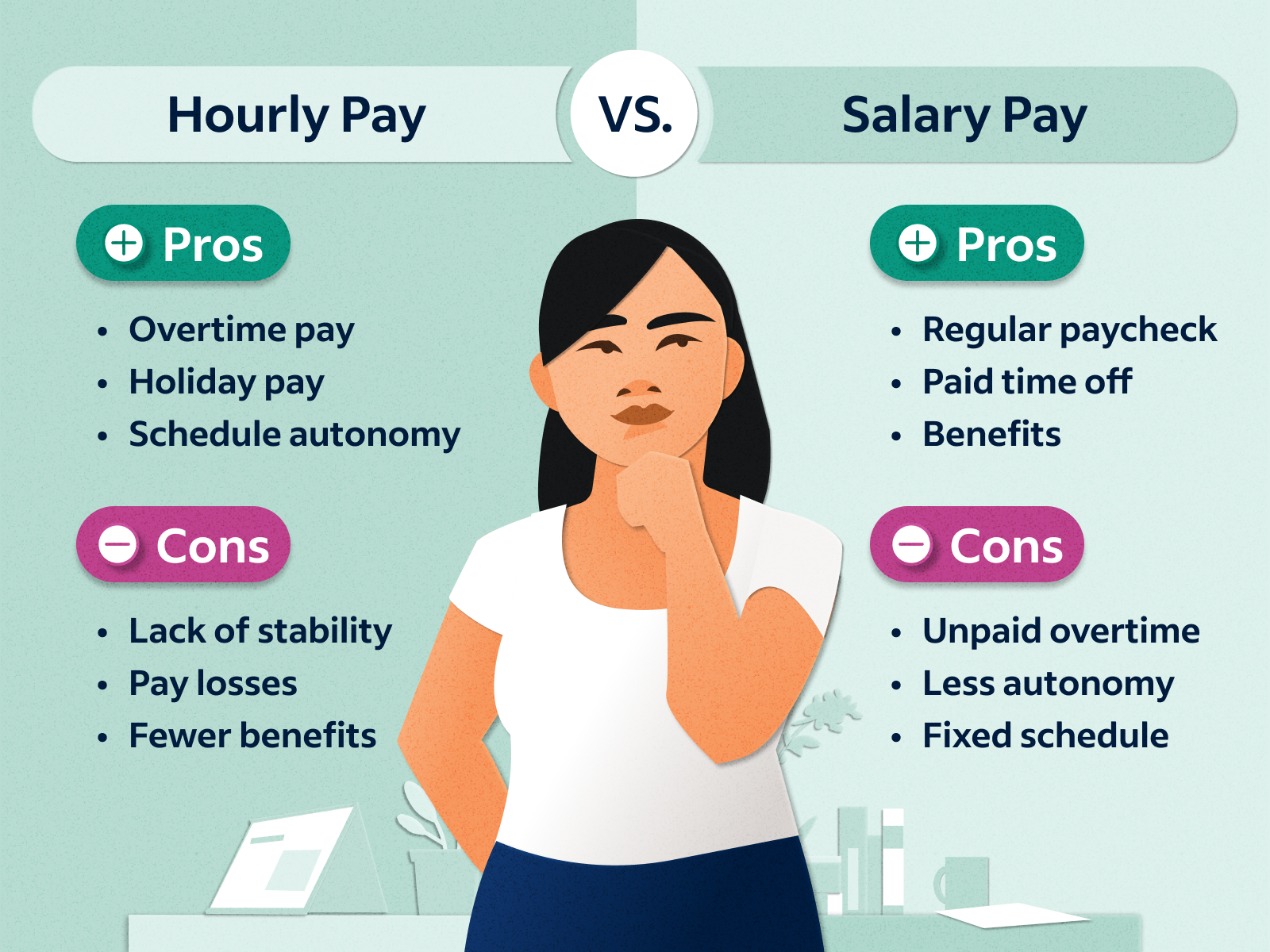
That figure assumes you work every single week of the year with no unpaid time off. If your employer offers paid vacation and paid holidays, the number stays the same because you are still receiving income during those weeks. However, if you take two weeks of unpaid leave — say, for a vacation or a gap between jobs — the math shifts to 50 working weeks instead of 52, and your annual total drops to $40,000.
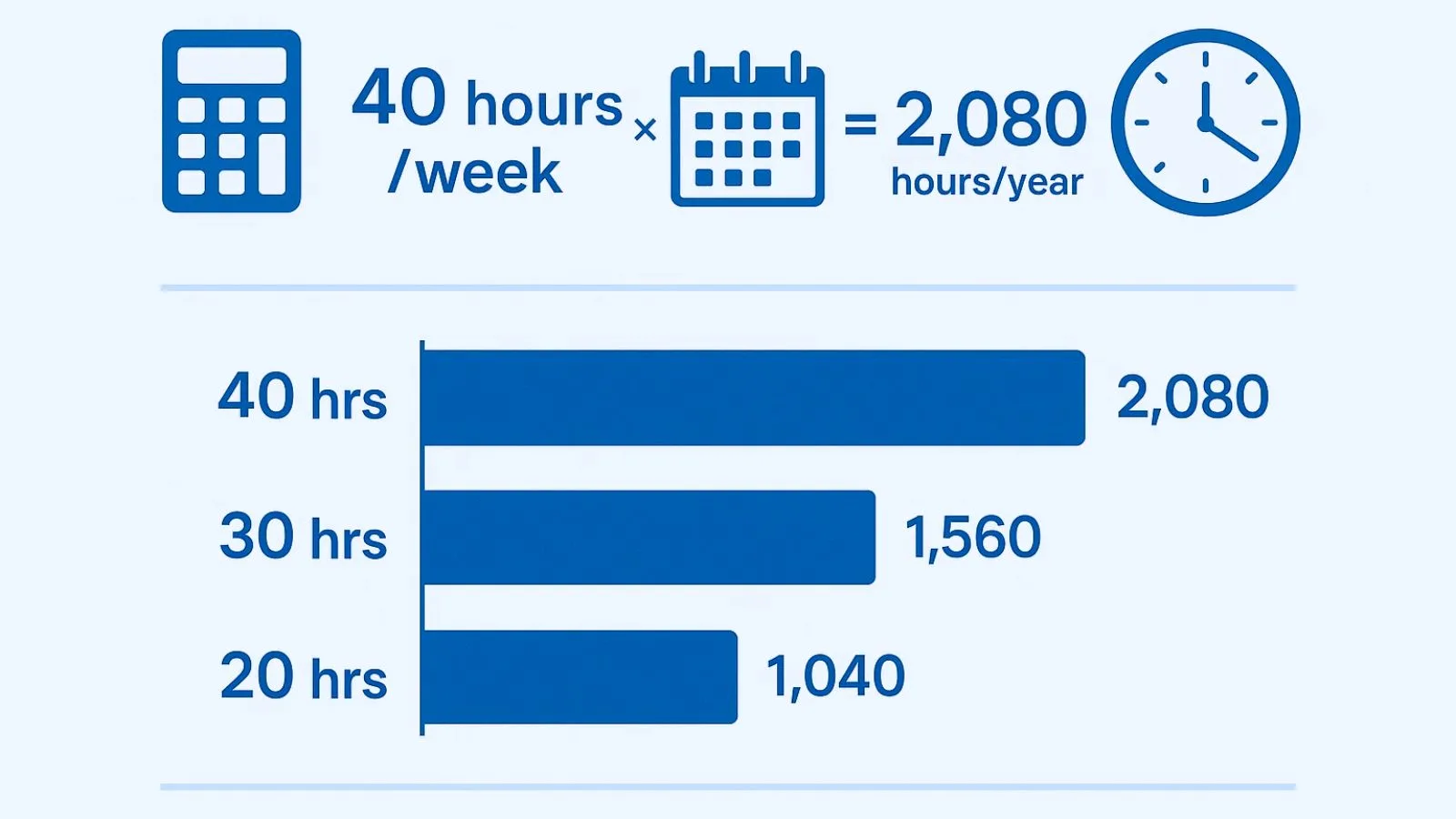
There is also a quick mental shortcut that many people use when figuring out 20 hr is how much a year without pulling out a calculator. You double your hourly wage and add three zeros. So twenty dollars becomes forty, and then $40,000. This trick gives you a ballpark estimate that is pretty close, though it slightly underestimates the real total because it assumes 2,000 working hours in a year instead of the actual 2,080.
Here is a quick breakdown of what $20 per hour looks like across different pay periods. Your daily earnings come out to $160 based on an eight-hour shift. Your weekly pay is $800. Every two weeks, you bring home $1,600 before taxes. And your monthly gross income works out to approximately $3,467 when you divide the annual total by twelve. Keeping these numbers in your head makes it much easier to plan your spending, set savings targets, and evaluate whether a particular expense fits within your means.
How Much Is $20 an Hour After Federal and State Taxes?
Knowing your gross salary is a good starting point, but the number that truly matters is the one that shows up in your bank account after taxes. When people look up 20 hr is how much a year, they are usually trying to figure out real spending power — the money left over once every deduction has been taken.
Let us start with federal taxes. For the 2026 tax year, a single filer earning $41,600 qualifies for a standard deduction of $16,100. That brings taxable income down to roughly $25,500. Under the current federal bracket structure, the first $12,400 or so of that taxable income is taxed at 10 percent, and the remainder falls into the 12 percent bracket. Your total federal income tax bill in this scenario ends up somewhere around $2,800 to $3,000 for the year.
On top of federal income tax, you also owe FICA payroll taxes. Social Security takes 6.2 percent of your gross wages, which amounts to about $2,579 on a $41,600 salary. Medicare adds another 1.45 percent, or roughly $603. Combined, FICA alone pulls about $3,182 out of your annual paycheck before you even look at state-level taxes.
State income tax is the wildcard. Nine states — including Texas, Florida, Tennessee, and Nevada — charge no state income tax at all. If you live in one of those states, your take-home pay will be noticeably higher. In states with income taxes, rates can range from a flat 3 or 4 percent up to graduated brackets that top out above 10 percent in places like California. For most people earning $41,600, a state tax rate between 3 and 6 percent is common, pulling another $1,200 to $2,500 out of your annual earnings.
Putting all of these deductions together, a single filer living in a state with a moderate income tax can expect to take home somewhere between $31,000 and $33,500 per year. That works out to roughly $2,580 to $2,790 per month, or about $1,190 to $1,290 per biweekly paycheck. Your actual figures will vary depending on your specific state, your filing status, any additional deductions you claim, and whether you contribute to a pre-tax retirement account like a 401(k). The point is that understanding 20 hr is how much a year after taxes gives you the real number you need for budgeting — not the gross figure that looks nice on paper.
How Does $20 Per Hour Compare to the National Average?
Context matters when you are evaluating any wage, and twenty dollars per hour is no exception. According to data from the Bureau of Labor Statistics, the average hourly wage for all private-sector employees in the United States was hovering between $31 and $36 as of late 2025. That means a $20 hourly rate falls roughly 35 to 45 percent below the national average.
The picture gets even sharper when you compare annual totals. The median household income in the United States sits at approximately $77,700 per year based on recent Census Bureau data. At $41,600, a full-time worker earning twenty dollars an hour brings in about $36,000 less than that median figure. It is worth noting, though, that the median household income often reflects multiple earners under one roof, so a single income of $41,600 is not directly comparable to a dual-income household.
Where $20 per hour stands relative to minimum wage is also worth mentioning. The federal minimum wage remains stuck at $7.25 per hour and has not changed since 2009. Many states have set their own floors well above that level — California, Washington, and New York all mandate minimums above $15 per hour — but twenty dollars an hour still exceeds every current state minimum in the country. So while this wage may not be high-income by national standards, it does provide a meaningful step up from the baseline. Anyone searching 20 hr is how much a year should feel reassured that this rate provides a workable income in many regions, even if it sits below the national average.
Jobs that commonly pay around this rate include warehouse and logistics roles, food service management, entry-level administrative positions, retail supervisors, customer service specialists, and certain skilled trade apprenticeships. If you are in one of these fields and wondering whether your paycheck is competitive, $20 per hour is a respectable starting point with clear room for growth.
Can You Actually Live on $20 Per Hour — and Where?
This is the question that really keeps people up at night. Knowing 20 hr is how much a year on paper is one thing. Figuring out whether that amount covers your actual cost of living is another thing entirely.
The honest answer is that it depends almost entirely on where you live, whether you have dependents, and how much debt you carry. A single person with no children and no major debts can live comfortably on $41,600 in dozens of cities and towns across the country — especially in the South, Midwest, and parts of the Mountain West. States like Arkansas, Mississippi, Oklahoma, Iowa, Kansas, and Kentucky all have costs of living that run 15 to 22 percent below the national average. In those areas, housing is more affordable, groceries cost less, and your dollar simply stretches further.
On the other hand, trying to live on this salary in San Francisco, New York City, Boston, or Seattle would be genuinely difficult. In these cities, average rents for a one-bedroom apartment can easily consume half or more of a $3,467 monthly gross income, leaving very little breathing room for everything else.
A common guideline is to spend no more than 30 percent of your gross income on housing. On a $41,600 salary, that cap works out to roughly $1,040 per month. In low-cost states, that amount can get you a decent one-bedroom apartment or even a modest two-bedroom in smaller cities. In high-cost metros, you would likely need a roommate or a longer commute to stay within that range.
Family size is another critical factor. Supporting a spouse and one or two children on a single income of $41,600 is tough almost anywhere. The MIT Living Wage Calculator estimates that a single adult with one child in most U.S. counties needs to earn between $25 and $35 per hour just to cover basic necessities. That means a household with children would likely need a second income or supplemental assistance to make ends meet at this wage.
States where $20 per hour stretches the farthest tend to share a few things in common — low housing costs, affordable groceries, cheap utilities, and in some cases no state income tax. Mississippi, West Virginia, Oklahoma, Arkansas, and Kansas consistently rank among the most affordable places to live in the country. If you have the flexibility to relocate, choosing one of these states can make a real difference in your quality of life at this income level.
A Realistic Monthly Budget When You Earn $20 Per Hour
Budgeting is where theory meets reality. Knowing 20 hr is how much a year only helps if you actually structure your spending around that number. Let us assume you are a single filer in a moderate-tax state, bringing home about $2,700 per month after taxes. Here is how a practical budget might look using the well-known 50/30/20 framework.
Needs (50 percent — roughly $1,350): This category covers everything you cannot skip. Rent or mortgage payment takes the largest share, ideally landing around $800 to $900 in a low- to mid-cost area. Utilities — electricity, water, gas, internet — might run $150 to $200. Groceries for one person typically cost $250 to $350 per month depending on eating habits. Transportation, whether that is a car payment, gas, insurance, or a public transit pass, rounds out the rest.
Wants (30 percent — roughly $810): This is the discretionary bucket. Dining out, streaming subscriptions, gym memberships, hobbies, clothing beyond the basics, and weekend entertainment all live here. On a $20-per-hour income, you will want to be intentional about this category. It is the first place to cut when money gets tight, and keeping a watchful eye on small recurring charges can free up surprising amounts of cash over the course of a year.
Savings and Debt Repayment (20 percent — roughly $540): Financial advisors almost universally recommend saving at least 20 percent of your take-home pay. That $540 per month might be split between building a three-to-six-month emergency fund, contributing to a retirement account, and chipping away at any outstanding debt like student loans or credit card balances. Even if you cannot hit the full 20 percent right away, starting with whatever you can manage and increasing the amount over time is far better than saving nothing at all.
A few practical habits can make this budget work much harder for you. Cooking at home instead of ordering delivery three or four nights a week can save $200 or more per month. Using public transportation, carpooling, or biking to work cuts fuel and parking costs significantly. Taking advantage of your employer’s 401(k) match — even at a small contribution level — is essentially free money that you should never leave on the table. And automating a weekly transfer of even $25 into a savings account builds a habit that compounds over time. That $25 a week becomes $1,300 a year without any extra effort on your part.
How Overtime and Part-Time Hours Change the Answer
Not everyone works a clean forty-hour week, fifty-two weeks a year. Your actual schedule has a big impact on what 20 hr is how much a year in your specific case. The $41,600 figure is the baseline, but your real number could be higher or lower depending on how many hours you clock.
If you regularly work overtime, the numbers tilt in your favor. Under federal labor law, most hourly employees earn time-and-a-half for any hours worked beyond forty in a single week. At $20 per hour, your overtime rate jumps to $30 per hour. Even five hours of overtime each week adds up fast — that is an extra $150 per week, or roughly $7,800 over the course of a full year. With overtime factored in, your annual gross income climbs from $41,600 to nearly $49,400. There is also a new tax provision under the 2026 OBBBA legislation that allows workers to deduct up to $12,500 in overtime income from their taxable earnings, which means overtime pay is now more valuable after taxes than it was in previous years.
On the flip side, part-time workers earning $20 per hour see a proportionally smaller annual total. Someone working twenty hours per week brings in $400 per week and roughly $20,800 per year — exactly half the full-time amount. Seasonal workers and gig-economy earners face even more variability, since their hours may fluctuate from week to week. If your schedule is inconsistent, the best approach is to track your actual hours over two or three months and then project your annual income based on your real average rather than the idealized forty-hour figure.
Smart Ways to Grow Beyond $20 Per Hour
Earning twenty dollars an hour is a solid foundation, but it does not have to be your ceiling. The gap between $20 per hour and the national average wage represents a significant opportunity for income growth, and there are concrete steps you can take to close that gap. Now that you understand 20 hr is how much a year and what it means for your budget, the next step is figuring out how to push that number higher.
Ask for a raise. This sounds obvious, but surveys consistently show that a large percentage of workers never negotiate their pay. Before you walk into that conversation, do your homework. Research what similar roles pay in your area, document your accomplishments, and come prepared with specific examples of how you have added value to the company. Even a modest bump from $20 to $21 per hour adds $2,080 to your annual income. Going from $20 to $22 adds $4,160 — enough to noticeably change your monthly budget.
Invest in skills and certifications. Many higher-paying fields — healthcare, information technology, skilled trades like welding or electrical work, and project management — have certifications that employers actively seek. Programs like CompTIA credentials, medical coding certifications, or a commercial driver’s license can often be completed in a few months and can open doors to wages well above the $20 mark.
Start a side hustle. Freelance writing, tutoring, reselling products online, rideshare driving, or offering a specialized skill like graphic design or photography on the side can add $500 to $1,500 per month to your income. Over a year, that side income can rival or exceed the difference between $20 per hour and a higher-paying full-time role.
Negotiate benefits even if the hourly rate does not budge. Health insurance, retirement matching, tuition reimbursement, and paid time off all carry real monetary value. An employer who adds $300 per month in health coverage is effectively giving you a $3,600 annual raise, even if your hourly wage stays the same.
20 Hr Is How Much a Year — Your Top 10 Questions Answered
FAQ 1: 20 Hr Is How Much a Year Before Taxes?
At a standard full-time schedule of 40 hours per week for 52 weeks, $20 per hour adds up to $41,600 per year in gross income. This figure does not account for any taxes, insurance premiums, or retirement contributions that will be deducted from your paycheck. If you take two weeks of unpaid leave, the total drops to $40,000.
FAQ 2: How Much Is $20 an Hour After Taxes?
After federal income tax, Social Security (6.2%), Medicare (1.45%), and average state taxes, most single filers earning $20 per hour take home roughly $31,000 to $33,500 per year. That comes out to approximately $2,580 to $2,790 per month in actual spending money, though the exact number depends on your state and filing status.
FAQ 3: What Is the Biweekly Paycheck for Someone Earning $20 Per Hour?
Your gross biweekly paycheck at $20 per hour is $1,600, based on 80 hours of work over two weeks. After federal and state tax withholdings plus FICA deductions, your net biweekly take-home pay will typically fall between $1,190 and $1,300 depending on where you live and how many allowances you claim.
FAQ 4: How Much Rent Can I Afford Making $20 an Hour?
Using the widely recommended 30 percent rule, you should spend no more than about $1,040 per month on rent based on your gross monthly income of $3,467. If you prefer a more conservative approach based on net income, aim for $780 to $830 per month to keep your budget comfortable and leave room for savings.
FAQ 5: Is $20 an Hour Considered a Good Salary in 2026?
It depends heavily on location and lifestyle. The national average hourly wage for private-sector workers sits between $31 and $36, which means $20 per hour falls below the midpoint. However, in states with low costs of living like Arkansas, Mississippi, and Oklahoma, $41,600 per year provides a comfortable living for a single person with manageable expenses.
FAQ 6: Can I Support a Family on $20 Per Hour?
Supporting a family on a single $20-per-hour income is very difficult in most parts of the country. The MIT Living Wage Calculator estimates that a single parent with one child typically needs between $25 and $35 per hour just to cover basic necessities. A dual-income household or supplemental government assistance programs would likely be needed to make it work.
FAQ 7: What Is My Tax Bracket if I Earn $20 Per Hour?
At $41,600 gross annual income, a single filer in 2026 falls primarily into the 12 percent federal tax bracket after claiming the standard deduction of $16,100. Your taxable income works out to about $25,500, with the first portion taxed at 10 percent and the remainder at 12 percent, resulting in a federal tax bill of roughly $2,800 to $3,000 for the year.
FAQ 8: How Does $20 Per Hour Compare to the Federal Minimum Wage?
The federal minimum wage has remained at $7.25 per hour since 2009. Earning $20 per hour means you are making nearly three times the federal minimum. While many states have raised their own minimums above $15 per hour, $20 per hour still exceeds every current state minimum wage in the country.
FAQ 9: How Much Is $20 an Hour Per Month?
Working full-time at $20 per hour, your gross monthly income comes to approximately $3,467, calculated by dividing your $41,600 annual salary by 12 months. After typical tax deductions, your net monthly take-home pay usually falls in the range of $2,580 to $2,790 for a single filer in a moderate-tax state.
FAQ 10: Can I Buy a House Making $20 Per Hour?
Buying a house on a $20-per-hour income is possible but requires careful planning. With an FHA loan at current rates and roughly $15,000 as a down payment, you could potentially qualify for a home priced around $150,000 to $165,000. Affordable housing markets in the Midwest and South offer the best opportunities, though your debt-to-income ratio and credit score will play a major role in approval.
FAQ 11: How Much Should I Save for Retirement Earning $20 an Hour?
Financial experts recommend saving 10 to 15 percent of your gross salary for retirement. On a $41,600 income, that translates to roughly $4,160 to $6,240 per year. Contributing even a small amount to a 401(k) — especially enough to capture any employer match — is one of the smartest financial moves you can make at this income level, since matched contributions are essentially free money.
FAQ 12: What Does $20 Per Hour Look Like Weekly?
At 40 hours per week, your gross weekly pay is $800. After taxes, most workers take home between $600 and $660 per week, depending on state taxes and any pretax deductions like health insurance or retirement contributions. If you work fewer hours — say 30 per week — your gross weekly drops to $600.
FAQ 13: Is $20 Per Hour Enough to Live Alone?
For a single person with no dependents, $20 per hour is generally enough to live independently in most low-to-moderate-cost areas. States like Iowa, Kansas, Kentucky, West Virginia, and Oklahoma offer costs of living 15 to 22 percent below the national average, making solo living comfortable on this wage. High-cost cities like New York or San Francisco would be extremely tight without a roommate.
FAQ 14: What Jobs Pay $20 Per Hour?
Common roles in this pay range include warehouse associates, retail supervisors, customer service representatives, food service managers, administrative assistants, delivery drivers, veterinary technicians, IT help desk support, dental assistants, and entry-level positions in skilled trades like HVAC or electrical work. Many of these roles offer strong advancement potential into higher-paying positions.
FAQ 15: How Does $20 an Hour Compare to a $40,000 Salary?
They are very close but not identical. A $20 hourly wage at full-time hours totals $41,600 per year, which is $1,600 more than a flat $40,000 salary. However, salaried positions often include benefits such as health insurance, paid vacation, and retirement matching that add significant value beyond the base pay figure.
FAQ 16: How Much Overtime Pay Do I Earn at $20 Per Hour?
Under federal law, most hourly employees receive time-and-a-half for hours worked beyond 40 in a week, which brings your overtime rate to $30 per hour. Working just five extra hours per week adds roughly $7,800 in annual gross income, pushing your yearly total close to $49,400. Under the 2026 OBBBA tax law, up to $12,500 in overtime income may also be tax-deductible.
FAQ 17: What Is the Daily Pay for $20 Per Hour?
Based on a standard eight-hour workday, you earn $160 per day before taxes at a rate of $20 per hour. After estimated tax withholdings, your net daily take-home pay is closer to $120 to $130. Keep in mind that your actual daily amount can vary if you work shifts longer or shorter than eight hours.
FAQ 18: Can I Qualify for a Credit Card Earning $20 Per Hour?
Yes, an annual income of $41,600 is generally sufficient to qualify for most standard personal credit cards, assuming you have a fair to good credit score (typically 670 or above). Some premium rewards cards may require higher incomes, but there are plenty of solid cash-back and credit-builder options available at this income level from major issuers.
FAQ 19: How Does $20 Per Hour Change if I Work Part-Time?
Part-time hours significantly reduce your annual earnings. At 30 hours per week, your gross annual income drops to $31,200. At 20 hours per week, it falls to $20,800 — exactly half of the full-time total. If you are budgeting on a part-time schedule, always base your financial plan on your actual weekly hours rather than the standard 40-hour assumption.
FAQ 20: What Is the Best Budget Method for a $20 Per Hour Income?
The 50/30/20 rule is widely recommended for this income level. Allocate 50 percent of your after-tax pay (about $1,350) to needs like rent, groceries, and transportation. Put 30 percent (about $810) toward wants like dining out and entertainment. Direct the remaining 20 percent (about $540) into savings and debt repayment to build financial stability over time.
FAQ 21: Am I Eligible for Government Assistance at $20 Per Hour?
Eligibility depends on your household size, state of residence, and specific program requirements. A single person earning $41,600 per year will generally exceed income limits for programs like SNAP and Medicaid in most states. However, if you have dependents or live in a high-cost state, you may still qualify for certain assistance programs including the Earned Income Tax Credit or subsidized healthcare through the marketplace.
FAQ 22: How Does $20 Per Hour Compare to the Median U.S. Income?
The median household income in the United States is approximately $77,700 per year, according to recent Census Bureau data. At $41,600, a full-time $20-per-hour income is roughly $36,000 below that figure. However, the median often reflects dual-income households, so a direct comparison to a single earner can be misleading.
FAQ 23: How Much Does $20 an Hour Add Up to Over 10 Years?
Over a decade of full-time work at $20 per hour with no raises, your cumulative gross earnings would total $416,000. Factoring in even modest annual raises of 2 to 3 percent, that total climbs to roughly $455,000 to $475,000 over the same period. Investing a portion of those earnings consistently could grow that number substantially through compound returns.
FAQ 24: Is $20 Per Hour the Same for Self-Employed and W-2 Workers?
No, there is a significant difference. A W-2 employee earning $20 per hour has Social Security and Medicare taxes split with their employer, so only 7.65 percent comes out of their paycheck. Self-employed workers must pay the full 15.3 percent FICA self-employment tax themselves, plus handle their own health insurance and retirement savings. This means a self-employed person earning $20 per hour effectively takes home considerably less than a W-2 employee at the same rate.
Final Thoughts
So, 20 hr is how much a year? The answer starts at $41,600 gross and settles somewhere around $31,000 to $33,500 after taxes for most full-time workers. But as you have seen throughout this guide, the full picture goes well beyond a single number. Your weekly pay, your monthly budget, your tax bracket, your overtime opportunities, and the cost of living in your area all shape what that hourly rate actually means for your everyday life.
The most important thing you can do with this knowledge is put it to work. Build a monthly budget that reflects your real take-home pay, not your gross figure. Set savings goals that are ambitious but realistic. Look for concrete ways to push your hourly rate higher through raises, certifications, new skills, or side income. Understanding 20 hr is how much a year is the first step toward making smarter financial decisions — but taking action on that knowledge is what actually moves the needle. Twenty dollars an hour is not just a wage. It is a starting point, and what you build from here is entirely up to you.