

Millions of workers across the United States earn around $20 an hour. Whether you just landed a new job, received a raise, or you are comparing offers, the first question on your mind is probably this — 20 per hour is how much per year? The short answer is $41,600 before taxes. You get that number by multiplying $20 by 40 hours per week and then by 52 weeks in a year. But that gross figure only tells half the story. Taxes chip away at it. Your actual hours might not hit a perfect 40 every single week. And your cost of living can make that salary feel very different depending on whether you rent in Dallas or San Francisco.
This guide breaks all of it down for 2026. You will see exactly how $20 an hour translates into daily, weekly, monthly, and per-minute income. You will learn what you actually take home after federal and state taxes. You will get a practical budgeting framework built around this wage and a clear picture of which jobs pay this rate. If you are making financial decisions around a $20 hourly wage, keep reading. Every dollar matters, and knowing your numbers is the first step toward spending them wisely.
How the Math Works — 20 Per Hour Is How Much Per Year?
The standard calculation starts with three numbers: your hourly rate, the hours you work per week, and the number of weeks in a year. For a full-time employee earning $20 an hour, the math looks like this — $20 multiplied by 40 hours per week, multiplied by 52 weeks. That gives you $41,600 per year before any deductions. The total of 2,080 annual hours is the conventional full-time benchmark used by employers, payroll departments, and the Bureau of Labor Statistics. It is the same number that appears on most salary calculators you will find online.
What If You Work Fewer or More Hours?
Not everyone clocks a clean 40-hour week throughout the entire year. Part-time employees, gig workers, and those with variable schedules often log different totals. At 30 hours per week, $20 an hour brings in $31,200 per year. At 35 hours, it comes to $36,400. If your schedule regularly runs to 45 hours per week and your employer pays time-and-a-half for anything beyond 40, those five overtime hours are compensated at $30 each. That adds $150 per week to your check, pushing your annual gross closer to $49,400.
It is also worth remembering that most hourly workers do not hit a perfect 2,080-hour year. Unpaid holidays, sick days without pay, and gaps between jobs can shave anywhere from $1,000 to $3,000 off the total. If you miss just two full weeks of work over the course of a year, your actual gross drops from $41,600 to $40,000. That is $1,600 less than the textbook answer, which is why your real-world number will almost always land a bit lower than the figure you see on paper.
Breaking It Down — Daily, Weekly, Monthly, and Per-Minute Pay
Once you know the answer to 20 per hour is how much per year, the next step is breaking that number into smaller time frames. You pay rent monthly. You buy groceries weekly. You make impulse purchases daily. Seeing how your $20-an-hour wage distributes across those cycles makes it far easier to budget and control where your money goes.
20 Dollars Per Hour Is How Much Per Minute?
Divide $20 by 60 minutes and you get roughly $0.33 per minute. That number sounds small, but it puts everyday spending into sharp focus. A casual ten-minute scroll through an online store costs about $3.30 of your labor. A 30-minute lunch break at a restaurant represents roughly $10 worth of work time before you even see the bill. Thinking in per-minute terms is a surprisingly effective way to evaluate whether small purchases are truly worth it.
Weekly and Biweekly Earnings at $20 an Hour
At 40 hours per week, your gross weekly pay is $800. If your employer runs a biweekly payroll — the most common pay cycle in the United States — your gross paycheck comes to $1,600 every two weeks. That works out to 26 pay periods per year, not 24. Many people mistakenly assume biweekly means twice a month, but the difference matters. Two months each year will contain three paychecks instead of two, and those months are a great opportunity to put extra money toward savings or debt.
How Much Is 20 Per Hour Annually on a Monthly Basis?
Your gross monthly income is approximately $3,467 when you divide $41,600 by 12. Some months have more working days than others, so your individual paychecks may vary slightly. February tends to feel a bit leaner than a month like October or March. For budgeting purposes, though, $3,467 is a reliable planning figure. Having this monthly number front and center helps you set realistic spending limits for rent, groceries, car payments, utilities, and other recurring expenses that show up like clockwork.
How Much Do You Actually Take Home After Taxes?
Here is where things get real. Gross pay is the number you see on a job listing. Take-home pay is the amount that actually reaches your bank account. The gap between those two numbers can be surprising if you have never done the math. Federal income tax, Social Security, Medicare, and state taxes all take their share before your money lands in your wallet. When people ask $20 per hour is how much per year, the answer they actually need is the after-tax number, because that is the figure they will use to pay bills and buy groceries.
Federal Income Tax on a $41,600 Salary
For the 2026 tax year, a single filer can claim a standard deduction of $16,100. That immediately reduces your taxable income from $41,600 to roughly $25,500. Under the current federal brackets, the first $12,400 of taxable income is taxed at 10 percent, and the remaining amount up to $50,400 sits in the 12 percent bracket. Your estimated federal income tax comes out to approximately $2,800 to $2,900 for the year.
A common misunderstanding is believing that landing in the 12 percent bracket means all your income is taxed at that rate. The United States uses a progressive system where only the dollars above each threshold are taxed at the higher rate. Your effective federal tax rate on $41,600 is closer to 7 percent. The 2026 brackets were adjusted upward thanks to inflation indexing and provisions from the One Big Beautiful Bill signed in 2025, meaning workers at this income level keep a little more than they would have under the old thresholds.
Social Security, Medicare, and FICA Deductions
On top of federal income tax, every paycheck includes FICA deductions that fund Social Security and Medicare. As an employee, you pay 6.2 percent toward Social Security on wages up to $184,500 in 2026, and 1.45 percent toward Medicare with no income cap. Combined, that is 7.65 percent. On $41,600 in annual gross wages, your FICA bill comes to approximately $3,182 per year.
State Income Tax — Why Your Location Matters
Where you live has a serious impact on your take-home pay. Nine states — Texas, Florida, Nevada, Washington, Wyoming, South Dakota, Tennessee, New Hampshire, and Alaska — impose no state income tax. If you live in one of those states, your only deductions are federal income tax and FICA, leaving you with roughly $35,600 to $36,400 per year.
High-tax states tell a different story. Living in California or New York can reduce your annual take-home by an additional $1,500 to $4,500. At $20 an hour, the weekly difference between Texas and California is about $86, which adds up to roughly $4,472 over a full year. The answer to 20 per hour is how much per year depends heavily on your zip code. A dollar earned in Austin stretches further than a dollar earned in Los Angeles, and your budget should reflect that reality.
How Does $20 an Hour Stack Up Against the National Average?
Knowing your annual income is one thing. Understanding where it sits on the national scale gives you perspective on whether that number is competitive, average, or something you should aim to surpass. If you have already worked out 20 per hour is how much per year, it helps to see how $41,600 compares to what everyone else earns.
Comparison With the Federal Minimum Wage
The federal minimum wage has remained at $7.25 per hour since 2009. At $20 an hour, you earn nearly three times that amount. However, as of 2026, many states have pushed their own minimums into the $15 to $17 range, narrowing the gap somewhat. Still, earning $20 an hour puts you comfortably above both the federal floor and most state-level minimums.
Where $41,600 Falls on the Income Spectrum
The median individual income in the United States hovers near $41,000 to $42,000 per year. That means a full-time worker who calculates 20 per hour is how much per year lands right around the national midpoint. You are earning more than roughly half of all individual earners in the country. Whether that feels comfortable depends on your personal situation. A single person in a mid-cost city like Indianapolis or Raleigh can live reasonably well on this income. A single parent in New York City will find it stretched thin. Your cost of living, debt load, and family size all shape what $41,600 actually feels like day to day.
Smart Budgeting When You Earn $20 an Hour
Once you know how much is 20 per hour annually in take-home terms, the next step is building a budget that works. Without a spending plan, it is easy to feel like your paycheck vanishes before the month ends. One of the simplest and most popular frameworks for managing your money is the 50/30/20 rule, and it pairs well with a $20-an-hour income.
How the 50/30/20 Rule Works at This Income Level
Start with your estimated monthly take-home pay. In a state with no income tax, that figure lands between $2,950 and $3,030 per month. Under the 50/30/20 framework, you divide that total into three categories. Fifty percent goes to needs — rent, utilities, groceries, insurance, transportation, and minimum debt payments. That gives you about $1,475 to $1,515 for essentials. Thirty percent covers wants — dining out, streaming subscriptions, hobbies, and entertainment. That is roughly $885 to $909. The final twenty percent goes toward savings and debt repayment, giving you $590 to $606 per month to build financial stability.
If you live in a high-rent area, the 50 percent cap may feel unrealistic. Many people in expensive cities operate on a 60/25/15 split until their income grows. The percentages are guidelines, not rules carved in stone. What matters is that you are tracking your money and making deliberate spending choices.
Practical Tips to Stretch Your Paycheck Further
Small habits add up to significant savings over the course of a year. When you understand 20 per hour is how much per year after taxes, you realize that every dollar you save carries extra weight. Automating a savings transfer on each payday — even if it is only $50 per check — removes the temptation to spend that money before it reaches your savings account. Over 26 biweekly pay periods, that one habit puts away $1,300 without any conscious effort. Review your recurring subscriptions every quarter. Most people are surprised to discover they are still paying for streaming services, apps, or gym memberships they rarely use. Cutting just $30 per month in forgotten subscriptions frees up $360 per year.
Cooking at home is one of the highest-impact money moves at this income level. A single restaurant meal runs $15 to $20, which is roughly an hour of your gross earnings. Preparing meals at home can cut food spending by 40 to 50 percent. If your employer offers a 401(k) with a company match, contribute at least enough to capture the full match. That match is free money, and even modest contributions compound into meaningful retirement savings over decades. Start with a small emergency fund of $1,000, then build toward three months of essential expenses. That cushion protects you from credit card debt when unexpected costs show up.
Jobs That Pay $20 an Hour or More in 2026
If you are actively looking for work at this pay level, you have more options than you might think. Now that you know 20 per hour is how much per year in take-home terms, the question becomes where to find roles that actually pay this rate. The good news is that a $20-an-hour wage is available across a wide range of industries, and many of these roles do not require a four-year college degree.
Entry-Level and Trade Roles
Customer service representatives, warehouse associates, medical assistants, dental hygienists, delivery drivers, office administrators, and freelance writers are all commonly advertised at or above $20 per hour. Skilled trades are especially strong at this pay level. Electrician and plumber apprenticeships often start near $20 an hour and climb past $30 within a few years as you earn certifications. HVAC technicians, solar panel installers, and commercial truck drivers are also in high demand, with many positions hitting the $20 mark at the entry level. These careers offer long-term stability because demand for skilled labor continues to outpace the supply of trained workers.
Remote and Flexible Positions
Remote work has opened up a wide selection of $20-an-hour roles you can do from home. Virtual assistants, social media managers, online tutors, freelance content writers, digital marketing specialists, and medical transcriptionists all regularly earn at or above this rate with flexible schedules. However, if you go the freelance or independent contractor route, keep one critical fact in mind. A $20-an-hour contract rate is not the same as $20 an hour on a W-2 paycheck. Contractors pay both the employee and employer share of FICA — a total of 15.3 percent — plus they handle their own health insurance and retirement savings. After those expenses, a $20-an-hour contract gig can feel more like $15 to $16 in real spending power.
Growing Beyond $20 an Hour
Treating your current rate as a starting point rather than a ceiling is one of the smartest financial decisions you can make. Earning a professional certification — like a CompTIA credential for IT, a Google Career Certificate, a CDL for trucking, or a real estate license — can push your hourly rate past $25 to $30 within a year or two. Negotiating a raise after six to twelve months of solid performance is often more effective than waiting for an annual review. Many workers also stack a side income on top of their primary job. Tutoring, freelancing, or driving for a delivery platform can push total annual earnings past $50,000 even while your base hourly wage stays at $20.
Common Mistakes When Calculating 20 Per Hour Is How Much Per Year
The math may seem simple, but a handful of recurring errors trip people up when they try to convert an hourly rate to an annual salary. Avoiding these mistakes puts you in a much stronger position to manage your finances accurately.
The most common mistake is building a budget around gross income instead of net income. When you see $41,600 on paper, it is tempting to plan your rent, car payment, and groceries around that number. But your actual take-home pay can be $5,000 to $9,000 less than gross, depending on your tax situation. Every real-world expense comes out of your net paycheck. If you budget around the gross figure, you will almost certainly overshoot your spending every month and wonder where the money went.
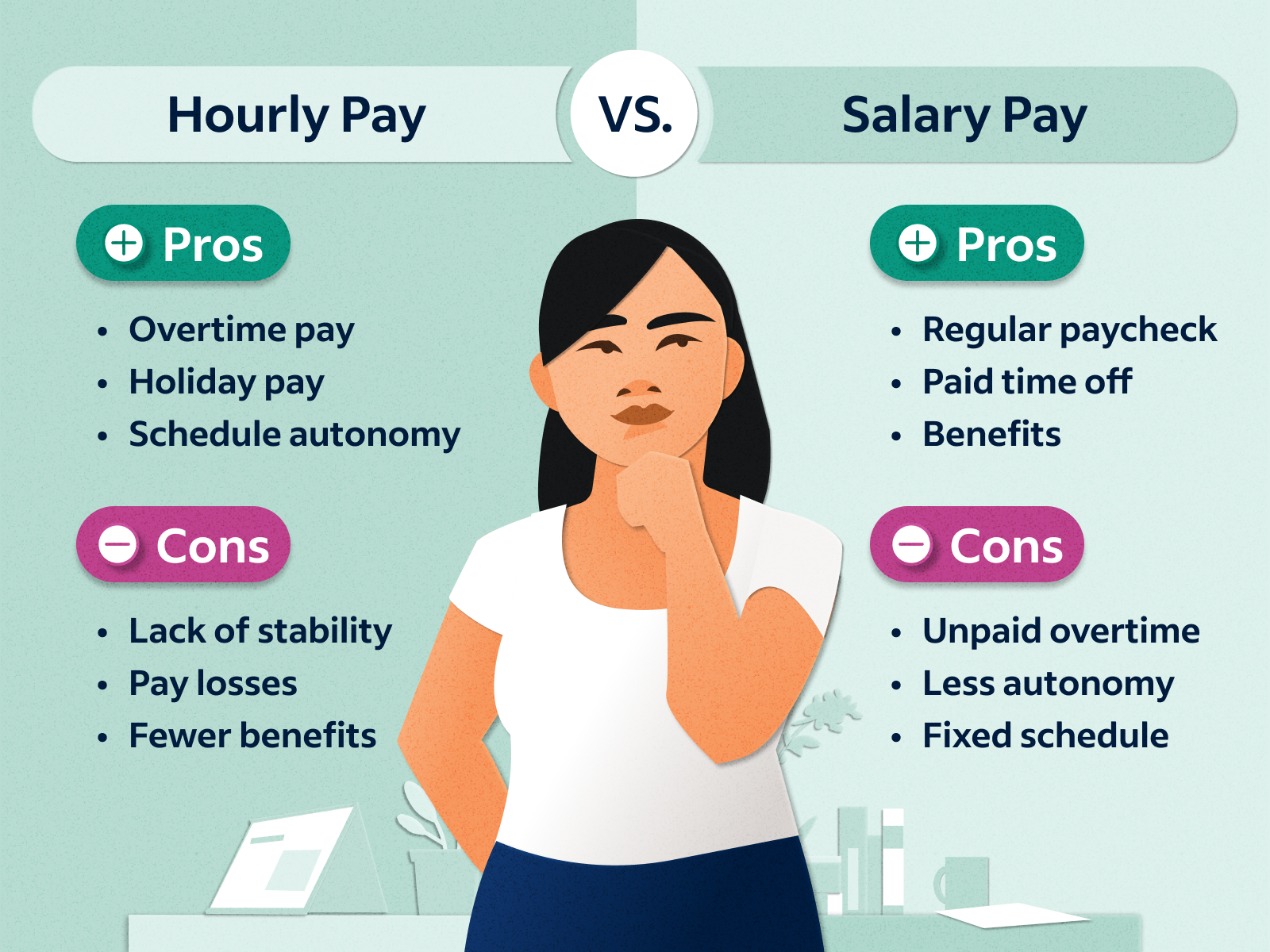
Another frequent error is ignoring unpaid time off. Salaried workers usually get paid vacation and sick leave. Many hourly employees do not. Missing two weeks of work drops your annual gross from $41,600 to $40,000 — a $1,600 shortfall that creates real problems on a tight budget.
Treating contractor pay the same as employee pay is a third mistake that catches people off guard. A $20-an-hour 1099 gig costs the worker an additional 7.65 percent in self-employment tax because the employer’s share of FICA falls on your shoulders. Add in out-of-pocket health insurance and the absence of an employer retirement match, and the real value of that hourly rate shrinks significantly.
Finally, many people forget how overtime affects their tax picture. Under the Fair Labor Standards Act, non-exempt hourly workers earn 1.5 times their regular rate for every hour beyond 40 in a workweek. That extra income is taxable and can nudge you into a slightly higher marginal bracket, so the take-home from overtime is not quite as generous as it first appears. Keeping all of these factors in mind gives you a much more honest answer to the question, 20 per hour is how much per year in your specific situation.
Conclusion
The direct answer to 20 per hour is how much per year is $41,600 for a standard full-time schedule of 40 hours per week across 52 weeks. But as this guide has shown, the number that truly matters is the one that lands in your bank account — and that figure depends on federal taxes, state taxes, FICA contributions, your actual hours, and the cost of living where you reside.
In a state with no income tax, you can expect to take home roughly $35,600 to $36,400 per year. In a higher-tax state, that number drops closer to $31,900 to $32,000. Either way, a $20-an-hour wage sits right around the U.S. median individual income. It is enough to build a stable, comfortable financial life in many parts of the country, especially if you pair it with disciplined budgeting and consistent saving habits.
More importantly, $20 an hour does not have to be your ceiling. With targeted certifications, steady skill-building, and smart career decisions, there is every reason to use this wage as a launchpad toward higher earnings and long-term financial security. Know your numbers, budget around your take-home pay, and keep pushing forward.
Frequently Asked Questions
1. 20 per hour is how much per year before taxes?
If you work 40 hours per week for 52 weeks, $20 per hour equals $41,600 per year in gross income. This figure represents your total earnings before federal income tax, state tax, Social Security, and Medicare deductions are applied. It is the standard number used on job listings and loan applications.
2. 20 per hour is how much per year after taxes?
After federal income tax and FICA deductions, a single filer earning $20 an hour takes home roughly $35,600 to $36,400 per year in a state with no income tax. In higher-tax states like California or New York, annual take-home pay can drop to approximately $31,900 to $32,000.
3. How much is $20 an hour per month?
At $20 an hour working full-time, your gross monthly income is approximately $3,467 before taxes. After federal and payroll tax deductions, your monthly take-home pay typically falls between $2,650 and $3,030, depending on your state and filing status.
4. 20 dollars per hour is how much per minute?
Dividing $20 by 60 minutes gives you roughly $0.33 per minute of work. This per-minute figure is useful for putting small daily purchases into perspective — a $10 coffee-and-snack run, for example, costs you about 30 minutes of labor.
5. How much is $20 an hour per week?
At a standard 40-hour workweek, $20 an hour equals $800 per week in gross pay. If you work fewer hours, such as 30 hours per week, your weekly gross drops to $600 before any tax deductions.
6. How much is $20 an hour biweekly after taxes?
Your gross biweekly paycheck at $20 an hour is $1,600 across 26 pay periods per year. After federal taxes and FICA, the average single filer takes home approximately $1,280 to $1,370 per biweekly check, though the exact figure varies by state.
7. Is $20 an hour a good salary in 2026?
An annual income of $41,600 sits near the U.S. median for individual earners and is almost three times the federal minimum wage. It provides a comfortable living in many mid-cost areas, though it can feel tight in expensive metro regions like San Francisco or New York City.
8. Can you live on $20 an hour in 2026?
Yes, many people live on this wage successfully by choosing a location with a reasonable cost of living and budgeting around net pay rather than gross. Keeping rent below 30 percent of your monthly gross income — roughly $1,040 — is a widely recommended starting point for financial stability on this salary.
9. How much rent can I afford making $20 an hour?
Following the standard 30 percent rule, you can afford approximately $960 to $1,040 per month in rent on a $20-an-hour wage. This guideline helps ensure you have enough left over for groceries, transportation, utilities, savings, and debt payments each month.
10. What tax bracket does $20 an hour put you in?
At $41,600 per year, a single filer falls into the 12 percent federal income tax bracket for 2026 after the standard deduction. However, because the U.S. uses a progressive system, your effective federal tax rate is closer to 7 percent — much lower than the bracket rate itself.
11. $20 an hour is how much per year working part-time?
At 25 hours per week, $20 an hour equals $26,000 per year. At 30 hours per week, it comes to $31,200 annually. Your total depends entirely on how many hours you consistently work each week, and part-time schedules are more sensitive to missed hours than full-time ones.
12. 20 per hour is how much per year with overtime?
If you work 45 hours per week with five overtime hours paid at time-and-a-half ($30 per hour), your annual gross income climbs to approximately $49,400 before taxes. Overtime significantly boosts yearly earnings, though the extra income is also subject to federal and state taxation.
13. How does $20 an hour compare to the federal minimum wage?
The federal minimum wage remains $7.25 per hour, which equals about $15,080 per year at full-time hours. Earning $20 an hour means you make nearly three times more than the federal floor, though many states now have minimums in the $15 to $17 range.
14. Is $20 an hour considered middle class in the United States?
Whether $41,600 qualifies as middle class depends on location and household size. In many mid-cost states, a single earner at this level falls on the lower end of the middle-class range. In high-cost states like California, where the median household income exceeds $90,000, a single $20-an-hour earner typically falls below the middle-class threshold.
15. How much is $20 an hour per day?
At a standard 8-hour workday, $20 per hour earns you $160 per day before taxes. If you work a 10-hour shift, daily gross pay increases to $200. These daily figures are useful for tracking income on schedules with variable shift lengths.
16. What jobs pay $20 an hour without a degree in 2026?
Common no-degree roles at or above $20 per hour include truck driver, electrician apprentice, plumber apprentice, medical assistant, dental hygienist, warehouse supervisor, and customer service representative. Skilled trades and healthcare support positions frequently start at this rate and climb with certifications and experience.
17. Can I buy a house making $20 an hour?
Buying a house on $41,600 per year is challenging but possible, especially in lower-cost housing markets. Lenders typically use your gross monthly income of $3,467 to calculate affordability, and FHA loans with 3.5 percent down can bring homeownership within reach if your debt-to-income ratio is manageable.
18. How much should I save for retirement at $20 an hour?
Financial advisors generally recommend saving 10 to 15 percent of your gross income for retirement. On a $41,600 salary, that means contributing $4,160 to $6,240 per year to a 401(k) or IRA. If your employer offers a match, contribute at least enough to capture the full amount — it is essentially free money.
19. Is $20 an hour the same for a contractor and an employee?
No, $20 an hour as an independent contractor is worth significantly less than $20 an hour as a W-2 employee. Contractors pay both the employee and employer share of FICA (a combined 15.3 percent), plus they cover their own health insurance and retirement savings, reducing effective take-home to roughly $15 to $16 per hour.
20. How much does $20 an hour equal per year if I take two weeks off unpaid?
If you take two weeks of unpaid time off, you work 50 weeks instead of 52, bringing your annual gross down to $40,000 instead of $41,600. That $1,600 difference is a common surprise for hourly workers who do not receive paid vacation or sick leave.
21. What is the difference in take-home pay between Texas and California at $20 an hour?
In Texas, which has no state income tax, a $20-an-hour worker takes home roughly $35,600 to $36,400 per year. In California, state income tax reduces take-home pay to approximately $31,900 to $32,000 — a difference of about $86 per week or $4,472 per year on the same gross wage.
22. How many hours do I need to work at $20 an hour to make $50,000 a year?
To earn $50,000 annually at $20 per hour, you would need to work approximately 2,500 hours per year, which works out to about 48 hours per week for 52 weeks. Overtime pay at time-and-a-half for hours beyond 40 would reduce the total weekly hours needed slightly.
23. Is $20 an hour enough to support a family in 2026?
For a single-income household with dependents, $41,600 per year can be challenging in most parts of the country. The MIT Living Wage Calculator shows that a single parent with one child typically needs $20 or more per hour in low-cost counties, and significantly more in urban areas. Dual-income households at $20 per hour each ($83,200 combined) have considerably more financial flexibility.
24. How can I increase my pay beyond $20 an hour?
The fastest paths beyond $20 per hour include earning professional certifications (CompTIA for IT, CDL for trucking, real estate license), completing trade apprenticeships (electricians, plumbers, and HVAC technicians often reach $30+ per hour), negotiating a raise after six to twelve months of strong performance, or stacking a side income through freelancing, tutoring, or delivery driving.