
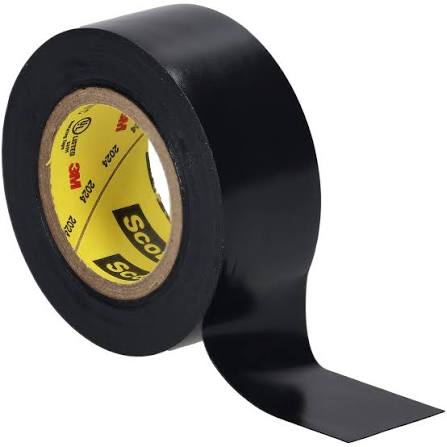
Ask any working electrician what sits in their tool pouch right next to the wire strippers, and the answer is almost always the same — a roll of tape. Not just any tape, though. When a splice needs to hold up through freezing winters, blistering summers, and years of vibration, the name on that roll matters. That is exactly why 3M electrical tape has become the default choice for professionals across every corner of the trades. From residential remodelers pulling wire through attic spaces to industrial maintenance crews wrapping transformer coils in a power plant, this product line covers ground that no other manufacturer has matched in over seven decades.
But here is where things get tricky. Walk into any electrical supply house and you will find more than a dozen varieties sitting on the shelf. Vinyl tapes, rubber mastic tapes, glass cloth tapes, color-coded tapes — all from 3M, all designed for different conditions. Pick the wrong one and you risk a tape failure that can compromise insulation, violate code, or create a safety hazard. Pick the right one and your work holds up for decades without a callback.
This guide cuts through the confusion. Whether you are a licensed journeyman, an apprentice still learning the ropes, or a homeowner who just wants to patch up some speaker wire without burning down the garage, the next few minutes of reading will save you hours of guesswork. We will break down the most popular products in the lineup, explain what every number on a spec sheet actually means, walk through specialty tapes for heat and color coding, and share real-world application techniques that separate a professional wrap from a sloppy one.
Let’s get into it.
Why Professionals Trust 3M Electrical Tape
Trust in the trades is earned over time, not awarded by marketing departments. The reason 3M holds the dominant position in the electrical tape market is simple — their products have been proving themselves on job sites since the 1940s. That track record matters when your reputation rides on every connection you make.
A Legacy of Innovation in Electrical Insulation
Before 3M entered the picture, electricians worked with tar-coated cotton tape and vulcanized rubber adhesive. It was messy, unreliable, and prone to rotting within a few years. Worse, the sulfur used to cure the rubber adhesive would corrode copper conductors over time, weakening the very connections it was supposed to protect.
In 1946, 3M changed all of that by releasing Scotch No. 33 — the first commercially successful pressure-sensitive vinyl electrical tape. It stretched. It stuck without heat or moisture activation. And its adhesive did not contain corrosive sulfur. Electricians could wrap a splice faster, tighter, and with far better insulation than anything that came before it. By 1966, the company had introduced Super 33, an even more flexible version. Then came Super 33+ with enhanced cold-weather performance, and eventually the heavy-duty Super 88. Each generation improved on the last.
What Sets 3M Apart from Generic Brands
You can buy cheap electrical tape at any hardware store. It costs a fraction of what professional-grade products cost, and for wrapping a loose garden hose it works fine. But when you are insulating a 600-volt splice that needs to pass inspection and survive twenty years of weather exposure, the difference between budget tape and 3M becomes night and day.
It starts with material quality. Every roll of premium 3M vinyl tape uses an elastic PVC backing paired with a pressure-sensitive rubber-resin adhesive. That combination gives the tape enough stretch to conform around irregular surfaces while maintaining a tight, moisture-resistant seal. The adhesive bonds instantly to cable jackets and to itself, and it does not degrade when exposed to acids, alkalis, or UV radiation.
Then there are the certifications. Products like Super 33+ and Super 88 carry UL 510 listing, CSA C22.2 No. 197 certification, VDE marks, IEC 60454 compliance, and RoHS approval. These are not just stickers on the packaging. They represent independent laboratory testing that confirms the tape performs as advertised — flame retardancy, cold resistance, sunlight resistance, and dielectric strength all verified under controlled conditions.
That level of consistency, batch after batch and roll after roll, is what keeps electricians reaching for 3M instead of gambling on an unknown brand.
Understanding the 3M Electrical Tape Product Lineup
Not every job needs the same tape. A simple harnessing task inside a climate-controlled office building demands far less from a tape than an outdoor cable repair in northern Minnesota in January. The beauty of the 3M product range is that it scales with the difficulty of your application, giving you exactly the performance you need without overpaying for features you do not use.
Temflex General Use Vinyl Tapes — 165 and 175
Think of the Temflex line as your daily driver. These tapes are not built for extreme conditions, but for the routine tasks that fill most of a workday, they perform reliably and cost less per roll than the professional-grade options.
The Temflex 165 is a 7-mil vinyl tape rated for operating temperatures up to 80°C (176°F). It handles basic indoor insulation, protective jacketing, bundling, and harnessing without any issues. It is UL listed and CSA certified, so it meets code for general use applications. Where it falls short is adhesion in cold weather and resistance to harsh outdoor environments — this is an indoor tape at heart.
The Temflex 175 steps things up slightly. It offers better adhesion, a broader temperature range down to –7°C (19°F), and improved abrasion resistance. For moderate indoor and weather-protected outdoor work, it sits in that sweet spot between affordability and dependability.
Scotch Super 33+ — The Industry Standard
If there is one product that built 3M’s reputation in the electrical trade, it is the Scotch Super 33+. This 7-mil, professional-grade vinyl tape is what most electricians reach for on a typical day. It provides primary electrical insulation for wire and cable splices rated up to 600 volts, operates across a temperature range of –18°C to 105°C (0°F to 221°F), and carries UL listing as flame-retardant, cold-resistant, and sunlight-resistant.
What makes Super 33+ the go-to is its versatility. Indoor residential wiring, outdoor service entrances, commercial panel work, industrial motor connections — it handles all of these scenarios with the same level of reliability. The elastic PVC backing stretches and conforms to odd shapes, and the rubber-resin adhesive provides a moisture-tight seal that holds up in wet or corrosive environments.
For most electricians, this is the tape that never leaves the truck.
3M Super 88 Electrical Tape — Built for Heavy-Duty Jobs
When Super 33+ is not enough, the next step up is 3M Super 88 electrical tape. This premium-grade product takes everything the Super 33+ does well and adds a thicker, tougher build designed for the harshest working conditions.
At 8.5 mils thick, Super 88 provides noticeably more abrasion resistance and mechanical protection than its thinner counterpart. That extra thickness also means faster insulation build-up — fewer wraps to reach the same dielectric strength, which saves time on large-scale projects. The tape remains conformable in cold weather down to –18°C (0°F) and handles continuous operating temperatures up to 105°C (221°F).
3M Super 88 electrical tape excels in outdoor cable jacketing, motor lead insulation, transformer coil wrapping, and any industrial environment where vibration, chemical exposure, or physical abuse would chew through a thinner tape. It is also the tape specified for overwrapping high-voltage rubber splicing tapes, providing the outer mechanical layer that shields the splice from the elements.
If your job involves anything heavy-duty, exposed, or industrial, Super 88 is the product worth stocking.
Specialty Options — From Color Coding to High-Temperature Insulation
Standard black vinyl tape covers the majority of electrical applications, but some jobs demand something more specific. That is where the specialty products in the 3M lineup earn their place.
3M White Electrical Tape and the Scotch 35 Color-Coding System
Electrical codes require specific colors for phase identification, and that is exactly what the Scotch 35 series was designed to deliver. Available in ten fade-resistant colors — white, red, blue, green, yellow, orange, brown, gray, violet, and pink — this 7-mil vinyl tape gives electricians a reliable way to mark phases, identify motor leads, label piping systems, and designate safety zones.
Among the ten options, 3M white electrical tape stands out for a practical reason. It is the only color in the Scotch 35 lineup that carries a full UL sunlight-resistance rating. That makes it the best choice for outdoor phase identification where prolonged UV exposure would cause other colors to fade over time. Indoors, any color works equally well, but outdoors, white holds its appearance and integrity longer than the rest.
The Scotch 35 operates at up to 600 volts and handles temperatures from –10°C to 105°C (14°F to 221°F). Its rubber-resin adhesive bonds aggressively to cable jackets and splicing compounds, and its elastic PVC backing stretches to conform around tight corners and irregular fittings.
Color coding might seem like a small detail, but it pays dividends during future maintenance. When a technician opens a panel three years after installation and can instantly identify which wire belongs to which phase, that saves time, prevents mistakes, and improves safety. Using 3M white electrical tape or any Scotch 35 color is a professional habit that separates careful work from careless work.
3M Glass Cloth Electrical Tape — When Heat Is the Enemy
Vinyl tape starts to soften and lose adhesion well before 200°C. For applications involving furnaces, ovens, motors, and transformers where temperatures regularly push past what PVC can handle, 3M glass cloth electrical tape provides a heat-stable alternative that will not shrink, melt, or rot.
The glass cloth family includes several products, each built around a woven fiberglass backing paired with a thermosetting adhesive. Tape 27 uses a rubber thermosetting adhesive and is rated for continuous use at 130°C (266°F). It is the most common choice for coil covers, anchoring, banding, and crossover insulation in 600-volt dry-location applications. Its edge-tear resistance and conformability make it easy to work with even on uneven surfaces.
For higher heat demands, Tape 69 steps up with a silicone pressure-sensitive adhesive rated at 200°C (392°F). This is the product you will find on furnace controls, oven wiring, high-temperature motor leads, and any application where standard insulation would break down. It is UL recognized, CSA certified, and qualified to military specification MIL-I-19166 — a level of testing that confirms its reliability in the most demanding conditions.
Tape 79 fills a similar role at 180°C with a silicone adhesive, while Tape 90 is built specifically for automated application with a saturated glass cloth backing that resists fraying during machine winding.
Choosing between vinyl and glass cloth comes down to one question — will the operating temperature exceed 105°C? If the answer is yes, 3M glass cloth electrical tape is the only safe choice.
How to Read a 3M Electrical Tape Spec Sheet
Every product in the 3M lineup comes with a published technical data sheet, and knowing how to interpret it is one of the most practical skills an electrician or engineer can develop. A spec sheet tells you exactly what a tape can and cannot do, which eliminates guesswork and helps you match the right product to the right job every time.
Key Specifications That Matter Most
The first number to look at is thickness, expressed in mils (thousandths of an inch) or millimeters. Thickness directly affects dielectric strength, abrasion resistance, and how quickly you can build up an insulation layer. Across the 3M electrical tape spec sheet range, you will find products from 3 mils on the thin end up to 20 mils for heavy-duty rubber mastics. For standard vinyl tapes, 7 mils (Super 33+, Scotch 35) and 8.5 mils (Super 88) are the most common.
Dielectric strength measures how much voltage the tape can withstand per unit of thickness before electricity breaks through. The Scotch 35, for example, delivers 1,250 volts per mil, meaning each 7-mil layer provides 8,750 volts of dielectric protection. This number matters most when you are calculating how many half-lapped layers a splice needs to meet code.
Voltage rating tells you the maximum working voltage for primary insulation. Most vinyl tapes in the 3M range are rated for 600 volts, which covers the vast majority of residential and commercial work.
Temperature range appears as two numbers — the minimum application temperature (how cold it can be when you apply the tape) and the maximum continuous service temperature (how hot the tape can get during operation without losing its properties). Super 33+ and Super 88 both handle –18°C to 105°C, but general-use Temflex products have narrower windows.
Tensile strength and elongation tell you how much the tape can stretch before breaking and how much force it takes to tear it. Higher elongation means better conformability around corners and fittings. Higher tensile strength means the tape resists tearing during aggressive wrapping.
Adhesion, usually measured in ounces per inch, indicates how firmly the tape bonds to surfaces. Premium tapes like Super 33+ and Super 88 have significantly higher adhesion values than economy products, which is why they hold up better in humid, oily, or vibration-heavy environments.
Certifications and Compliance Standards to Look For
Beyond the physical properties, a 3M electrical tape spec sheet lists every certification the product carries. The most important ones for North American electricians are UL 510 (the standard for insulating tape), CSA C22.2 No. 197 (the Canadian equivalent), and flame-retardancy ratings. Products sold internationally may also carry VDE marks and IEC 60454 compliance.
Some tapes carry military specifications as well. Super 88 is qualified to MIL-I-24391C, and glass cloth Tape 69 meets MIL-I-19166. These designations confirm that the tape has passed rigorous government testing for defense and aerospace applications.
The bottom line — always check the spec sheet before you buy. Matching tape certifications to your local electrical code, whether that is the NEC in the United States or the CEC in Canada, is not optional for professional work. It is the standard of care.
Practical Tips for Applying 3M Electrical Tape the Right Way
Even the best tape in the world will fail if you apply it poorly. Wrapping technique matters just as much as product selection, and getting it right is not difficult once you understand a few basic principles.
Wrapping Technique and Tension
Every 3M vinyl tape should be applied in half-lapped layers. That means each pass overlaps the previous one by roughly half the tape width, creating a double-thick insulation barrier across the entire splice. As you wrap, apply steady tension — enough to reduce the tape width to approximately 60 percent of its original size. That stretch activates the adhesive and creates a tight, uniform wind with no gaps, wrinkles, or air pockets.
Direction matters too. Always wrap uphill, taping from a smaller diameter surface toward a larger one. This allows each new layer to seal over the edge of the previous layer rather than peeling away from it. On pigtail splices, wrap the tape past the ends of the wire conductors and fold it back to create a protective cushion that resists cut-through.
Here is a detail that separates experienced hands from beginners — apply the final wrap with no tension at all. A tension-free final pass prevents flagging, which is the annoying tendency of tape edges to peel back over time. That loose final layer lies flat and stays flat.
Common Mistakes to Avoid
The most frequent mistake is using the wrong tape for the application. Temflex 165 is a fine product, but reaching for it on an outdoor splice or a high-vibration motor connection is asking for trouble. Those jobs call for Super 33+ at a minimum, and often Super 88.
Over-stretching is another common problem. When you pull vinyl tape too aggressively, the PVC backing thins out and loses dielectric strength. You end up with a thinner, weaker layer that looks tight but provides less insulation than it should.
Applying tape in extreme cold without selecting a product rated for those conditions is a recipe for poor adhesion. Temflex tapes stiffen and lose their tack below freezing. Super 33+ and Super 88 remain conformable down to –18°C, which is why they are the standard for outdoor winter work.
Finally, do not rely on vinyl tape alone for underground cable splices or automotive underhood connections. Those environments require self-fusing rubber tape or heat shrink tubing as a primary insulating layer, with vinyl tape serving only as the protective outer jacket.
How to Choose the Right 3M Electrical Tape for Your Project
With all of this information in hand, selecting the right product becomes straightforward. It comes down to matching your working conditions — voltage, temperature, exposure, and mechanical stress — to the tape that meets or exceeds those demands.
Matching Tape to Application
For indoor residential wiring where the environment is dry and temperature-controlled, Temflex 165 or 175 handles non-critical jobs like bundling and harnessing. When you need code-compliant splice insulation at 600 volts, step up to Super 33+.
Outdoor and all-weather installations demand a tape that resists UV radiation, moisture, and temperature swings. Super 33+ covers most outdoor work, while 3M Super 88 electrical tape is the better choice for exposed locations with heavy mechanical abuse or extreme weather.
Phase identification and color coding call for Scotch 35 in the appropriate NEC or CEC color. If the installation is outdoors, 3M white electrical tape offers the strongest UV resistance in the lineup.
High-temperature environments around motors, transformers, and heating equipment require 3M glass cloth electrical tape. Match the specific product — Tape 27 for moderate heat, Tape 69 for extreme heat — to the maximum operating temperature of your application.
For high-voltage cable splicing, use a self-fusing rubber tape like Scotch 130C or 2228 as the primary insulating layer, then overwrap with at least two half-lapped layers of Super 33+ or Super 88 as the outer protective jacket.
Budget vs. Performance — When to Spend More
Temflex products save money on low-risk, short-term tasks where the tape will not face extreme conditions. There is nothing wrong with economy tape when the application calls for it.
But for anything exposed to weather, vibration, chemicals, or the scrutiny of an electrical inspector, the small price difference between general-use tape and professional-grade tape is one of the best investments you can make. A failed splice can cost thousands in troubleshooting, repairs, and downtime. A roll of Super 33+ or Super 88 costs a few dollars more and eliminates that risk.
Spend wisely, not cheaply.
Frequently Asked Questions
1. What is 3M electrical tape made of? Most vinyl products in the lineup use an elastic PVC film backing coated with a non-corrosive, pressure-sensitive rubber-resin adhesive. Specialty products like glass cloth tapes use woven fiberglass backings with thermosetting adhesives instead.
2. Is 3M electrical tape waterproof? Premium-grade vinyl tapes like Super 33+ and Super 88 create a moisture-tight seal when applied with proper half-lapped tension. They resist moisture ingress effectively, though they are not rated as fully submersible waterproof barriers on their own.
3. What is the difference between 3M Super 33+ and Super 88? Super 33+ is 7 mils thick and designed for all-purpose professional electrical work. Super 88 is 8.5 mils thick, offering greater abrasion resistance, faster insulation build-up, and better mechanical protection for heavy-duty industrial applications.
4. What is 3M white electrical tape used for? The white variant in the Scotch 35 color-coding series is primarily used for phase identification and wire marking. It is the only color in the Scotch 35 lineup with a full UL sunlight-resistance rating, making it the top choice for outdoor applications.
5. Can 3M glass cloth electrical tape handle high temperatures? Yes. Glass cloth tapes like Tape 69 are rated for continuous use at temperatures up to 200°C (392°F), making them suitable for furnace controls, motor leads, transformers, and other high-heat environments where vinyl tape would fail.
6. Where can I find a 3M electrical tape spec sheet? Technical data sheets for every product are available through the 3M official website under their Electrical Products division. Most authorized distributors and electrical supply houses also stock printed copies or downloadable PDFs.
7. How many layers of 3M electrical tape do I need for a 600-volt splice? 3M recommends a minimum of two half-lapped layers for primary insulation on 600-volt wire rated at 105°C or below. For connectors with irregular surfaces, pad first with electrical insulation putty before taping.
8. Does 3M electrical tape expire or go bad? Yes, vinyl electrical tape does degrade over time. 3M states that its vinyl electrical tapes carry a five-year shelf life from the date of manufacture when stored in a clean, dry environment away from direct sunlight and extreme temperatures.
9. Is 3M electrical tape safe for automotive wiring? For basic wire bundling and harnessing inside the vehicle cabin, yes. However, for underhood or exposed connections, always use heat shrink tubing or self-fusing rubber tape as the primary insulation, with vinyl tape serving only as an outer protective jacket. 10. What makes 3M electrical tape better than generic alternatives? Consistency, certification, and material quality set it apart. Every roll meets published specifications and carries independent lab certifications like UL 510 and CSA C22.2 No. 197. Generic tapes often lack these certifications and use lower-grade adhesives that break down faster. 11. Can 3M electrical tape catch fire? Premium vinyl tapes from 3M are flame-retardant and self-extinguishing, meaning they will not sustain a flame once the heat source is removed. However, they are not fireproof. Prolonged exposure to temperatures above their rated range (typically 105°C for premium tapes) can cause degradation.
12. What is the maximum temperature rating for 3M electrical tape? Standard vinyl tapes like Super 33+ and Super 88 handle continuous temperatures up to 105°C (221°F). For higher heat demands, glass cloth options like Tape 69 are rated up to 200°C (392°F).
13. What do the different colors of 3M electrical tape mean? Colors are used for phase identification and wire marking per NEC and CEC standards. For example, black identifies hot conductors, white marks neutrals, green designates ground, and red indicates a second hot leg. The Scotch 35 series is available in ten colors for this purpose.
14. Can I use 3M electrical tape to connect wires together? No. Electrical tape is designed for insulating connections, not making them. Wire connections must be made with approved mechanical connectors like wire nuts, push-in connectors, or crimp terminals. The tape is then applied over the completed connection for insulation.
15. How long does 3M electrical tape last once applied? When applied correctly in a protected indoor environment, premium vinyl tape can last five to ten years or more. Outdoor installations exposed to UV, moisture, and temperature swings typically see a shorter service life of one to five years depending on the product used.
16. Is 3M electrical tape UL listed? Yes. All professional-grade vinyl tapes in the 3M lineup, including Super 33+, Super 88, and Scotch 35, are UL 510 listed. This certification confirms they meet independent testing standards for flame retardancy, cold resistance, and dielectric strength.
17. Can 3M electrical tape be used outdoors? Professional-grade products like Super 33+ and Super 88 are specifically designed for outdoor use. They resist UV radiation, moisture, temperature extremes, and corrosion. General-use Temflex products are intended primarily for indoor or weather-protected applications.
18. What is the voltage rating of 3M electrical tape? Most vinyl tapes in the 3M range are rated for primary insulation on wire and cable splices up to 600 volts. The dielectric strength per mil of thickness varies by product, with Scotch 35 offering approximately 1,250 volts per mil.
19. What is the best 3M electrical tape for cold weather? Super 33+ and Super 88 are both rated for application and operation down to –18°C (0°F), making them the top picks for cold-weather work. General-use Temflex tapes stiffen below freezing and lose adhesion in very cold conditions.
20. Can I use 3M electrical tape as a permanent repair? For code-compliant insulation on properly made connections, yes, premium tapes serve as a long-term solution. However, tape should never replace a proper mechanical connection, and damaged wiring should be fully repaired or replaced by a licensed electrician.
21. Is 3M electrical tape resistant to chemicals and solvents? Premium-grade vinyl tapes from 3M resist a wide range of chemicals, including acids, alkalis, and most common solvents. This chemical resistance helps prevent adhesive breakdown in industrial environments where tapes may encounter oils, greases, or cleaning agents.
22. What is the difference between 3M Temflex and Scotch electrical tape? Temflex is the general-use, economy-grade line designed for non-critical tasks like bundling and harnessing. The Scotch brand (Super 33+, Super 88, Scotch 35) represents the professional-grade products built for demanding applications requiring superior adhesion, durability, and certifications.
23. Does 3M electrical tape leave residue when removed? When removed within a reasonable timeframe, premium tapes typically leave minimal adhesive residue. However, tape left in place for years, especially in hot environments, may leave some residue as the adhesive ages and bonds more aggressively to the surface.
24. Can I use 3M electrical tape on plumbing or non-electrical applications? While vinyl tape can be used for general-purpose tasks like bundling, color coding, and minor surface protection, it should not replace products specifically designed for plumbing, such as PTFE thread seal tape. Always use the right product for the right application.
Conclusion
Picking the right tape is not glamorous work. Nobody brags about their tape selection at the end of a long day on the job site. But every experienced electrician knows that a good connection starts with good insulation, and good insulation starts with choosing the right product for the conditions you are working in.
The 3M electrical tape lineup gives you that choice. From the budget-friendly Temflex for everyday harnessing to the heavy-duty Super 88 for punishing industrial environments, from color-coded Scotch 35 for clean phase identification to glass cloth tapes that shrug off furnace-level heat — there is a purpose-built product for every situation you will encounter in the field.
Take the time to check the spec sheet. Match the certifications to your local code. Apply the tape with proper tension and half-lapped layers. These small steps take seconds but protect your work for years.
Whether you are stocking a service van for the week ahead or grabbing a single roll for a weekend project at home, choosing the right tape is one of the simplest ways to do the job right the first time.