Picture a halftime show on a Friday night. The stadium lights are blazing, the brass section is in full roar, and the crowd is scanning the field. Then something catches the eye — not the trumpets, not the drum line, but the performers moving along the center of the field. They’re spinning flags high into the air. They’re tossing wooden rifles with a force that makes the crowd lean forward. They move like dancers, land catches that look impossible, and tell a story without speaking a single word.
That’s color guard. And yet, despite how many people have watched it from the bleachers, very few can actually describe what it is, how it works, or why it matters as much as it does to the people who perform it.
This guide covers everything worth knowing — what the activity actually is, where it came from, the equipment that defines every performance, how uniforms are designed, how competitions are judged, and how to get involved. Whether you’re a curious spectator, a parent of a first-year member, or a student thinking about auditioning, this is the place to start.
What Is Color Guard?
The Short Answer
Color guard is a performance sport in which teams execute choreographed routines using flags, mock rifles, sabers, and dance to visually interpret music. It is a non-musical section of a marching band or drum corps, but its role is far from secondary. The performers are the visual layer of the show — the element that turns music into something you can watch as well as hear.
Teams at every level participate, from middle school bands performing at local football games to elite drum corps competing in major stadiums in front of thousands. It exists in two primary formats. The first is the traditional marching band format, performed outdoors on a football field alongside a live band. The second is winter guard, which takes place indoors in a gymnasium or auditorium, with performers moving to pre-recorded music.
In both formats, team members are called “guard members,” and their job is to bring the show’s theme to life through movement, expression, and precision equipment work.
What Makes It Different from a Regular Sport
This activity sits at the intersection of sport and art, and that’s exactly what makes it unusual. Judges score performances based on movement quality, visual effect, the fluidity of choreography against the music, coordination among members, and how skillfully equipment is handled. Scores are assigned per caption on a numerical scale.
This isn’t a sport where you count goals or points. Winning comes from executing a designed show better than anyone else on that floor or field — and that takes athleticism, artistry, and relentless repetition in equal measure. Winter Guard International (WGI), the sport’s major governing body, officially calls it the “Sport of the Arts,” a title that captures the balance perfectly. The activity has even been discussed as a candidate for Olympic inclusion, given how structured and standardized its competitive framework has become.
A Brief History of Color Guard
Military Roots: Where It All Began
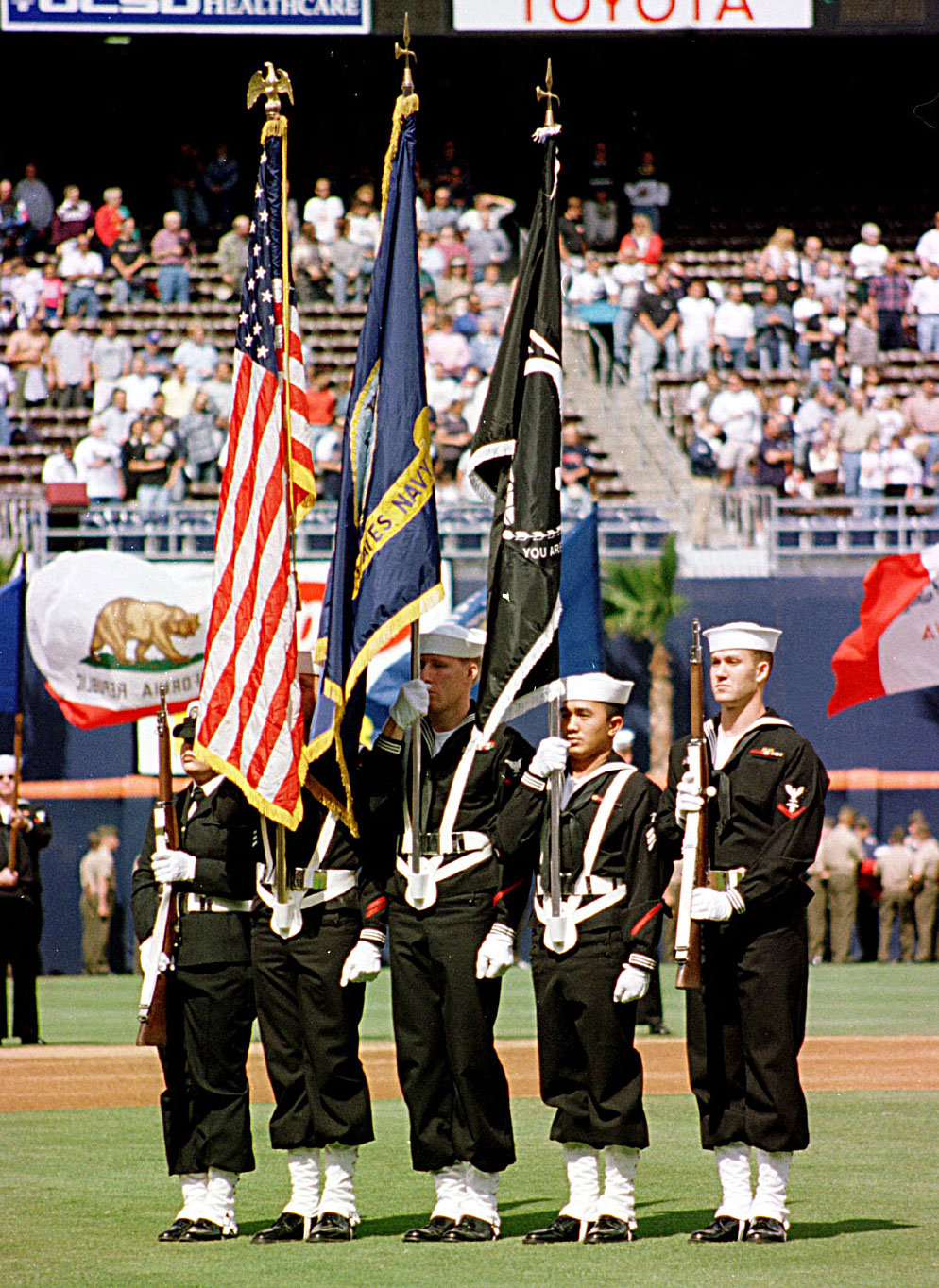
To understand how this activity became what it is today, you have to go back much further than the football field. The roots stretch directly into military history. In combat, soldiers needed to identify the location of their own unit at all times. The solution was the “color bearer” — a soldier assigned to carry the regimental flag, or “colors,” into battle. These flags were markers of identity, direction, and unit morale.
Military bands marched alongside these color bearers, playing patriotic music to keep soldiers in step and spirits high. Over time, as armies shifted from battlefield function to ceremonial pageantry, the tradition of carrying flags within a band formation migrated into civilian life. When marching bands became a fixture of American schools and universities, the flag carriers came with them.
From Drill Teams to Performance Art
The transformation from military tradition to performance art didn’t happen overnight. In the late 1950s and early 1960s, competitive drill teams began incorporating the American flag into their routines on football field-sized stages. At the same time, a separate tradition was arriving from Europe.
In 1937, Swiss Olympian Franz Hug introduced the art of flag swinging — a tradition called Fahnenschwingen — to American audiences. Leonard Haug, then an assistant band director at the University of Wisconsin, saw something in it. He created ten flags representing the schools of the Big Ten Conference. When Haug moved to the University of Oklahoma, he expanded the idea and established a co-ed flag corps that some consider the oldest continuously existing unit of its kind in American marching bands. By 1940, that group was performing two-flag routines at basketball games and developing innovative choreography that would influence the sport for decades.
The 1970s Turning Point
The most decisive shift came in 1977. That year, the Seattle Imperials made a choice that sounds small but changed everything: they replaced military boots with ballet slippers. It was a symbolic break from the stiff, precision-drill tradition toward something more expressive, more dancelike, and more artistic.
Also in 1977, Winter Guard International was co-founded in San Francisco by six people who wanted to organize and standardize indoor competitions. Their goal was to create consistent skill levels, scoring systems, and a framework for growth. From that foundation, the activity expanded steadily — eventually reaching more than 33,000 regional participants in a single year. The WGI structure remains the backbone of competitive performance today.
Types of Color Guard
Not every program looks or feels the same. The activity takes three distinct forms, each with its own season, format, and competitive structure.
Marching Band Color Guard
This is the version most people recognize. It performs outdoors on a football field alongside a live marching band, with a fall season that typically runs from late summer through early winter. Competitions are staggered throughout the autumn months, and performances are also featured at halftime shows during high school and college football games.
In competition, the guard contributes to the band’s overall score but is also evaluated in its own category. Judges assess how well the performers interpret the music visually, how clean the equipment work is, and how effectively the guard and band function as a unified show.
Winter Guard
Winter guard is the indoor version, and for many performers, it becomes their primary competitive focus. Programs move indoors after the marching season ends, typically beginning competition in February and running through April, when WGI hosts its annual World Championships.
Without a live band, show design becomes even more intentional. Choreographers and designers select recorded music across any genre — classical, hip-hop, film scores, original compositions — and build an entire narrative around it. The gymnasium floor is typically covered with a custom-designed tarp that reflects the show’s theme. This is where some of the most experimental, emotionally powerful, and technically demanding performances happen in the entire activity.
Drum Corps Color Guard
At the top of the competitive ladder sits drum corps, and the units within Drum Corps International (DCI) programs represent the highest level the sport offers. These performers train for months, rehearse daily during the summer, and perform in major outdoor stadiums with live brass and percussion sections.
The technical expectations in drum corps are extraordinary. Choreography is intricate, equipment work is precise down to the degree of a spin, and the combination of scale, speed, and synchronization creates performances that are genuinely breathtaking. For many younger performers, earning a spot in a drum corps program is the central goal of their performing career.
Color Guard Flags — The Foundation of Every Routine
What Color Guard Flags Are Made Of
Flags are the most fundamental piece of equipment in the activity. A standard flag consists of a six-foot aluminum pole with rubber stoppers on each end to protect both the equipment and the performer. The silk — the fabric portion — is generally around three feet long and four feet wide and is attached to the pole using electrical tape or custom-made guard tape.
Modern silks are made from lightweight nylon or polyester. These materials are durable enough to withstand the force of high tosses and fast spins, but light enough that performers can keep them airborne without excessive strain. The choice of fabric directly affects how the flag moves through the air, so program directors select materials carefully based on the choreography being designed.
Types of Flags Used in Color Guard
Not every flag in a program is the same. Different styles serve different choreographic and visual purposes.
Swing flags are smaller flags mounted on short poles, typically sold in pairs. They’re designed for fast, close-body work and can be used one in each hand simultaneously, allowing for more complex patterns and quicker sequences.
Tall flags use poles ranging from seven to ten feet. They create a dramatic visual presence on a large field or floor and are especially effective during slower, sweeping musical passages where long lines of fabric trailing through the air produce a striking effect.
Show silks are the custom-designed flags specific to a program’s annual production. Colors, shapes, and printed designs are chosen to match the show’s theme, reinforce the emotional arc of the music, and complement the costumes being worn. A show silk isn’t just decoration — it’s part of the storytelling.
Flag Techniques Performers Master
The range of skills involved in flag work is broader than it looks from a distance. At the beginner level, members learn basic spins — horizontal, vertical, and diagonal — along with simple tosses and catches. As skill develops, those tosses go higher. Throwing a six-foot flag fifteen feet into the air and catching it cleanly, in sync with every other member of the line, is a routine expectation at the competitive level.
Judges aren’t only rewarding impressive tricks. They’re evaluating the cleanliness of every spin, the consistency between performers, the timing against the music, and whether the equipment work is contributing to the story the show is telling. Flashiness without purpose doesn’t score well.
The Color Guard Rifle — More Than Just a Prop
What Is a Color Guard Rifle?
The rifle is one of the most visually striking pieces of equipment in the sport and also one of the most misunderstood. These are not functional weapons. They are mock rifles made of wood or hard plastic, designed purely for spinning, tossing, and visual effect.
Rifles come in three standard sizes: 36 inches, 39 inches, and 41 inches. The right size depends on the performer’s age, height, and experience level. For younger or newer members — particularly in middle school programs — the 36-inch rifle is recommended because it’s lighter and easier to manage while technique is still developing. More experienced performers typically move to longer sizes, which produce more dramatic tosses.
Rifle Technique and Difficulty Level
Rifle work is generally considered more technically demanding than flag. The weight and rigidity of the equipment require a more controlled grip and a stronger, more deliberate spin. Tosses are classified by the number of full rotations the rifle makes in the air: one rotation is a single, two is a double, and so on through triples, quads, and beyond.
Because of the higher skill requirement, many programs require performers to audition specifically for the rifle line rather than automatically placing any member there. The commitment and coordination expected are significant, and a rifle line that performs cleanly can meaningfully elevate a program’s competitive score. The weight of a rifle also creates a different visual experience than a flag — there’s a satisfying, physical impact to a well-executed catch that audiences respond to instinctively.
Rifles vs. Sabers
Sabers round out the primary equipment of the sport. A saber is a sword-like prop with a hilt and a dull, non-sharpened blade made of metal or plastic. They are smaller and lighter than rifles, but that deceptive lightness makes them harder to control. Sabers are widely considered the most technically challenging piece of standard equipment in the activity.
Because of that difficulty level, sabers appear more frequently in winter guard and elite independent ensembles, where performers tend to have more experience and refined technique. In drum corps programs, saber lines are a mark of a program’s technical ambition. Watching a skilled saber line execute synchronized high tosses is one of the most impressive sights the sport has to offer.
Color Guard Uniforms — Costume as Storytelling
Why Uniforms Matter
These uniforms are not uniforms in the way a basketball jersey or a soccer kit is a uniform. They are costumes. They are designed as part of the show — not added after the choreography is built, but developed alongside it, in collaboration with the same design team that selects the music and plans the flag silks.
Every choice a costume designer makes — the color palette, the silhouette, whether sleeves are present or absent, what the neckline looks like — affects how the performer’s body reads from a distance and how the costume interacts with the equipment being used. If the performers are carrying silks in deep crimson, a uniform in clashing tones will fracture the visual. If the show is emotionally quiet and vulnerable, a heavily embellished costume might undermine the mood the choreographers are working to build.
The uniform is part of the artistic argument the show is making. It has to be right.
What Color Guard Uniforms Typically Include
At the competitive level, uniforms are usually fully custom-made. The most common styles are unitards, fitted bodysuits, or multi-layered costume pieces assembled to suggest a particular time period, emotion, or narrative concept.
Footwear is almost always jazz shoes or modern dance shoes rather than traditional marching shoes. The reason is practical: marching shoes are rigid in a way that prevents performers from pointing their feet, which limits the expressiveness of leg and foot movement during choreography. Jazz shoes allow the articulation that dance-forward performance demands.
Gloves — fingerless, with flexible padding across the palms — are standard for performers spinning rifle or saber. They protect the hands from the repeated impact of equipment and improve grip. Hair and makeup are also coordinated with the show design. In this sense, preparing for a performance has more in common with preparing for a theatrical production than suiting up for a traditional sport.
The Timeline and Cost of Ordering Uniforms
The logistics of costuming a competitive program are more complex than most people outside the activity realize. Custom winter guard uniforms can take up to eight weeks to produce from the time an order is placed. That means a program planning for a February competition start date needs to finalize costume designs and submit orders in November at the latest.
The full cost of running a competitive program — including equipment, custom silks, costumes, choreographers, props, competition entry fees, and travel — adds up quickly. Budget management is a real and constant challenge for many programs. To help address this, a thriving secondary market exists where programs buy and sell consignment uniforms, flags, and props from previous seasons.
How Color Guard Competitions Work
Scoring and Judging Criteria
Competitive performances are judged by trained professionals with backgrounds in music, dance, and theater. Each judge is assigned specific “captions” — distinct areas of the performance to evaluate — and assigns numerical scores typically ranging from 0 to 20 per caption. The captions commonly evaluated include movement quality, visual effect, equipment technique, and the overall design of the show.
WGI organizes competing groups into eight divisions: Middle School, Regional A, Scholastic A, Independent A, Scholastic Open, Independent Open, Scholastic World, and Independent World. Each division has different expectations for show length, technical difficulty, and design complexity. As programs advance through the divisions, the standards become progressively more demanding.
Judges at WGI-sanctioned events go through a rigorous approval process that includes a home study program, a Judges’ Academy, trial evaluations, and ongoing continuing education requirements. After each performance, judges meet one-on-one with the ensemble to deliver verbal critiques — a practice that makes the competitive experience genuinely educational for performers and directors alike.
The WGI World Championships
The WGI World Championships is the culmination of the indoor season. It’s a three-day event held in April that brings together hundreds of winter guard groups from across the country and internationally. In 2019, more than 33,000 participants competed at the regional level, and over 16,000 performers gathered for the World Championships alone. Those numbers speak to how substantial this community has become.
Groups qualify for Worlds through a series of regional events where rankings determine placement. The Championships themselves span multiple venues and run continuous performances from morning through evening across all three days.
The Fall Marching Season
For programs tied to marching bands, the competitive season runs through autumn. Most fall competitions are organized through circuits like Bands of America (BOA) or state-level marching band associations, with championships typically held in November. The guard is evaluated as part of the band’s overall package but also scored separately, making it possible for a guard to significantly influence the band’s competitive standing.
Drum Corps International runs its summer tour from June through August, culminating in the DCI World Championships. For performers in drum corps programs, the summer season is an all-consuming commitment that many describe as the most intense and formative experience of their performing lives.
Benefits of Joining Color Guard
Physical and Mental Development
The sport is physically demanding in ways that catch newcomers off guard. The combination of dance, equipment manipulation, and full-body choreography requires genuine strength, flexibility, coordination, and endurance. Members train for hours each week, running the same phrases of choreography hundreds of times until the muscle memory is automatic.
Tossing a six-foot flag or a weighted rifle fifteen feet into the air and catching it without breaking the flow of a routine is not something that happens by accident. It requires conditioning, focus, and the kind of repetitive practice that competitive athletes in any discipline would recognize. The physical demands of a full rehearsal day during a summer drum corps program are comparable to those of any rigorous sport.
Life Skills and Community
The benefits that last longest for most members aren’t physical — they’re the habits and relationships built over years of participation. Members learn time management, the ability to function within a large ensemble, responsibility for personal preparation, and how to perform under pressure in front of an audience.
The community dimension is equally powerful. Alumni consistently describe the bonds formed through shared rehearsals, competitions, and seasons as some of the strongest friendships of their lives. Programs foster a culture of mutual support and collective accountability that carries into professional and personal life long after the competitive seasons end. WGI as an organization explicitly promotes goodwill, sportsmanship, and camaraderie as core values — not just competition outcomes.
How to Get Started with Color Guard
Who Can Join
One of the most welcoming aspects of the activity is how accessible it is at the entry level. No prior dance experience is required. No gymnastics background, no musical training, no prior performing arts involvement. Many of the most accomplished performers in the sport started with zero experience. What programs look for is commitment, coachability, and a genuine willingness to put in the work.
Programs exist for students in middle school, high school, and college. Beyond school-based options, independent and community-based groups accept performers of all ages. There is no single profile of a guard member — the activity is genuinely open to anyone willing to learn.
What to Expect as a Beginner
Most beginners start with flag. It’s the foundational equipment of the activity, and learning it develops the body awareness, timing, and spatial coordination that transfers directly to rifle and saber work later. Early rehearsals focus on basic spins, simple footwork patterns, and the fundamentals of moving as part of a group.
Auditions are part of many programs, but they’re rarely as intimidating as they sound for beginners. Directors auditioning new members are typically looking for potential and attitude rather than pre-existing skill. If you can follow direction, stay focused, and show up consistently, that’s often enough to earn a spot on a beginner line.
Finding a Program Near You
Starting with local high school or college programs is the most natural entry point. If you’re already enrolled in school, talking to the band director is the first step — most marching bands either have an existing guard or are open to building one.
For adults or those not connected to a school program, regional circuits provide a map of active groups. WGI maintains a network of affiliated circuits across the country, including TIA (Tournament Indoor Association), MAIN (Mid-Atlantic Indoor Network), and AIA (Atlantic Indoor Association). Attending a regional competition in your area is one of the best ways to discover active programs near you and get a feel for the competitive environment firsthand.
Conclusion
Color guard is one of those activities that looks decorative from the outside and reveals itself as something entirely different the moment you look closer. It carries centuries of military history in its DNA and wears the creativity of modern performance art on its sleeve. It asks as much of its members physically as any competitive sport and as much artistically as any theatrical production.
The flags, the rifles, the custom-made uniforms, the synchronized tosses, the storytelling built into every minute of a performance — none of it happens by accident. Behind every clean catch and every precisely timed spin is a season of preparation, a team of designers and instructors, and performers who care deeply about what they’re doing.
Whether you’ve watched from the stands and wondered what it all means, or you’re standing on the edge of your first audition, understanding this activity changes how you see it. Color guard is the visual story behind the music. It’s worth knowing. And it’s far more impressive up close than it ever looks from the bleachers.
FAQ 1. What is color guard in a marching band?
Color guard is the non-musical visual section of a marching band. Members perform choreographed routines using flags, mock rifles, and sabers to visually interpret the music the band is playing. They march alongside the musicians on a football field, adding storytelling, movement, and emotional expression to the overall performance. In competition, the guard is scored both as part of the band’s total and in its own separate category.
FAQ 2. What does color guard do exactly?
Color guard performers spin, toss, and catch equipment — primarily flags, rifles, and sabers — while executing synchronized dance and choreographed movement. Their role is to bring the show’s theme and music to life visually. Every spin, toss, and body movement is intentional and contributes to the story the program is telling. At the competitive level, a typical routine runs between four and seven minutes of continuous, full-body performance.
FAQ 3. Is color guard a sport or an activity?
Color guard is widely recognized as both a sport and a performance art. It requires significant physical conditioning — strength, flexibility, endurance, and hand-eye coordination — alongside technical skill and artistic expression. Winter Guard International (WGI), the sport’s major governing body, officially calls it the “Sport of the Arts.” Its Olympic inclusion has also been formally discussed due to its structured competitive framework. Many state athletic associations now officially recognize it as a sport.
FAQ 4. How hard is color guard?
Color guard is genuinely difficult. It demands upper body strength for equipment manipulation, core strength for balance and control, and cardiovascular endurance to sustain full-length performances without breaking form. A typical competitive routine involves 4 to 7 minutes of continuous movement. Learning to spin and toss flags, rifles, and sabers requires thousands of repetitions before the skills become second nature. The mental demands are equally significant — performers must execute precise technique, stay synchronized with teammates, and connect emotionally with the audience simultaneously.
FAQ 5. Can you join color guard with no experience?
Yes. Most programs actively welcome beginners with no prior dance, gymnastics, or performance experience. Directors auditioning new members are typically looking for coachability, a positive attitude, and genuine commitment — not pre-existing skills. Many high school programs offer open enrollment for first-year members, with formal technique training beginning at the start of the season. Beginners almost always start with flag work before progressing to rifle or saber over time.
FAQ 6. What age can you start color guard?
Most people start color guard in middle school, typically around age 11 or 12, through school-based marching band programs. Some programs accept students as young as 10 for introductory-level participation. On the upper end, WGI’s competitive rules allow scholastic color guards to include participants up to age 23 in most classifications. The Independent World Class division has no age ceiling at all, meaning adults of any age can compete. Community-based and independent groups also exist for adult performers outside the school system.
FAQ 7. How long does it take to learn color guard?
Basic flag spins and footwork can be learned within the first few weeks of consistent practice. Performing those skills cleanly in front of an audience during a full routine typically takes one full season — roughly four to six months — for most beginners. Rifle and saber techniques take longer to develop, often requiring a full year or more of focused training. Reaching a competitive level that allows for high tosses, complex combinations, and smooth ensemble synchronization is a multi-year process that most performers describe as ongoing throughout their entire career.
FAQ 8. What equipment is used in color guard?
The three primary pieces of equipment are flags, mock rifles, and sabers. Flags are made from lightweight nylon or polyester silk attached to an aluminum pole, typically six feet long. Rifles are non-functional props made of wood or hard plastic, available in 36-, 39-, and 41-inch sizes. Sabers are sword-like props with a dull blade, made of metal or plastic. Programs also use custom props specific to their show theme — anything from umbrellas and chairs to large sculptural set pieces — as long as the equipment complies with competition rules.
FAQ 9. What are color guard flags made of?
Color guard flags are made from lightweight nylon or polyester, commonly referred to as “silk” within the activity. The fabric is attached to an aluminum pole — typically six feet in length — using electrical tape or specialized guard tape. The poles have rubber stoppers on each end for safety. Modern silks are designed to be durable enough to withstand high-speed tosses and spins while remaining light enough to stay airborne with ease. Custom show silks are designed with specific colors, patterns, and shapes to match a program’s annual production theme.
FAQ 10. What is a color guard rifle made of?
A color guard rifle is a mock weapon — not a real firearm — made from wood or hard plastic with a plastic bolt and a leather or synthetic strap. It is designed purely for spinning, tossing, and performance. Rifles come in three standard sizes: 36 inches, 39 inches, and 41 inches. The choice of size depends on the performer’s age, height, and experience level. Shorter rifles are recommended for younger or newer members, while longer rifles are favored at the advanced and competitive levels because they produce more dramatic visual tosses.
FAQ 11. What do color guard uniforms look like?
Color guard uniforms are custom performance costumes, not standard athletic uniforms. They are designed specifically for each show season to reflect the program’s theme, music, and emotional arc. The most common styles include fitted unitards, layered bodysuits, or multi-piece costume sets. Footwear is almost always jazz shoes or modern dance shoes rather than marching shoes. Performers also wear fingerless padded gloves for rifle and saber work, and hair and makeup are coordinated with the show’s visual design — similar to the preparation involved in a theatrical production.
FAQ 12. How much does color guard cost?
The total cost of participating in color guard varies significantly depending on the program and competitive level. For a high school marching band program, members typically pay for performance shoes, gloves, and personal accessories, often ranging from $50 to $200. At the competitive winter guard level, costs rise considerably — custom uniforms alone can run several hundred dollars, and programs may charge participation fees covering equipment, choreography, props, and travel. Full-season costs for competitive winter guard programs range from $500 to several thousand dollars per participant. Some programs offer payment plans, fundraising opportunities, or consignment options to reduce the financial burden.
FAQ 13. What is the difference between color guard and winter guard?
Color guard is the term generally used for the flag and equipment performance section of a marching band that performs outdoors during the fall season. Winter guard is the indoor version, performed in gymnasiums and arenas to pre-recorded music during the late winter and spring months — typically February through April. Winter guard does not involve a live band. Shows are fully self-contained, often more theatrical and narrative-driven, and performed on custom-designed floor tarps. Both are governed by WGI, and many performers participate in both seasons.
FAQ 14. Can boys join color guard?
Absolutely. While color guard has historically skewed female in many programs, the activity has always been open to performers of all genders. Most WGI-affiliated color guard groups are explicitly described as mixed-gender, and the number of male and non-binary performers participating has grown steadily in recent years. Some programs have historically been single-gender, but the broader trend across scholastic and independent programs is toward full gender inclusion. There are no rules at the national competitive level that restrict participation by gender.
FAQ 15. What is WGI and how does it relate to color guard?
Winter Guard International — commonly known as WGI — is the primary governing body for competitive indoor color guard. It was co-founded in 1977 in San Francisco with the goal of standardizing the activity and creating a consistent competitive framework. WGI organizes regional competitions throughout the winter and spring season, culminating in the annual World Championships held in April. In 2019, the WGI World Championships drew more than 16,000 performers. WGI divides competitors into eight classes ranging from Middle School through Independent World, with each class carrying different expectations for technical difficulty and design complexity.
FAQ 16. What is the difference between color guard and baton twirling?
Color guard and baton twirling are related but distinct activities. Baton twirling uses a single metal baton as its primary apparatus, with roots in majorette performance. Color guard uses a range of equipment — flags, mock rifles, and sabers — as well as full-body choreography and ensemble storytelling. Color guard is performed as part of a group with synchronized routines, while baton twirling often includes solo performance. Color guard members are specifically preferred to be called “spinners” rather than “twirlers,” a distinction that matters within the community. Color guard is more closely tied to theatrical narrative and visual design than traditional baton twirling.
FAQ 17. Does color guard count as a varsity sport?
This varies by state, school district, and institution. In many U.S. states, color guard is officially recognized as a varsity sport by the state athletic or activities association, granting participants the same status as athletes in other recognized sports. In states or schools where it is not yet classified as a varsity sport, it typically operates as a co-curricular activity or performing arts program. Advocacy for consistent varsity recognition continues to grow, particularly as more programs document the physical demands and competitive structure of the activity.
FAQ 18. What is drum corps and how is color guard involved?
Drum corps — specifically programs competing under Drum Corps International (DCI) — are elite, independent marching ensembles featuring brass, percussion, and color guard sections. The color guard units in DCI corps are considered the highest competitive level of the activity. These performers rehearse full-time during the summer, traveling to perform in major outdoor stadiums across the country. DCI guard members execute technically demanding choreography synchronized with live brass and percussion, under intense competitive scrutiny. Many performers consider a summer in a DCI drum corps program the defining experience of their performing career.
FAQ 19. How are color guard performances scored?
In competition, color guard performances are evaluated by trained judges across specific scoring categories called “captions.” The most common captions include movement quality, equipment technique, visual effect, and overall program design. Each caption receives a numerical score, typically on a 0–20 scale. Judges are trained professionals with backgrounds in music, dance, and theater, and they deliver one-on-one verbal critiques to ensembles after each performance. WGI judges must complete a Judges’ Academy and ongoing continuing education requirements before being approved to adjudicate at sanctioned events.
FAQ 20. Is color guard dangerous or do injuries happen?
Like any physically demanding activity, color guard carries a real risk of injury. Common injuries include jammed fingers, bruises, and cuts from equipment contact, as well as lower extremity soft tissue injuries from the physical demands of marching and dance. Research published in sports medicine literature has documented that color guard members sustain roughly one injury per hour of practice and performance, which is comparable to many traditional sports. The most effective injury prevention comes from proper training, conditioning before the season begins, strengthening the wrists and core, and mastering technique before attempting high-difficulty tosses.
FAQ 21. What is a color guard captain and what do they do?
A color guard captain is a senior leadership role within a program, typically filled by an experienced returning member. Captains serve as a bridge between instructors and performers, helping to teach technique, maintain focus during rehearsals, motivate the group, and model the standards the program expects. In some programs, captains are involved in choreographic feedback and help newer members adapt to the demands of the season. Being named captain is considered one of the highest honors a performer can receive within a program, and it carries genuine leadership responsibility.
FAQ 22. What is an air blade in color guard?
An air blade — sometimes written as “airblade” — is a specialized piece of equipment used in color guard that resembles a flattened, aerodynamic shape, different from traditional flags and rifles. It is designed to cut through the air with a distinctive visual effect during spins and tosses. Air blades are less common than flags or rifles and are more often seen in advanced and independent programs looking to expand their visual vocabulary beyond standard equipment. Like all color guard props, air blades are non-functional and used purely for performance purposes.
FAQ 23. How is color guard different from a drill team?
A drill team focuses primarily on precision marching, synchronized footwork, and uniform geometric formations. Color guard focuses on equipment work — flags, rifles, sabers — combined with dance and expressive choreography to tell a visual story. Drill teams traditionally have stronger ties to military marching styles, while color guard has evolved toward full performance art with theatrical design at its core. Some programs blend both disciplines, but the two are distinct in purpose, vocabulary, and competitive structure. Color guard scores are built around artistic interpretation and equipment proficiency, while drill team scoring emphasizes marching precision and formation accuracy.
FAQ 24. Will color guard ever become an Olympic sport?
It has not yet been recognized as an Olympic sport, but the conversation is ongoing. Multiple formal petitions and community campaigns have been submitted requesting Olympic consideration, and comparisons are regularly made to rhythmic gymnastics — an already-Olympic discipline that shares significant visual and technical overlap with color guard. The International Olympic Committee’s recent expansion of performing-arts-adjacent sports has kept the discussion relevant. For now, WGI’s World Championships serves as the highest competitive stage globally, drawing thousands of performers and tens of thousands of spectators each year.