

Maybe you just got a job offer. Maybe you are staring at a pay stub and trying to figure out what it adds up to over a full year. Or maybe you are scrolling through listings and wondering whether $22 per hour is actually enough to pay the bills, put some money away, and still enjoy life. Whatever brought you here, the question is simple, and you deserve a straight answer.
A 22 an hour salary works out to $45,760 per year before taxes, assuming you work a standard 40-hour week across all 52 weeks of the year. That single number, though, only tells part of the story. What you take home after the government gets its share, whether you can afford rent in your city, and how this rate stacks up against what other Americans earn are all questions that deserve more than a one-line answer. Whether you are trying to convert 22 an hour to salary terms for a loan application or simply planning your monthly budget, this guide breaks every one of those questions down in plain language so you can make real decisions about your money, your career, and your next move.
What Is 22 an Hour Salary When Converted to Yearly Pay?
The math behind converting an hourly rate to an annual figure is straightforward once you know the formula. You take your hourly wage, multiply it by the number of hours you work each week, and then multiply that result by 52, which is the total number of weeks in a calendar year.
The Basic Formula
Here is the calculation laid out step by step. At $22 per hour working 40 hours each week, you earn $880 per week. Multiply that weekly total by 52 weeks and you land on $45,760 per year in gross income. The Bureau of Labor Statistics uses this same 2,080-hour baseline (40 hours multiplied by 52 weeks) when it reports wage data, and most payroll departments across the country rely on the same standard. So when an employer or a lender asks about your annual income, $45,760 is the number you would use.
How Paid Time Off Affects the Calculation
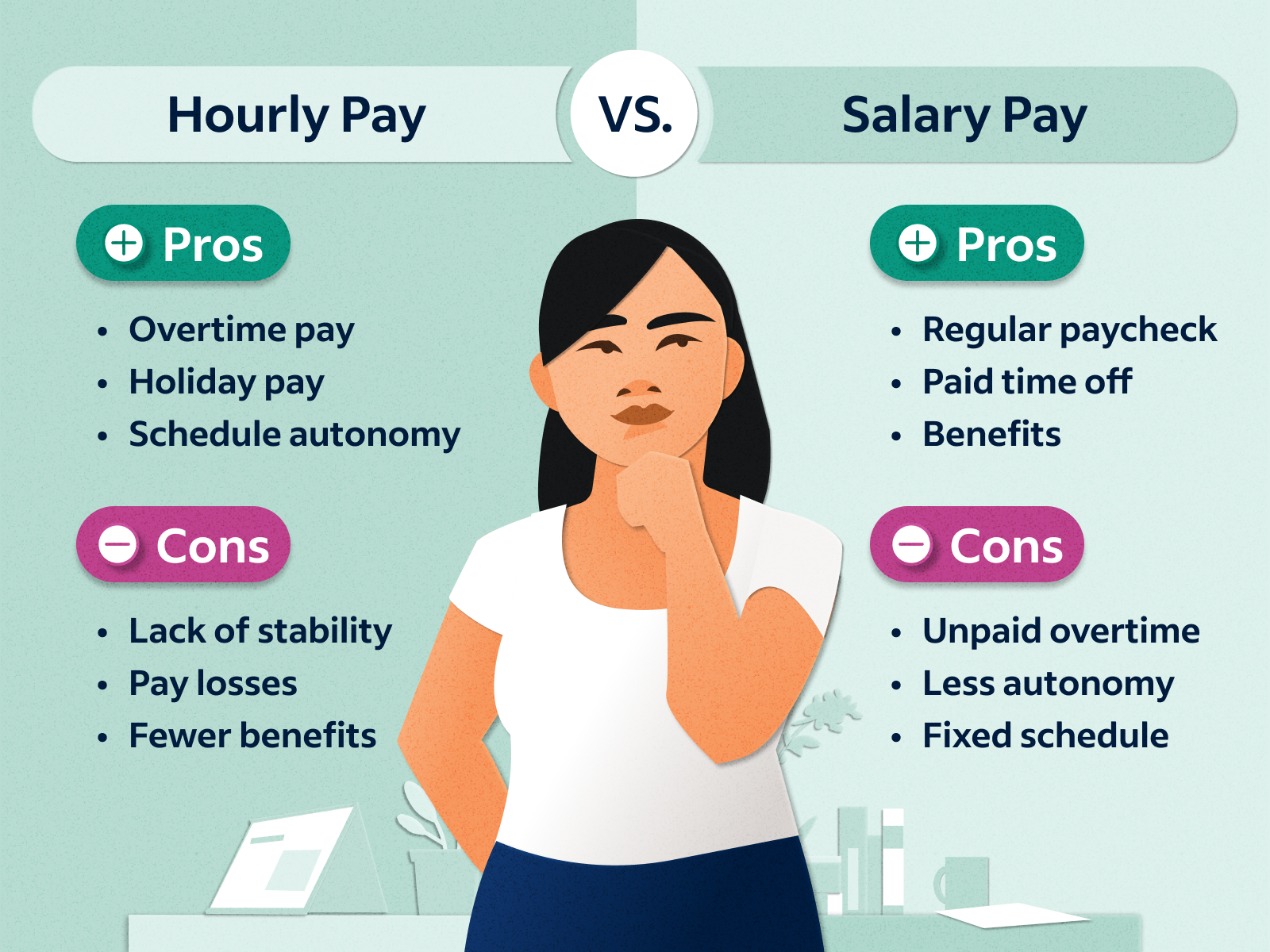
One thing that trips people up is paid time off. If your employer offers paid holidays and vacation days, your yearly gross stays at $45,760 even though you are not physically working every single day. Those days off are already baked into your compensation. The story changes if your job does not include paid leave. Taking two weeks of unpaid vacation, for example, would drop your annual total closer to $44,000. Similarly, if you are an hourly worker whose hours get cut during slow seasons, the actual amount you bring home could be lower than the headline figure. The key distinction to remember is this: salaried workers receive a fixed annual amount regardless of minor fluctuations in hours, while hourly workers are paid only for the hours they clock.
Breaking Down a 22 Dollars an Hour Salary by Pay Period
Knowing your yearly gross is useful for tax forms and loan applications, but most daily budgeting happens on a shorter cycle. You pay rent monthly, buy groceries weekly, and fill your gas tank every few days. So it helps to see what $22 per hour looks like across every common pay period.
Daily, Weekly, and Biweekly Earnings
On a standard eight-hour shift, you earn $176 per day. Over a full five-day workweek, that adds up to $880. If your employer pays you every two weeks, which is the most common payroll schedule in the United States, your biweekly gross paycheck comes out to $1,760 before deductions.
Monthly and Annual Totals
Divide the yearly figure of $45,760 by twelve months and you get approximately $3,813 per month. Some months are longer than others, so this is a smoothed average rather than an exact figure for any given calendar month. Here is a quick reference you can bookmark:
- Daily (8 hours): $176
- Weekly (40 hours): $880
- Biweekly (80 hours): $1,760
- Monthly (average): $3,813
- Annual (2,080 hours): $45,760
These are all gross figures, meaning they represent your earnings before any taxes or deductions come out. Your actual paycheck will be smaller, which brings us to the most important section of this entire article.
Your 22 an Hour Salary After Taxes — What You Actually Take Home
Nobody budgets with gross pay. You budget with the money that actually lands in your checking account. And the gap between what you earn on paper and what you keep can be significant. Understanding that gap starts with knowing which taxes apply to you.
Federal Income Tax and FICA
As a single filer earning $45,760, you are entitled to the 2026 standard deduction of $16,100. That brings your federal taxable income down to roughly $29,660. Under the current federal tax brackets, the first $11,925 of that is taxed at 10 percent, and the remainder falls into the 12 percent bracket. Your total federal income tax bill comes out to somewhere around $3,325 to $3,500, depending on any credits or adjustments you qualify for.
On top of federal income tax, you owe FICA payroll taxes. Social Security takes 6.2 percent of your gross wages up to the 2026 cap of $184,500, and Medicare takes another 1.45 percent with no cap. Combined, that is 7.65 percent, which on $45,760 equals approximately $3,500. Between federal income tax and FICA alone, you are looking at roughly $6,800 to $7,000 in annual deductions.
State Taxes and the No-Income-Tax Advantage
Where you live makes a real difference. Nine states charge zero state income tax: Texas, Florida, Nevada, Washington, Wyoming, South Dakota, Alaska, Tennessee, and New Hampshire. If you live and work in one of those states, your take-home pay stays noticeably higher. In states that do levy income taxes, the additional bite ranges from around 2 percent in states like Arizona to over 10 percent in California’s top brackets. For someone earning $45,760, the state tax hit in a moderate-tax state might be an extra $1,500 to $2,500 per year.
The Bottom Line on Take-Home Pay
After accounting for federal taxes, FICA, and a typical state tax burden, most single filers earning $22 per hour can expect to take home somewhere between $35,000 and $38,000 per year. That translates to roughly $2,900 to $3,170 per month in actual spending money, or about $1,350 to $1,460 per biweekly paycheck. Keep in mind that contributions to a 401(k), health insurance premiums, and other voluntary payroll deductions will reduce the number further. The exact amount landing in your account depends on your individual situation, but this range gives you a realistic planning baseline.
Can You Live Comfortably on This Income?
This is the question that actually matters. A number on a pay stub is meaningless until you hold it up against the cost of keeping a roof over your head, food on the table, and a reasonable quality of life. The honest answer is that it depends almost entirely on where you live.
Cost of Living Differences Across the Country
The United States is not one economy. It is dozens of local economies with wildly different price tags. The national median rent for a one-bedroom apartment sits at approximately $1,480 to $1,550 per month as of mid-2026, according to data from ApartmentAdvisor and Apartments.com. But that national number hides a massive spread. In Midwestern cities like Indianapolis, Wichita, and Tulsa, you can find a clean one-bedroom apartment for under $900 per month. In San Francisco, the average rent for a one-bedroom exceeds $3,500. New York and Boston are not far behind.
If your monthly take-home is around $3,000, spending $850 on rent in Oklahoma City leaves you $2,150 for everything else. Spending $2,200 on a studio in Brooklyn leaves you $800 and a whole lot of stress. Location is the single biggest variable in determining whether a 22 an hour salary feels comfortable or suffocating.
A Sample Budget on $3,000 Monthly Take-Home
The 50/30/20 budgeting framework is a popular starting point, and it works well at this income level when housing costs cooperate. Here is what it looks like in practice with roughly $3,000 in monthly take-home pay:
Needs (50 percent — $1,500): This covers rent or mortgage, utilities, groceries, car payment or public transit, insurance premiums, and minimum required debt payments. In a low-to-moderate cost-of-living area, $1,500 is workable. In an expensive metro, rent alone could consume this entire category.
Wants (30 percent — $900): Dining out, streaming subscriptions, gym membership, hobbies, personal shopping, and weekend activities. This is where quality of life shows up, and it is also the first place to trim if your needs bucket overflows.
Savings and Debt Payoff (20 percent — $600): Emergency fund contributions, retirement savings, and any extra payments toward student loans, car loans, or credit cards. Six hundred dollars a month may not sound like much, but it adds up to $7,200 per year, which can build a solid emergency cushion within twelve to eighteen months.
The percentages are guidelines, not commandments. A single parent will allocate differently than a twenty-three-year-old sharing an apartment with a roommate. The point is to have a framework that prevents spending from drifting aimlessly.
How This Pay Rate Compares to the National Average
Understanding your earnings in isolation is not enough. You also need context. Whether you searched for a 22$ an hour salary breakdown or simply want to know where you stand, the comparison to national averages tells the real story. Where does $22 per hour place you among the roughly 160 million working Americans?
Median Wages and Minimum Wage Context
According to the Bureau of Labor Statistics, the median hourly wage for all U.S. workers as of 2025 was $22.26. That means earning $22 per hour puts you almost exactly at the national midpoint. Roughly half of American workers earn more, and roughly half earn less. It is neither a high-income wage nor a low-income wage. It is, statistically speaking, the middle of the road.
For additional perspective, the federal minimum wage still sits at $7.25 per hour. Earning $22 per hour means you are making just over three times the federal floor. Even in states with higher local minimums, such as California at $16 or Washington at $16.28, a 22 an hour salary represents a meaningful step above the legal baseline. You are earning a living wage by most definitions, even if it requires careful budgeting in pricier parts of the country.
Common Jobs Paying Around This Rate
Plenty of roles across a wide range of industries cluster near the $22 per hour mark. These include customer service representatives in specialized fields, warehouse supervisors, pharmacy technicians, HVAC apprentices, medical billing specialists, dental assistants, entry-level IT support technicians, and security officers. The pay at this level tends to reward reliability, practical skills, and some degree of specialized training rather than a four-year degree. That makes it accessible to a broad cross-section of workers, which partly explains why it sits so close to the national median.
Part-Time and Overtime — How Your Hours Shape the Yearly Total
Not everyone works a neat 40-hour week. If you are part-time, freelance, or regularly picking up extra shifts, your annual earnings at $22 per hour can look very different from the standard $45,760 figure.
Part-Time Earnings
Working fewer hours per week naturally reduces your annual total. Here is how the numbers shift at common part-time schedules. At 20 hours per week, you would earn $22,880 per year. Bumping up to 25 hours brings you to $28,600. At 30 hours per week, you reach $34,320 annually. And at 35 hours, the total climbs to $40,040. Each of these figures represents gross pay before taxes, so your actual take-home would be somewhat lower. The formula stays the same regardless of how many hours you work, just plug in your weekly hours, multiply by $22, and then multiply by 52.
How Overtime Changes Your 22 an Hour Salary
On the other end of the spectrum, overtime can be a powerful income booster. Under the Fair Labor Standards Act, non-exempt employees earn time-and-a-half for every hour worked beyond 40 in a single workweek. At $22 per hour, your overtime rate is $33 per hour. If you pick up just five hours of overtime every week, that adds $165 per week, or roughly $8,580 per year, before taxes. Your annual gross jumps from $45,760 to approximately $54,340. Ten hours of weekly overtime pushes the total to nearly $62,920. Overtime eligibility depends on your job classification. Salaried employees classified as exempt under federal guidelines do not qualify, while most hourly workers do. If overtime is available in your role, it is one of the fastest ways to meaningfully increase your annual income without changing jobs.
Smart Strategies to Grow Beyond Your Current Hourly Rate
Earning $22 per hour is a respectable starting point, but it does not have to be a ceiling. Whether you want to buy a home, eliminate debt faster, or simply build more breathing room into your monthly budget, the path forward comes down to a few proven moves.
Negotiate Your Next Raise With Real Data
Most people leave money on the table simply because they never ask. Research from multiple compensation studies shows that workers who negotiate during performance reviews or job offers earn an average of $5,000 to $7,500 more per year than those who accept the first number on the table. Before your next conversation with a manager, spend an hour looking up what your role pays in your region using Bureau of Labor Statistics data and salary comparison platforms. Walk in with specific numbers, not vague feelings, and frame your request around measurable contributions you have made rather than personal financial needs.
Invest in High-Value Certifications
Certain certifications consistently push hourly rates into the $28 to $40 range within twelve to eighteen months of completion. In the IT space, CompTIA certifications and AWS cloud credentials are in high demand. In project management, a PMP designation carries weight across nearly every industry. In marketing and analytics, Google certifications are widely recognized and relatively inexpensive. Many of these programs cost less than $500 and can be completed through self-study while you continue working full time. The return on investment is often dramatic compared to pursuing a full degree.
Target Industries With Built-In Wage Growth
Some industries are growing faster than others, and that growth translates directly into higher pay for workers who get in early. Healthcare continues to expand as the population ages. Cloud computing and cybersecurity cannot hire fast enough to keep up with demand. Skilled trades like electrical work, plumbing, and welding face chronic labor shortages that drive wages upward year after year. AI-adjacent roles, from data labeling to prompt engineering, are emerging as entirely new career categories with compensation well above the median. Sometimes, a lateral move into a growing field delivers a bigger pay bump than years of incremental raises in a stagnating one.
Conclusion
A 22 an hour salary adds up to $45,760 per year on paper and roughly $35,000 to $38,000 per year in your pocket after taxes. That places you right at the statistical heart of the American workforce, earning more than half the country and roughly three times the federal minimum wage. Whether that figure translates into a comfortable life depends on where you live, how you budget, and whether you have a plan to keep that number moving upward.
The math itself is simple. The real skill is in what you do with it. Living in a region where your rent stays below 30 percent of your take-home pay, following a structured budget, building an emergency fund, and investing in your own skills through certifications or strategic job moves can turn a solid middle-of-the-road wage into a genuine foundation for long-term financial stability. Twenty-two dollars an hour is not the finish line. Treat it as a launchpad.
Frequently Asked Questions
1. What is 22 an hour salary per year? A 22 an hour salary equals $45,760 per year before taxes. This figure is based on working 40 hours per week for all 52 weeks of the year, which totals 2,080 working hours annually.
2. How much is $22 an hour per month? At $22 per hour working full time, you earn approximately $3,813 per month before taxes. This is calculated by dividing the annual gross of $45,760 by 12 months.
3. How much is $22 an hour biweekly? Your gross biweekly paycheck at $22 per hour comes to $1,760 before deductions. After federal taxes and FICA withholdings, most workers take home roughly $1,350 to $1,460 every two weeks.
4. How much is $22 an hour per week? Working a standard 40-hour week, you earn $880 per week in gross pay. Your actual take-home amount will be lower after federal income tax, Social Security, Medicare, and any applicable state taxes are withheld.
5. How much is $22 an hour per day? On a typical eight-hour workday, you earn $176 before taxes. This daily figure can help with short-term budgeting, especially if you are an hourly worker whose shift lengths vary from day to day.
6. How much is a 22 an hour salary after taxes? After federal income tax, FICA, and average state taxes, most single filers earning $22 per hour take home between $35,000 and $38,000 per year. That works out to roughly $2,900 to $3,170 per month deposited into your bank account.
7. What tax bracket does $22 an hour fall into? At $45,760 gross annual income, a single filer with the 2026 standard deduction of $16,100 has taxable income of about $29,660. Most of that falls within the 12 percent federal tax bracket, with the effective overall rate landing between 17 and 22 percent when FICA is included.
8. How much does $22 an hour take home in a no-income-tax state? In states like Texas, Florida, Nevada, or Wyoming that charge zero state income tax, a single filer earning $22 per hour can keep roughly $37,000 to $38,000 per year after federal taxes and FICA. That is approximately $200 to $300 more per month compared to workers in high-tax states.
9. How much does a self-employed person keep at $22 an hour? Self-employed workers and independent contractors earning $22 per hour pay the full 15.3 percent self-employment tax (both the employee and employer portions of FICA), compared to 7.65 percent for regular employees. After all taxes, a self-employed single filer may take home closer to $31,000 to $34,000 annually.
10. Can you live on a 22 an hour salary? Yes, in most parts of the United States outside of expensive coastal metros. With a monthly take-home of roughly $3,000, a single person can cover rent, groceries, transportation, and some savings in Midwestern, Southern, and Mountain West cities where one-bedroom rents stay under $1,000.
11. How much rent can I afford making $22 an hour? Following the widely recommended 30-percent rule, you should aim to spend no more than $1,144 per month on rent based on a gross monthly income of $3,813. In practice, this means comfortable one-bedroom apartments are affordable in many mid-size and smaller cities, but you may need roommates in expensive metros.
12. Can you support a family on $22 an hour? Supporting a family on a single income of $22 per hour is challenging but possible in low-cost areas with careful budgeting. For a household with children, dual income or government assistance programs like the Earned Income Tax Credit and CHIP can make a meaningful difference in bridging the gap between needs and take-home pay.
13. What does a good monthly budget look like on $22 an hour? Using the 50/30/20 framework on roughly $3,000 monthly take-home, you would allocate about $1,500 toward needs like rent, utilities, groceries, and insurance. Around $900 goes toward wants such as dining out and entertainment, and $600 goes toward savings and debt repayment.
14. Is $22 an hour a good wage in 2026? It sits right at the national median. The Bureau of Labor Statistics reported a median hourly wage of $22.26 for all U.S. workers in 2025, meaning $22 per hour places you almost exactly at the midpoint. It is roughly three times the federal minimum wage of $7.25.
15. How does $22 an hour compare to the average U.S. salary? The average (mean) U.S. salary is higher than the median because top earners skew the number upward. At $45,760, a 22 an hour salary falls below the national average salary of roughly $63,000 to $78,000, but it sits right at the median, which is a more representative measure of what a typical worker earns.
16. Is $22 an hour above minimum wage? Yes, significantly. The federal minimum wage is $7.25 per hour, making $22 per hour just over three times the federal floor. Even in states with higher minimum wages like California ($16) and Washington ($16.28), a 22 an hour salary is well above the legal baseline.
17. How does $22 an hour compare to $20 or $25 an hour annually? A $2-per-hour difference adds up fast over a full year. At $20 per hour you earn $41,600 annually, at $22 per hour you earn $45,760, and at $25 per hour you reach $52,000. That means the jump from $20 to $22 puts an extra $4,160 per year in your pocket, while moving from $22 to $25 adds $6,240.
18. How much does overtime pay at $22 an hour? Under the Fair Labor Standards Act, non-exempt workers earn time-and-a-half for hours exceeding 40 per week. At $22 per hour, your overtime rate is $33 per hour. Just five overtime hours per week adds roughly $8,580 per year to your gross income.
19. How much do you make part-time at $22 an hour? Part-time earnings at $22 per hour depend on your weekly schedule. At 20 hours per week you earn $22,880 annually, at 25 hours you reach $28,600, and at 30 hours per week your yearly gross climbs to $34,320. All figures are before taxes.
20. Is $22 an hour with overtime better than a $50,000 salary? It can be. A $22-per-hour worker logging 10 hours of weekly overtime earns approximately $62,920 per year gross, which exceeds a $50,000 salary by a significant margin. However, salaried roles often include benefits like paid time off, health insurance, and retirement matching that add thousands in total compensation value.
21. Can I buy a house making $22 an hour? It is possible in affordable markets. Using the common 3x-income lending guideline, a $45,760 annual income could qualify you for a home priced around $130,000 to $160,000. With FHA or USDA loans that require low or zero down payments, homeownership is realistic in many Midwestern and Southern cities, though coastal metros will be out of reach without a second income.
22. What jobs pay around $22 per hour? Common roles near this rate include warehouse supervisors, pharmacy technicians, dental assistants, HVAC apprentices, medical billing specialists, entry-level IT support technicians, customer service specialists in specialized fields, and security officers. Pay varies by region, experience, and industry demand.
23. How can I increase my income beyond $22 an hour? The most proven strategies include negotiating raises using market salary data, earning industry-recognized certifications like CompTIA, AWS, or PMP, and targeting high-growth sectors such as healthcare, skilled trades, and cloud computing. Workers who negotiate proactively earn an average of $5,000 to $7,500 more per year than those who accept the first offer.
24. Is a 22 an hour salary enough to save for retirement? It requires discipline, but it is absolutely achievable. Contributing even 5 to 10 percent of your gross income to a 401(k) or IRA means setting aside roughly $190 to $380 per month. With compound growth over 25 to 30 years and any employer match, that consistent habit can build a meaningful retirement fund, especially if you increase contributions as your pay grows.