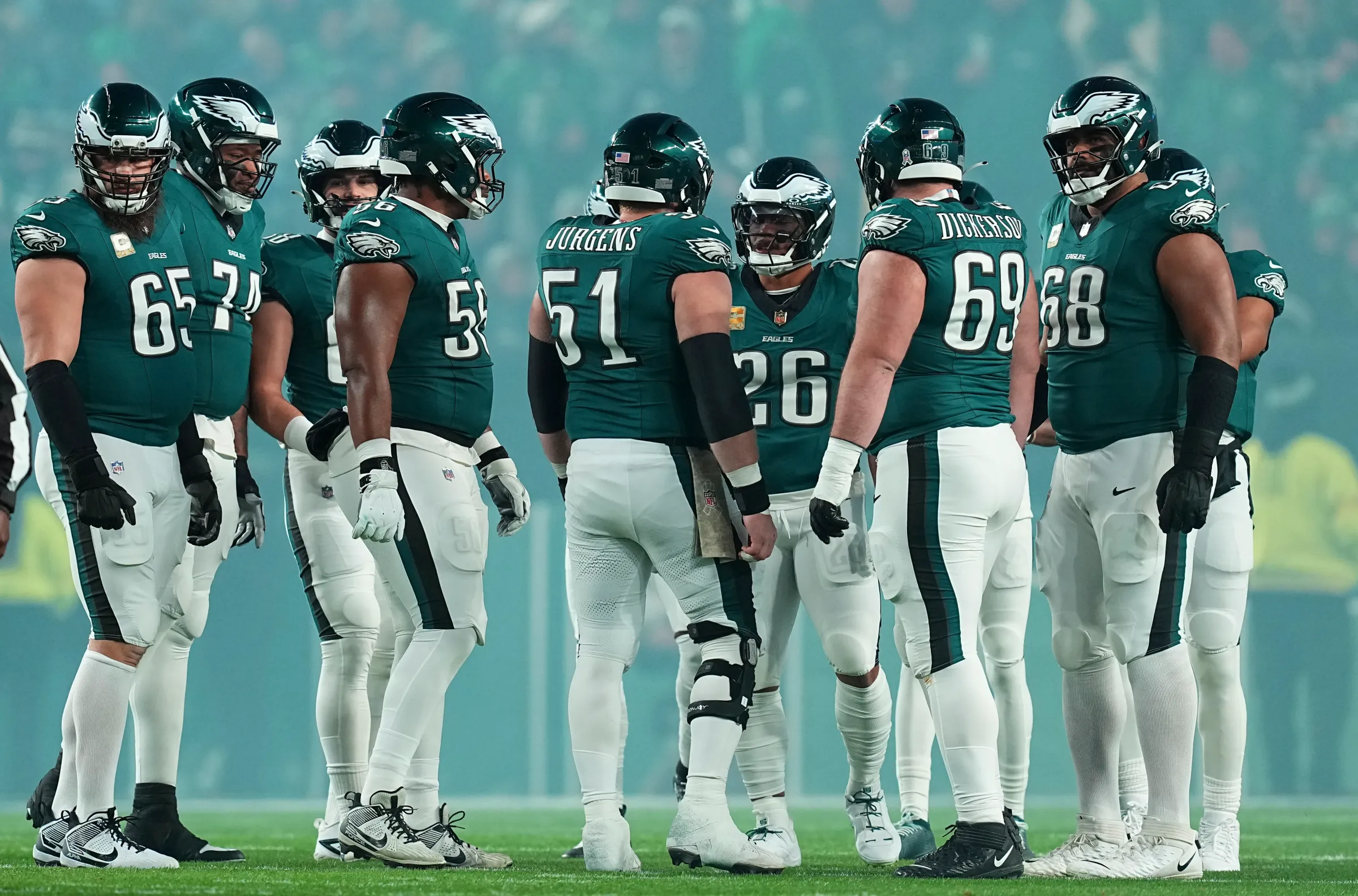
The 2025 NFL Draft will be remembered for many things. Surprising picks, unexpected trades, and franchise-altering decisions came fast and furious on draft night. But for Philadelphia Eagles fans, one story stood above the rest — the eagles rookie trade attempt that put Jihaad Campbell in midnight green.
It sounds simple enough on the surface. The Eagles moved up one spot. They traded with the Kansas City Chiefs. They got their guy. End of story, right?
Not quite.
What happened behind the scenes tells a much richer story. There were multiple trade conversations. There were bigger moves explored and ultimately walked away from. There was calculated patience under enormous pressure. And when the right moment finally came, the Eagles front office acted fast and precisely.
This article breaks down every layer of that story — from the pre-draft scouting process to Campbell’s impressive rookie season. If you want to understand how modern NFL teams are built, the story of this trade attempt is one of the best case studies available. It reveals not just what happened, but why it matters for the Eagles’ future and for the league as a whole.
What the Eagles Rookie Trade Attempt Actually Means
Before diving into draft-night details, it helps to understand what the phrase “eagles rookie trade attempt” actually refers to.
In the most direct sense, it describes Philadelphia’s effort during the 2025 NFL Draft to move up the board and secure linebacker Jihaad Campbell before any other team could. The Eagles entered the draft holding the No. 32 overall pick — the very last selection of the first round. That position made them vulnerable. Any team picking just before them could swoop in and take their target.
The front office, led by General Manager Howie Roseman, wasn’t willing to leave that to chance.
Reports surfaced that Philadelphia had explored multiple trade scenarios throughout the first round — some involving significant moves higher up the board, not just one or two spots. The goal was always the same: get Campbell. The method was flexible.
What made the situation even more interesting was the restraint the Eagles showed. They talked to teams. They ran the numbers. They calculated what each move would cost in future draft capital. And when the price got too high, they walked away — not out of fear, but out of discipline.
Eventually, as the first round wound down and Campbell was still shockingly available, the Eagles found the right opportunity. They sent pick No. 32 and a fifth-round selection (No. 164) to the Kansas City Chiefs in exchange for pick No. 31. It was a modest price for a major gain.
That precision — exploring boldly, spending wisely — is what defines this eagles rookie trade attempt and why it became one of the most talked-about draft stories of 2025.
The Player Behind the Move — Why Jihaad Campbell Was the Target
No trade attempt makes sense without understanding the player at the center of it. So who exactly is Jihaad Campbell, and why was Philadelphia so determined to land him?
A Rare Two-Way Linebacker
Campbell came out of the University of Alabama as arguably the most complete linebacker in the 2025 draft class. In his final college season, he recorded 117 tackles, 11.5 tackles for loss, five sacks, two forced fumbles, two pass breakups, and one interception across 13 games. Those are standout numbers by any measure.
What separated him from other linebackers wasn’t just the stats — it was the way he produced them. Campbell was equally dangerous against the run and in pass coverage. In the modern NFL, linebackers who can only do one thing well are liabilities. Teams need defenders who can handle running backs coming out of the backfield, drop into zone coverage, and still make plays in the box. Campbell could do all of it.
Pro Football Focus identified him as one of just six FBS linebackers in the country to earn at least an 80.0 grade in both run defense and coverage in the same season. That dual excellence is rare. Teams noticed.
How the Eagles Zeroed In on Campbell
Philadelphia’s scouting staff had been watching Campbell closely throughout the college season. The Eagles’ defense under coordinator Vic Fangio demands intelligence, versatility, and the ability to process information quickly. Campbell fit that profile perfectly.
There was one complication. Campbell had undergone surgery for a torn labrum, which caused some teams to hesitate. A medical concern during the pre-draft process can drop a player’s stock significantly — and it appeared to have done exactly that for several teams who may have otherwise targeted him earlier.
Roseman didn’t flinch. The Eagles saw past the short-term injury concern and focused on the long-term talent. That conviction is what drove the entire eagles rookie trade attempt — a belief that Campbell was too good to risk sitting at pick No. 32 and hoping no one else acted first.
Inside the Draft Room — How the Eagles Rookie Trade Attempt Unfolded
Understanding what happened on draft night requires understanding how draft-night negotiations actually work.
Teams are constantly communicating during the draft. Phones are ringing throughout all three days. Offers are made, countered, and withdrawn — sometimes within minutes. The board is always moving, and a player’s availability can change with every pick.
The Larger Moves That Didn’t Happen
The Eagles didn’t enter draft night simply planning to move up one spot. Reports indicated they explored possibilities of moving significantly higher in the first round — into the mid-teens or late teens — to guarantee Campbell wouldn’t be available for anyone else to take.
Those conversations involved real trade packages. Philadelphia considered combinations of mid-round picks and future draft capital. But every time the numbers were run, the cost came back too high. Moving up 15 or more spots in the first round is expensive in any year. For a team with Super Bowl aspirations needing to protect future flexibility, it wasn’t the right call.
So the Eagles did something that many NFL teams struggle to do in the heat of the moment: they waited.
Patience as a Strategy
As the picks rolled in during the first round of the 2025 draft, something unexpected happened. Campbell kept falling. The teams that might have taken him didn’t. The linebacker who checked every box for multiple franchises was still on the board deep into the round.
This is where the Eagles’ preparation paid off. Because they had already explored the big trade scenarios and done the math, they weren’t scrambling when opportunity knocked. They knew exactly what it would cost to move up one spot. They had already identified Kansas City as a willing partner. When the time was right, the call was made and the deal was done in minutes.
The move from No. 32 to No. 31 might look like a minor adjustment on paper. In practice, it was the product of hours of preparation, multiple rejected trade conversations, and the discipline to not overpay when patience could deliver the same result.
That’s the full story of the eagles rookie trade attempt — not just the final trade, but everything that led to it.
The Eagles Draft Philosophy Behind This Move
To truly appreciate what happened in the 2025 draft, you need to understand how the Eagles think about roster building as an organization.
Philadelphia is not a franchise that sits back and reacts. Roseman and his front office are proactive, aggressive, and always scanning for leverage. They treat every offseason — draft included — as an opportunity to pull ahead of the competition, not just keep pace with it.
Treating the Draft Like a Chess Match
The eagles rookie trade attempt fits perfectly within this broader philosophy. Roseman has consistently operated with the mindset that the draft board is not a passive experience — it’s an active negotiation. Teams who communicate, stay flexible, and gather information throughout the night make better decisions than teams who simply sit and wait for their pick.
By talking to multiple teams about moving up significantly, the Eagles gathered intelligence. They learned what the market was for various picks. They knew which teams were looking to move down. That information didn’t go to waste even when those larger deals didn’t come together. It made the final, decisive move easier to execute.
The Value of Rookie Contracts in Trade Negotiations
There’s another layer to why rookies and draft picks carry so much weight in modern NFL trade discussions — money.
Under the NFL’s collective bargaining agreement, rookie salaries are determined by draft slot before a single player is even selected. This means teams know exactly what they’re getting financially when they trade for or draft a young player. For a franchise like the Eagles, which manages a complex salary cap with high-profile veteran contracts, this predictability is enormously valuable.
Rookie contracts typically run four years at cap-friendly numbers, with a fifth-year option for first-round picks. A player like Campbell, drafted 31st overall, represents several years of affordable, high-level production — assuming he develops as expected. When you factor in what it would cost to sign a veteran linebacker to a comparable role in free agency, the value of a first-round pick becomes clear.
This is why the eagles rookie trade attempt was worth pursuing even at the cost of an additional fifth-round pick. The math simply made sense.
Jihaad Campbell’s Rookie Season — Did the Eagles Rookie Trade Attempt Pay Off?
All the strategy in the world only matters if the player delivers. And in Campbell’s case, the answer is a resounding yes — with some important nuance along the way.
A Strong Start to His NFL Career
Campbell didn’t ease into professional football. He jumped in immediately.
Through the first eight weeks of the 2025 season, Campbell played 461 defensive snaps — roughly 88% of the team’s total defensive snaps. For a rookie linebacker, that workload is substantial. It reflects the coaching staff’s trust in his ability to handle NFL speed and complexity from day one.
His stat line at the midpoint of the season: 45 tackles, one interception, one tackle for loss, one quarterback hit, two pass breakups, and a forced fumble. Those aren’t just solid rookie numbers. They’re starter-caliber production that put him in early conversations for Defensive Rookie of the Year.
Performances That Turned Heads
One game in particular captured what Campbell can do at the NFL level.
In a Week 17 road win at Buffalo — a game where the Eagles’ offense struggled in difficult conditions — Campbell played all 71 defensive snaps and was one of the best players on the field. He helped contain the Bills’ running game, generated two quarterback hurries as part of a team effort that sacked Josh Allen five times, and allowed just a 59.4 passer rating when targeted in coverage. He was matching up stride-for-stride with running backs on passing plays — something even veteran linebackers struggle to do consistently.
His earlier highlight came in Week 4 against the Tampa Bay Buccaneers, when he recorded a fourth-quarter end-zone interception off Baker Mayfield that sealed a critical win. That play showed his instincts, not just his athleticism.
The Mid-Season Role Reduction
Not everything was smooth. When veteran linebacker Nakobe Dean returned from injury partway through the season, Campbell’s snap count dropped significantly. Through his first six games, he never played under 90% of the snaps. After Dean’s return, that number fell into the 30–50% range for several weeks, and he didn’t play a single defensive snap in one late-season game.
The coaching staff’s decision drew scrutiny. There was a reasonable case that Campbell deserved to stay on the field given his production. And interestingly, the game where his snaps dropped to zero happened to coincide with the Eagles’ worst rushing yards allowed in a decade.
But Campbell responded the right way — he kept working, stayed ready, and contributed when his number was called. That professionalism, particularly for a first-year player, says a lot about his character.
End-of-Season Recognition
When the 2025 regular season wrapped up, the Pro Football Writers of America named Campbell to their All-Rookie Team. He played all 17 games, made 10 starts, and finished the year with 76 total tackles, 11 quarterback pressures, a forced fumble, and a fumble recovery.
It marked the fourth consecutive season that the Eagles’ top draft pick earned that recognition — a testament not just to individual talent but to the organization’s ability to evaluate and develop young players.
For anyone who questioned whether the eagles rookie trade attempt was worth the cost, Campbell’s rookie season provided a clear answer.
What This Trade Attempt Reveals About Philadelphia’s Future
Beyond the immediate results of the 2025 draft, the story of the eagles rookie trade attempt offers a window into how Philadelphia plans to stay competitive in the years ahead.
A Model for Smart, Aggressive Roster Building
The Eagles didn’t mortgage their future to get Campbell. They didn’t trade three future first-rounders to move up fifteen spots. They explored every option, stayed patient while other teams passed, and executed a precise, affordable move at exactly the right moment.
That approach — call it disciplined aggression — is repeatable. It doesn’t rely on luck. It relies on preparation, information gathering, and the willingness to act decisively when conditions are right.
Other franchises can learn from this blueprint. The temptation in the draft is always to panic, to overpay, to let fear of missing out drive decisions. The Eagles demonstrate that the teams who win the draft most consistently are the ones who stay in control of their emotions and stick to their board.
Campbell’s Long-Term Impact on the Eagles’ Defense
Looking ahead, Campbell is only going to get better. Rookie seasons are almost always a period of adjustment — learning NFL schemes, reading professional offenses, building stamina for the physical demands of a full season. Campbell handled all of that while still producing at an All-Rookie level.
With Nakobe Dean’s injury history, the Eagles will likely lean on Campbell more heavily in 2026 and beyond. The fifth-year option on his contract gives Philadelphia the ability to keep him through 2029 at a predetermined cost. That’s significant team control over a player who already shows Pro Bowl potential.
The eagles rookie trade attempt, viewed through this long-term lens, looks like one of the best value moves in the 2025 draft — not just for the Eagles, but across the entire league.
Roseman’s Continued Front-Office Aggression
Roseman has never been a passive general manager. His offseason moves, both in the draft and at the trade deadline, consistently reflect a front office that believes every asset is a tool to be used, not hoarded.
The 2025 season reinforced that approach. Beyond Campbell, the Eagles also acquired cornerback Jakorian Bennett via trade and picked up pass rusher Jaelan Phillips from the Miami Dolphins before the trade deadline, giving up a future third-round pick. These moves weren’t reckless — they were calculated bets on specific players at specific moments.
The eagles rookie trade attempt fits perfectly within that pattern. It wasn’t an isolated event. It was one expression of a consistent philosophy that has kept Philadelphia among the NFC’s elite franchises for nearly a decade.
Conclusion
The story of the eagles rookie trade attempt is more than a footnote in the 2025 NFL Draft. It’s a blueprint.
It shows what happens when a front office prepares thoroughly, scouts with conviction, and stays disciplined under pressure. It shows that boldness doesn’t require recklessness. And it shows that the best draft moves aren’t always the biggest ones — sometimes the most impactful decision is knowing exactly when and how much to spend.
Jihaad Campbell arrived in Philadelphia with high expectations and, by every meaningful measure, met them in year one. A productive rookie season, an All-Rookie Team selection, and a growing role in one of the NFL’s best defenses — the foundation is clearly there for something special.
For Eagles fans watching this story develop, the excitement isn’t just about what Campbell did in 2025. It’s about what he can become as he gains experience, adds strength, and grows into a leadership role on that defense.
The eagles rookie trade attempt was a single transaction. But what it set in motion could shape Philadelphia’s defense for the better part of a decade. In a league where the margin between winning and losing is razor-thin, that’s exactly the kind of move that keeps franchises at the top.
FAQ 1: What is the Eagles rookie trade attempt? The Eagles rookie trade attempt refers to Philadelphia’s effort during the 2025 NFL Draft to move up the board and secure linebacker Jihaad Campbell, exploring multiple trade scenarios before ultimately trading up one spot from No. 32 to No. 31 with the Kansas City Chiefs. It became one of the defining draft stories of the 2025 NFL season.
FAQ 2: Who did the Eagles target in the rookie trade attempt? The Eagles rookie trade attempt centered on Alabama linebacker Jihaad Campbell, whom the front office believed was an elite defensive prospect with the versatility to play multiple linebacker roles in coordinator Vic Fangio’s defense. Campbell was considered the top linebacker in the entire 2025 draft class.
FAQ 3: What picks did the Eagles give up to complete the trade? The Eagles traded their 32nd overall pick and a fifth-round selection (No. 164) to the Kansas City Chiefs to move up to pick No. 31, where they selected Jihaad Campbell — balancing ambition with the preservation of future draft assets. The cost was widely regarded as fair market value for a top-30 talent
FAQ 4: Did the Eagles try to move higher than one spot before the trade? Yes. The Eagles attempted to trade as high as pick No. 18 in the 2025 NFL Draft, but the asking price from teams ahead of them was too high. Rather than overpay, the front office exercised patience and waited for a better opportunity to materialize later in the round. That restraint ultimately saved them significant future draft capital.
FAQ 5: Why didn’t the Eagles complete a bigger trade-up in the draft? The Eagles explored multiple paths to reach picks as high as No. 18, but the asking price from teams ahead of them continued to rise. Rather than overpay, the front office made a crucial decision to wait — and when the board shifted, they executed a smaller trade to select Campbell at No. 31 without sacrificing future capital.
FAQ 6: How do NFL teams decide what to pay when trading up in the draft? NFL front offices use trade value charts — originally developed by Jimmy Johnson in the 1990s — that assign point values to every pick in the seven-round draft. If a team wants to trade up, they must package enough lower-round picks to equal the point value of the higher pick, with most modern teams using updated analytical models like the Rich Hill version.
FAQ 7: Why are rookie contracts so valuable in NFL trade negotiations? In the NFL, draft picks are the ultimate currency because the salary cap limits spending on veteran free agents, making building through the draft — where players are locked into cheap, four-year rookie deals — the most efficient way to construct a championship contender. Teams covet affordable, controlled talent above almost any other asset.
FAQ 8: How does the NFL rookie contract system work? For drafted players, all rookie contracts are for four years, with first-round picks receiving a fifth-year team option that must be picked up or declined between the player’s third and fourth seasons. Fifth-year options are fully guaranteed in terms of cash value, giving teams significant control over premium young talent.
FAQ 9: How did Jihaad Campbell perform in his rookie season with the Eagles? Campbell was named to the Pro Football Writers of America All-Rookie Team after playing all 17 games and making 10 starts, finishing his rookie season with 76 total tackles, 11 quarterback pressures, a forced fumble, and a fumble recovery — marking the fourth consecutive season that the Eagles’ top draft pick earned that recognition.
FAQ 10: Was Jihaad Campbell a Defensive Rookie of the Year candidate? Yes. Through the first half of the 2025 season, Campbell played 461 defensive snaps (88% of the total) and recorded 45 tackles, one interception, and a forced fumble, putting him on the short list of candidates to win NFL Defensive Rookie of the Year at the midpoint of the season. His playing time reduction after Nakobe Dean’s return affected his final vote totals.
FAQ 11: Why did Jihaad Campbell’s playing time drop mid-season? After veteran linebacker Nakobe Dean returned from injury midseason, Campbell’s snap count steadily declined from 87% of defensive snaps against the Vikings all the way down to zero in one late-season game, as defensive coordinator Vic Fangio restructured the linebacker rotation around Dean’s return. Campbell responded professionally and rebounded with a strong finish to the year.
FAQ 12: What made Jihaad Campbell such a high-priority target for Philadelphia? PFF identified Campbell as one of just six FBS linebackers in the 2024 college season to post at least an 80.0 grade in both run defense and coverage — a rare dual-excellence combination that perfectly matched what Vic Fangio’s defense demanded from the position. His athleticism, leadership, and immediate-impact potential made him a consensus top-tier prospect.
FAQ 13: How has Howie Roseman’s trade history shaped the Eagles’ draft strategy? Jihaad Campbell was the seventh player Howie Roseman has traded up for in the first round of the NFL Draft, a list that includes Brandon Graham, Fletcher Cox, Carson Wentz, Andre Dillard, Jordan Davis, and Jalen Carter — reflecting a consistent organizational philosophy of pursuing specific targets aggressively rather than sitting passively.
FAQ 14: Is the Eagles rookie trade attempt a sign of a broader organizational philosophy? During the 2024 draft, the Eagles tied an NFL record by making eight trades across seven rounds, with the stated goal of securing specific rookies the staff had targeted while simultaneously building extra capital for future seasons — demonstrating that aggressive draft-day movement is a core organizational strategy, not an isolated event.
FAQ 15: How do rookie trades differ from veteran trades in the NFL? One fundamental difference between trading for players on rookie contracts versus trading for players with cheap veteran contracts is that all the privileges of a rookie deal — including team-friendly salary, fifth-year options, and years of cost-controlled production — transfer entirely to the trading team, making rookie assets particularly valuable in negotiations.
FAQ 16: Can a team trade a rookie immediately after drafting them? Recently signed draft picks cannot be traded immediately after signing their initial contracts until a specific timeframe passes, a rule preventing teams from drafting players solely to flip them as assets. This restriction ensures the draft retains its intended purpose of placing players with teams that genuinely want them.
FAQ 17: What other moves did the Eagles make alongside the rookie trade attempt in 2025? Beyond the Campbell trade, the Eagles converted defensive line depth into secondary support by trading defensive tackle Thomas Booker to the Raiders for cornerback Jakorian Bennett, later adding pass rusher Jaelan Phillips from Miami ahead of the trade deadline, surrendering a 2026 third-round pick — part of a broader pattern of aggressive roster optimization throughout the year.
FAQ 18: What does the Eagles rookie trade attempt reveal about modern NFL roster building? The eagles rookie trade attempt concept requires understanding how the team prepares for the draft, how rookie contracts influence trade negotiations, and how Philadelphia balances immediate competitiveness with long-term roster development — reflecting a modern NFL truth that the most successful franchises treat all assets, including young players, as dynamic tools rather than sacred investments.
FAQ 19: How do conditional draft picks factor into rookie trade negotiations? When teams cannot agree on a player’s exact value, they use conditional draft picks that fluctuate based on performance — for example, a fifth-round pick might automatically upgrade to a third-round pick if the acquired player achieves certain statistical benchmarks or the team reaches the playoffs. This mechanism protects buyers from acquiring busts while rewarding sellers when players excel.
FAQ 20: Are Eagles rookie players considered tradeable assets under Roseman? The Eagles’ front office under Howie Roseman has a consistent pattern of identifying players on rookie deals, finding the right moment when their value peaks, and either extending them or trading them for assets — a system that has worked well over multiple draft cycles and reinforces the idea that no roster spot is guaranteed, regardless of age or draft pedigree.
FAQ 21: How does the Eagles’ salary cap situation affect their rookie trade decisions? The Eagles’ total estimated rookie pool for their 2025 draft class was approximately $11.5 million, but the actual cap space required was far less because most rookies replace players already counted in the top 51 — demonstrating how strategically the front office manages the financial side of acquiring and developing young talent.
FAQ 22: Will the Eagles continue to make rookie trade attempts in the 2026 NFL Draft? Yes — the Eagles moved up three spots in the 2026 draft to No. 20 to select USC receiver Makai Lemon before adding tight end Eli Stowers in the second round, earning an “A” grade from ESPN’s Mel Kiper and reinforcing that aggressive draft-day movement remains a core strategy under Roseman. Their 2026 approach confirmed the 2025 eagles rookie trade attempt was no fluke.
FAQ 23: What risks come with trading up for a rookie in the NFL Draft? Rookie trade attempts carry real risks: a talented player may fail if the defensive or offensive scheme doesn’t suit their strengths, trading multiple picks for one player can backfire if that player underperforms, and draft-day pressure often leads to impulsive decisions that cost teams future flexibility. The Eagles managed these risks in 2025 by refusing to overpay for a larger move-up.
FAQ 24: What is the long-term impact of the Eagles rookie trade attempt on the franchise? By executing a precise, calculated move to acquire Campbell, Philadelphia secured a top-tier talent without compromising their future — a case study showing that boldness doesn’t require overspending and that careful preparation, scouting confidence, and strategic timing can yield maximum results for years to come. Campbell’s rookie contract runs through at least 2028, with a fifth-year option available for 2029, giving the Eagles long-term defensive stability at a team-friendly cost.