You are scrolling through Twitter, reading a perfectly innocent reply, and then you spot it — a tiny “/pos” tacked onto the end of the sentence. Your first thought might be confusion. Is it an abbreviation? A typo? Some kind of code? If you have ever found yourself wondering about the /pos meaning, you are far from alone. Millions of people search for this exact term every month because the internet keeps inventing new ways to talk, and the rest of us are left playing catch-up.
Here is the thing that makes this topic so slippery. Those three letters — P, O, S — carry completely different weight depending on where you see them. On social media, /pos is a tone indicator that signals warmth and sincerity. In a retail store, POS refers to the system that processes your credit card payment. In a group chat, POS might be a crude insult or a teen warning that a parent is watching. And in Mexican Spanish, “pos” is a casual filler word that has nothing to do with any of the above.
This article breaks down every major interpretation so you never have to guess again. Whether you searched for the /pos meaning after seeing it on social media or landed here out of pure curiosity, we will start with the most searched version — the /pos tone tag — and work outward from there, covering business terminology, internet slang, cultural expressions, and everything in between.
The /pos Meaning Explained: The Tone Indicator That Changed Online Conversations
If you came here after seeing /pos on Twitter, TikTok, Tumblr, or Discord, this section is for you. The /pos meaning in the context of social media is simple and surprisingly wholesome. It stands for “positive” or “positive connotation.” When someone adds /pos to the end of their message, they are telling you that their words are meant kindly, sincerely, and without sarcasm. That is it. No hidden trick, no double meaning. Just a small signal that says, “I genuinely mean this in a good way.”
This matters because written text is terrible at carrying emotion. When you speak to someone face-to-face, your tone of voice, your facial expression, and your body language all help the other person understand your intent. Remove all of that — which is exactly what happens in a text message or a tweet — and suddenly a simple sentence like “wow, you really did that” could be read as admiration, sarcasm, disbelief, or mockery. The /pos tag eliminates that ambiguity in a single stroke.
The system of tone indicators that /pos belongs to gained serious traction around 2020 and 2021. Reddit had already popularized the /s tag for sarcasm years earlier, but the broader library of tone tags exploded during the pandemic era, when most human interaction moved online and misunderstandings became more frequent. Communities on Twitter and TikTok, particularly those with large neurodivergent memberships, drove much of the adoption. Grasping the /pos meaning became essential for anyone who spent time in these spaces. For many autistic users and others who process implied tone differently, these tags serve as genuine accessibility tools — not trends, not gimmicks, but practical aids that make digital spaces more navigable.
To see how /pos works in practice, consider these examples. Someone might write, “I am literally going to cry /pos,” meaning they are so moved or happy that they could cry — it is a positive emotional response. Another person might comment, “you are so annoying /pos,” which flips an otherwise harsh statement into an expression of playful endearment. Without that little tag at the end, both sentences could easily be misread. The /pos meaning in each case is clear: the speaker’s intent is warm, not hostile.
The tag /pc, which stands for “positive connotation,” works exactly the same way and can be used interchangeably with /pos. Most people default to /pos because it is shorter and more widely recognized.
Why the /pos Meaning Matters More Than You Might Expect
Understanding the /pos meaning is one thing. Understanding why it exists — and why it caught on so fast — is another. Tone indicators are not just internet novelty. They solve a real communication problem that affects every single person who types a message.
Text-based conversation strips away roughly 93 percent of the nonverbal cues we rely on during in-person interaction. That statistic gets thrown around a lot, and the exact number is debated by researchers, but the underlying point holds up well. When you cannot hear pitch, see a smile, or watch someone’s posture shift, your brain starts filling in the gaps with assumptions — and those assumptions are often wrong. A colleague’s Slack message that reads “fine, go ahead” might be enthusiastic approval or passive-aggressive frustration. You genuinely cannot tell without additional context.
Tone tags offer that context in the most efficient way possible. One or two characters at the end of a sentence, and the guessing game is over.
This is particularly valuable for neurodivergent individuals. Autistic people, for instance, may find it more challenging to infer tone from text alone — not because of any deficit in intelligence or empathy, but because the social shorthand that neurotypical people lean on is not always intuitive for everyone. Tone indicators level that playing field. They make conversations more inclusive by turning subtext into plain text. Once you understand the /pos meaning and its purpose, you start to see these tags less as internet jargon and more as a form of digital empathy.
Beyond accessibility, tone indicators are also finding a place in professional communication. Some teams use /gen (genuine) and /pos in internal Slack channels to reduce friction, particularly in remote-first companies where everything from performance feedback to casual banter happens over text. The idea is straightforward: clarity prevents conflict.
If /pos is the tag you will encounter most often in positive contexts, it helps to know its neighbors. Knowing the /pos meaning alone is a great start, but the full system of tone tags gives you a much richer understanding of online communication. Here are a few other common tone indicators that show up alongside it. The tag /s signals sarcasm. The tag /j means the speaker is joking. The tag /gen indicates a genuine question or statement. The tag /srs communicates seriousness. The tag /neg marks a negative connotation, functioning as the opposite of /pos. The tag /lh means light-hearted, and /r signals a romantic intent. You do not need to memorize all of them, but recognizing a handful will make your online experience far smoother.
What Does POS Mean in Business? The Point-of-Sale Connection
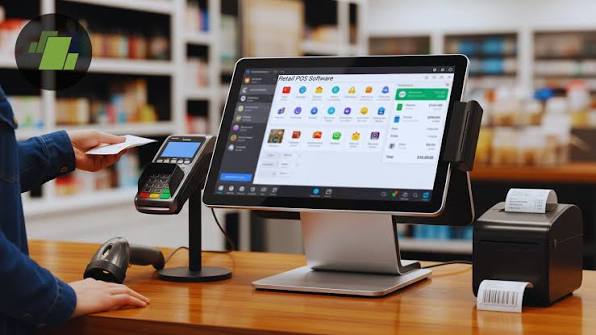
Step away from social media and into a retail store, and POS takes on a completely different identity. In the business world, POS stands for “Point of Sale” — the exact location and moment where a customer completes a purchase. If you have ever wondered about the pos system meaning while staring at the card reader on a checkout counter, this is your answer.
A POS system is the combination of hardware and software that makes modern transactions possible. On the hardware side, you are looking at things like touchscreen terminals, barcode scanners, receipt printers, and card readers that support tap-to-pay and digital wallets. On the software side, a POS platform handles payment processing, inventory management, sales analytics, employee scheduling, customer loyalty programs, and tax calculations — often all from a single dashboard.
The evolution of POS systems over the past decade has been dramatic. What used to be a clunky cash register bolted to a counter is now a sleek tablet running cloud-based software that a shop owner can monitor from their phone while sitting in a different city. Mobile POS setups have made it possible for food trucks, pop-up shops, and outdoor vendors to accept credit card payments just as smoothly as a major department store. Cloud-based systems update automatically, sync data across multiple locations in real time, and give business owners access to sales reports from any internet-connected device.
For small businesses in particular, a good POS system is not a luxury — it is operational infrastructure. It reduces manual errors in pricing, speeds up the checkout process, and provides data insights that help owners make smarter decisions about inventory, staffing, and marketing. Companies like Square, Shopify, Lightspeed, and Toast have built entire ecosystems around the POS concept, each tailored to different industries ranging from retail and restaurants to salons and service businesses.
Here is a quick context clue that will save you confusion in the future. If the conversation involves transactions, payments, receipts, terminals, or inventory, POS almost certainly means Point of Sale. If the conversation involves tweets, Discord messages, or someone expressing emotion, you are probably looking at the tone indicator. The letters are the same, but the worlds are entirely different.
POS in Slang and Casual Texting: The Meanings Nobody Talks About at Work
Now we enter the territory that makes POS such a loaded acronym. In casual internet slang — particularly in American English — POS is widely understood as a crude abbreviation for “piece of sh*t.” It is used to describe a person who has behaved badly, a product that does not work, a car that keeps breaking down, or really anything the speaker considers worthless, broken, or deeply frustrating. The term has been part of internet vocabulary since the late 1990s, when chat rooms and early forums created the need for fast, punchy shorthand. It stuck around because it is short, blunt, and universally understood in informal English.
There is also a less common but still noteworthy texting meaning: “Parent Over Shoulder.” This one comes from teen communication culture, where POS functions as an alert. If someone sends POS in the middle of a conversation, they are warning the other person that a parent is nearby and the chat content should be kept clean. This use is more niche and has declined somewhat as teens have shifted to platforms with disappearing messages, but it still appears in texting-slang reference guides.
The key takeaway across all of these definitions — tone indicator, point of sale, vulgar slang, parental warning — is that context determines meaning. POS without a forward slash leans toward business or slang depending on the setting. The forward-slash version, /pos, is specifically and exclusively the positive tone indicator. That small punctuation mark makes a big difference, and it is exactly why the /pos meaning stands apart from every other interpretation of these three letters.
What Does “No Pos Ora Sí Que No Entendí Ni Madres” Mean?
If you have ever stumbled across this phrase in a meme, a comment section, or a conversation with a Mexican friend, you probably did a double take. The expression “no pos ora sí que no entendí ni madres” is a colloquial Mexican Spanish phrase that roughly translates to “well, this time I really didn’t understand a damn thing.” It is informal, emphatic, and colorful — three qualities that Mexican slang delivers in abundance.
Let us break it down piece by piece. “No pos” is a casual, spoken-form shortening of “no pues,” which functions like the English word “well” or “so” at the start of a sentence. It is a filler word, a conversational cushion, and one of the most frequently heard expressions in everyday Mexican Spanish. “Ora sí que” translates loosely to “this time” or “now really.” And “no entendí ni madres” means “I didn’t understand anything at all,” with “ni madres” being a vulgar emphatic that roughly carries the force of “not a damn thing” or stronger. The word “madres” in Mexican slang is incredibly versatile and appears in dozens of expressions, many of them profane, most of them deeply expressive.
The important thing to note is that “pos” in this phrase has absolutely no connection to the English acronym POS or the tone indicator /pos. It is a completely separate word from a different language, and the overlap is purely coincidental. However, because this phrase appears frequently in memes and bilingual internet spaces, it often shows up in search results alongside questions about what POS or /pos means — which is exactly why it earns a place in this guide.
For non-Spanish speakers encountering this phrase for the first time, the cultural context matters. Mexican Spanish is famously expressive, playful, and layered with double meanings. Expressions like “no pos ora sí que no entendí ni madres” are not meant to offend — they are part of the everyday verbal texture of casual conversation, especially among younger speakers. Think of it as the Spanish equivalent of saying “yeah no, I literally understood absolutely nothing” with maximum dramatic emphasis.
Other Meanings of POS You Might Run Into
The acronym POS shows up in a few more specialized fields that are worth a quick mention, especially for anyone who has already learned the /pos meaning and wants the complete picture. In medical settings, POS can mean “positive” — for example, on a lab result or a diagnostic chart. If a doctor writes “POS” next to a test name, it typically indicates a positive finding. In grammar and linguistics, POS stands for “Part of Speech,” referring to the classification of words as nouns, verbs, adjectives, and so on. This meaning is common in academic textbooks and language-learning tools but rarely causes confusion outside of those settings. In technology and networking, POS can refer to “Packet Over SONET,” a data transmission protocol. In the cryptocurrency world, POS often stands for “Proof of Stake,” a consensus mechanism used by blockchain networks like Ethereum. Each of these is a legitimate use of the abbreviation, but none of them come close to the search volume generated by the tone indicator, the business term, or the slang.
How to Tell Which POS Meaning Applies: A Practical Guide
With so many definitions floating around, it helps to have a quick mental checklist for identifying the /pos meaning versus every other use of those three letters. When you see /pos with the forward slash, you are looking at the tone indicator — full stop. When you see POS in a business, retail, or payment context, it means Point of Sale. When POS appears in a casual, emotional, or insulting context in English, it is almost certainly the vulgar slang term. When you see “pos” in a Spanish-language sentence, it is the colloquial form of “pues.” And when POS shows up in a medical, academic, or technical document, it takes on whatever meaning that field assigns to it. The forward slash is the clearest dividing line. If it is there, you are dealing with a tone tag. If it is not, read the room.
Frequently Asked Questions
What does /pos mean on TikTok? On TikTok, /pos is a tone indicator meaning “positive.” Creators add it to comments and captions to show that their words are sincere and warm, not sarcastic or mocking.
Is /pos the same as POS without the slash? No, they are different. The /pos meaning refers specifically to the positive tone indicator used on social media. POS without the slash usually means Point of Sale in business or a vulgar insult in casual slang.
When did tone indicators like /pos become popular? Tone indicators gained widespread popularity around 2020 and 2021. They grew out of earlier conventions like the /s sarcasm tag on Reddit and expanded across Twitter, TikTok, and Discord communities.
Can I use /pos in professional or workplace communication? Yes, some remote teams use /pos and similar tone tags in internal messaging platforms like Slack. However, it is best to make sure everyone on the team understands the system before using it, and provide a quick explanation for anyone unfamiliar.
What is the opposite of /pos? The opposite of /pos is /neg, which stands for “negative connotation.” It signals that a statement carries a downbeat or critical tone, even if the words themselves might seem neutral on the surface.
What does POS mean in a store or restaurant? In retail and hospitality settings, POS stands for Point of Sale. It refers to the combined hardware and software system that processes customer payments, tracks inventory, and manages transactions at checkout.
Does the /pos meaning change depending on the platform? The /pos meaning stays consistent across all platforms. Whether you see it on Twitter, TikTok, Discord, Tumblr, or Instagram, it always signals a positive tone. The only variation is how frequently each community uses it.
What does “no pos” mean in Mexican Spanish? “No pos” is a colloquial shortening of “no pues,” which translates roughly to “well” or “so.” It is a filler phrase used at the start of sentences in casual Mexican conversation and has no connection to the English acronym or tone indicator.
Why do neurodivergent communities use /pos and other tone tags? Tone indicators help bridge the gap between written text and intended emotion. For many neurodivergent individuals, particularly autistic people, these tags make it easier to interpret messages accurately without having to guess implied social cues from text alone.
Is using /pos considered necessary in online conversations? Using /pos is not mandatory, but it is considered helpful, especially in communities where misunderstandings happen often. Nobody expects you to tag every single message, but adding /pos to a statement that might be misread is a small gesture that prevents confusion.
What does POS mean on a bank statement? On a bank statement, POS stands for Point of Sale and indicates a debit card purchase made at a merchant’s card terminal. It simply means money was withdrawn directly from your checking account when you swiped, tapped, or inserted your card at a store or restaurant.
Is /pos the same as /pc? Yes, /pos and /pc are completely interchangeable. Both stand for “positive connotation” and serve the exact same function as tone indicators. Most people default to /pos because it is shorter and more widely recognized online.
What does POS mean when a teenager texts it? When teens text POS, it most commonly means “Parent Over Shoulder,” warning the other person that a parent is nearby and can see the screen. In some cases, teens also use POS as a vulgar insult or add the slash version /pos as a positive tone indicator.
Can /pos be used sarcastically or as a joke? No. Tone indicators are specifically designed to convey genuine intent and should never be used sarcastically or to mislead. Using /pos on a message you do not actually mean positively defeats the entire purpose of the system and is considered bad etiquette in online communities.
What does POS mean in a job description or listing? In job descriptions, POS almost always stands for Point of Sale. It means the employer is looking for someone with experience using checkout systems, card payment terminals, or retail management software commonly found in stores, restaurants, and service businesses.
How do you pronounce /pos when speaking out loud? Most people say it as “slash poss” or simply spell out the letters as “P-O-S.” In casual conversation about tone indicators, people often just say “positive” instead of pronouncing the tag itself, since the spoken context usually makes the intent clear without shorthand.
What is the difference between /pos and /gen? The tag /pos means “positive connotation,” signaling that a message is meant warmly or encouragingly. The tag /gen means “genuine,” indicating that a question or statement is sincere and not rhetorical. Both clarify intent, but /pos speaks to emotional tone while /gen speaks to sincerity.
Is POS considered offensive or rude in texting? It depends entirely on context. POS used as slang for “piece of sh*t” is vulgar and offensive. However, /pos with the forward slash is a wholesome tone indicator meaning positive, and POS in a business or banking context is completely neutral and professional.
What does POS mean in medical terms? In medical settings, POS typically stands for “positive.” It appears on lab results, diagnostic charts, and clinical records to indicate a positive finding on a test. This usage has no connection to the social media tone indicator or the slang definition.
Can you use multiple tone indicators in one message? Yes, you can combine two tone indicators when a single tag does not fully capture your intent. For example, someone might write “I cannot believe you did that /pos /gen” to signal that the statement is both positive and genuinely meant. However, using more than two in one message is generally discouraged because it can create clutter.
What does /pos mean on Discord? On Discord, /pos carries the same meaning as on every other platform — it signals a positive connotation. It is especially common in fandom servers, gaming communities, and neurodivergent-friendly spaces where tone clarity helps prevent unnecessary conflict between members.
What does “no pos ora sí que no entendí ni madres” mean in English? This Mexican Spanish expression roughly translates to “well, this time I really did not understand a damn thing.” The phrase is informal, emphatic, and commonly heard in casual conversation or seen in memes shared across bilingual internet communities.
Are tone indicators like /pos only used in English? Tone indicators originated in English-speaking internet communities, but they are language-agnostic by design. Non-English speakers on international platforms like Discord and Twitter have adopted tags like /pos, /s, and /j in their messages regardless of the language used in the rest of the sentence.
What does POS debit mean on my bank statement? POS debit on a bank statement means a purchase was made using your debit card at a Point of Sale terminal. The funds were withdrawn directly from your bank account at the time of the transaction, and the entry simply records that an in-person or card-present payment occurred.
Conclusion
Language never sits still, and the internet speeds up its evolution dramatically. Three tiny letters — arranged as /pos, POS, or “pos” — carry entirely different meanings depending on whether you are reading a tweet, paying for groceries, or listening to a conversation in Mexico City. The /pos meaning that most people search for today is the tone indicator, a small but powerful tool that tells the reader, “I mean this warmly.” It is part of a growing system of digital shorthand that is making online communication clearer, kinder, and more accessible for everyone.
What makes this topic worth understanding is not just vocabulary — it is awareness. Knowing the difference between a positive tone tag, a checkout terminal, a slang insult, and a Mexican filler word keeps you from misreading people across cultures, platforms, and languages. And in a world where most of our conversations happen through screens, that kind of literacy matters more than ever. The next time you see /pos at the end of a sentence, you will know exactly what it means — and more importantly, you will understand why it is there. That, in a nutshell, is the /pos meaning worth remembering.