Introduction — What Is a Water Tower and Why Does It Still Matter?
Look up in almost any city and somewhere above the rooftops, you will spot a familiar silhouette — a wide tank perched high on steel legs or a stone column. Most people walk past it every day without giving it a second thought. Yet this quiet structure is one of the most important pieces of infrastructure ever built.
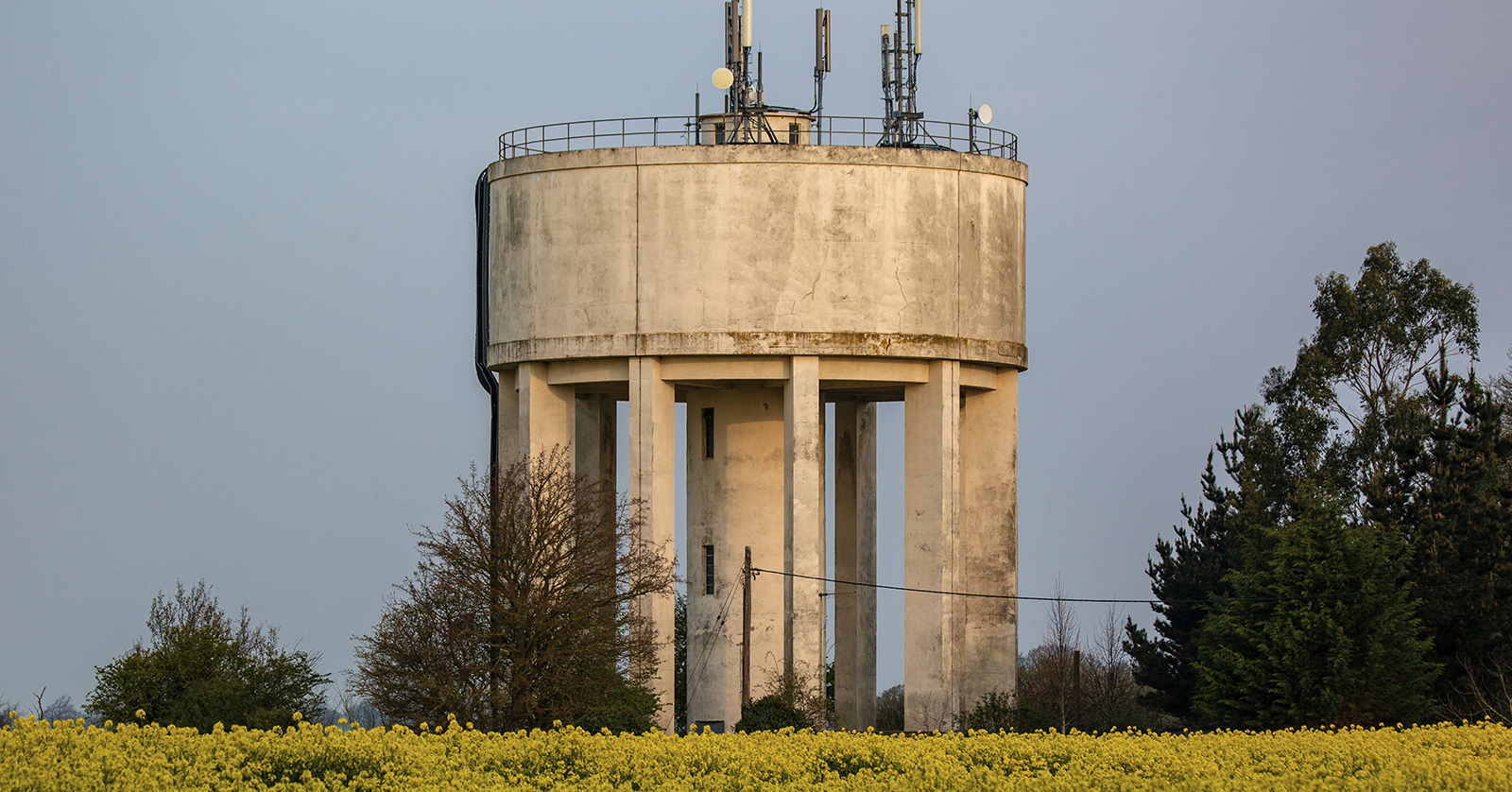
A water tower is essentially a large elevated storage tank. It holds a community’s supply at a specific height so that gravity can push water through pipes with consistent pressure. No complex machinery. No digital systems. Just the simple physics of elevation doing the heavy lifting.
The design has been with us for well over a century and, in many ways, it has barely changed. That is a testament to how well it works. From small American towns to dense urban skylines, this kind of elevated structure remains a reliable, cost-effective solution to one of humanity’s most basic needs — clean, pressurised water on demand.
This article covers everything worth knowing: where it came from, how it actually works, the famous landmarks it has inspired, and why communities around the world are still building them today.
The Origins and Evolution of the Water Tower
The story begins long before electricity was ever invented. Ancient civilisations understood that water needed to travel downhill to reach homes and public buildings. The Romans built aqueducts that used natural elevation to deliver water across entire regions. These stone channels were gravity systems in their purest form — and they planted the seed for everything that followed.
By the early 1800s, cities were growing faster than anyone had planned for. London, New York, and Chicago were packed with people, factories, and wooden buildings. Fire was a constant threat. Clean drinking water was often scarce. Something had to change.
How Urban Growth Forced a Solution
The industrial revolution brought steam-powered pumps that could move large amounts of water quickly. But pumps alone could not maintain steady pressure in the pipes. When demand spiked during a fire, pressure dropped and water barely trickled out of hoses when it was needed most.
Elevated storage solved this problem elegantly. Engineers realised that by storing water high above the city and letting gravity deliver it, they could maintain constant, reliable pressure at all times. The pump’s job became simply to refill the tank overnight. The tank then handled the demand peaks during the day.
By the mid-1800s, elevated water storage had become standard practice in industrialised cities across North America and Europe.
Key Engineering Milestones in Design
Early elevated tanks were made of wood — typically cedar or redwood, which naturally resists rot and expands when wet to form a watertight seal. Wooden tanks were cheap, effective, and reasonably easy to build at height. Many of New York City’s famous rooftop tanks are still made from wood today for exactly these reasons.
As the 20th century arrived, steel fabrication became affordable and widespread. Steel tanks could be built taller and hold far more water. The familiar “mushroom” and “spherical” designs emerged — wide tanks mounted on a single central column. These shapes are not just aesthetic. They distribute weight evenly and minimise surface exposure to temperature extremes, helping keep the stored water stable.
Later came concrete standpipe structures and composite fibreglass tanks, both still common in rural and suburban areas. Each material brought its own advantages, but the underlying principle never changed.
How a Water Tower Works: The Science Behind the Structure
Understanding the science takes no engineering degree. It comes down to one idea: height equals pressure.
Every foot of water height above a tap creates a small but measurable amount of pressure. Engineers measure this in PSI — pounds per square inch. A typical household needs between 40 and 80 PSI for water to flow properly through pipes, fill toilets quickly, and run showers comfortably.
To reach that target, an elevated storage structure needs to sit roughly 100 feet above the highest point it serves. That is why these tanks are built on high ground wherever possible, or built tall enough to compensate when flat terrain offers no natural advantage.
Pumping Cycles and Peak Demand
Here is something most people do not know: the system does not pump water continuously. Instead, it follows a simple daily cycle that is both efficient and clever.
Overnight, when almost no one is using water, electric pumps fill the tank to capacity. During the day, as people wake up, shower, cook, and go about their lives, water flows out under gravity. When demand spikes — such as during a fire emergency or a morning rush — the tank acts as a buffer, releasing its stored supply without any drop in pressure.
This cycle also helps utilities manage electricity costs. Pumping at night, when demand on the power grid is low, is significantly cheaper than running pumps at full capacity during peak daytime hours. A single installation like this can save a municipality thousands of dollars a year in energy costs alone.
Materials Used: Wood, Steel, and Composite Tanks
Walk through Manhattan and look up at the rooftops. You will see small, barrel-shaped wooden tanks — some of them more than a hundred years old. These are built primarily from cedar, which is naturally antibacterial and expands when wet to form a watertight seal without chemical treatment. The Rosenwach Group has been crafting them by hand since 1896 and remains one of the last companies still doing this work.
In most other parts of the world, steel dominates newer installations. Galvanised steel tanks are durable, scalable, and relatively low maintenance. In recent decades, fibreglass-reinforced plastic tanks have become increasingly popular for smaller installations. They are lightweight, corrosion-resistant, and require minimal ongoing upkeep.
Water Tower Place Chicago: A Landmark That Redefined a City
Few places in the world illustrate the cultural power of elevated water storage better than Chicago. The city is home to one of the most storied examples anywhere on earth — and this name is now attached to one of its most iconic addresses.
The Historic Chicago Water Tower: Survivor of the Great Fire of 1871
In October of 1871, fire tore through Chicago and destroyed nearly the entire city. More than 17,000 structures burned to the ground. Almost nothing was left standing. Yet when the smoke cleared, one building remained largely intact — the Chicago Water Tower on North Michigan Avenue.
Built in 1869 from Joliet limestone in a striking Gothic Revival style, this structure was never just functional. It was a symbol of civic ambition. When it survived the Great Fire, it became something more — a symbol of resilience. When Oscar Wilde visited in 1882, he reportedly called it a “castellated monstrosity.” Whether or not you agree, the building has a personality that still draws visitors today. It now serves as a gallery and visitor centre, and stands as one of the oldest surviving public buildings in Illinois.
Water Tower Place Chicago: From Pumping Station to Vertical Mall
Right across Michigan Avenue from the historic structure stands Water Tower Place — a very different kind of landmark. This 74-storey mixed-use skyscraper opened in 1975 and was, at the time, the tallest concrete building in the world.
The complex transformed Chicago’s Magnificent Mile into one of the most famous shopping and entertainment districts in the United States. It houses a multi-level atrium mall, luxury apartments, a hotel, and office spaces. It draws millions of visitors each year. The name is a direct nod to the historic landmark just steps away — a deliberate decision to honour the past while building toward something entirely new.
Water Tower Cinema and Cultural Attractions at the Complex
Within the complex, entertainment has always played a central role. The Water Tower Cinema was long a destination for film-goers on Chicago’s North Side, conveniently positioned alongside shops and restaurants. Beyond the cinema, the Michigan Avenue corridor is home to galleries, theatres, hotels, and cultural spaces that together make this neighbourhood one of the most vibrant in the city.
The two structures — one historic, one modern — stand side by side as a reminder of how much a city can grow while still honouring what came before.
Iconic Elevated Storage Structures Around the World
This kind of infrastructure is a global solution, but no two examples are quite alike. Some have become beloved landmarks. Others have been turned into homes, hotels, and museums. A few have sparked controversy. All of them tell a story.
New York City’s Wooden Rooftop Tanks
New York City has approximately 10,000 wooden rooftop storage tanks — more than any other city on earth. They exist because local building code requires elevated water storage for any structure taller than six storeys. Without them, underground water mains simply cannot generate enough pressure to reach upper floors naturally.
These tanks are one of the most photographed elements of the New York skyline, appearing in countless films, photographs, and paintings. They are remarkably low-tech — working the same way they did 130 years ago.
European Repurposed Towers
Across Europe, Victorian-era structures that once served entire cities have been converted into unique residential properties — some selling for millions of euros. In Belgium, the Netherlands, and the United Kingdom, architects have turned hulking stone towers into extraordinary homes with panoramic views.
These conversions reflect a broader truth: because of its height and structural solidity, a converted storage tower makes for a genuinely extraordinary living space. Floor-to-ceiling windows, 360-degree views, and thick walls are a compelling combination.
Unusual and Record-Breaking Designs Globally
Not every example blends quietly into the skyline. The Ypsilanti tower in Michigan, completed in 1890, became famous for an anatomical resemblance that locals noticed immediately — and it regularly appears on lists of the world’s most unusual structures. In Sweden, the Svampen tower in Örebro was built in 1958 to look exactly like a giant mushroom, complete with a restaurant inside. The Union Tower in New Jersey, standing 212 feet tall, is one of the largest single-column elevated tanks in the United States.
These examples show that engineers have never treated this type of structure as purely utilitarian.
Are Water Towers Still Being Built Today?
This is one of the most commonly asked questions, and the answer surprises people. Yes — they absolutely are being built today, though the landscape is changing.
Modern Alternatives and Where They Fall Short
In many urban areas, utilities have shifted toward ground-level storage tanks paired with variable-speed pressure pumps. These systems use electronic controls to maintain steady pressure without elevated storage. They are more compact and can be integrated into smart city infrastructure.
However, they have two significant weaknesses. First, they are entirely dependent on electricity. If the power goes out, pressure drops immediately. An elevated tank holds enough pressure to serve a community for hours — sometimes days — without any power input. Second, they require more sophisticated monitoring and maintenance.
For communities in earthquake zones, flood-prone areas, or regions with unreliable electricity, the elevated water tower remains not just relevant but essential.
Where Elevated Storage Remains Indispensable
Rural America is the clearest example of where this approach will not be going away anytime soon. Small towns and rural districts often lack the infrastructure for complex pump systems. A single elevated tank serves dozens or hundreds of homes reliably, cheaply, and with minimal intervention.
Fire protection is another area where elevated storage has no substitute. Insurance standards in many US states require a certain volume of water to be available at specified pressure for fire suppression. An elevated tank meets those standards automatically, by design.
In developing regions across Africa, South Asia, and Latin America, new tanks are being built as part of rural water access programmes. For communities receiving piped water for the first time, elevated storage is often the first infrastructure investment, not the last.
Smart Technology and Remote Monitoring
Modern installations are increasingly equipped with sensors and remote monitoring systems. Operators can now track levels, detect leaks, monitor pressure fluctuations, and receive alerts when maintenance is needed — all from a smartphone or central operations dashboard.
Some utilities have integrated these systems into broader smart city platforms, coordinating distribution with real-time demand data. The technology does not replace the structure. It makes it smarter, extending useful life and reducing operational costs significantly.
Cultural Symbols and Repurposed Spaces
Far beyond engineering, this type of structure has found its way into art, film, literature, and real estate in ways that its 19th-century builders never could have imagined.
Art, Murals, and Community Identity
Drive through rural America and you will notice something: nearly every elevated tank in a small town carries the town’s name — often in bold lettering visible for miles. Many go further. Some carry murals of local wildlife, historic events, or scenes of community pride. In larger cities, storage tanks have become canvases for commissioned street art, turning utilitarian steel into public gallery space.
In Chicago specifically, the area around the historic tower has long served as a platform for public art installations and civic exhibitions, with the structure’s deep connection to the city’s history making it a natural anchor.
Living in a Converted Tower
Some of the most talked-about residential conversions in recent years have involved old storage towers. A converted example in Brooklyn sold for over three million dollars. A 19th-century tower in the English countryside became a five-bedroom holiday property with a hot tub at the top.
The appeal is clear. Circular floor plans, extraordinary height, industrial heritage, and thick walls add up to a living space unlike anything else. Architects love the challenge. Buyers love the uniqueness. Local councils love having heritage structures saved rather than demolished.
Pop Culture and Literature
Perhaps the most famous fictional appearance is the rooftop structure atop the Warner Bros. studio lot, where the three cartoon siblings lived in the animated series Animaniacs. That image has lodged this kind of structure firmly in the imagination of an entire generation. In film, a tall isolated tank often appears at a moment of high tension. In literature, it functions as a metaphor for watchfulness and the invisible systems that hold daily life together.
Maintaining and Inspecting a Water Tower: What Communities Should Know
Built to last for decades, these structures do not maintain themselves. Regular inspection and upkeep are essential to ensure the tank remains safe and the stored water stays clean.
Inspection Frequency and EPA Compliance
In the United States, the Environmental Protection Agency recommends that all public water storage facilities be inspected at least every five years. Many state regulators require annual assessments. These cover structural integrity, interior and exterior coatings, sediment accumulation, and any signs of contamination.
Neglected tanks carry real public health risks. Sediment builds up. Cracks in interior linings can allow contaminants into the supply. Rust can leach into drinking water. Regular inspection catches these problems early, when they are still inexpensive to fix.
Common Problems and How They Are Fixed
The most frequently identified issues are coating failures, sediment build-up, and structural corrosion. Interior coatings protect metal walls from rust and prevent contamination. Over time, these coatings crack and degrade. Recoating a tank typically costs between $50,000 and $200,000 depending on its size.
Sediment accumulates naturally at the base of any storage tank. In small quantities it is harmless, but over years it can become a breeding ground for bacteria. Tanks are periodically drained and cleaned to remove the build-up. Structural repairs are less frequent but more significant. With proper maintenance, many installations remain in active service for well over a century.
Conclusion — The Quiet Giant Still Holding Up Our Cities
The water tower is one of those rare inventions that solved a problem so completely, it never needed to be replaced — only refined. From cedar rooftop tanks in New York to the limestone Chicago landmark that outlasted the Great Fire, this type of structure has been with us through everything.
It represents engineering at its most honest: no unnecessary complexity, no digital dependencies, just height, gravity, and water working together. And yet it has become something far richer than a functional object. It has become a part of urban identity — photographed, painted, converted, celebrated, and preserved on every continent.
Whether standing quietly above a small midwestern town or anchoring an entire neighbourhood in the heart of Chicago, the water tower continues to do exactly what it has always done. It holds what we need. It delivers it reliably. And it reminds us that the most enduring infrastructure is often the simplest kind.
Q1. What is a water tower and what does it do? [Both] A water tower is a large elevated storage tank that holds treated water at a height high enough to create natural water pressure through gravity. It serves two primary purposes: maintaining consistent water pressure throughout a distribution system, and storing emergency reserves for fire protection and power outage scenarios. Most municipal towers are sized to hold roughly one full day’s water supply for the community they serve.
Q2. How does gravity create water pressure in a water tower? [AIO] Every 2.31 feet of water elevation creates exactly 1 PSI (pound per square inch) of pressure. So a tower 140 feet tall produces roughly 60 PSI at ground level — well within the 50–100 PSI range that homes and businesses require. The water does not need any pump to flow from the tower; gravity alone drives it through underground pipes and into every connected building.
Q3. Why is a water tower built so high off the ground? [PAA] Height is what generates pressure. Without sufficient elevation, water would trickle out of taps rather than flow with force. A standard water tower stands approximately 130 to 165 feet tall. In hilly regions, tanks are sometimes placed directly on elevated ground to take advantage of natural topography, which removes the need for a tall support structure entirely.
Q4. When does a water tower fill up — and how? [PAA] Water towers are typically filled overnight, during the hours of lowest demand when electricity rates are cheapest. Electric pumps at the treatment plant push treated water up through a large riser pipe at the base of the tower. Automated level sensors monitor the tank and signal pumps to switch on when the level drops and off when it reaches capacity. During the day, gravity handles distribution without any pumps running at all.
Q5. How much water can a typical water tower hold? [Both] Most municipal water towers hold between 300,000 and 3 million gallons of water. Some larger tanks — such as the Earthoid in Germantown, Maryland — hold up to 2 million gallons. New York City rooftop tanks are much smaller, often holding just 10,000 to 50,000 gallons each, but there are approximately 10,000 of them across the city working together.
Q6. What happens to a water tower during a power outage? [Both] A water tower continues to supply water during a power outage because it relies on gravity, not electricity. A full or partially full tank can keep water flowing to homes and businesses for several hours to a full day without any pumping. This makes it an essential backup for hospitals, fire stations, and emergency services. Once power is restored, pumps refill the tank automatically.
Q7. What materials are water towers made from? [PAA] The most commonly used materials are steel and reinforced or pre-stressed concrete. Wood — specifically cedar or redwood — is still used for thousands of rooftop tanks in New York City, where it has been preferred since the 1800s because it naturally resists bacteria and expands when wet to form a watertight seal. Fibreglass-reinforced plastic is increasingly popular for smaller and rural installations due to its light weight and low maintenance requirements.
Q8. What are the main components inside a water tower? [AIO] The key components are: the tank (which stores the water), the riser pipe (which carries water from ground level up into the base of the tank), the inlet pipe (which fills the tank), the outlet pipe (which distributes water to the community), an overflow pipe (which safely diverts excess water to prevent overfilling), and the support structure — either multiple legs or a single central pedestal. Modern towers also include level sensors and remote monitoring equipment.
Q9. What shapes do water tower tanks come in? [PAA] Water tower tanks can be spherical, cylindrical, ellipsoidal, or composite in shape. The spherical “water sphere” and “pedesphere” designs — a sphere on a single pedestal — are among the most common in North America. Cylindrical tanks on multi-legged supports are also widely used. The shape affects structural strength, temperature stability, and how evenly weight is distributed across the support structure.
Q10. How tall is a standard water tower? [PAA] A standard municipal water tower typically stands between 130 and 165 feet (40 to 50 meters) tall. The exact height is determined by the elevation needed to supply the highest buildings in the service area with adequate pressure. In flat terrain, towers must be taller than in hilly areas where natural ground elevation provides a pressure advantage.
Q11. How often should a water tower be inspected? [Both] The U.S. Environmental Protection Agency recommends that all public water storage facilities be inspected at least once every five years. Many states require annual inspections. These assessments evaluate structural integrity, interior and exterior coatings, sediment levels, water quality, and potential contamination risks. Routine annual cleaning and water quality testing is also recommended by most industry standards.
Q12. Is the water inside a water tower safe to drink? [PAA] Yes — when properly maintained, the water in a municipal tower is fully treated and meets safe drinking water standards. The water is disinfected at the treatment plant before it enters the tower. Regular interior inspections and cleaning prevent sediment build-up, rust, and bacterial growth. However, a neglected or poorly maintained tank can affect water quality, which is why scheduled inspections are a legal requirement in most jurisdictions.
Q13. Can water in a water tower go stale or become contaminated? [AIO] In active systems, water turns over frequently — sometimes up to five times per day — which prevents stagnation. However, fire protection tanks that store water for emergency-only use are more vulnerable to stagnation because the water rarely circulates. Sediment and sludge can accumulate at the base of any tank over time. Untreated tanks can harbour bacteria, which is why interior cleaning every three to five years is the industry standard minimum.
Q14. Do water towers freeze in winter? [PAA] Water towers do not typically freeze solid because the water is constantly moving in and out, which prevents ice from forming throughout the tank. In extremely cold climates, ice can form on the surface of the water inside the tank — sometimes several feet thick — but it floats as the water level changes and does not usually block flow. In severe climates, engineers install heating systems in the riser pipe and valve pit to prevent freeze damage to internal fixtures.
Q15. How long does a water tower last? [Both] A properly maintained water tower has a structural lifespan of 120 to 150 years, according to engineering professionals at KLM Engineering. Most are designed with a minimum service life of 50 years. With consistent inspection, interior recoating, and timely structural repairs, many remain fully operational for well over a century. The oldest operational water tower in the United States — the Louisville Water Tower in Kentucky — was built in 1860.
Q16. How much does it cost to maintain or repaint a water tower? [AIO] Interior recoating — replacing the protective paint and sealant inside the tank — typically costs between $50,000 and $200,000 depending on the size of the structure. Exterior repainting is a separate cost. Full structural restoration projects for aging towers can reach into the millions. Consistent maintenance is far cheaper in the long run than neglect, which can lead to premature replacement costing several million dollars.
Q17. Why did cities start building water towers in the 1800s? [AIO] The key driver was rapid urban growth combined with the devastating frequency of city fires. Steam-powered pumps could move water but could not maintain steady pressure — when demand spiked during a fire, water pressure collapsed. Elevated storage provided a constant-pressure reserve that fire hoses and household taps could rely on. Chicago, New York, and London were among the first cities to adopt the technology at scale, driven by fire safety codes after major urban fires.
Q18. What is the oldest water tower still in operation in the United States? [PAA] The Louisville Water Tower in Louisville, Kentucky, built in 1860, is recognised as the oldest ornamental water tower still standing in the United States. The second oldest is the Chicago Water Tower, completed in 1869 in a Gothic Revival limestone design — and famously one of the very few structures to survive the Great Chicago Fire of 1871. Both are now protected landmarks and tourist attractions.
Q19. Why does New York City have so many wooden water towers on rooftops? [Both] New York City building codes require elevated water storage for any building over six storeys, because the city’s underground water mains cannot generate enough pressure to reach upper floors naturally. Cedar and redwood tanks have been the preferred material since the late 1800s — they are antibacterial, naturally watertight when wet, and surprisingly durable. Approximately 10,000 wooden rooftop tanks remain in active use across the city today.
Q20. What is Water Tower Place in Chicago? [PAA] Water Tower Place is a 74-storey mixed-use skyscraper on Chicago’s Magnificent Mile that opened in 1975. It was named after the historic Chicago Water Tower directly across Michigan Avenue. At the time of its opening, it was the tallest reinforced concrete building in the world. Today it houses a multi-level retail mall, luxury hotel, apartments, and offices, and remains one of the most-visited commercial destinations in Chicago.
Q21. Are water towers still being built today? [Both] Yes, new water towers continue to be constructed — particularly in rural America, developing nations, and any region where consistent electricity supply cannot be guaranteed. While some urban utilities have shifted to variable-speed pump systems as an alternative, these depend entirely on continuous electrical power and are not suitable for every community. Elevated storage remains the most resilient and cost-effective solution in many parts of the world.
Q22. What are the modern alternatives to a water tower? [AIO] The main alternative is a ground-level storage tank combined with variable-speed booster pumps that maintain pressure electronically. This system is more compact and easier to integrate into smart city infrastructure. However, it requires continuous electricity and is more complex to maintain. For areas with stable power grids and dense infrastructure, pump-only systems are viable. For rural, developing, or disaster-prone regions, elevated storage remains irreplaceable.
Q23. Can a water tower be converted into a home or office? [PAA] Yes — and it has been done across Europe and North America with remarkable results. Old water towers are structurally solid, architecturally distinctive, and offer dramatic height with panoramic views. Converted towers in Belgium, the Netherlands, the United Kingdom, and the United States have sold as private homes and boutique hotels, some for several million dollars. Their circular floor plans, thick walls, and industrial character make them among the most unique residential conversions available.
Q24. Do water towers affect fire insurance rates? [AIO] Yes — the presence of a functioning water tower in a community typically lowers fire insurance rates for property owners. Water towers guarantee that sufficient water pressure and volume are available at fire hydrants even during peak demand or pump failure. Insurance underwriters recognise the tower as a passive, always-available emergency reserve. Communities relying solely on electric pump systems may face higher rates due to the risk of pressure failure during a power outage.