
Picture this. The S&P 500 ticks up 1% on a quiet Tuesday afternoon. Most index fund holders barely notice. But somewhere, a trader watches their position jump 3% in the same session — triple the move, triple the adrenaline, and potentially triple the pain if the market reverses the next morning.
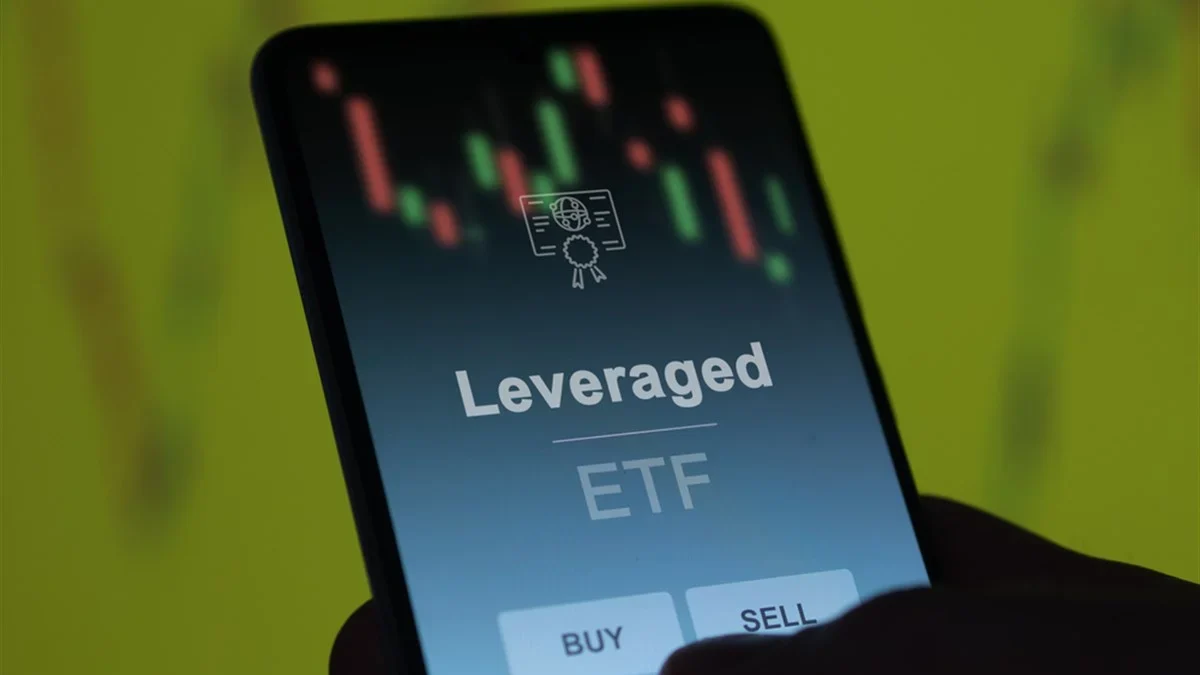
That scenario captures the core promise of 3x leveraged ETFs. At their simplest, 3x leveraged ETFs are exchange-traded funds that use financial derivatives and borrowed capital to deliver three times the daily return of an underlying index. When the benchmark goes up, they go up faster. When it falls, they fall harder. And the word “daily” in that sentence matters more than most people realize.
The appeal is obvious. Why settle for ordinary market returns when you can amplify them? That thinking has pushed assets in leveraged equity ETFs past $134 billion, and the number keeps climbing. Retail traders, swing traders, and even some institutional desks have made these products a permanent fixture of their playbooks.
But here is the uncomfortable truth. Most people who buy into triple-leveraged products do not fully understand the mechanics underneath. They see “3x” and assume it means three times the annual return of the S&P 500. It does not. Not even close. The daily reset, the compounding drag, and the sheer scale of potential drawdowns make these instruments far more complex than they appear on a brokerage screen.
This guide breaks down how 3x leveraged ETFs actually work, which funds track the S&P 500, where the hidden risks live, and how experienced traders manage those risks without blowing up their accounts. Whether you are considering your first leveraged trade or sharpening a strategy you already use, this is the information that separates informed decisions from expensive lessons.
How 3x Leveraged ETFs Actually Work
Understanding the engine inside these funds is step one. Skip this, and every trade you place is a gamble rather than a strategy.
The Daily Reset Mechanism
The “3x” label refers to a daily target. Not weekly. Not monthly. Not annual. Each trading session, the fund aims to deliver exactly three times the return of its benchmark index for that single day. After the closing bell, the fund’s managers reset the entire exposure so the same 3x ratio holds fresh when markets open the next morning.
Here is what that looks like in practice. A fund with $1 billion in net assets needs $3 billion in total market exposure to hit its 3x target. The fund posts its own billion as collateral and enters into total return swap agreements with major investment banks to cover the remaining $2 billion. Those banks — typically names like Goldman Sachs or Morgan Stanley — provide the synthetic exposure in exchange for fees and interest.
Every single evening, this exposure gets recalibrated. If the index rose 2% during the day, the fund gained 6%. Its net assets are now larger, so the swap positions must be expanded to maintain the 3x ratio for tomorrow. If the index dropped 2%, the opposite happens — the fund shrinks its exposure. This daily reset creates what traders call “path dependency.” It means the fund’s return over any period longer than one day depends not just on where the index ends up, but on the specific path it took to get there. Two weeks with identical start and end points can produce wildly different results depending on how volatile the ride was in between.
Derivatives Under the Hood
Three main instruments power the leveraged exposure inside these funds. Total return swaps are the workhorses — contracts where the fund receives the index return and pays a financing rate in return. Equity index futures provide additional exposure, particularly when swap capacity is limited. Some funds also use options strategies for fine-tuning.
Backing all of this sits a collateral stack. Treasury bills, repurchase agreements, and cash equivalents serve as the margin that keeps the derivative positions open. The fund is essentially running a leveraged balance sheet inside an ETF wrapper, which is why expense ratios tend to run higher than standard index funds — typically between 0.75% and 0.95% annually.
Top S&P 500 Leveraged ETF 3x Options for Traders
When traders look for a 3x leveraged ETF tied to the S&P 500, three names dominate the conversation. Each one tracks the same 500-stock benchmark, but they differ in cost, liquidity, and where they are listed.
SPXL — Direxion Daily S&P 500 Bull 3X ETF
SPXL is the largest leveraged S&P 500 ETF 3x product by assets under management. Launched by Direxion in November 2008, it now holds roughly $6.87 billion in AUM as of mid-2026. The expense ratio sits at 0.84%, making it slightly cheaper than its closest rival. Over the past decade, SPXL has delivered an annualized return of approximately 29.64%. That number sounds incredible until you see the other side of the coin — a maximum historical drawdown of negative 76.86%. Nearly four out of every five dollars erased during the worst stretch. The fund invests at least 80% of its net assets in swap agreements, index securities, and other ETFs that collectively produce the 3x daily exposure. Direxion explicitly states that the fund is designed for sophisticated investors with a bullish short-term outlook, not for anyone running a buy-and-hold retirement portfolio.
UPRO — ProShares UltraPro S&P 500
UPRO is the other heavyweight in this space. Issued by ProShares and launched in June 2009, it carries an expense ratio of 0.89% and manages around $5.31 billion. Performance tracks almost identically to SPXL, with a 10-year annualized return of roughly 29.51% and a maximum drawdown of negative 76.82%. The difference between the two is razor thin. UPRO tends to offer slightly tighter bid-ask spreads and higher average daily volume, which matters for traders moving in and out of positions quickly. Its dividend yield also runs a bit higher — about 0.77% trailing compared to SPXL’s 0.53%. The two funds share approximately 97.8% portfolio overlap and move with a correlation of 1.00. In practical terms, choosing between SPXL and UPRO comes down to personal preference on fees versus liquidity. The market exposure is identical.
WisdomTree S&P 500 3x Daily Leveraged
European investors who want the same 3x leveraged S&P ETF exposure face a different product landscape. SPXL and UPRO are U.S.-domiciled, which creates tax and regulatory complications for non-U.S. residents. WisdomTree fills that gap with its S&P 500 3x Daily Leveraged product, listed on European exchanges. The total expense ratio comes in at 0.75% — the lowest of the three — and the fund uses synthetic replication through swap agreements. Dividends are accumulated and reinvested rather than distributed, which can be tax-efficient depending on the investor’s jurisdiction.
Choosing the Right Fund
With all three funds tracking the same index at 3x daily leverage, the decision is not about exposure. It is about operational details. U.S.-based traders should compare SPXL and UPRO on expense ratio, spread costs, and brokerage availability. European traders will likely default to the WisdomTree product. In every case, the underlying mechanics — daily rebalancing, swap-based leverage, and compounding effects — remain the same regardless of which ticker you trade.
The Volatility Decay Problem That Catches New Traders Off Guard
This is where most newcomers get burned. They buy a triple-leveraged fund expecting three times the index return over weeks or months and end up with something far less — or even a loss when the index itself broke even. Understanding why this happens is essential before trading any 3x leveraged ETF product.
Why “3x the Index” Doesn’t Mean “3x Your Profit” Over Time
Consider a simple two-day scenario. An index starts at 100, rises 10% to 110 on day one, then falls 9.09% back to 100 on day two. The index went on a round trip. It ended flat. Now run the same two days through a 3x fund. On day one, the fund gains 30% — jumping from 100 to 130. On day two, the index drops 9.09%, so the fund drops 27.27%. That takes the fund from 130 down to roughly 94.55. The index is back where it started. The 3x product has lost more than 5%.
This gap is called volatility decay, sometimes referred to as beta slippage. It happens because the daily reset forces the fund to compound gains and losses asymmetrically. Gains are calculated on a larger base; losses are calculated on a smaller one after a down day. Over time, this mathematical drag eats away at returns in any market that chops back and forth. The decay factor for triple-leveraged products is 9 times the variance divided by 2. That makes it 2.25 times worse than what a 2x leveraged fund experiences, and 4.5 times worse than an unleveraged position. In highly volatile sectors, the annual drag from decay alone can reach double digits.
When Compounding Works in Your Favor — and When It Doesn’t
Volatility decay is not the whole story, though. In a strong trending market with low volatility, the daily compounding effect can actually boost returns beyond the simple 3x multiple. If the S&P 500 climbs 1% per day for five straight sessions, a 3x fund gains roughly 15% — slightly more than a flat 3% times five, because each day’s gain compounds on a growing base. Bull markets with a low VIX reading are the sweet spot for leveraged holders.
The problem comes when direction is unclear. Choppy, sideways markets are where decay accelerates. The daily reset forces the fund to add exposure after up days and cut exposure after down days — effectively buying high and selling low on repeat. Even if the index finishes a month at the exact same level where it started, the leveraged product will almost certainly be worth less. This is why experienced traders say that volatility is the real enemy of these products, not direction.
Daily vs. Monthly Rebalancing — Does It Change the Outcome?
Almost every 3x leveraged ETF you will find on a retail brokerage rebalances daily. But a handful of fund families — Rydex being the most notable — have offered monthly leveraged ETF products tied to the S&P 500 at a 3x multiple. These funds reset their target leverage once per calendar month instead of every session. The idea is straightforward: if daily rebalancing causes decay through constant compounding, then reducing the rebalancing frequency should reduce that drag.
In practice, it is a trade-off rather than a solution. Monthly rebalanced funds experience less compounding drag during choppy weeks because they are not adjusting exposure every evening. However, they also drift further from their stated 3x target on any given day within the month. If the index moves sharply in one direction, the fund might be delivering 2.5x or 3.4x exposure mid-month, depending on how much the net asset value has shifted since the last reset.
Academic research on this question — including a widely cited paper by William Trainor that compared daily and monthly rebalancing across historical periods — suggests that neither approach eliminates the compounding problem. Monthly rebalancing simply redistributes the tracking error. You trade daily precision for less frequent decay, but the total drag over a full year tends to converge toward similar levels. For most retail traders, the practical takeaway is this: the vast majority of available 3x leveraged ETFs use daily rebalancing, and that is the framework you should plan around.
Risk Management Strategies for Trading 3x Leveraged ETFs
Knowing how these funds work is only half the battle. The other half is building a risk framework that keeps one bad trade from wiping out a month of gains. Professional traders who use 3x leveraged ETFs treat risk management as non-negotiable — and their rules are tighter than what most people apply to standard positions.
Position Sizing Rules
The single most important rule is keeping your allocation small. Most professional protocols cap total portfolio exposure to leveraged ETFs at 5% to 10%. That might feel overly conservative when a trade is working, but it protects you from catastrophic losses when the market snaps in the wrong direction. Remember, the leverage is already baked into the product. If you normally trade 100 shares of SPY, you do not need 100 shares of UPRO. Thirty to fifty shares of the leveraged version gives you comparable or greater notional exposure. Doubling the position size on top of built-in leverage is one of the fastest ways to destroy capital.
Stop-Loss Discipline
Standard stop-loss thresholds do not work for triple-leveraged products. A 3x fund can move 6% on an ordinary market day and 15% or more on a volatile one. Professional traders typically set initial stops at 3% to 5% below their entry price — much tighter than the 10% to 15% thresholds common with unleveraged positions. Trailing the stop by roughly 3% as the trade moves in your favor locks in gains without exiting prematurely. Equally important is avoiding exposure through major scheduled events. Federal Reserve rate decisions, consumer price index releases, and monthly employment reports can trigger outsized single-day moves that get amplified three times over. Closing positions before these events removes a category of risk that no stop-loss can fully protect against.
Time-Based Exit Rules
Beyond price-based stops, time limits add another layer of discipline. Many experienced traders cap their holding period at one to three days for 3x positions. The longer you hold, the more exposed you become to volatility decay and overnight gap risk. Monitoring implied volatility also helps with timing. When annualized volatility in the underlying index climbs above 40% to 50%, conditions become unfavorable for holding leveraged positions overnight. The Average True Range indicator offers a practical way to gauge daily price swings and calibrate stop distances accordingly.
Who Should — and Shouldn’t — Trade These Products
Not every trader belongs in the leveraged ETF arena. 3x leveraged ETFs are specialized instruments, and using them without the right experience or temperament is a recipe for frustration.
The Right Profile
The ideal candidate for a 3x leveraged S&P ETF is an active, short-term trader who already has a clear directional thesis backed by technical or fundamental analysis. This person understands how derivatives work, has experience managing margin, and grasps the mechanics of daily compounding well enough to anticipate how their position will behave over a multi-day hold. Traders who use leveraged funds as tactical overlays — small, deliberate allocations inside a broader diversified portfolio — tend to get the most consistent results. They treat the leveraged position as a short-term amplifier, not a core holding.
Who Should Stay Away
Buy-and-hold investors looking for steady long-term wealth accumulation should avoid these products entirely. The math of volatility decay works against multi-month or multi-year holding periods in almost every historical scenario outside of a perfectly smooth bull run. Beginners who have not yet traded standard ETFs or individual equities need to build foundational skills first. And anyone who cannot emotionally handle a 70% to 80% drawdown — which both SPXL and UPRO have experienced historically — should not be anywhere near triple leverage. FINRA has issued explicit warnings that leveraged products carry amplified risks that most retail investors do not fully understand, and brokerage firms are increasingly scrutinizing suitability before allowing access to these funds.
Alternatives Worth Considering Before You Commit
If the risks of 3x leveraged ETFs feel too steep, several middle-ground options exist. Two-times leveraged ETFs like SSO (ProShares Ultra S&P 500) offer half the decay and meaningfully lower drawdowns — the 5-year maximum drawdown for SSO sits around negative 46.7%, compared to the roughly negative 77% seen in 3x products. That gap can be the difference between riding out a correction and panic-selling at the bottom.
Options contracts on SPY or the S&P 500 index itself provide leveraged exposure with a defined maximum loss. You cannot lose more than the premium you paid, and there is no daily rebalancing drag. The trade-off is complexity — options require a steeper learning curve and more active management. Margin accounts offer another path to amplified returns. With margin, you control the leverage ratio and can adjust it in real time without the automatic daily reset that causes compounding issues. The downside is margin calls during sharp declines.
And for most investors — especially those without a proven short-term trading edge — unleveraged index funds like SPY or VOO remain the simplest, cheapest, and most reliable path to long-term market participation. The S&P 500 has averaged roughly 10% annually over extended periods without any of the decay, drawdown, or complexity that comes with leveraged structures.
Frequently Asked Questions
FAQ 1: What exactly are 3x leveraged ETFs and how do they work?
3x leveraged ETFs are exchange-traded funds that use financial derivatives like swaps and futures contracts to deliver three times the daily return of a specific benchmark index. If the S&P 500 rises 1% in a single session, a 3x leveraged ETF tracking it aims to gain 3%. The fund resets its leverage every trading day, which means multi-day returns will not simply equal three times the index’s cumulative performance.
FAQ 2: Can you lose more than your initial investment in a 3x leveraged ETF?
No. Unlike trading on margin or short selling, you can never lose more than the amount of money you originally invested in a 3x leveraged ETF. Your maximum possible loss is limited to your initial capital. However, in extreme market conditions, the value of the fund can drop to near zero if the underlying index experiences severe consecutive declines.
FAQ 3: What is volatility decay, and why does it matter for 3x leveraged ETFs?
Volatility decay, also called beta slippage, is the gradual erosion of value caused by the daily rebalancing process inside leveraged funds. When the underlying index swings up and down over multiple days, the fund buys high and sells low repeatedly during each reset. Even if the index returns to its starting point after a period of choppy trading, the 3x leveraged ETF will almost certainly be worth less than where it started.
FAQ 4: Are 3x leveraged ETFs suitable for long-term investing?
Generally, no. Fund issuers, regulators like the SEC, and financial industry organizations like FINRA all warn that these products are designed for short-term tactical trading, not buy-and-hold strategies. The daily reset mechanism, volatility drag, higher expense ratios, and amplified drawdowns work against long-term holders in most market environments. The exception is a rare, sustained bull market with low volatility, but even then the risks remain substantial.
FAQ 5: What is the difference between SPXL and UPRO?
Both SPXL (Direxion Daily S&P 500 Bull 3X ETF) and UPRO (ProShares UltraPro S&P 500) provide 3x daily leveraged exposure to the S&P 500 index. SPXL has a slightly lower expense ratio of 0.84% compared to UPRO’s 0.89%, while UPRO tends to offer tighter bid-ask spreads and higher daily trading volume. The two funds share approximately 97.8% portfolio overlap and move with a near-perfect correlation of 1.00, so the real difference comes down to trading costs and brokerage availability rather than market exposure.
FAQ 6: Can a 3x leveraged ETF go to zero?
In theory, a 3x leveraged ETF would be wiped out if its underlying index dropped roughly 33.4% in a single trading session. Exchange circuit breakers make this extremely unlikely for broad market indexes like the S&P 500. However, a series of consecutive bad trading days can reduce the fund’s value to near-zero levels over time, and some niche leveraged products have come close to full capital loss during severe downturns.
FAQ 7: How long can you safely hold a 3x leveraged ETF?
Most professionals recommend holding 3x leveraged ETFs for one to three trading days at most. Day traders who enter and exit within the same session avoid overnight gap risk and daily reset decay entirely. The longer you hold, the more exposure you have to volatility decay, compounding drag, and tracking error. Some traders extend holding periods to a week or more in strongly trending markets, but this requires careful monitoring and tight stop-loss discipline.
FAQ 8: What is the daily reset, and why does it cause tracking error?
The daily reset is the process by which a leveraged ETF adjusts its derivative exposure at the end of each trading day to restore the target leverage ratio for the next session. This means the fund starts fresh every morning. Over multiple days, the compounding of these daily resets causes the fund’s return to diverge from a simple 3x multiple of the index’s cumulative return. In choppy markets, this divergence results in returns that are significantly worse than expected.
FAQ 9: Do 3x leveraged ETFs pay dividends?
Yes, some 3x leveraged ETFs do distribute dividends, though yields are typically modest. For example, SPXL has a trailing twelve-month dividend yield of approximately 0.53%, while UPRO offers around 0.77%. These dividends come from the underlying securities and collateral held by the fund. However, investors should not buy leveraged ETFs primarily for income, as the yields are far lower than what unleveraged dividend-focused funds offer.
FAQ 10: What are the tax implications of trading 3x leveraged ETFs?
Leveraged ETFs can be less tax-efficient than traditional ETFs. Because the funds rebalance daily using derivatives, they may generate significant short-term capital gains throughout the year. Capital gains distributions became a notable concern when some issuers reported distributions as high as 70% of fund assets. Active traders accumulate short-term gains taxed at higher ordinary income rates rather than the lower long-term capital gains rate. Consulting a tax professional is advisable before trading these products.
FAQ 11: What is the difference between 2x and 3x leveraged ETFs?
The core difference is the degree of leverage and the scale of risk. A 2x leveraged ETF aims to double the daily return of its benchmark, while a 3x fund targets triple. However, the risk does not scale linearly. The volatility decay factor for 3x products is 9 times the variance divided by 2, making it approximately 2.25 times worse than what a 2x product experiences. Maximum drawdowns in 3x funds have historically exceeded 76%, compared to roughly 46% for comparable 2x products.
FAQ 12: What happens to 3x leveraged ETFs during a market crash?
During a severe market downturn, 3x leveraged ETFs amplify losses dramatically. In the 2022 market correction, for example, the Nasdaq-100 fell approximately 33% for the year, but TQQQ — its 3x leveraged counterpart — plummeted nearly 71%. This is not simple linear amplification but geometric compression caused by daily compounding of negative returns. Some leveraged funds lost 50% to 70% of their value in a matter of days during the March 2020 crash.
FAQ 13: Are 3x leveraged ETFs legal and regulated?
Yes, 3x leveraged ETFs are legally registered investment products that meet all regulatory requirements in the United States. They are overseen by the SEC and listed on major exchanges like the NYSE Arca. However, some brokerage firms restrict access to these products, requiring traders to acknowledge additional risk disclosures or maintain minimum account balances before allowing purchases. Both the SEC and FINRA have issued investor bulletins warning about the risks.
FAQ 14: What is the best time to buy a 3x leveraged ETF?
The most favorable conditions for entering a 3x leveraged position are during the beginning of a strong, directional market trend with low volatility. Bull markets with a low VIX reading provide the best environment because daily compounding works in the fund’s favor when prices move consistently in one direction. Conversely, choppy or sideways markets with elevated volatility are the worst conditions because decay accelerates rapidly.
FAQ 15: How much of my portfolio should I allocate to 3x leveraged ETFs?
Most professional risk management frameworks recommend capping total portfolio exposure to leveraged ETFs at 5% to 10% of your overall capital. This keeps the amplified volatility from dominating your returns or wiping out gains from other positions. The leverage is already built into the product, so normal position sizing should be cut in half or more compared to what you would use for unleveraged ETFs.
FAQ 16: What are the expense ratios for popular 3x leveraged ETFs?
Expense ratios for 3x leveraged ETFs typically range from 0.75% to 1.10% annually, which is significantly higher than traditional index ETFs that charge under 0.10%. SPXL charges 0.84%, UPRO charges 0.89%, and TQQQ charges approximately 0.86%. The WisdomTree S&P 500 3x Daily Leveraged product available in Europe has a total expense ratio of 0.75%. These higher costs reflect the complexity of managing derivative-based leverage and the daily rebalancing process.
FAQ 17: Can you trade options on 3x leveraged ETFs?
Yes, the largest and most liquid 3x leveraged ETFs have active options chains. TQQQ, SQQQ, SOXL, and SPXL all offer listed options with reasonable liquidity. However, keep in mind that buying options on a 3x ETF is effectively stacking leverage on top of leverage. The fund already moves three times the underlying index, and options add another layer of amplification. Smaller or more niche 3x funds may have thin or nonexistent options markets.
FAQ 18: What is an inverse 3x leveraged ETF?
An inverse 3x leveraged ETF aims to deliver negative three times the daily return of its benchmark. If the S&P 500 rises 1% in a day, an inverse 3x fund like SPXS (Direxion Daily S&P 500 Bear 3X ETF) targets a loss of 3%. These products are used by traders to profit from declining markets or to hedge existing long positions during periods of anticipated volatility. They suffer from the same volatility decay as their bullish counterparts and are designed for short-term use only.
FAQ 19: Is there a 3x leveraged ETF on individual stocks?
Currently in the U.S. market, single-stock leveraged ETFs are capped at 2x leverage by fund issuers. Products like NVDL (2x Nvidia) and TSLL (2x Tesla) exist, but you will not find a 3x fund on an individual stock in the standard ETF wrapper. All 3x leveraged products track indexes or sector baskets rather than single names. The regulatory and risk environment for single-stock leverage is considered too extreme for triple exposure.
FAQ 20: How do 3x leveraged ETFs perform in a sideways market?
Poorly. Sideways markets with frequent up-and-down swings are the worst possible environment for any leveraged product. The daily reset forces the fund to continuously buy exposure after up days and sell after down days, locking in a pattern of buying high and selling low. Even if the underlying index finishes a month exactly where it started, the 3x leveraged ETF will almost certainly be worth less due to the compounding drag of volatility decay.
FAQ 21: Can you hold 3x leveraged ETFs in an IRA or retirement account?
Technically, some brokerages allow 3x leveraged ETFs to be purchased within an IRA or retirement account. However, this is widely considered inappropriate for retirement portfolios. The products are designed for short-term tactical trading, and their amplified drawdowns — historically exceeding 76% — conflict with the capital preservation goals of most retirement investors. Some platforms require additional risk acknowledgments before permitting leveraged products in tax-advantaged accounts.
FAQ 22: What is the difference between daily and monthly rebalanced 3x leveraged ETFs?
Daily rebalanced 3x leveraged ETFs reset their leverage target every trading session, providing tight daily tracking but accumulating compounding drag over longer periods. Monthly rebalanced versions, offered by a small number of fund families like Rydex, reset only once per calendar month. Monthly rebalancing can reduce some compounding drag during choppy weeks but causes the fund to drift further from its stated 3x target on any given day within the month. The vast majority of retail-accessible products use daily rebalancing.
FAQ 23: What role does counterparty risk play in 3x leveraged ETFs?
Because 3x leveraged ETFs rely heavily on total return swaps with major investment banks, they carry counterparty risk. If a swap counterparty — typically firms like Goldman Sachs or Morgan Stanley — were to default on its obligations, the fund could suffer losses beyond normal market movements. Fund managers mitigate this risk by diversifying among multiple counterparties and requiring collateral backing. While a counterparty failure has not caused a major leveraged ETF loss to date, the risk exists in theory.
FAQ 24: Are 3x leveraged ETFs better than using margin for leverage?
Each approach has trade-offs. 3x leveraged ETFs come with daily reset decay but limit your loss to the amount invested — you cannot owe money beyond your initial capital. Margin accounts allow you to adjust your leverage ratio in real time without a forced daily reset, but they carry the risk of margin calls during sharp declines, and losses can exceed your original deposit. Options on the underlying index offer a third alternative with a defined maximum loss and no daily compounding drag, but require more specialized knowledge. The right choice depends on your experience level, trading horizon, and risk tolerance.
Final Thoughts
3x leveraged ETFs are precision instruments built for a specific purpose — amplifying short-term directional bets in liquid markets. They are not shortcuts to wealth, and they are not enhanced index funds. The daily reset, the compounding math, and the potential for drawdowns exceeding 75% make 3x leveraged ETFs fundamentally different from any standard ETF sitting in a retirement account.
That said, in the right hands, they serve a real function. During strong, low-volatility trending periods, experienced traders can extract outsized gains that would be difficult to replicate with unleveraged positions or even margin accounts. The key is knowing exactly what you own, sizing positions conservatively, and exiting before the math turns against you.
As retail interest in leveraged products continues to grow in 2026 and beyond, the traders who will thrive are the ones who respect the mechanics. Understanding how daily rebalancing compounds, where decay hides, and why a stop-loss is not optional — that knowledge is the single most valuable edge you can carry into any trade involving triple leverage. Everything else is noise.